Love Status in Nepali (2026): 130+ Romantic, Sad & Short Lines to Copy

माया · प्रेम · Status & Captions

Love Status in Nepali (2026): 130+ Romantic, Sad & Short Lines to Copy

Original Nepali love status lines for Facebook, WhatsApp, Instagram and TikTok. Every line comes in Nepali (Devanagari), Romanized Nepali and its English meaning, with one-tap copy.

  • By Wilson Shrestha
  • Updated
  • 130 original lines
Love status in Nepali: romantic, sad and short Nepali love lines to copy
130original lines
3scripts per line
13moods & occasions
1-tapcopy & share

How to use this page

  1. Find a mood with the filters or search a word like याद, chiya or miss.
  2. Copy in Nepali or Roman letters, or share straight to WhatsApp.
  3. Save lines with ♡ and come back to your favourites any time.
📑 Jump to a section
  1. Top 10 Nepali Love Status (Quick Picks)
  2. Short Love Status in Nepali (One-Liners)
  3. Romantic Love Status for Girlfriend
  4. Romantic Love Status for Boyfriend
  5. Husband Wife Love Status in Nepali
  6. Missing You & Long Distance Love Status
  7. Love Status for Partners Working Abroad
  8. Sad Love Status in Nepali
  9. One Side Love Status
  10. Broken Heart Status
  11. Love Status in Nepali English (Romanized)
  12. Nepali Love Captions for Instagram & TikTok
  13. Dashain, Tihar & Valentine's
  14. Write your own status
  15. How to type & share
  16. FAQs

Top 10 Nepali Love Status (Quick Picks) 10

Short on time? These ten lines cover every mood, from first love to missing someone.

#1Romantic

तिमी आएपछि मेरो साधारण दिन पनि विशेष लाग्न थाल्यो।

Timi aayepachhi mero sadharan din pani bishesh lagna thalyo.

Since you came, even my ordinary days started to feel special.

#2Romantic

धेरै कुरा चाहिँदैन मलाई, बस तिम्रो साथ र तिम्रो मुस्कान भए पुग्छ।

Dherai kura chahindaina malai, bas timro saath ra timro muskan bhaye pugchha.

I don't need much; your company and your smile are enough.

#3Missing You

माया भनेको सधैं सँगै हुनु होइन, टाढा हुँदा पनि मनले नछोड्नु हो।

Maya bhaneko sadhai sangai hunu hoina, tadha huda pani manle nachhodnu ho.

Love isn't always being together; it's the heart not letting go even when apart.

#4Romantic

तिम्रो नाम सुन्दा मात्र पनि ओठमा मुस्कान आउँछ।

Timro naam sunda matra pani othma muskan aauchha.

Just hearing your name brings a smile to my lips.

#5Romantic

संसारमा धेरै मान्छे छन्, तर मेरो मनले तिमीलाई मात्र चिन्छ।

Sansarma dherai manchhe chhan, tara mero manle timilai matra chinchha.

There are many people in the world, but my heart only recognizes you.

#6Couple

झगडा जति भए पनि, अन्त्यमा मलाई तिमी नै चाहिन्छ।

Jhagada jati bhaye pani, antyama malai timi nai chahinchha.

However much we fight, in the end I still need you.

#7Couple

तिमीसँग बिताएको एक साँझ मेरो पूरा हप्ताको थकान मेटाइदिन्छ।

Timisanga bitayeko ek sanjh mero pura haptako thakan metaidinchha.

One evening with you erases a whole week's tiredness.

#8Couple

मेरो प्रार्थनामा अब मेरो नामभन्दा पहिले तिम्रो नाम आउँछ।

Mero prarthanama aba mero naambhanda pahile timro naam aauchha.

In my prayers, your name now comes before mine.

#9Romantic

साथ छोड्ने धेरै भेटिए, तर हात समात्ने तिमी नै भयौ।

Saath chhodne dherai bhetiye, tara haat samatne timi nai bhayau.

I met many who left, but you were the one who held my hand.

#10Romantic

माया गर्न सजिलो हुन्छ, निभाउन मुटु चाहिन्छ।

Maya garna sajilo hunchha, nibhauna mutu chahinchha.

Falling in love is easy; keeping it takes heart.

Short Love Status in Nepali (One-Liners) 15

Fits a WhatsApp status, an Instagram bio or a TikTok caption without getting cut off.

#11Romantic

तिमी नै मेरो खुसीको कारण हौ।

Timi nai mero khusiko karan hau.

You are the reason for my happiness.

#12Romantic

मेरो मुटुको ठेगाना: तिमी।

Mero mutuko thegana: timi.

My heart's address: you.

#13Romantic

तिमी छौ, त्यसैले म खुसी छु।

Timi chhau, tyasaile ma khusi chhu.

You're here, so I'm happy.

#14Romantic

माया थोरै होइन, पूरै गर्छु।

Maya thorai hoina, purai garchhu.

I don't love a little; I love completely.

#15Romantic

तिम्रो मुस्कान, मेरो कमजोरी।

Timro muskan, mero kamjori.

Your smile, my weakness.

#16Romantic

सधैं तिम्रै, अरूको होइन।

Sadhai timrai, aruko hoina.

Always yours, never anyone else's.

#17Romantic

तिमीबिना अधुरो, तिमीसँग पूरा।

Timibina adhuro, timisanga pura.

Incomplete without you, complete with you.

#18Romantic

मनले रोजेको मान्छे तिमी।

Manle rojeko manchhe timi.

You're the one my heart chose.

#19Romantic

याद तिम्रो, मुस्कान मेरो।

Yaad timro, muskan mero.

Your memory, my smile.

#20Romantic

तिम्रो साथ, मेरो संसार।

Timro saath, mero sansar.

Your company, my world.

#21Romantic

एउटा मुटु, एउटै नाम: तिमी।

Euta mutu, eutai naam: timi.

One heart, one name: you.

#22Romantic

तिमी मेरो आजको खुसी र भोलिको सपना।

Timi mero aajko khusi ra bholiko sapana.

You're my joy today and my dream for tomorrow.

#23Romantic

माया छ, त्यसैले पर्खाइ पनि मीठो छ।

Maya chha, tyasaile parkhai pani mitho chha.

There's love, so even the waiting is sweet.

#24Romantic

बोल्न नसके पनि, आँखाले सबै भन्छन्।

Bolna nasake pani, aankhale sabai bhanchhan.

Even when I can't say it, my eyes say everything.

#25Romantic

तिमी मेरो सबैभन्दा प्यारो बानी।

Timi mero sabaibhanda pyaro bani.

You're my sweetest habit.

Romantic Love Status for Girlfriend 12

Sweet lines for her. If she likes longer words, pair one with a short romantic poem in Nepali.

#26Romantic

तिम्रो हाँसो सुन्दा लाग्छ, संसारको सबैभन्दा मीठो धुन यही हो।

Timro haaso sunda lagchha, sansarko sabaibhanda mitho dhun yahi ho.

When I hear you laugh, it feels like the sweetest tune in the world.

#27Romantic

तिमी रिसाउँदा पनि राम्री देखिन्छ्यौ, त्यसैले कहिलेकाहीँ जानीजानी जिस्काउँछु।

Timi risauda pani ramri dekhinchhyau, tyasaile kahilekahi janijani jiskauchhu.

You look cute even when you're angry, so sometimes I tease you on purpose.

#28Romantic

मलाई महँगो उपहार दिन आउँदैन, तर तिम्रो लागि मेरो समय सधैं खाली हुन्छ।

Malai mahango upahar dina aaudaina, tara timro lagi mero samay sadhai khali hunchha.

I can't give expensive gifts, but I always have time for you.

#29Romantic

तिम्रो एउटा "गुड नाइट" मेसेजपछि मात्र मलाई निद्रा लाग्छ।

Timro euta "good night" messagepachhi matra malai nidra lagchha.

I only fall asleep after your "good night" message.

#30Romantic

भीडमा पनि मेरा आँखाले पहिले तिमीलाई नै खोज्छन्।

Bhidma pani mera aankhale pahile timilai nai khojchhan.

Even in a crowd, my eyes look for you first.

#31Romantic

तिमीसँग कुरा गर्दा घडी हेर्न बिर्सिन्छु।

Timisanga kura garda ghadi herna birsinchhu.

When I talk to you, I forget to look at the clock.

#32Romantic

तिम्रो आँखामा आँसु आउन नदिनु नै मेरो सबैभन्दा ठूलो वाचा हो।

Timro aankhama aansu aauna nadinu nai mero sabaibhanda thulo wacha ho.

Never letting tears reach your eyes is my biggest promise.

#33Romantic

कहिलेकाहीँ तिम्रो फोटो हेरेर मात्र पनि मेरो दिन बन्छ।

Kahilekahi timro photo herera matra pani mero din banchha.

Sometimes just looking at your photo makes my day.

#34Romantic

तिम्रो हात समातेर हिँड्दा बाटो कहिल्यै लामो लाग्दैन।

Timro haat samatera hidda bato kahilyai lamo lagdaina.

Walking with your hand in mine, the road never feels long.

#35Romantic

तिमी मेरो जीवनमा ढिलो आयौ, तर सबैभन्दा राम्रो भएर आयौ।

Timi mero jiwanma dhilo aayau, tara sabaibhanda ramro bhaera aayau.

You came into my life late, but you came as the best part of it.

#36Romantic

संसारले जे भने पनि, मेरो लागि तिमी नै सबैभन्दा सुन्दर।

Sansarle je bhane pani, mero lagi timi nai sabaibhanda sundar.

Whatever the world says, to me you're the most beautiful.

#37Romantic

तिम्रो चिया बनाउने तरिकादेखि मुस्कुराउने तरिकासम्म, सबै मन पर्छ।

Timro chiya banaune tarikadekhi muskuraune tarikasamma, sabai man parchha.

From the way you make tea to the way you smile, I love it all.

Romantic Love Status for Boyfriend 12

Lines for him, about trust, comfort and the small things he does.

#38Romantic

तिमीले "म छु नि" भन्दा मेरो आधा डर हराउँछ।

Timile "ma chhu ni" bhanda mero aadha dar harauchha.

When you say "I'm here," half my fear disappears.

#39Romantic

मेरो रिस पनि सहने, मेरो चुप्पी पनि बुझ्ने मान्छे तिमी नै हौ।

Mero ris pani sahane, mero chuppi pani bujhne manchhe timi nai hau.

You're the one who puts up with my anger and understands my silence.

#40Romantic

तिम्रो काँधमा टाउको राख्दा संसारका सबै चिन्ता टाढा हुन्छन्।

Timro kaadhma tauko rakhda sansarka sabai chinta tadha hunchhan.

Resting my head on your shoulder, all the world's worries go away.

#41Romantic

तिमी मेरो हिरो होइनौ, मेरो घर हौ।

Timi mero hero hoinau, mero ghar hau.

You're not my hero; you're my home.

#42Romantic

मलाई राम्रो लाग्छ जब तिमी मेरो कुरा ध्यान दिएर सुन्छौ।

Malai ramro lagchha jaba timi mero kura dhyan diera sunchhau.

I love it when you really listen to me.

#43Romantic

तिम्रो एउटा फोनले मेरो खराब दिन पनि राम्रो बनाइदिन्छ।

Timro euta phone le mero kharab din pani ramro banaidinchha.

One call from you turns even my bad day good.

#44Romantic

तिमीसँग झगडा गर्नु पनि अरूसँग हाँस्नुभन्दा राम्रो लाग्छ।

Timisanga jhagada garnu pani arusanga hasnubhanda ramro lagchha.

Even fighting with you beats laughing with anyone else.

#45Romantic

धेरैले मलाई देखे, तर तिमीले मात्र मलाई बुझ्यौ।

Dheraile malai dekhe, tara timile matra malai bujhyau.

Many saw me, but only you understood me.

#46Romantic

तिम्रो मुस्कान हेरेर म मेरा सबै दुःख बिर्सन्छु।

Timro muskan herera ma mera sabai dukha birsanchhu.

Looking at your smile, I forget all my sorrows.

#47Romantic

म तिमीलाई परफेक्ट भएर होइन, इमानदार भएर माया गर्छु।

Ma timilai perfect bhaera hoina, imandar bhaera maya garchhu.

I love you not by being perfect, but by being honest.

#48Romantic

मेरो हरेक "ठिक छ" को पछाडिको कुरा तिमी मात्र बुझ्छौ।

Mero harek "thik chha" ko pachhadiko kura timi matra bujhchhau.

Only you understand what's behind each of my "I'm fine."

#49Romantic

तिमी साथ भए, अँध्यारो बाटो पनि उज्यालो लाग्छ।

Timi saath bhaye, andhyaro bato pani ujyalo lagchha.

With you beside me, even a dark road feels bright.

Husband Wife Love Status in Nepali 12

For married couples: trust, home and growing old together. Celebrating a milestone? See our marriage anniversary wishes in Nepali.

#50Couple

सिन्दूर र पोते त सम्झना हुन्, साँचो बन्धन त हाम्रो विश्वास हो।

Sindur ra pote ta samjhana hun, sacho bandhan ta hamro biswas ho.

Sindoor and pote are reminders; our real bond is trust.

#51Couple

बिहे भएको यत्तिका वर्षपछि पनि तिम्रो हातको चिया नै मेरो दिनको सुरुवात हो।

Bihe bhaeko yattika barshapachhi pani timro haatko chiya nai mero dinko suruwat ho.

After all these years of marriage, your tea still starts my day.

#52Couple

घर ठूलो छैन, तर तिमी भएकाले न्यानो छ।

Ghar thulo chhaina, tara timi bhaekale nyano chha.

Our home isn't big, but it's warm because you're in it.

#53Couple

जीवनसाथी त्यो हो, जो खुसीमा मात्र होइन, दुःखमा पनि हात छोड्दैन।

Jiwansathi tyo ho, jo khusima matra hoina, dukhama pani haat chhoddaina.

A life partner holds your hand in sorrow, not just in joy.

#54Couple

तिमीसँग बूढो हुन मन छ, एउटै बरन्डामा बसेर घाम ताप्दै।

Timisanga budho huna man chha, eutai barandama basera gham tapdai.

I want to grow old with you, warming ourselves in the sun on the same veranda.

#55Couple

हाम्रो झगडा पनि साँझसम्म मात्र, रात परेपछि फेरि उही माया।

Hamro jhagada pani sanjhsamma matra, raat parepachhi pheri uhi maya.

Our fights only last till evening; by night, it's the same love again.

#56Couple

तिमीले मलाई श्रीमान् मात्र होइन, अझ राम्रो मान्छे बनायौ।

Timile malai shriman matra hoina, ajha ramro manchhe banayau.

You didn't just make me a husband; you made me a better person.

#57Couple

सात फेरा त एक दिनमा सकियो, वाचा भने हरेक दिन निभाउँछु।

Saat phera ta ek dinma sakiyo, wacha bhane harek din nibhauchhu.

The seven rounds ended in a day, but I keep the vows every day.

#58Couple

तिम्रो र मेरो सपना अब छुट्टाछुट्टै छैनन्, हाम्रो भइसके।

Timro ra mero sapana aba chhuttachhuttai chhainan, hamro bhaisake.

Your dreams and mine aren't separate anymore; they're ours.

#59Couple

थकाइ लागेर घर फर्किँदा ढोकामा तिम्रो मुस्कान नै सबैभन्दा ठूलो आराम हो।

Thakai lagera ghar pharkida dhokama timro muskan nai sabaibhanda thulo aram ho.

Coming home tired, your smile at the door is the greatest rest.

#60Couple

मेरो हरेक सफलताको पछाडि तिम्रो धैर्य लुकेको छ।

Mero harek saphalatako pachhadi timro dhairya lukeko chha.

Behind every success of mine is your patience.

#61Couple

तिमीसँगको बिहे मेरो जीवनको सबैभन्दा राम्रो निर्णय हो।

Timisangako bihe mero jiwanko sabaibhanda ramro nirnaya ho.

Marrying you is the best decision of my life.

Missing You & Long Distance Love Status 10

For when the person you love is in another city or another country.

#62Missing You

तिमी टाढा छौ, तर हरेक साँझ मेरो मन तिम्रै बाटो हेरेर बस्छ।

Timi tadha chhau, tara harek sanjh mero man timrai bato herera baschha.

You're far away, but every evening my heart sits watching the road for you.

#63Missing You

फोनको स्क्रिनमा तिम्रो नाम आउँदा मुटुको धड्कन अझै बढ्छ।

Phoneko screenma timro naam aauda mutuko dhadkan ajhai badhchha.

When your name pops up on my phone, my heart still beats faster.

#64Missing You

दूरीले भेट कम गर्‍यो, माया होइन।

Durile bhet kam garyo, maya hoina.

Distance reduced our meetings, not our love.

#65Missing You

तिम्रो याद आउँदा पुराना मेसेजहरू पढेर मुस्कुराउँछु।

Timro yaad aauda purana messageharu padhera muskurauchhu.

When I miss you, I read our old messages and smile.

#66Missing You

आज पनि चिया दुई कप बनाएँ, बानी नै परिसक्यो।

Aaja pani chiya dui cup banaye, bani nai parisakyo.

I made two cups of tea again today; it's become a habit.

#67Missing You

भिडियो कलमा तिमीलाई देख्छु, तर अँगालो हाल्न मन लाग्छ।

Video callma timilai dekhchhu, tara angalo halna man lagchha.

I see you on video call, but I long to hug you.

#68Missing You

हाम्रो बीचमा केवल किलोमिटर छन्, मन त एउटै ठाउँमा छ।

Hamro bichma kewal kilometer chhan, man ta eutai thaunma chha.

Only kilometres lie between us; our hearts are in the same place.

#69Missing You

जति टाढा भए पनि, रात सुत्नुअघि अन्तिम सम्झना तिमी नै हौ।

Jati tadha bhaye pani, raat sutnuaghi antim samjhana timi nai hau.

However far you are, you're my last thought before sleep.

#70Missing You

भेट्ने दिन गन्दागन्दै क्यालेन्डर पनि थाकिसक्यो।

Bhetne din gandagandai calendar pani thakisakyo.

Counting the days till we meet, even the calendar is tired.

#71Missing You

तिमी नआउन्जेल यो सहर पनि सुनसान लाग्छ।

Timi naaunjel yo sahar pani sunsan lagchha.

Until you come, even this city feels empty.

Love Status for Partners Working Abroad 5

For the many Nepali couples living apart because one partner works in the Gulf, Malaysia or elsewhere.

#72Missing You

तिमी परदेशमा पसिना बगाउँछौ, म यहाँ तिम्रो सकुशल फर्कने दिन पर्खन्छु।

Timi pardesma pasina bagauchhau, ma yaha timro sakushal pharkane din parkhanchhu.

You sweat it out abroad; I wait here for the day you come home safe.

#73Missing You

विदेशको घाम चर्को होला, तर घरको माया सधैं शीतल छ।

Bideshko gham charko hola, tara gharko maya sadhai shital chha.

The sun abroad may be harsh, but love from home is always cool and soothing.

#74Missing You

खाडीको रात लामो हुन्छ, तर तिम्रो एउटा कलले छोटो बनाइदिन्छ।

Khadiko raat lamo hunchha, tara timro euta call le chhoto banaidinchha.

Nights in the Gulf are long, but one call from you makes them short.

#75Missing You

पैसा कमाउन टाढा गएँ, तर मन यतै छोडेर गएँ।

Paisa kamauna tadha gaye, tara man yatai chhodera gaye.

I went far to earn, but I left my heart right here.

#76Missing You

एयरपोर्टमा छुटेको हात फेरि समात्ने दिन पर्खिरहेको छु।

Airportma chhuteko haat pheri samatne din parkhiraheko chhu.

I'm waiting for the day I hold again the hand I let go at the airport.

Sad Love Status in Nepali 8

For heavy days. Want a whole story about love and loss? Read our review of Until Love Sets Us Apart.

#77Sad

मुस्कुराएर हिँड्छु, तर भित्र एउटा कथा अधुरै छ।

Muskurayera hidchhu, tara bhitra euta katha adhurai chha.

I walk around smiling, but inside a story remains unfinished.

#78Sad

तिमी बदलियौ, म भने उही ठाउँमा पर्खिरहेँ।

Timi badaliyau, ma bhane uhi thaunma parkhirahe.

You changed; I kept waiting in the same place.

#79Sad

सबैभन्दा धेरै दुखाउने त तिम्रो मौनता रहेछ।

Sabaibhanda dherai dukhaune ta timro maunata rahechha.

What hurts the most, it turns out, is your silence.

#80Sad

"म ठिक छु" भन्न सिकेँ, ठिक हुन भने सिकिनँ।

"Ma thik chhu" bhanna sike, thik huna bhane sikina.

I learned to say "I'm fine," but not to be fine.

#81Sad

तिम्रो लागि म विकल्प रहेछु, मेरो लागि तिमी सबैथोक थियौ।

Timro lagi ma bikalpa rahechhu, mero lagi timi sabaithok thiyau.

To you I was an option; to me you were everything.

#82Sad

रात लामो छ, निद्रा छोटो, र याद अझै ताजा।

Raat lamo chha, nidra chhoto, ra yaad ajhai taja.

The night is long, sleep is short, and the memories are still fresh.

#83Sad

माया दिन जानेँ, फिर्ता माग्न भने जानिनँ।

Maya dina jane, phirta magna bhane janina.

I knew how to give love, but never how to ask for it back.

#84Sad

हाँसेर बिदा गरेँ, रोएको कसैले देखेन।

Haasera bida gare, royeko kasaile dekhena.

I said goodbye with a smile; no one saw me cry.

One Side Love Status 8

For loving someone who doesn't know, or doesn't feel the same.

#85Sad

तिमीलाई थाहा पनि छैन, कसैले तिमीलाई हरेक दिन चुपचाप माया गरिरहेको छ।

Timilai thaha pani chhaina, kasaile timilai harek din chupchap maya gariraheko chha.

You don't even know someone quietly loves you every day.

#86Sad

तिम्रो खुसीमा खुसी हुन सिकेँ, यद्यपि त्यो खुसीमा म थिइनँ।

Timro khusima khusi huna sike, yadyapi tyo khusima ma thiina.

I learned to be happy in your happiness, though I wasn't part of it.

#87Sad

मेरो मेसेज "सीन" मा अड्कियो, मेरो माया पनि त्यहीँ अड्कियो।

Mero message "seen" ma adkiyo, mero maya pani tyahi adkiyo.

My message got stuck on "seen," and so did my love.

#88Sad

भन्न खोजेँ धेरैपटक, तर तिम्रो आँखामा अरू कोही देखेँ।

Bhanna khoje dheraipatak, tara timro aankhama aru kohi dekhe.

I tried to tell you many times, but I saw someone else in your eyes.

#89Sad

तिमी मेरो कथाको मुख्य पात्र, म तिम्रो कथाको पात्र पनि होइन।

Timi mero kathako mukhya patra, ma timro kathako patra pani hoina.

You're the lead in my story; I'm not even a character in yours.

#90Sad

टाढैबाट हेरेर मुस्कुराउनु नै मेरो मायाको सीमा रहेछ।

Tadhaibata herera muskuraunu nai mero mayako sima rahechha.

Smiling at you from afar, it seems, is as far as my love can go.

#91Sad

तिमीलाई पाउने चाहना छोडेँ, तिमीलाई माया गर्ने बानी छोड्न सकिनँ।

Timilai paune chahana chhode, timilai maya garne bani chhodna sakina.

I gave up hoping to have you, but not the habit of loving you.

#92Sad

मेरो प्रार्थनामा तिमी छौ, तिम्रो सम्झनामा म छैन।

Mero prarthanama timi chhau, timro samjhanama ma chhaina.

You're in my prayers; I'm not in your thoughts.

Broken Heart Status 6

For after a breakup, when you're hurting but still standing.

#93Sad

फुटेको ऐना जोडिए पनि अनुहार पहिलेजस्तो देखिँदैन।

Phuteko aina jodiye pani anuhar pahilejasto dekhidaina.

Even if a broken mirror is mended, the face never looks the same.

#94Sad

तिमी गयौ, तर तिम्रो बानी मसँगै बस्यो।

Timi gayau, tara timro bani masangai basyo.

You left, but the habit of you stayed with me.

#95Sad

सम्बन्ध सकियो, तर फोनबाट तिम्रो नम्बर मेटाउने हिम्मत अझै आएन।

Sambandha sakiyo, tara phonebata timro number metaune himmat ajhai aayena.

The relationship ended, but I still haven't found the courage to delete your number.

#96Sad

धोका दिनेलाई निद्रा राम्रै लाग्छ, जाग्राम त माया गर्नेको भागमा पर्छ।

Dhoka dinelai nidra ramrai lagchha, jagram ta maya garneko bhagma parchha.

Those who betray sleep well; sleepless nights fall to those who loved.

#97Sad

म टुटेको छैन, बस अलि शान्त भएको छु।

Ma tuteko chhaina, bas ali shanta bhaeko chhu.

I'm not broken, just a little quieter now.

#98Sad

तिमीलाई बिर्सन होइन, आफूलाई फेरि भेट्न समय लाग्दैछ।

Timilai birsana hoina, aaphulai pheri bhetna samay lagdaichha.

It's not forgetting you that takes time; it's finding myself again.

Love Status in Nepali English (Romanized) 10

Most people text Nepali in English letters. These lines are written Roman-first, the way you'd actually type them in Messenger.

#99Romantic

Timi bina yo dil lagdaina, timi sanga bhaye sab thik lagchha.

तिमीबिना यो दिल लाग्दैन, तिमीसँग भए सब ठिक लाग्छ।

Without you my heart feels restless; with you, everything feels right.

#100Romantic

Maya ta timilai nai garchhu, bhanna matra lajauchhu.

माया त तिमीलाई नै गर्छु, भन्न मात्र लजाउँछु।

I do love you; I'm just shy to say it.

#101Romantic

Timro ek "hi" le mero pura din banchha.

तिम्रो एक "हाइ" ले मेरो पूरा दिन बन्छ।

One "hi" from you makes my whole day.

#102Romantic

Mero mobile ma sabai bhanda dherai khulne chat timro nai ho.

मेरो मोबाइलमा सबैभन्दा धेरै खुल्ने च्याट तिम्रो नै हो।

The chat I open most on my phone is yours.

#103Romantic

Timi risauda pani maya lagchha, timi haasda jhan dherai.

तिमी रिसाउँदा पनि माया लाग्छ, तिमी हाँस्दा झन् धेरै।

I love you even when you're angry, and even more when you laugh.

#104Romantic

Sabai sanga boldai hidchhu, tara man timi sanga matra kholchhu.

सबैसँग बोल्दै हिँड्छु, तर मन तिमीसँग मात्र खोल्छु।

I talk to everyone, but I open my heart only to you.

#105Romantic

Bholi k hunchha thaha chhaina, tara aaja ma timro hu.

भोलि के हुन्छ थाहा छैन, तर आज म तिम्रो हुँ।

I don't know what tomorrow brings, but today I'm yours.

#106Romantic

Timi online aaune bittikai mero muskan pani online hunchha.

तिमी अनलाइन आउनेबित्तिकै मेरो मुस्कान पनि अनलाइन हुन्छ।

The moment you come online, my smile comes online too.

#107Romantic

Timile "khana khayau?" sodhda pani maya jhalkinchha.

तिमीले "खाना खायौ?" सोध्दा पनि माया झल्किन्छ।

Even when you ask "Have you eaten?", your love shows.

#108Romantic

Yaad garnu pardaina, kinaki birseko nai chhaina.

याद गर्नु पर्दैन, किनकि बिर्सेको नै छैन।

I don't need to remember you, because I never forgot.

Nepali Love Captions for Instagram & TikTok 10

Short captions for couple photos, reels and TikTok videos. Grab a hashtag set below to go with them.

#109Caption

उसको हात, मेरो संसार।

Usko haat, mero sansar.

Their hand, my world.

#110Caption

हामी दुई, कथा एउटै।

Hami dui, katha eutai.

Two of us, one story.

#111Caption

यो फोटोमा मुस्कान मेरो, कारण तिमी।

Yo photoma muskan mero, karan timi.

The smile in this photo is mine; the reason is you.

#112Caption

पहाडजस्तो अडिग, नदीजस्तो बगिरहने माया।

Pahadjasto adig, nadijasto bagirahane maya.

A love steady as the hills, flowing like a river.

#113Caption

चिया, साँझ र तिमी।

Chiya, sanjh ra timi.

Tea, evening, and you.

#114Caption

केही पल, सधैंका लागि।

Kehi pal, sadhaika lagi.

A few moments, forever.

#115Caption

मेरो मनपर्ने ठाउँ: तिम्रो छेउ।

Mero manparne thau: timro chheu.

My favourite place: beside you.

#116Caption

सँगै हिँड्दा बाटो पनि गीत बन्छ।

Sangai hidda bato pani geet banchha.

Walking together, even the road becomes a song.

#117Caption

फिल्टर चाहिँदैन, तिमी छेउमा भए पुग्छ।

Filter chahidaina, timi chheuma bhaye pugchha.

No filter needed; having you beside me is enough.

#118Caption

यो तस्बिर पुरानो हुन्छ, माया होइन।

Yo tasbir purano hunchha, maya hoina.

This picture will get old; our love won't.

Copy-ready hashtag sets

Romantic#nepalilovestatus #maya #premnepali #nepalicaption #lovelines #nepalistatus
Couple#nepalicouple #husbandwife #jiwansathi #couplegoals #nepalilove
Sad#nepalisadstatus #brokenheart #onesidelove #nepaliquotes #sadlines

Love Status for Dashain, Tihar & Valentine's Day 12

Festival lines that mix love with the season. For family greetings, see our Dashain wishes in Nepali and Tihar wishes in Nepali.

🪁 Dashain Love Status

#119Festival

यो दशैंको टीकामा मलाई एउटै आशीर्वाद चाहिन्छ: तिम्रो साथ सधैं।

Yo Dashainko tikama malai eutai aashirvad chahinchha: timro saath sadhai.

This Dashain tika, I want only one blessing: your company forever.

#120Festival

जमराजस्तै हरियो र ताजा रहोस् हाम्रो माया।

Jamarajastai hariyo ra taja rahos hamro maya.

May our love stay green and fresh like jamara.

#121Festival

पिङ जति माथि पुगे पनि, मन तिम्रै छेउमा फर्कन्छ।

Ping jati mathi puge pani, man timrai chheuma pharkanchha.

However high the swing goes, my heart swings back to you.

#122Festival

चङ्गा उडाउँदा पनि धागो तिम्रै हातमा छ जस्तो लाग्छ।

Changa udauda pani dhago timrai haatma chha jasto lagchha.

Even when I fly a kite, it feels like the string is in your hands.

🪔 Tihar Love Status

#123Festival

दियोको उज्यालोजस्तै तिमीले मेरो जीवन उज्यालो बनायौ।

Diyoko ujyalojastai timile mero jiwan ujyalo banayau.

Like the light of a diyo, you lit up my life.

#124Festival

मखमलीको मालाजस्तै, हाम्रो माया कहिल्यै नओइलाओस्।

Makhamaliko malajastai, hamro maya kahilyai naoilaos.

Like a makhamali garland, may our love never wilt.

#125Festival

देउसी-भैलोको गीतजस्तै, तिम्रो हाँसो मेरो आँगनमा गुन्जिरहोस्।

Deusi-bhailoko geetjastai, timro haaso mero aanganma gunjirahos.

Like deusi-bhailo songs, may your laughter keep echoing in my courtyard.

#126Festival

रङ्गोलीका सबै रङ तिम्रो मुस्कानअगाडि फिका लाग्छन्।

Rangolika sabai rang timro muskanagadi phika lagchhan.

All the rangoli's colours look pale next to your smile.

🌹 Valentine's Day Love Status

#127Festival

महँगो गुलाफ होइन, सधैंको साथ दिन आएको छु।

Mahango gulaph hoina, sadhaiko saath dina aaeko chhu.

I didn't bring an expensive rose; I came to give you my company forever.

#128Festival

भ्यालेन्टाइन एक दिनको हो, तिमीलाई गर्ने माया हरेक दिनको।

Valentine ek dinko ho, timilai garne maya harek dinko.

Valentine's is one day; my love for you is every day.

#129Festival

चकलेट सकिन्छ, गुलाफ ओइलाउँछ, तर यो वाचा रहिरहन्छ।

Chocolate sakinchha, gulaph oilauchha, tara yo wacha rahirahanchha.

Chocolate runs out, roses wilt, but this promise stays.

#130Festival

यो फेब्रुअरी चौध, फेरि एकपटक तिमीलाई नै रोजेँ।

Yo February chaudha, pheri ekpatak timilai nai roje.

This February 14, I chose you once again.

Will It Fit? Character Limits by Platform

Each card shows its character count. Use this table to check where a line fits without being cut off.

Where you postLimitBest section
TikTok bio80Short one-liners
Facebook bio (Intro)101Short one-liners
WhatsApp About139Top 10, Short
Instagram bio150Captions, any line
Instagram / TikTok caption2,200Any line + a hashtag set

How to Write Your Own Love Status in Nepali

A status you write yourself always lands better than one everyone else is posting.

1

Start from one real moment

A cup of tea, a late-night call, a bus ride together. Specific beats generic every time.

2

Keep it to one or two lines

Statuses get skimmed. Captions work best as a single phrase.

3

Choose तिमी or तपाईं on purpose

तिमी feels close and romantic. तपाईं sounds respectful and suits newly engaged couples or an anniversary post for parents.

4

Mix English lightly

A word like “good night” or “seen” makes a line sound like real texting.

5

Read it aloud

If it sounds like a translation, rewrite it the way you'd say it.

How to Type and Share Nepali Status on Your Phone or PC

On your phone

Add the Nepali keyboard in Gboard (Settings → Languages → Add keyboard → Nepali). Type in English letters and pick the Devanagari suggestion.

On a computer

Type in Roman letters with our English to Nepali Unicode converter, then copy the result. Full setup: how to type Nepali on a laptop.

Text from an old Preeti document?

Convert it first with the Preeti to Unicode converter, or it will turn into gibberish on Facebook.

Letters showing as boxes?

Install a Nepali font such as Kalimati. Here's how to install a Nepali font on Windows 11.

Want to type faster?

Practise with Online Typeshala, our free Nepali typing tutor, and learn how to type half letters.

FAQs

How do you say "I love you" in Nepali?

Say म तिमीलाई माया गर्छु (Ma timilai maya garchhu). For a more respectful tone, use म तपाईंलाई माया गर्छु (Ma tapainlai maya garchhu).

What is a good short love status in Nepali for WhatsApp?

Try तिमी नै मेरो खुसीको कारण हौ। (You are the reason for my happiness.) Tap the “Short only” switch in the status finder to see every line under 40 characters.

What should I post for one-sided love?

Pick a line from the One Side Love Status section. Keep it about your own feelings rather than tagging the person, so it stays dignified for both of you.

Why does my Nepali status show as boxes or strange letters?

Either the device is missing a Nepali font, or the text was typed in Preeti instead of Unicode. Install a Unicode font like Kalimati, and convert any Preeti text to Unicode before posting.

Can I use these statuses on Instagram and TikTok?

Yes, copy them freely for your personal posts. Every card shows its character count, so you can check it fits an Instagram bio (150 characters) or a TikTok bio (80 characters).

How do I save my favourite lines?

Tap the heart on any card. Your favourites are saved in your browser, and the “Favourites” switch shows only those lines next time you visit on the same device.

Are these love status lines original?

Yes. Every line on this page was written for wilson.com.np. Share them on social media, but please don't republish the full list on another website.

Find Your Line, Then Make It Yours

Whether you're in a new relationship, years into a marriage, or missing someone far away, there's a Nepali love status here that fits. Copy your favourite, or use the tips above to write your own.

Have a line of your own? Share it in the comments. The best ones may join the list in the next update.

↑

150+ Birthday Wishes in Nepali (2026)

150+ Birthday Wishes in Nepali (जन्मदिनको शुभकामना)

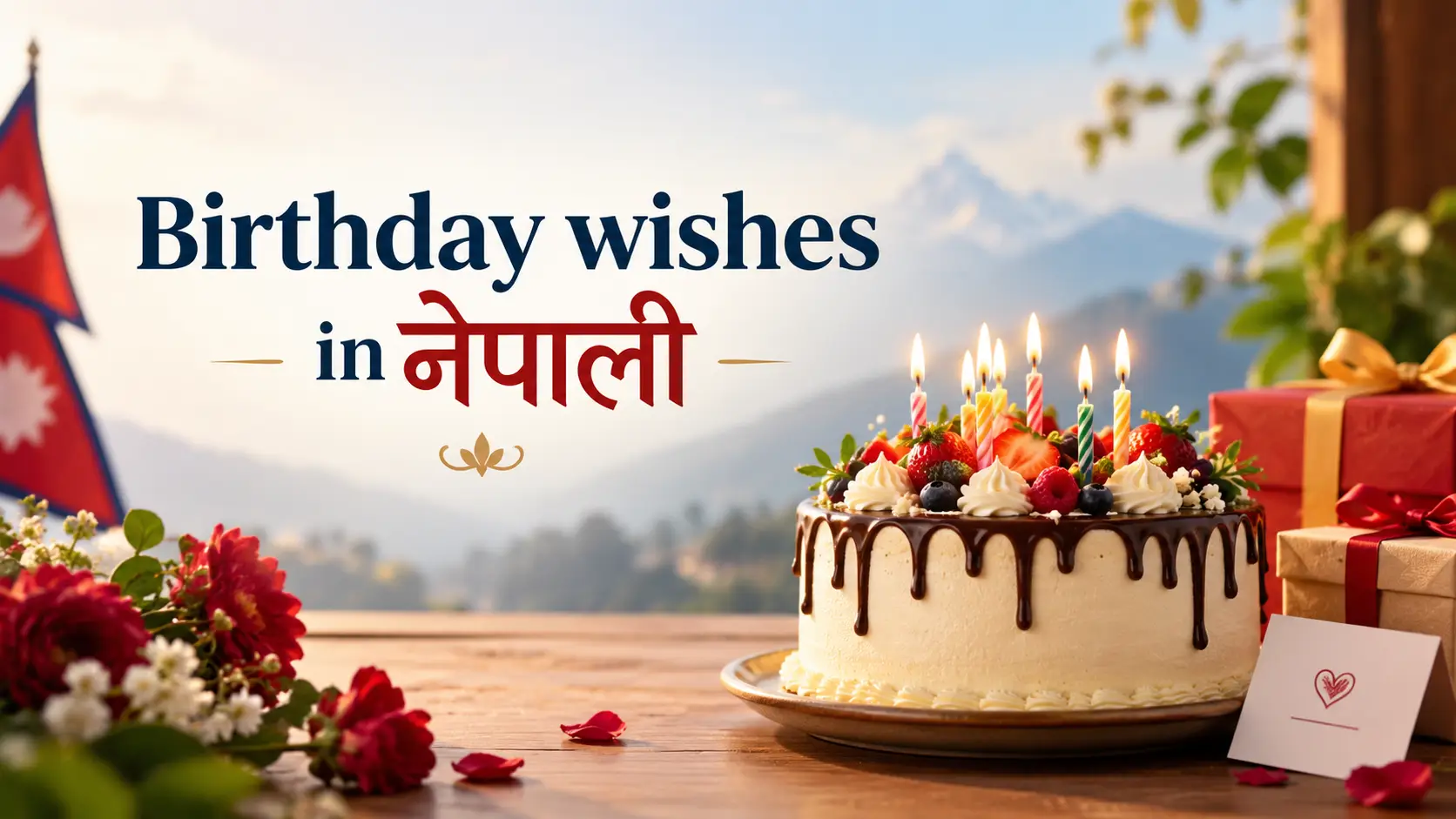
Birthday wishes in Nepali (जन्मदिनको शुभकामना) greeting card

Looking for the right birthday wishes in Nepali? Below are 150+ original wishes for your Aama, Buwa, sister, brother, best friend, husband, wife, son, daughter, relatives, teacher and boss, plus funny wishes, blessings, belated wishes and milestone birthdays. Every wish is written in Nepali (Devanagari) with a Roman Nepali version underneath, so you can send it even if your phone has no Nepali keyboard.

Long-press any wish to copy it, or tap WhatsApp next to it to send it straight away. Start by picking who you are wishing below.

Quick answer: "Happy birthday" in Nepali is जन्मदिनको शुभकामना (Janmadin ko shubhakamana). For a warmer or more formal wish, write जन्मदिनको हार्दिक शुभकामना (Janmadin ko hardik shubhakamana).

Who are you wishing? Jump straight to it:

How to Say Happy Birthday in Nepali

The Nepali word for birthday is जन्मदिन (janmadin), and the word for wishes is शुभकामना (shubhakamana). You will also see it spelled "janma din ko subhakamana" in Roman letters. All spellings mean the same thing.

NepaliRoman NepaliMeaningWhen to use
जन्मदिनको शुभकामनाJanmadin ko shubhakamanaHappy birthdayAnyone; the most common form
जन्मदिनको हार्दिक शुभकामनाJanmadin ko hardik shubhakamanaHeartfelt birthday wishesCards, elders, office
जन्मदिनको धेरै धेरै शुभकामनाJanmadin ko dherai dherai shubhakamanaMany, many birthday wishesWarm and emphatic, family and friends
शुभ जन्मदिनShubha janmadinHappy birthdayShort texts, captions
जन्मदिनको शुभेच्छाJanmadin ko shubhechchhaGood wishes on your birthdayFormal writing and cards

हजुर, तपाईं or तिमी: pick the right respect level

A wish sounds wrong in Nepali if the respect level does not match the person. Use this as a guide; the wishes below already follow it. Avoid the Hindi-style "आपको" in Nepali wishes. Write तपाईंको instead.

हजुर / हजुरहरू

Aama, Buwa, grandparents, elders, in-laws, and a husband in many families

तपाईं / तपाईंहरू

Didi, Dai, uncles and aunts, teachers, boss, colleagues

तिमी / तिमीहरू

Wife, husband, close friends, Bahini, Bhai, your own children

Most respectful on the left, most intimate on the right. When unsure, use हजुर for elders and तपाईं for everyone else. Some families use तिमी for Didi and Dai, so follow what you say at home.

WhoUseExample ending
Aama, Buwaहजुरसधैं स्वस्थ रहनुहोस्
Didi, Daiतपाईंसधैं खुसी रहनुहोस्
Bahini, Bhai, friendsतिमीसधैं खुसी रहनू
Teacher, bossतपाईंस्वस्थ र सफल रहनुहोस्

Short Birthday Wishes in Nepali

One-line wishes that work for almost anyone. Good for a quick text, a Facebook comment or the inside of a card.

  1. जन्मदिनको हार्दिक शुभकामना!
    Janmadin ko hardik shubhakamana! WhatsApp
  2. शुभ जन्मदिन! सधैं खुसी रहनुहोस्।
    Shubha janmadin! Sadhai khusi rahanuhos. WhatsApp
  3. जन्मदिनको धेरै धेरै शुभकामना।
    Janmadin ko dherai dherai shubhakamana. WhatsApp
  4. यो दिन तपाईंको जीवनमा खुसी लिएर आओस्।
    Yo din tapaaiko jiwanma khusi liera aaos. WhatsApp
  5. तिम्रो हरेक सपना पूरा होस्। जन्मदिनको शुभकामना!
    Timro harek sapana pura hos. Janmadin ko shubhakamana! WhatsApp
  6. सुख, शान्ति र सफलताले भरिएको नयाँ वर्ष होस्।
    Sukha, shaanti ra safalataale bhariyeko nayaa barsha hos. WhatsApp
  7. दीर्घायु र सुस्वास्थ्यको कामना। जन्मदिनको शुभकामना!
    Dirghaayu ra suswasthyako kaamana. Janmadin ko shubhakamana! WhatsApp
  8. आजको दिन तिम्रो लागि विशेष होस्।
    Aajko din timro lagi bishesh hos. WhatsApp
  9. मुस्कान सधैं यस्तै रहोस्। शुभ जन्मदिन!
    Muskaan sadhai yastai rahos. Shubha janmadin! WhatsApp
  10. नयाँ वर्ष, नयाँ आशा, नयाँ खुसी। जन्मदिनको शुभकामना!
    Naya barsha, naya aasha, naya khusi. Janmadin ko shubhakamana! WhatsApp
  11. तपाईंको जीवन फूलझैँ सुगन्धित होस्।
    Tapaaiko jiwan phuljhain sugandhit hos. WhatsApp
  12. सधैं स्वस्थ र सफल रहनुहोस्। जन्मदिनको शुभकामना!
    Sadhai swastha ra saphal rahanuhos. Janmadin ko shubhakamana! WhatsApp
  13. धेरै माया र शुभकामनासहित जन्मदिनको बधाई!
    Dherai maya ra shubhakamanasahit janmadin ko badhai! WhatsApp
  14. खुसीले भरिएको दिन होस्, मीठो केक होस्!
    Khusile bhariyeko din hos, mitho cake hos! WhatsApp

Birthday Wishes for Aama and Buwa

Always use हजुर for parents. A line of thanks for what they gave you means more to most parents than a long poem.

Birthday wishes for Aama (mother)

  1. आमा, हजुरलाई जन्मदिनको हार्दिक शुभकामना।
    Aama, hajurlai janmadin ko hardik shubhakamana. WhatsApp
  2. हजुरको मायाले नै म आज यहाँ छु। शुभ जन्मदिन, आमा!
    Hajurko mayale nai ma aaja yahaa chhu. Shubha janmadin, Aama! WhatsApp
  3. आमा, हजुर सधैं स्वस्थ र खुसी रहनुहोस्।
    Aama, hajur sadhai swastha ra khusi rahanuhos. WhatsApp
  4. संसारकै सबैभन्दा राम्री आमालाई जन्मदिनको शुभकामना।
    Sansaarkai sabaibhanda ramri aamalai janmadin ko shubhakamana. WhatsApp
  5. हजुरको हातको दाल-भात संसारकै मीठो खाना हो। जन्मदिनको शुभकामना, आमा!
    Hajurko haatko daal-bhaat sansaarkai mitho khaana ho. Janmadin ko shubhakamana, Aama! WhatsApp
  6. आमा, हजुरको आशीर्वाद सधैं मेरो साथमा रहोस्।
    Aama, hajurko aashirbaad sadhai mero saathma rahos. WhatsApp
  7. हजुरले सिकाएका कुरा नै मेरो सबैभन्दा ठूलो सम्पत्ति हुन्।
    Hajurle sikaaeka kura nai mero sabaibhanda thulo sampatti hun. WhatsApp
  8. दीर्घायु होस्, आमा। जन्मदिनको धेरै धेरै शुभकामना।
    Dirghaayu hos, Aama. Janmadin ko dherai dherai shubhakamana. WhatsApp
  9. आमा, हजुरको मुस्कान सधैं यस्तै रहोस्। Happy birthday!
    Aama, hajurko muskaan sadhai yastai rahos. Happy birthday! WhatsApp

Birthday wishes for Buwa (father)

  1. बुवा, हजुरलाई जन्मदिनको हार्दिक शुभकामना।
    Buwa, hajurlai janmadin ko hardik shubhakamana. WhatsApp
  2. हजुर मेरो पहिलो हिरो हुनुहुन्छ। शुभ जन्मदिन, बुवा!
    Hajur mero pahilo hero hunuhunchha. Shubha janmadin, Buwa! WhatsApp
  3. हजुरको मेहनतले नै हाम्रो घर बनेको छ। धन्यवाद, बुवा।
    Hajurko mehanatle nai hamro ghar baneko chha. Dhanyabaad, Buwa. WhatsApp
  4. बुवा, हजुर सधैं स्वस्थ र दीर्घायु रहनुहोस्।
    Buwa, hajur sadhai swastha ra dirghaayu rahanuhos. WhatsApp
  5. हजुरको सल्लाह मेरो बाटोको उज्यालो हो।
    Hajurko sallaah mero baatoko ujyalo ho. WhatsApp
  6. बुवा, हजुरको आशीर्वादले मेरा सबै काम सजिलो हुन्छन्।
    Buwa, hajurko aashirbaadle mera sabai kaam sajilo hunchhan. WhatsApp
  7. संसारका सबै बुवामध्ये हजुर सबैभन्दा असल हुनुहुन्छ।
    Sansaarka sabai buwamadhye hajur sabaibhanda asal hunuhunchha. WhatsApp
  8. हजुरको हाँसो यो घरको बल हो। जन्मदिनको शुभकामना!
    Hajurko haanso yo gharko bal ho. Janmadin ko shubhakamana! WhatsApp
  9. बुवा, अर्को जन्ममा पनि हजुर नै मेरो बुवा हुनुहोस्।
    Buwa, arko janmama pani hajur nai mero Buwa hunuhos. WhatsApp

Also see our Father's Day wishes for Buwa.

Birthday wishes for parents from abroad

For those in the Gulf, Malaysia, Japan, Australia, the UK or the US who will miss the celebration at home.

  1. टाढा भए पनि मन हजुरकै छेउमा छ। आमा/बुवा, जन्मदिनको शुभकामना।
    Taadha bhae pani man hajurkai chheuma chha. Aama/Buwa, janmadin ko shubhakamana. WhatsApp
  2. भिडियो कलमै भए पनि केक काटौँ। जन्मदिनको शुभकामना!
    Video callmai bhae pani cake kaatau. Janmadin ko shubhakamana! WhatsApp
  3. छुट्टीमा घर आउँदा फेरि मनाउँला। अहिलेलाई धेरै माया र शुभकामना।
    Chhuttima ghar aaunda pheri manaaunla. Ahilelai dherai maya ra shubhakamana. WhatsApp

Birthday Wishes for Sister in Nepali (Didi, Bahini)

For Didi (elder sister)

  1. दिदी, तपाईंलाई जन्मदिनको हार्दिक शुभकामना।
    Didi, tapaailai janmadin ko hardik shubhakamana. WhatsApp
  2. दिदी, तपाईं मेरो दोस्रो आमा हुनुहुन्छ। शुभ जन्मदिन!
    Didi, tapaai mero dosro aama hunuhunchha. Shubha janmadin! WhatsApp
  3. तपाईंको साथ र सल्लाहका लागि धन्यवाद, दिदी।
    Tapaaiko saath ra sallaahka lagi dhanyabaad, Didi. WhatsApp
  4. दिदी, तपाईंको हरेक सपना पूरा होस्।
    Didi, tapaaiko harek sapana pura hos. WhatsApp

For Bahini (younger sister)

  1. बहिनी, तिमीलाई जन्मदिनको धेरै धेरै शुभकामना।
    Bahini, timilai janmadin ko dherai dherai shubhakamana. WhatsApp
  2. तिम्रो हँसिलो मुहार सधैं यस्तै रहोस्, बहिनी।
    Timro hansilo muhaar sadhai yastai rahos, Bahini. WhatsApp
  3. झगडा गर्छौँ, तर तिमीबिना घर सुनसान लाग्छ। शुभ जन्मदिन!
    Jhagada garchhau, tara timibina ghar sunasaan laagchha. Shubha janmadin! WhatsApp
  4. बहिनी, तिमी जति ठूली भए पनि मेरो लागि सानी नै हौ।
    Bahini, timi jati thuli bhae pani mero lagi saani nai hau. WhatsApp

Birthday Wishes for Brother in Nepali (Dai, Bhai)

For Dai (elder brother)

  1. दाइ, तपाईंलाई जन्मदिनको हार्दिक शुभकामना।
    Dai, tapaailai janmadin ko hardik shubhakamana. WhatsApp
  2. दाइ, तपाईं मेरो बलियो सहारा हुनुहुन्छ। शुभ जन्मदिन!
    Dai, tapaai mero baliyo sahaara hunuhunchha. Shubha janmadin! WhatsApp
  3. तपाईंजस्तो दाइ पाउनु मेरो भाग्य हो।
    Tapaaijasto Dai paaunu mero bhagya ho. WhatsApp
  4. दाइ, सधैं स्वस्थ र सफल रहनुहोस्।
    Dai, sadhai swastha ra saphal rahanuhos. WhatsApp

For Bhai (younger brother)

  1. भाइ, तिमीलाई जन्मदिनको धेरै धेरै शुभकामना।
    Bhai, timilai janmadin ko dherai dherai shubhakamana. WhatsApp
  2. भाइ, तिम्रो मेहनतले एक दिन ठूलो फल दिनेछ।
    Bhai, timro mehanatle ek din thulo phal dinechha. WhatsApp
  3. दाइको तर्फबाट धेरै माया। जन्मदिनको शुभकामना!
    Daiko tarphabaata dherai maya. Janmadin ko shubhakamana! WhatsApp
  4. भाइ, तिमी जहाँ पुगे पनि मेरो माया साथमै रहनेछ।
    Bhai, timi jahaa pugepani mero maya saathmai rahanechha. WhatsApp

Birthday Wishes for Best Friend in Nepali (Saathi)

Use तिमी and keep it playful. A shared memory or inside joke makes any of these feel personal.

  1. साथी, तिमीलाई जन्मदिनको धेरै धेरै शुभकामना!
    Saathi, timilai janmadin ko dherai dherai shubhakamana! WhatsApp
  2. तिमी जस्तो साथी पाउनु मेरो भाग्य हो। शुभ जन्मदिन!
    Timi jasto saathi paaunu mero bhagya ho. Shubha janmadin! WhatsApp
  3. हाम्रो यारी सधैं यस्तै रहोस्। जन्मदिनको शुभकामना, यार!
    Hamro yaari sadhai yastai rahos. Janmadin ko shubhakamana, yaar! WhatsApp
  4. आज तिम्रो दिन हो, मज्जाले मनाऊ!
    Aaja timro din ho, majjale manaau! WhatsApp
  5. सुख-दुःखमा साथ दिने साथीलाई जन्मदिनको शुभकामना।
    Sukha-dukhama saath dine saathilai janmadin ko shubhakamana. WhatsApp
  6. तिम्रा सबै सपना पूरा होऊन्, साथी!
    Timra sabai sapana pura houn, Saathi! WhatsApp
  7. उमेर बढ्यो, तर तिम्रो केटाकेटीपन नघटोस्! 😄
    Umer badhyo, tara timro ketaketipan naghatos! WhatsApp
  8. पार्टी कहिले? शुभ जन्मदिन, यार!
    Party kahile? Shubha janmadin, yaar! WhatsApp
  9. तिमीसँगका सबै सम्झना अनमोल छन्। जन्मदिनको शुभकामना।
    Timisangaka sabai samjhana anamol chhan. Janmadin ko shubhakamana. WhatsApp
  10. मेरो मिल्ने साथीलाई मुटुदेखि शुभकामना।
    Mero milne saathilai mutudekhi shubhakamana. WhatsApp

Birthday Wishes for Husband in Nepali

Many wives write to their श्रीमान् using हजुर; others use तिमी or a pet name like बुढा. Both styles are below, so pick the one you use at home. Celebrating more than a birthday? See our anniversary wishes in Nepali.

  1. श्रीमान्, हजुरलाई जन्मदिनको हार्दिक शुभकामना।
    Shrimaan, hajurlai janmadin ko hardik shubhakamana. WhatsApp
  2. हजुरको साथले मेरो जीवन पूर्ण छ। शुभ जन्मदिन!
    Hajurko saathle mero jiwan purna chha. Shubha janmadin! WhatsApp
  3. तिमी मेरो बलियो काँध र मेरो सबैभन्दा मिल्ने साथी हौ।
    Timi mero baliyo kaandh ra mero sabaibhanda milne saathi hau. WhatsApp
  4. मेरो जीवनसाथी, तिमी सधैं स्वस्थ र खुसी रहनू।
    Mero jiwansaathi, timi sadhai swastha ra khusi rahanu. WhatsApp
  5. हजुरको मायाले मलाई सधैं सुरक्षित बनाएको छ।
    Hajurko mayale malai sadhai surakshit banaeko chha. WhatsApp
  6. बुढा, उमेर बढ्दै गए पनि माया उस्तै छ!
    Budha, umer badhdai gae pani maya ustai chha! WhatsApp
  7. हरेक जन्ममा हजुर नै मेरो हुनुहोस्। जन्मदिनको शुभकामना!
    Harek janmama hajur nai mero hunuhos. Janmadin ko shubhakamana! WhatsApp
  8. तिमीले मलाई राम्रो मान्छे बनायौ। धन्यवाद र शुभकामना।
    Timile malai ramro manchhe banaayau. Dhanyabaad ra shubhakamana. WhatsApp
  9. आजको दिन हजुरको लागि सुख र सफलताले भरिएको होस्।
    Aajko din hajurko lagi sukha ra safalataale bhariyeko hos. WhatsApp

Birthday Wishes for Wife in Nepali

For your श्रीमती, use तिमी and keep it personal. Mention something only the two of you share, like morning tea or the day you met.

  1. श्रीमती, तिमीलाई जन्मदिनको हार्दिक शुभकामना।
    Shrimati, timilai janmadin ko hardik shubhakamana. WhatsApp
  2. तिमी छौ, त्यसैले मेरो घर घर हो। शुभ जन्मदिन!
    Timi chhau, tyasaile mero ghar ghar ho. Shubha janmadin! WhatsApp
  3. मेरी माया, तिम्रो मुस्कान सधैं यस्तै चम्किरहोस्।
    Meri maya, timro muskaan sadhai yastai chamkirahos. WhatsApp
  4. तिमीले मेरो परिवारलाई आफ्नै ठान्यौ। धन्यवाद, र जन्मदिनको शुभकामना।
    Timile mero pariwaarlai aaphnai thaanyau. Dhanyabaad, ra janmadin ko shubhakamana. WhatsApp
  5. रिसाउँदा पनि राम्री, हाँस्दा झन् राम्री!
    Risaunda pani ramri, haansda jhan ramri! WhatsApp
  6. तिम्रो हरेक सपना पूरा होस्, म सधैं साथमा छु।
    Timro harek sapana pura hos, ma sadhai saathma chhu. WhatsApp
  7. मेरी जीवनसंगिनी, यो वर्ष तिम्रो लागि सबैभन्दा राम्रो होस्।
    Meri jiwansangini, yo barsha timro lagi sabaibhanda ramro hos. WhatsApp
  8. जति वर्ष बिते पनि, तिमी उत्तिकै प्यारी छौ।
    Jati barsha bite pani, timi uttikai pyaari chhau. WhatsApp
  9. आज तिमीलाई केही काम गर्न दिन्नँ। आराम गर, आज तिम्रो दिन हो!
    Aaja timilai kehi kaam garna dinna. Aaram gara, aaja timro din ho! WhatsApp

Planning a wedding anniversary too? Browse more marriage anniversary wishes in Nepali.

Birthday Wishes for Son and Daughter in Nepali

Wishes from parents usually carry आशीर्वाद (a blessing). Use तिमी for your own children.

For son (Chhora)

  1. छोरा, तिमीलाई जन्मदिनको धेरै धेरै माया र आशीर्वाद।
    Chhora, timilai janmadin ko dherai dherai maya ra aashirbaad. WhatsApp
  2. तिमी हाम्रो घरको उज्यालो हौ, बाबु।
    Timi hamro gharko ujyalo hau, Babu. WhatsApp
  3. सधैं असल, स्वस्थ र सफल बन्नू, छोरा।
    Sadhai asal, swastha ra saphal bannu, Chhora. WhatsApp
  4. तिम्रो हरेक मेहनतले फल देओस्। शुभ जन्मदिन!
    Timro harek mehanatle phal deos. Shubha janmadin! WhatsApp
  5. छोरा, तिमी जति ठूलो भए पनि हाम्रो लागि सानै बाबु हौ।
    Chhora, timi jati thulo bhae pani hamro lagi saanai Babu hau. WhatsApp

For daughter (Chhori)

  1. छोरी, तिमीलाई जन्मदिनको धेरै धेरै माया र आशीर्वाद।
    Chhori, timilai janmadin ko dherai dherai maya ra aashirbaad. WhatsApp
  2. तिमी हाम्रो घरको लक्ष्मी हौ, नानी।
    Timi hamro gharko Laxmi hau, Naani. WhatsApp
  3. तिम्रो हाँसोले हाम्रो घर उज्यालो छ।
    Timro haansole hamro ghar ujyalo chha. WhatsApp
  4. ठूला सपना देख्नू, मेहनत गर्नू, हामी सधैं साथमा छौँ।
    Thula sapana dekhnu, mehanat garnu, haami sadhai saathma chhau. WhatsApp
  5. छोरी, तिमी जहाँ गए पनि सधैं खुसी रहनू।
    Chhori, timi jahaa gae pani sadhai khusi rahanu. WhatsApp

Birthday Wishes for Grandparents, Relatives, Teacher and Boss

For grandparents (Hajurbuwa, Hajuraama)

  1. हजुरबुवा, हजुरलाई जन्मदिनको हार्दिक शुभकामना।
    Hajurbuwa, hajurlai janmadin ko hardik shubhakamana. WhatsApp
  2. हजुरआमा, हजुरको आशीर्वाद हाम्रो परिवारको छहारी हो।
    Hajuraama, hajurko aashirbaad hamro pariwaarko chhahaari ho. WhatsApp
  3. हजुरले देखाउनुभएको बाटोमा हामी हिँडिरहेका छौँ।
    Hajurle dekhaaunubhaeko baatoma haami hindirahekaa chhau. WhatsApp
  4. दीर्घायु होऊन्, हजुरबा-हजुरआमा।
    Dirghaayu houn, Hajurba-Hajuraama. WhatsApp

For uncles and aunts

  1. काका/मामा/फुपाजु, तपाईंलाई जन्मदिनको हार्दिक शुभकामना।
    Kaka/Mama/Phupaaju, tapaailai janmadin ko hardik shubhakamana. WhatsApp
  2. काकी/माइजू/फुपू, तपाईंको माया सधैं मेरो साथमा रहोस्।
    Kaaki/Maijyu/Phupu, tapaaiko maya sadhai mero saathma rahos. WhatsApp
  3. तपाईंको स्नेहका लागि धन्यवाद। शुभ जन्मदिन!
    Tapaaiko snehaka lagi dhanyabaad. Shubha janmadin! WhatsApp

For in-laws

  1. आदरणीय सासू-आमा, हजुरलाई जन्मदिनको हार्दिक शुभकामना।
    Aadaraniya Saasu-Aama, hajurlai janmadin ko hardik shubhakamana. WhatsApp
  2. ससुरा-बुवा, हजुरको स्वास्थ्य र खुसीको कामना गर्छु।
    Sasura-Buwa, hajurko swasthya ra khusiko kaamana garchhu. WhatsApp
  3. हजुरहरूले मलाई आफ्नै छोरा/छोरी जस्तै माया दिनुभयो। धन्यवाद।
    Hajurharule malai aaphnai chhora/chhori jastai maya dinubhayo. Dhanyabaad. WhatsApp

For teacher (Guruju, Madam)

  1. आदरणीय गुरुज्यू, तपाईंलाई जन्मदिनको हार्दिक शुभकामना।
    Aadaraniya Guruju, tapaailai janmadin ko hardik shubhakamana. WhatsApp
  2. तपाईंले सिकाएका कुराहरू जीवनभर काम लाग्ने छन्।
    Tapaaile sikaaeka kuraharu jiwanbhar kaam laagne chhan. WhatsApp
  3. म्याडम, तपाईंको स्वास्थ्य र खुसी सधैं रहोस्।
    Madam, tapaaiko swasthya ra khusi sadhai rahos. WhatsApp

For boss or senior

Strictly तपाईं, short and respectful.

  1. आदरणीय सर/म्याडम, जन्मदिनको हार्दिक शुभकामना।
    Aadaraniya Sir/Madam, janmadin ko hardik shubhakamana. WhatsApp
  2. तपाईंको नेतृत्वबाट धेरै सिक्ने अवसर पाएको छु। शुभ जन्मदिन!
    Tapaaiko netritwabaata dherai sikne awasar paaeko chhu. Shubha janmadin! WhatsApp
  3. सर, तपाईं र परिवारमा सुख र स्वास्थ्यको कामना।
    Sir, tapaai ra pariwaarma sukha ra swasthyako kaamana. WhatsApp

Funny Birthday Wishes in Nepali

Only for people who will laugh. Keep these for friends, siblings and your spouse, not for elders.

  1. उमेर बढ्दै छ, तर तिमी अझै बच्चा नै छौ! जन्मदिनको शुभकामना!
    Umer badhdai chha, tara timi ajhai bachha nai chhau! Janmadin ko shubhakamana! WhatsApp
  2. बधाई छ! केकको सबैभन्दा ठूलो टुक्रा मेरो भागमा।
    Badhai chha! Cakeko sabaibhanda thulo tukra mero bhaagma. WhatsApp
  3. जन्मदिनमा मात्र होइन, पार्टी त हरेक महिना चाहिन्छ!
    Janmadinma matra hoina, party ta harek mahina chahinchha! WhatsApp
  4. कपाल झर्दै गए पनि माया झर्दैन। शुभ जन्मदिन!
    Kapaal jharde gae pani maya jhardaina. Shubha janmadin! WhatsApp
  5. आज उमेर नसोध्नू, सिधै शुभकामना देऊ!
    Aaja umer nasodhnu, sidhai shubhakamana deu! WhatsApp
  6. मोमबत्ती धेरै भए, फुक्न अलि सास चाहिन्छ। 😄
    Mombatti dherai bhae, phukna ali saas chahinchha. WhatsApp
  7. उपहार नल्याएको भए पनि माफ छ, तर केक चाहिँ नबिर्सनू!
    Upahaar nalyaaeko bhae pani maaf chha, tara cake chaahi nabirsanu! WhatsApp

Blessing Birthday Wishes in Nepali (आशीर्वाद)

Elders send a blessing rather than a wish. In Nepali custom, blessings flow downward: parents, grandparents and elders give आशीर्वाद, and younger people receive it.

  1. भगवानले तिमीलाई सधैं सुखी र स्वस्थ राखून्।
    Bhagawaanle timilai sadhai sukhi ra swastha raakhun. WhatsApp
  2. दीर्घायु होऊ, यशस्वी होऊ, सफल होऊ।
    Dirghaayu hou, yashaswi hou, saphal hou. WhatsApp
  3. मेरो आशीर्वाद सधैं तिम्रो साथमा रहोस्।
    Mero aashirbaad sadhai timro saathma rahos. WhatsApp
  4. तिम्रो बाटो सधैं उज्यालो र सहज होस्।
    Timro baato sadhai ujyalo ra sahaj hos. WhatsApp
  5. पशुपतिनाथको कृपाले तिम्रो जीवन मंगलमय होस्।
    Pashupatinaathko kripale timro jiwan mangalmaya hos. WhatsApp
  6. जीवनमा जे चाहन्छौ, त्यो पाऊ। हाम्रो आशीर्वाद छ।
    Jiwanma je chaahanchhau, tyo paau. Hamro aashirbaad chha. WhatsApp
  7. सुख, समृद्धि र शान्ति सधैं तिम्रो घरमा रहोस्।
    Sukha, samriddhi ra shaanti sadhai timro gharma rahos. WhatsApp

Belated, Advance and Long-Distance Birthday Wishes

Belated wishes (when you forgot)

  1. ढिलो भयो, माफ गर्नुहोला! जन्मदिनको हार्दिक शुभकामना।
    Dhilo bhayo, maaf garnuhola! Janmadin ko hardik shubhakamana. WhatsApp
  2. जन्मदिन हिजो थियो, तर शुभकामना आज पनि उत्तिकै साँचो छ।
    Janmadin hijo thiyo, tara shubhakamana aaja pani uttikai saancho chha. WhatsApp
  3. मिति बिर्सेँ, तिमीलाई होइन। ढिलो भए पनि शुभ जन्मदिन!
    Miti birsen, timilai hoina. Dhilo bhae pani shubha janmadin! WhatsApp

Advance wishes

  1. भोलि तिम्रो जन्मदिन! अग्रिम शुभकामना।
    Bholi timro janmadin! Agrim shubhakamana. WhatsApp
  2. अग्रिम जन्मदिनको शुभकामना! भोलि भेटौँला।
    Agrim janmadinko shubhakamana! Bholi bhetaunlaa. WhatsApp

Long-distance wishes

  1. टाढा भए पनि मन नजिकै छ। जन्मदिनको शुभकामना!
    Taadha bhae pani man najikai chha. Janmadin ko shubhakamana! WhatsApp
  2. यो वर्ष फोनमै मनायौँ, अर्को वर्ष सँगै मनाउँला।
    Yo barsha phonmai manaayau, arko barsha sangai manaaunla. WhatsApp

Birthday Status and Captions in Nepali

Short lines for a Facebook post, Instagram photo or TikTok video. In the last one, replace X with the number.

  1. शुभ जन्मदिन 🎂
    Shubha janmadin WhatsApp
  2. एक वर्ष अझ, खुसी अझ धेरै।
    Ek barsha ajha, khusi ajha dherai. WhatsApp
  3. मेरो मान्छेको जन्मदिन ❤️
    Mero manchheko janmadin WhatsApp
  4. आज मेरो दिन! 🎉
    Aaja mero din! WhatsApp
  5. उमेर संख्या मात्र हो, खुसी चाहिँ मनको।
    Umer sankhya matra ho, khusi chaahi manko. WhatsApp
  6. नयाँ वर्ष, नयाँ सपना।
    Naya barsha, naya sapana. WhatsApp
  7. जन्मदिनको दिन परिवारसँगै 🙏
    Janmadinko din pariwaarsangai WhatsApp
  8. मायालु मान्छेहरूको शुभकामनाले दिन सुन्दर बन्यो।
    Maayaalu manchheharuko shubhakamanale din sundar banyo. WhatsApp
  9. केक, हाँसो र साथी। यही हो जन्मदिन!
    Cake, haanso ra saathi. Yahi ho janmadin! WhatsApp
  10. X औँ जन्मदिन ✨
    X aun janmadin WhatsApp

Birthday Wishes in Nepali and English

Handy for cards, cake toppers and gift tags where you want both languages side by side.

  1. जन्मदिनको शुभकामना।
    Happy birthday. WhatsApp
  2. जन्मदिनको हार्दिक शुभकामना।
    Heartfelt birthday wishes. WhatsApp
  3. तपाईंको जीवन खुसीले भरिएको होस्।
    May your life be filled with happiness. WhatsApp
  4. तिम्रा सबै सपना पूरा होऊन्।
    May all your dreams come true. WhatsApp
  5. सधैं स्वस्थ र सफल रहनुहोस्।
    May you always be healthy and successful. WhatsApp
  6. तिमी मेरो लागि विशेष छौ।
    You are special to me. WhatsApp
  7. यो वर्ष तिम्रो सबैभन्दा राम्रो वर्ष होस्।
    May this be your best year yet. WhatsApp

Milestone Birthday Wishes in Nepali

Big birthdays deserve a wish that names the number. Among the Newa community, Janku is a ritual celebrating long life when a person turns between 77 and 89, with relatives visiting to take blessings (Gulf Times).

  1. पहिलो जन्मदिनको धेरै धेरै शुभकामना, नानी!
    Pahilo janmadinko dherai dherai shubhakamana, Naani! WhatsApp
  2. १८ औँ जन्मदिनको शुभकामना! अब जिम्मेवारी र सपना दुवै ठूला हुँदैछन्।
    18aun janmadinko shubhakamana! Aba jimmewari ra sapana duwai thula hudaichhan. WhatsApp
  3. २१ औँ जन्मदिनको हार्दिक शुभकामना! जीवनको नयाँ यात्रा सुरु होस्।
    21aun janmadinko hardik shubhakamana! Jiwanko naya yatra suru hos. WhatsApp
  4. ६० औँ जन्मदिनको हार्दिक शुभकामना! हजुरको अनुभव हाम्रो पुँजी हो।
    60aun janmadinko hardik shubhakamana! Hajurko anubhav hamro punji ho. WhatsApp
  5. दीर्घायु जीवनको उत्सवमा हार्दिक शुभकामना। हजुरको आशीर्वाद हामीमाथि रहिरहोस्।
    Dirghaayu jiwanko utsawma hardik shubhakamana. Hajurko aashirbaad haamimaathi rahirahos. WhatsApp

How to Reply to Birthday Wishes in Nepali

Got a lot of wishes on Facebook or WhatsApp? Post one of these as a thank-you, or reply to each person.

  1. शुभकामना दिनुभएकोमा हार्दिक धन्यवाद!
    Shubhakamana dinubhaekoma hardik dhanyabaad! WhatsApp
  2. तपाईंको माया र आशीर्वादले मेरो दिन विशेष बन्यो।
    Tapaaiko maya ra aashirbaadle mero din bishesh banyo. WhatsApp
  3. सम्झनुभएकोमा धेरै धेरै धन्यवाद।
    Samjhanubhaekoma dherai dherai dhanyabaad. WhatsApp
  4. धन्यवाद साथी! तिम्रो जन्मदिनमा दोब्बर शुभकामना फर्काउँछु।
    Dhanyabaad saathi! Timro janmadinma dobbar shubhakamana pharkaaunchhu. WhatsApp
  5. शुभकामना दिने सबै आफन्त र साथीहरूलाई मनदेखि आभार।
    Shubhakamana dine sabai aaphanta ra saathiharulai mandekhi aabhaar. WhatsApp

Tips for Writing Your Own Nepali Birthday Wish

  • Add one real detail. A shared place, a year or an inside joke makes any wish above feel personal.
  • Match the respect level. हजुर for parents and elders, तपाईं for Didi, Dai, teachers and your boss, तिमी for your spouse, friends and younger siblings.
  • Say the number. "२५ औँ जन्मदिन" is warmer than a general wish.
  • Keep it short for texts, and save the long message for a card or a Facebook post.
  • Use Unicode, not Preeti. Text typed in a legacy font arrives as unreadable characters on the other phone.

Want to type your own wish in Nepali? Use our free English to Nepali Unicode converter: type in Roman letters and copy the Nepali text. If Nepali letters look broken on your computer, install the Kalimati Nepali Unicode font.

Frequently Asked Questions

How do you say happy birthday in Nepali?

Say जन्मदिनको शुभकामना (Janmadin ko shubhakamana). In short texts, शुभ जन्मदिन (Shubha janmadin) also works.

What is the difference between शुभकामना and शुभेच्छा?

Both mean good wishes. शुभकामना is the everyday word and the one most people use in a birthday message. शुभेच्छा sounds a little more formal and is common in written cards and announcements.

How do I wish my mother or father a happy birthday in Nepali?

Use हजुर and add a line of thanks or a blessing, for example: आमा, हजुरलाई जन्मदिनको हार्दिक शुभकामना। सधैं स्वस्थ र खुसी रहनुहोस्।

Should I use तपाईं or तिमी in a birthday message?

Use तपाईं for anyone older than you, any teacher and anyone senior at work. Use तिमी for close friends, younger siblings and your spouse. If you are not sure, use तपाईं. Too much respect is never taken as rude in Nepali, while too much familiarity can be.

How do I write birthday wishes in Roman Nepali?

There is no single official spelling, so "janmadin ko shubhakamana", "janma din ko subhakamana" and similar forms are all understood. Copy the Roman line under any wish above, or type your own with the Unicode converter.

How do I reply to birthday wishes in Nepali?

A simple reply is शुभकामना दिनुभएकोमा हार्दिक धन्यवाद! (Thank you for the birthday wishes). More replies are in the section above.

Conclusion

The best birthday wish is the one that sounds like you. Pick a line above, add a name or a small memory, and send it. If you have a favourite Nepali birthday wish of your own, share it in the comments; the best ones will be added to this list.

Celebrating another occasion? Read our Dashain wishes in Nepali and marriage anniversary wishes in Nepali.

170+ Nepali Quotes About Life (जीवन सम्बन्धी भनाइ) With English Meaning

Nepali quotes about life with English meaning

170+ Nepali Quotes About Life (जीवन सम्बन्धी भनाइ) With English Meaning

These are 171 Nepali quotes about life, written in copy-ready Nepali Unicode with a plain English meaning under every line. They are sorted by mood, so you can find a line for your WhatsApp status, Instagram caption, speech or diary in under a minute.

Most life-quote pages give you hundreds of lines with no meaning and no source. This one adds the meaning, 12 traditional ukhan (proverbs) explained, and only those writer quotes we could trace to a real book. Most lines were written fresh for wilson.com.np in October 2026.

Quick answer

A Nepali quote about life is called a जीवन सम्बन्धी भनाइ (jeevan sambandhi bhanai). One of the most shared short ones is “दुःख पनि मेहमान हो, सधैं बस्दैन।” — “Sorrow is a guest too; it never stays forever.” Pick a mood from the table below to jump to the right section.

Pick a Quote by Mood

If you feel…Go toQuote numbers
You want the best lines fastBest Nepali quotes about life1–15
Thoughtful, quietDeep meaning quotes16–35
Let down by peopleReality of life quotes36–55
You need a pushMotivational quotes56–75
Low or heartbrokenSad life quotes and status76–90
Grateful, happyPositive and happy quotes91–105
You need a bio or captionShort quotes for WhatsApp, Instagram and TikTok106–135
Working hard, waiting for resultsStruggle, karma and time136–155
You want something traditionalNepali ukhan about life156–167
You want a famous nameNepali literature and scripture168–171

Best Nepali Quotes About Life (Top 15)

Start here if you just want the strongest lines. Each one works as a status on its own.

  1. जीवन लामो हुनुभन्दा गहिरो हुनु धेरै राम्रो हो।A deep life is far better than a merely long one.
  2. समयले सबै कुरा सिकाउँछ, तर फी धेरै महँगो लिन्छ।Time teaches everything, but its fee is very high.
  3. हिजोको पीडालाई आजको मुस्कान चोर्न नदेऊ।Don’t let yesterday’s pain steal today’s smile.
  4. जिन्दगी परीक्षा होइन, अभ्यास हो; हरेक दिन फेरि सुरु गर्न पाइन्छ।Life is not an exam but practice; every day you get to start again.
  5. खुसी ठूलो कुरामा होइन, सानो कुरालाई ठूलो मान्ने मनमा हुन्छ।Happiness lives in a heart that treats small things as big, not in big things.
  6. मान्छे चिन्न समय लाग्छ, आफूलाई चिन्न पूरा जीवन।It takes time to know people, and a whole lifetime to know yourself.
  7. बाटो कठिन छ भने बुझ, गन्तव्य सुन्दर छ।If the road is hard, understand that the destination is beautiful.
  8. जीवनको हिसाब पैसाले होइन, सम्झनाले गरिन्छ।Life is counted in memories, not money.
  9. आफ्नो दियो आफैं बाल्न सिक, उज्यालो पर्खेर बस्नु पर्दैन।Learn to light your own lamp; you don’t have to sit waiting for light.
  10. सबैले बुझून् भन्ने जरुरी छैन, आफू सही हुनु पर्याप्त छ।Not everyone needs to understand you; being right with yourself is enough.
  11. जीवनमा ढिलो पुग्नु हार होइन, नहिँड्नु हार हो।Arriving late is not losing; not walking at all is.
  12. माया, मेहनत र धैर्य: जीवनका तीन जरा।Love, hard work and patience: the three roots of life.
  13. पहाड चढ्नेको खुट्टा दुख्छ, तर दृश्य उसैको हुन्छ।The climber’s legs ache, but the view belongs to him.
  14. जीवन किताब हो, हरेक दिन एउटा नयाँ पाना।Life is a book, and every day is a new page.
  15. मनको शान्ति किन्न सकिँदैन, कमाउनुपर्छ।Peace of mind cannot be bought; it has to be earned.

Editor’s pick: #13

“पहाड चढ्नेको खुट्टा दुख्छ, तर दृश्य उसैको हुन्छ।” It fits anyone in Nepal studying for Lok Sewa, saving for a first business or working abroad: the pain is real, but so is the view at the top.

Deep Meaning Life Quotes in Nepali (जीवनको गहिरो अर्थ)

Slower lines that make people stop scrolling. Good for a diary, a Facebook post or a quiet night.

  1. मौनता पनि उत्तर हो, बुझ्नेले मात्र सुन्छ।Silence is an answer too; only those who understand can hear it.
  2. नदी कहिल्यै पछाडि फर्किँदैन, जीवन पनि।A river never flows back, and neither does life.
  3. जसले आफ्नो घाउ बुझ्छ, उसले अरूको आँसु पनि बुझ्छ।One who understands their own wounds understands other people’s tears.
  4. सबैभन्दा लामो यात्रा दिमागबाट मुटुसम्मको हुन्छ।The longest journey is the one from the head to the heart.
  5. पाएको कुराको मूल्य गुमाएपछि मात्र थाहा हुन्छ।We learn the worth of what we had only after we lose it.
  6. जरा जति गहिरो, रुख उति बलियो; मान्छे पनि उस्तै।The deeper the roots, the stronger the tree; people are the same.
  7. बादल जति कालो भए पनि घाम हराउँदैन, लुक्छ मात्र।However dark the clouds, the sun is not gone; it is only hiding.
  8. जसले रिस जित्यो, उसले आधा लडाइँ जित्यो।Whoever conquers anger has already won half the battle.
  9. हरेक भेटमा एउटा पाठ हुन्छ, हरेक बिछोडमा अर्को।Every meeting holds a lesson, and every parting holds another.
  10. जीवनको अर्थ खोज्दा होइन, दिँदा भेटिन्छ।The meaning of life is found by giving, not by searching.
  11. जे छैन त्यसको गुनासोले जे छ त्यसको स्वाद बिगार्छ।Complaining about what you lack spoils the taste of what you have.
  12. शरीर बूढो हुन्छ, तर सिक्ने मन कहिल्यै बूढो हुनुहुँदैन।The body grows old, but a learning mind never should.
  13. धेरै बोल्नेले धेरै भन्छ, थोरै बोल्नेले धेरै सुन्छ।Those who talk a lot say a lot; those who talk little hear a lot.
  14. जीवन प्रतिध्वनि हो; जे पठायौ, त्यही फर्किन्छ।Life is an echo; whatever you send out comes back.
  15. दुःख पनि मेहमान हो, सधैं बस्दैन।Sorrow is a guest too; it never stays forever.
  16. आफूलाई माफ गर्न सिक्नु पनि ठूलो साहस हो।Learning to forgive yourself takes great courage too.
  17. उज्यालोको महत्त्व अँध्यारोले सिकाउँछ।It is darkness that teaches us the value of light.
  18. सम्बन्ध धागो जस्तै हो, धेरै तान्यौ भने चुँडिन्छ।A relationship is like a thread; pull it too hard and it snaps.
  19. सबै प्रश्नको उत्तर आजै चाहिँदैन, केही उत्तर समयले दिन्छ।Not every question needs an answer today; time gives some of them.
  20. जीवन छोटो छ, तर राम्रो काम लामो बाँच्छ।Life is short, but good deeds live long.

Reality of Life Quotes in Nepali (जिन्दगीको सत्य)

Honest, sometimes bitter lines about people, money and time. These are the ones most often used as “zindagi” status.

  1. उत्सवमा घर भरिन्छ, अस्पतालमा कुर्सी खाली रहन्छ।At celebrations the house fills up; at the hospital the chairs stay empty.
  2. पैसाले घर किन्छ, घरपरिवार किन्दैन।Money buys a house, not a family.
  3. मान्छेको असली अनुहार तिम्रो समस्याको बेला देखिन्छ।A person’s real face shows when you are in trouble.
  4. मीठो बोली सबैसँग हुन्छ, साथ दिने मन थोरैसँग।Everyone has sweet words; few have a heart that stands by you.
  5. संसारले तिम्रो सफलता देख्छ, रातभरको मेहनत देख्दैन।The world sees your success, not your sleepless nights of work.
  6. अरूबाट कम आशा राख, आफूबाट धेरै।Expect less from others and more from yourself.
  7. सबैलाई खुसी पार्न खोज्दा आफैं दुःखी भइन्छ।Trying to please everyone leaves you unhappy.
  8. नराम्रो समयमा आफ्नै छायाले पनि साथ छोड्छ।In bad times, even your own shadow leaves you.
  9. मान्छे बदलिँदैनन्, उनीहरूको असली रूप खुल्छ मात्र।People don’t change; their true selves simply come out.
  10. नाम कमाउन वर्षौं लाग्छ, गुमाउन एक पल।A good name takes years to earn and a moment to lose.
  11. जसलाई धेरै दियौ, उसैले धेरै बिर्सन्छ।The ones you gave the most to are often the ones who forget the most.
  12. विदेशको कमाइले घर चल्छ, तर आमाको आँसु सुक्दैन।Money earned abroad runs the house, but a mother’s tears don’t dry.
  13. योजना हाम्रो, नतिजा समयको; त्यसैले योजना बनाउन नछोड।The plan is ours and the result is time’s, so never stop planning.
  14. गल्ती गर्ने होइन, गल्ती नस्वीकार्ने मान्छे हार्छ।It is not the one who makes mistakes who loses, but the one who won’t admit them.
  15. भीड सधैं सही बाटोमा हुँदैन।The crowd is not always on the right road.
  16. जबसम्म काम छ, तबसम्म नाम छ; यही संसारको नियम हो।You are remembered only while you are useful; that is the rule of this world.
  17. सत्य ढिलो पुग्छ, तर पुग्छ अवश्य।The truth arrives late, but it surely arrives.
  18. कसैको पीडा उसको बाटो नहिँडी बुझिँदैन।You can’t understand someone’s pain without walking their road.
  19. जिन्दगीले सोधेका प्रश्नको उत्तर किताबमा हुँदैन।The questions life asks are not answered in books.
  20. घडी सबैसँग छ, समयको मूल्य थोरैसँग।Everyone owns a watch; few understand the value of time.

Motivational Life Quotes in Nepali

For exam weeks, job hunts and the first year of anything. If you like these, our inspirational Friday quotes keep the same energy going into the weekend.

  1. सगरमाथा पनि एक-एक पाइला चालेर नै चढिन्छ।Even Everest is climbed one step at a time.
  2. संसारले लडेको ठाउँ होइन, उठेको ठाउँ सम्झन्छ।The world remembers where you rose, not where you fell.
  3. सपना देख्न निद्रा चाहिन्छ, पूरा गर्न निद्रा त्याग्नुपर्छ।You need sleep to dream, and you must give up sleep to make dreams real.
  4. तिम्रो दौड तिम्रै हो, अर्काको घडी नहेर।Your race is your own; stop looking at someone else’s clock.
  5. डर लाग्नु स्वाभाविक हो, डरलाई रोक्न दिनु कमजोरी हो।Feeling fear is natural; letting fear stop you is weakness.
  6. सुरुवात सानो भए पनि हुन्छ, रोकिनु हुँदैन।A small start is fine; stopping is not.
  7. मेहनतको पसिना कहिल्यै खेर जाँदैन।The sweat of hard work is never wasted.
  8. हार्नेहरूको कथा पनि सुन, त्यहीँ जितको सूत्र लुकेको हुन्छ।Listen to the stories of those who lost too; the formula for winning hides there.
  9. बहाना र नतिजा एकै ठाउँमा बस्दैनन्।Excuses and results never live in the same place.
  10. आफ्नो क्षमतामाथि शंका गर्नु नै सबैभन्दा ठूलो अवरोध हो।Doubting your own ability is the biggest obstacle of all.
  11. खोलाले ढुंगा काट्छ, बलले होइन, निरन्तरताले।A stream cuts through stone, not by force but by never stopping.
  12. अवसर ढोका ढकढक्याउँदैन, ढोका आफैं बनाउनुपर्छ।Opportunity doesn’t knock; you have to build the door yourself.
  13. थाकेर बस, तर हार मानेर नबस।Sit down when you are tired, but never sit down in defeat.
  14. आजको अनुशासन भोलिको स्वतन्त्रता हो।Today’s discipline is tomorrow’s freedom.
  15. अरूले हाँसे भने हाँस्न देऊ, तिम्रो लक्ष्य तिम्रै हो।If others laugh, let them; your goal is yours alone.
  16. असफलता अल्पविराम हो, पूर्णविराम होइन।Failure is a comma, not a full stop.
  17. एउटा राम्रो बानीले जीवनको दिशा बदल्छ।One good habit can change the direction of a life.
  18. मौसम जस्तोसुकै होस्, किसानले बीउ छर्न छोड्दैन।Whatever the weather, the farmer never stops sowing.
  19. जित्नेहरू पनि डराउँछन्, तर अगाडि बढ्छन्।Winners feel afraid too, but they keep moving forward.
  20. आफूमाथि विश्वास गर, संसारले पछि आफैं गर्छ।Believe in yourself first; the world will follow later.

Editor’s pick: #71

“असफलता अल्पविराम हो, पूर्णविराम होइन।” Short enough for a bio, and it turns a bad result into a pause instead of an ending. For work-week versions, see these happy Friday quotes for work.

Sad Life Quotes and Status in Nepali

For the days when a smile is just for show. The section ends on a hopeful line on purpose.

  1. हाँसेर हिँड्ने हरेक मान्छे खुसी हुँदैन।Not everyone who walks around smiling is happy.
  2. कहिलेकाहीँ भीडमा पनि आफू एक्लो लाग्छ।Sometimes you feel alone even in a crowd.
  3. आँसु नझर्दैमा मन नदुखेको होइन।No tears does not mean no pain.
  4. जसलाई आफ्नो ठानेँ, उसैले पराई बनायो।The one I called my own turned me into a stranger.
  5. सम्झनाहरू बोल्दैनन्, तर रातभर जगाउँछन्।Memories don’t speak, but they keep you awake all night.
  6. सबै ठीक छ भन्दाभन्दै थाकेँ।I am tired of saying everything is fine.
  7. मनको घाउ कसैले देख्दैन, त्यसैले मलम पनि पाइँदैन।No one sees the wounds of the heart, so no one brings a balm.
  8. कोही टाढा भएपछि मात्र थाहा हुन्छ, ऊ कति नजिक थियो।Only when someone leaves do you realise how close they were.
  9. मनमा कथा धेरै छन्, सुनाउने ठाउँ छैन।My heart holds many stories, but there is nowhere to tell them.
  10. पुराना फोटोहरू हाँस्छन्, हेर्ने आँखा रुन्छन्।Old photos smile while the eyes looking at them cry.
  11. चिया उस्तै छ, सँगै पिउने मान्छे छैन।The tea is the same; the person I shared it with is gone.
  12. कहिलेकाहीँ चुप लाग्नु नै सबैभन्दा ठूलो चिच्याहट हुन्छ।Sometimes silence is the loudest scream.
  13. आफ्नैले दिएको चोट निको हुन सबैभन्दा ढिलो हुन्छ।Wounds given by your own people heal the slowest.
  14. जीवनले रुवायो, तर रुँदै हाँस्न पनि सिकायो।Life made me cry, but it also taught me to smile through the tears.
  15. रात जति लामो भए पनि बिहान हुन्छ नै।However long the night, the morning always comes.

Positive and Happy Life Quotes in Nepali

Light, grateful lines for good days, festival posts and family photos.

  1. हरेक बिहानको घामले भन्छ: फेरि प्रयास गर।Every morning’s sun says: try again.
  2. कृतज्ञ मनमा अभाव बस्दैन।Lack cannot live in a grateful heart.
  3. मुस्कान सबैभन्दा सस्तो गहना हो, तर सबैभन्दा सुन्दर।A smile is the cheapest jewel, and the most beautiful.
  4. राम्रो सोच्यौ भने बाटो आफैं राम्रो देखिन्छ।Think well and the road itself starts to look good.
  5. सानो खुसी जम्मा गर, ठूलो खुसी आफैं बन्छ।Collect small joys; a big joy forms on its own.
  6. मन बगैंचा हो; के रोप्ने, तिमी नै निर्णय गर।Your mind is a garden; you decide what to plant in it.
  7. गुनासो छोड, धन्यवाद भन्न सिक, जीवन हलुका हुन्छ।Drop the complaints, learn to say thank you, and life gets lighter.
  8. बाँड्दा घट्ने होइन, बढ्ने चीज खुसी हो।Happiness is the one thing that grows, not shrinks, when shared.
  9. घाम लाग्दा मात्र होइन, पानी पर्दा पनि नाच्न सिक।Learn to dance not only in the sunshine but in the rain too.
  10. हाँसो घरको सबैभन्दा राम्रो औषधि हो।Laughter is the best medicine in any home.
  11. आज जे छ, त्यही नै सबैभन्दा सुन्दर उपहार हो।Whatever you have today is the most beautiful gift.
  12. सकारात्मक मान्छे समस्यामा पनि समाधानको ढोका खोज्छ।A positive person looks for the door to a solution even inside a problem.
  13. सादा जीवन, उच्च विचार; यही खुसीको सूत्र हो।Simple living and high thinking: that is the formula for happiness.
  14. आफ्नै साथमा रमाउन सक्ने मान्छे कहिल्यै एक्लो हुँदैन।Someone who enjoys their own company is never lonely.
  15. दाल-भात, आफ्ना मान्छे र मनको शान्ति; जीवनमा अरू के चाहियो?Dal-bhat, your own people and peace of mind; what more does life need?

Short Nepali Life Quotes for WhatsApp, Instagram and TikTok

Short lines read better on a phone screen and fit inside profile limits.

For your bio (under 30 characters)

  1. आफ्नो गति, आफ्नो कथा।My pace, my story.
  2. मन शान्त, इरादा पक्का।Calm mind, firm intent.
  3. सपना ठूला, कदम साना।Big dreams, small steps.
  4. मुस्कान नै मेरो पहिचान।My smile is my identity.
  5. थोरै शब्द, धेरै काम।Few words, lots of work.
  6. आज राम्रो, भोलि झन् राम्रो।Good today, better tomorrow.
  7. रोकिँदैन जिन्दगी।Life doesn’t stop.
  8. हरेक चोटले अलि बलियो।A little stronger with every hurt.
  9. पहाडको मान्छे, पहाड जस्तै मन।A mountain person with a mountain-strong heart.
  10. यात्रामा छु।On my journey.
  11. सरल जीवन, सफा मन।Simple life, clean heart.
  12. कर्म गर, बाँकी समयको।Do your work; the rest belongs to time.

For your status and captions

  1. जिन्दगी छोटो छ, मन ठूलो राख।Life is short; keep your heart big.
  2. आज मौसम पनि मेरो मुड जस्तै छ।Today even the weather matches my mood.
  3. हरेक दिन नयाँ पाना, कलम मेरै हातमा।Every day is a new page, and the pen is in my hand.
  4. आफूलाई माया गर्दै छु, बिस्तारै तर पक्का।Learning to love myself, slowly but surely.
  5. जे छ, त्यसैमा खुसी छु।Happy with whatever I have.
  6. दुःख पनि बित्छ, सुख पनि।Sorrow passes, and so does joy.
  7. मेरो शान्ति, मेरो प्राथमिकता।My peace is my priority.
  8. बिस्तारै हिँड्दै छु, तर पछाडि फर्केको छैन।Walking slowly, but I haven’t turned back.
  9. सम्झना मीठो, यात्रा लामो।Sweet memories, long journey.
  10. अनुहार होइन, मन चिन्न सिक्दै छु।Learning to read hearts, not faces.
  11. चियाको चुस्की, जीवनको स्वाद।A sip of tea, the taste of life.
  12. हिजो गयो, भोलि आएन, आज मेरो हो।Yesterday is gone, tomorrow hasn’t come; today is mine.
  13. मौसम फेरिन्छ, मन पनि; त्यसैले धेरै चिन्ता नगर।Seasons change and so do moods, so don’t worry too much.
  14. सबैलाई होइन, सहीलाई साथ राख।Keep the right people close, not everyone.
  15. थोरै सपना, धेरै मेहनत, अलिकति भाग्य।A few dreams, a lot of work and a little luck.
  16. घर फर्किने बाटो सधैं सबैभन्दा छोटो लाग्छ।The road home always feels the shortest.
  17. मन हलुका, यात्रा सजिलो।Light heart, easy journey.
  18. म अधुरो छु, तर टुटेको छैन।I am incomplete, but I am not broken.

Life Quotes About Struggle, Karma and Time (संघर्ष, कर्म र समय)

Three ideas that run through almost every Nepali saying about life: you work, you wait, and what you sow comes back.

  1. कर्म बीउ हो, फल समयमै पाक्छ।Karma is a seed; its fruit ripens in its own time.
  2. संघर्षले मान्छेलाई तोड्दैन, आकार दिन्छ।Struggle doesn’t break a person; it shapes them.
  3. आगोमा तपेपछि मात्र सुन चम्किन्छ।Gold shines only after it has been through the fire.
  4. गएको समय र बोलेको शब्द फर्किँदैन।Time that has passed and words already spoken never come back.
  5. अरूका लागि खाल्डो खन्नेले आफैं खस्ने बाटो बनाउँछ।Whoever digs a pit for others builds the path to their own fall.
  6. राम्रो कर्म चुपचाप गर, त्यसको आवाज समयले सुनाउँछ।Do good quietly; time will make it heard.
  7. घडीको सुई कसैका लागि पर्खँदैन।The hands of the clock wait for no one.
  8. संघर्षका दिन लामा लाग्छन्, तर तिनैले कथा बनाउँछन्।Days of struggle feel long, but they are the ones that make your story.
  9. जस्तो बीउ, उस्तै बाली; जस्तो कर्म, उस्तै जीवन।As the seed, so the harvest; as the deeds, so the life.
  10. समय मार्ने होइन, सदुपयोग गर्ने चीज हो।Time is something to use well, not something to kill.
  11. पसिना बगाउनेलाई भाग्यले पनि साथ दिन्छ।Luck stands by those who sweat.
  12. ढुंगामा पनि फूल फुल्छ, धैर्य मात्र चाहिन्छ।Flowers bloom even on stone; it only takes patience.
  13. आज रोपेको रुखको छहारी भोलि कसैले पाउँछ।Someone tomorrow will rest in the shade of the tree you plant today.
  14. संघर्ष नगरी पाएको कुराको स्वाद हुँदैन।What you get without struggle has no taste.
  15. समयले घाउ निको पार्छ, तर दाग सम्झनाका लागि छोड्छ।Time heals the wound but leaves a scar to remember it by.
  16. कर्म गर्ने हात कहिल्यै रित्ता हुँदैनन्।Hands that work are never empty.
  17. पहिरोले बाटो थुन्छ, तर नयाँ बाटो खन्ने हिम्मत पनि दिन्छ।A landslide blocks the road, but it also gives you the courage to dig a new one.
  18. भोलि भन्नेको भोलि कहिल्यै आउँदैन।For the one who keeps saying “tomorrow”, tomorrow never comes.
  19. धैर्यको फल ढिलो पाक्छ, तर मीठो हुन्छ।The fruit of patience ripens late, but it is sweet.
  20. आफ्नो कर्मको हिसाब आफैंले तिर्नुपर्छ।Everyone has to settle the account of their own karma.

Nepali Ukhan About Life (With Meaning)

Ukhan are the proverbs grandparents use. Nobody wrote them; they were passed down. Here is how they differ from a bhanai.

TypeWhat it isExample
भनाइ (Bhanai)A saying or quote, often modern or by a known person; says the idea directlyअसफलता अल्पविराम हो, पूर्णविराम होइन।
उखान (Ukhan)A traditional proverb with no known author; teaches through a picture or metaphorघाँटी हेरी हाड निल्नु।
टुक्का (Tukka)A short idiom or phrase, often witty or satirical; used inside a sentenceUsually paired with ukhan as “ukhan tukka”
  1. आफू भलो त जगत भलो।Aafu bhalo ta jagat bhalo. Literally: if you are good, the world is good. Lesson: the world often reflects how you treat it.
  2. घाँटी हेरी हाड निल्नु।Ghanti heri haad nilnu. Literally: check your throat before swallowing a bone. Lesson: take on only what you can handle.
  3. जस्तो देश, उस्तै भेष।Jasto desh, ustai bhesh. Literally: as the land, so the dress. Lesson: adapt to the place and situation you are in.
  4. जिउँदाको जन्ती, मर्दाको मलामी।Jiunda ko janti, marda ko malami. Literally: a wedding guest in life, a mourner in death. Lesson: real people stand with you in joy and in grief.
  5. न बिराउनु, न डराउनु।Na biraunu, na daraunu. Literally: do no wrong, fear nothing. Lesson: a clean conscience removes fear.
  6. नाच्न नजान्ने आँगन टेढो।Nachna najanne aangan tedho. Literally: one who can’t dance calls the courtyard crooked. Lesson: stop blaming circumstances for your own gaps.
  7. आकाशको फल, आँखा तरी मर।Akash ko phal, aankha tari mar. Literally: stare at the fruit in the sky until you die. Lesson: chasing the unreachable wastes a life.
  8. आफू नमरी स्वर्ग देखिँदैन।Aafu namari swarga dekhindaina. Literally: you can’t see heaven without dying yourself. Lesson: some things you only learn by doing them yourself.
  9. अचानोको पीर खुकुरीले जान्दैन।Achano ko pir khukuri le jandaina. Literally: the khukuri doesn’t know the chopping block’s pain. Lesson: those who cause hurt rarely feel it.
  10. थोपा-थोपा मिलेर समुद्र बन्छ।Thopa thopa milera samudra banchha. Literally: drop by drop, an ocean forms. Lesson: small, steady efforts add up.
  11. हतपतको काम लतपत।Hatpat ko kaam latpat. Literally: hurried work ends up messy. Lesson: haste makes waste.
  12. हुने बिरुवाको चिल्लो पात।Hune biruwa ko chillo paat. Literally: a promising sapling has glossy leaves. Lesson: talent and character show early.

Meanings cross-checked with Wikiquote’s Nepali proverbs, Nepalgo and Hamro Barnamala.

Life Quotes From Nepali Literature and Scripture

Many sites attach famous names to lines nobody can trace. We kept this section short and listed only lines tied to a known work.

  1. मानिस ठूलो दिलले हुन्छ, जातले हुँदैन।A person becomes great through the heart, not through caste. Laxmi Prasad Devkota, Muna Madan. Read our Muna Madan review and लक्ष्मीप्रसाद देवकोटाको जीवनी.
  2. तर आजको म आजै हुँ, भोलीको म आजको म होइन नि ।I belong to today; tomorrow’s me will not be today’s me. Banira Giri, Karagar (via Goodreads).
  3. ईमान अत्यन्तै बहुमुल्य वस्तु हो, सस्ता मानिसहरूमा यसको अपेक्ष्या गरेर दु:खि नबौनौं ।Integrity is precious; don’t hurt yourself by expecting it from cheap people. Bhimsen Sapkota (Acharya Rajan), spelling as published on Goodreads.
  4. कर्म गर, फलको आशा नगर।Do your duty without clinging to the result. The common Nepali rendering of Bhagavad Gita 2.47, not a word-for-word translation.

Want more from these writers? Start with our list of the best Nepali novels to read or grab Nepali books in PDF.

How to Write Your Own Nepali Life Quote

A line you wrote yourself always lands better on your own status. Most of the quotes above follow the same four steps.

Step 1

Pick one feeling

Hope, loss, effort or gratitude. Only one.

Step 2

Find a Nepali image

Chiya, pahad, khola, dal-bhat, a landslide, the bus home.

Step 3

Add a turn

Use “तर” or “…होइन, …हो” to flip the idea.

Step 4

Cut to 12 words

Remove every word the line still works without.

Before

जीवनमा दुःख आउँछ तर हामीले हिम्मत हार्नु हुँदैन किनकि पछि सुख पनि आउँछ।

After

पहिरोले बाटो थुन्छ, हिम्मतले नयाँ बाटो खन्छ।

How to Copy or Type These Quotes in Nepali

  • Copy: every quote on this page is real Nepali Unicode text, not an image. Long-press on a phone or select with the mouse, then paste straight into WhatsApp, Facebook, Instagram or TikTok.
  • Letters show as boxes? Your device is missing a Unicode font. Install Kalimati, a free Nepali Unicode font, using our guide to install a Nepali font on Windows 11.
  • Want to type your own? Use our English to Nepali Unicode converter; type in Roman letters and it gives you Devanagari.
  • Text came out in Preeti? Preeti only looks right on computers with that font, so convert it to Unicode before posting. To type faster, practise with Online Typeshala.

Frequently Asked Questions

What is a life quote called in Nepali?

A life quote is called a जीवन सम्बन्धी भनाइ (jeevan sambandhi bhanai) or simply a भनाइ. A traditional proverb about life is an उखान (ukhan).

What is the best short Nepali quote about life?

For a short, widely shareable line, try “दुःख पनि मेहमान हो, सधैं बस्दैन।” (Sorrow is a guest too; it never stays forever) or, for a bio, “सपना ठूला, कदम साना।” (Big dreams, small steps).

Which Nepali writers are known for quotes about life?

Laxmi Prasad Devkota, whose Muna Madan is full of lines about life and humanity, is the best known. Banira Giri and Bhimsen Sapkota (Acharya Rajan) are also widely quoted. Check that a quote comes from a real book before sharing it with a name.

What is the difference between a bhanai and an ukhan?

A bhanai is a saying or quote, often modern or by a known person, that states its idea directly. An ukhan is a traditional proverb with no known author that teaches through a picture, like “घाँटी हेरी हाड निल्नु” (check your throat before swallowing a bone).

Can I use these quotes for WhatsApp, Facebook or TikTok status?

Yes. Every line is plain Unicode text, so it pastes cleanly into WhatsApp, Facebook, Instagram and TikTok. The quotes numbered 106 to 117 are under 30 characters and fit inside a profile bio.

How do I copy Nepali quotes without broken letters?

Copy the text directly from this page rather than from an image. If letters appear as boxes or jumbled symbols, install a Nepali Unicode font such as Kalimati, and convert any Preeti text to Unicode before posting.

Are these Nepali quotes free to use?

Yes, you can share the original lines and traditional ukhan freely for personal posts. For the writer quotes in numbers 168 to 171, keep the author’s name with the line.

Final Thoughts

The best Nepali quotes about life say one true thing in a few words: sorrow is a guest, effort is never wasted, and the road home always feels shortest. Copy the one that fits your day and share it with someone who needs it.

Which number is your favourite? Tell us in the comments, and we will add the most-loved lines to the top of the list in the next update.

Last reviewed: October 2026. Sources for ukhan and writer quotes: Wikiquote, Goodreads, Nepalgo, Hamro Barnamala.

Laxmi Puja Wishes in Nepali 2083: 40+ Messages, Quotes & Images

Laxmi Puja Wishes in Nepali 2083: 40+ Messages, Quotes & Images

Laxmi Puja wishes in Nepali – शुभ लक्ष्मी पूजा
🪔 Sunday, 8 November 2026 · Kartik 22, 2083 BS

Laxmi Puja 2026 falls on Sunday, 8 November 2026 (Kartik 22, 2083 BS). Below are 40+ Laxmi Puja wishes in Nepali (Devanagari Unicode) that you can copy and paste straight into WhatsApp, Messenger, Viber or a Facebook post. Each wish comes with a romanized version and an English meaning, so it works even if you cannot type Nepali.

40+ wishesNepali + Roman + EnglishOne-tap copy

Short Laxmi Puja wishes in Nepali (WhatsApp-ready)

Short, simple and safe for anyone on your contact list.

1

लक्ष्मी पूजाको हार्दिक मंगलमय शुभकामना!

Laxmi Pujako hardik mangalmaya shubhakamana!

Heartfelt, auspicious Laxmi Puja wishes!

2

शुभ लक्ष्मी पूजा! माता लक्ष्मीले तपाईंको घरमा सुख, शान्ति र समृद्धि ल्याऊन्।

Shubha Laxmi Puja! Mata Laxmile tapaiko gharma sukha, shanti ra samriddhi lyaun.

Happy Laxmi Puja! May Mother Laxmi bring happiness, peace and prosperity to your home.

3

दियोको उज्यालोसँगै तपाईंको जीवन पनि उज्यालो होस्।

Diyoko ujyalosangai tapaiko jiwan pani ujyalo hos.

May your life be as bright as the lamps.

4

लक्ष्मी माताको कृपा सदैव तपाईंमाथि रहिरहोस्।

Laxmi Matako kripa sadaiva tapaimathi rahiraho.

May Mother Laxmi’s grace always be upon you.

5

तिहारको जगमगाहटले तपाईंको घर-आँगन उज्यालो बनाओस्।

Tiharko jagmagahatle tapaiko ghar-aangan ujyalo banaos.

May the glow of Tihar light up your home and courtyard.

6

धन, स्वास्थ्य र खुसी — यो लक्ष्मी पूजामा तपाईंलाई सबै प्राप्त होस्।

Dhan, swasthya ra khusi — yo Laxmi Pujama tapailai sabai prapta hos.

Wealth, health and happiness — may you receive all of it this Laxmi Puja.

7

यो लक्ष्मी पूजाले तपाईंको मेहनतलाई सफलतामा बदलोस्।

Yo Laxmi Pujale tapaiko mehnatlai safalatama badalos.

May this Laxmi Puja turn your hard work into success.

8

शुभ तिहार! लक्ष्मी पूजाको धेरै धेरै शुभकामना।

Shubha Tihar! Laxmi Pujako dherai dherai shubhakamana.

Happy Tihar! Many, many Laxmi Puja wishes.

Laxmi Puja wishes in Nepali for family and friends

For Aama and Buwa (parents)

9

आमा, बुवा — लक्ष्मी पूजाको शुभकामना! तपाईंहरूको आशीर्वादले नै हाम्रो घर सधैं लक्ष्मीमय छ।

Aama, Buwa — Laxmi Pujako shubhakamana! Tapaiharuko ashirwadle nai hamro ghar sadhai Laxmimaya chha.

Mom, Dad — happy Laxmi Puja! Your blessings keep our home full of prosperity.

For brothers and sisters

10

दिदी, लक्ष्मी पूजाको शुभकामना! भाइटीकामा भेटौंला है।

Didi, Laxmi Pujako shubhakamana! Bhai Tikama bhetaunla hai.

Didi, happy Laxmi Puja! See you at Bhai Tika.

For friends

11

साथी, लक्ष्मी पूजाको शुभकामना! तिम्रो जीवनमा पैसा, खुसी र माया सधैं बगिरहोस्।

Sathi, Laxmi Pujako shubhakamana! Timro jiwanma paisa, khusi ra maya sadhai bagiraos.

Friend, happy Laxmi Puja! May money, joy and love keep flowing in your life.

12

यो तिहारमा देउसीभैलो गाऔं, दियो बालौं, अनि सबै मिलेर खुसी मनाऔं!

Yo Tiharma Deusi Bhailo gaaun, diyo baalaun, ani sabai milera khusi manaun!

This Tihar, let’s sing Deusi Bhailo, light lamps and celebrate together!

For relatives and well-wishers

13

सबै आफन्त र शुभचिन्तकहरूमा लक्ष्मी पूजाको हार्दिक शुभकामना।

Sabai aafnta ra shubhachintakharuma Laxmi Pujako hardik shubhakamana.

Heartfelt Laxmi Puja wishes to all relatives and well-wishers.

14

आफ्नो घर जस्तै मन पनि सफा र उज्यालो राख्नुहोस्, लक्ष्मी आफैँ आउनेछिन्।

Aafno ghar jastai man pani safa ra ujyalo rakhnuhos, Laxmi aafai aaunechhin.

Keep your heart as clean and bright as your home, and Laxmi will come on her own.

For family abroad

15

विदेशमा भए पनि मन घरमै छ। आमाको हातको सेल रोटी सम्झँदै — लक्ष्मी पूजाको शुभकामना!

Bideshma bhaye pani man gharmai chha. Aamako hatko sel roti samjhanda — Laxmi Pujako shubhakamana!

Though I am abroad, my heart is at home. Remembering Mom’s sel roti — happy Laxmi Puja!

Laxmi Puja wishes in Nepali for girlfriend, boyfriend, wife and husband

Tip: in Nepali the verb changes with gender and respect level. The lines below use the casual timi; swap in tapai for a more formal tone.

For a girlfriend or boyfriend

16

मेरो जीवनको लक्ष्मी, तिमीलाई लक्ष्मी पूजाको धेरै धेरै माया र शुभकामना।

Mero jiwanko Laxmi, timilai Laxmi Pujako dherai dherai maya ra shubhakamana.

The Laxmi of my life — lots of love and Laxmi Puja wishes to you.

17

दियो जस्तै तिमीले मेरो जीवन उज्यालो बनाएकी छौ। शुभ लक्ष्मी पूजा!

Diyo jastai timile mero jiwan ujyalo banaeki chhau. Shubha Laxmi Puja!

Like a lamp, you have brightened my life. Happy Laxmi Puja! (To a boyfriend, use बनाएको छौ — banaeko chhau.)

18

यो लक्ष्मी पूजामा भगवानसँग अरू केही मागेको छैन, बस् तिम्रो साथ सधैं रहोस्।

Yo Laxmi Pujama bhagwansanga aru kehi maageko chhaina, bas timro sath sadhai rahos.

This Laxmi Puja I have asked God for nothing else — just that your company stays with me always.

19

तिम्रो मुस्कानभन्दा ठूलो धन मेरो लागि अरू केही छैन। शुभ लक्ष्मी पूजा!

Timro muskanbhanda thulo dhan mero lagi aru kehi chhaina. Shubha Laxmi Puja!

For me, there is no greater wealth than your smile. Happy Laxmi Puja!

20

आउँदो वर्षभरि हामी दुवैको जीवनमा सुख र समृद्धि बसोस्।

Aaundo barshabhari hami duwaiko jiwanma sukha ra samriddhi basos.

May happiness and prosperity stay in both our lives all through the coming year.

21

तिमी मेरो जीवनमा आएदेखि हरेक दिन तिहार जस्तै लाग्छ।

Timi mero jiwanma aayedekhi harek din Tihar jastai lagchha.

Ever since you came into my life, every day feels like Tihar.

For a wife or husband

22

मेरो घरकी लक्ष्मी, तिमी सधैं हाँसिरहो, यही मेरो प्रार्थना। शुभ लक्ष्मी पूजा!

Mero gharki Laxmi, timi sadhai hasiraho, yehi mero prarthana. Shubha Laxmi Puja!

Laxmi of my home, may you always keep smiling — that is my prayer. Happy Laxmi Puja!

23

तपाईंको मेहनत र मेरो साथले हाम्रो घर सधैं लक्ष्मीमय रहोस्।

Tapaiko mehnat ra mero sathle hamro ghar sadhai Laxmimaya rahos.

May your hard work and my support keep our home prosperous always.

Laxmi Puja wishes for business, customers and colleagues

Many traders also worship their account books on Laxmi Puja, so business-style greetings are very common.
24

प्रिय ग्राहकवर्ग, तपाईंको विश्वासले नै हाम्रो व्यापार उज्यालो छ। लक्ष्मी पूजाको हार्दिक शुभकामना।

Priya grahakbarga, tapaiko biswasle nai hamro byapar ujyalo chha. Laxmi Pujako hardik shubhakamana.

Dear customers, your trust is what keeps our business bright. Heartfelt Laxmi Puja wishes.

25

नयाँ बहीखाता, नयाँ आशा — यो लक्ष्मी पूजाले व्यापारमा वृद्धि र समृद्धि ल्याओस्।

Naya bahikhata, naya aasha — yo Laxmi Pujale byaparma briddhi ra samriddhi lyaos.

New ledger, new hope — may this Laxmi Puja bring growth and prosperity to your business.

26

सहकर्मी साथीहरू, लक्ष्मी पूजाको शुभकामना! हाम्रो टिम यसरी नै अघि बढिरहोस्।

Sahakarmi sathiharu, Laxmi Pujako shubhakamana! Hamro team yesari nai aghi badhiraos.

Colleagues, happy Laxmi Puja! May our team keep moving forward like this.

27

आदरणीय सर/म्याडम, लक्ष्मी पूजाको अवसरमा हार्दिक मंगलमय शुभकामना व्यक्त गर्दछु।

Adarniya sir/madam, Laxmi Pujako awasarma hardik mangalmaya shubhakamana byakta gardachhu.

Respected Sir/Madam, I extend my heartfelt wishes on the occasion of Laxmi Puja.

Laxmi Puja quotes and status lines in Nepali

28

उज्यालो बाहिर मात्र होइन, मनभित्र पनि बालौं।

Ujyalo bahira matra hoina, manbhitra pani baalaun.

Let us light not only the outside, but our hearts too.

29

धन कमाउनु ठूलो कुरा होइन, त्यसलाई बाँड्न जान्नु ठूलो कुरा हो।

Dhan kamaunu thulo kura hoina, tyaslai bandna jannu thulo kura ho.

Earning wealth is not the big thing; knowing how to share it is.

30

लक्ष्मी त्यहीँ बस्छिन्, जहाँ सफाइ, मेहनत र इमानदारी हुन्छ।

Laxmi tyahin baschhin, jahan safai, mehnat ra imandari hunchha.

Laxmi stays where there is cleanliness, hard work and honesty.

31

दियो सानो भए पनि अँध्यारो हटाउन सक्छ।

Diyo sano bhaye pani andhyaro hatauna sakchha.

Even a small lamp can chase away the dark.

32

आज दियो बालौं, भोलिका सपना सजाऔं, सधैं खुसी बाँडौं।

Aaja diyo baalaun, bholika sapana sajaun, sadhai khusi bandaun.

Today let’s light lamps, decorate tomorrow’s dreams and always share happiness.

33

लक्ष्मी पूजाको रात, घरघरमा उज्यालो, मनमनमा खुसी!

Laxmi Pujako raat, gharghar-ma ujyalo, manman-ma khusi!

Laxmi Puja night: light in every home, joy in every heart!

34

तिहारको रमाइलो, दियोको उज्यालो, लक्ष्मीको आशिष — सबै तपाईंको जीवनमा रहोस्।

Tiharko ramailo, diyoko ujyalo, Laxmiko aashish — sabai tapaiko jiwanma rahos.

The fun of Tihar, the glow of lamps, the blessing of Laxmi — may all stay in your life.

35

सफा घर, खुला मन, मिठो सम्बन्ध — यही हो असली लक्ष्मी पूजा।

Safa ghar, khula man, mitho sambandha — yehi ho asali Laxmi Puja.

A clean home, an open mind, sweet relationships — this is the real Laxmi Puja.

Laxmi Puja wishes in English

  • Wishing you a Laxmi Puja filled with light, love and prosperity.
  • May Goddess Laxmi bless your home with happiness, health and wealth.
  • May the diyas of Laxmi Puja brighten every corner of your life.
  • Happy Laxmi Puja! May this Tihar bring you new hope and new beginnings.
  • May your home be lit with lamps and your heart with joy this Laxmi Puja.
  • Warm Laxmi Puja wishes to you and your family. May Laxmi’s blessings never leave your door.

Laxmi Puja wishes images

Want to send a card instead of plain text? Pair any wish above with a festive image, or make your own. See our guide to Tihar greeting card designs for banner and post ideas you can reuse for Laxmi Puja.

Tihar greeting card designs →

When is Laxmi Puja in 2026, and what does it mean?

Laxmi Puja is the third day of the five-day Tihar festival. Calendars list it on Sunday, 8 November 2026 (Kartik 22, 2083 BS). Some panchanga readings differ by a day, so check your local calendar.

On this evening families light lamps and candles to welcome Goddess Laxmi, the goddess of wealth, and the night is also when Deusi and Bhailo singing begins. Want the songs? Read our Deusi Bhailo lyrics.

FAQ

What do you say on Laxmi Puja in Nepali?

The most common greeting is “लक्ष्मी पूजाको हार्दिक मंगलमय शुभकामना” (Laxmi Pujako hardik mangalmaya shubhakamana). “शुभ तिहार” also works for the whole festival.

When is Laxmi Puja in 2026?

Sunday, 8 November 2026 (Kartik 22, 2083 BS), according to Nepal’s public holiday calendars.

Is Laxmi Puja the same as Diwali?

They fall on the same new-moon night and both honour Goddess Laxmi, but Laxmi Puja is the third day of Nepal’s five-day Tihar, which has its own traditions such as Deusi Bhailo and Bhai Tika.

Can I copy these wishes?

Yes. They are written in Nepali Unicode, so you can copy and paste them into any app.

Natural Resources of Nepal: Types, Uses, Latest Data & Challenges (2026)

Natural Resources of Nepal: Types, Uses, Latest Data & Challenges (2026)

By Wilson Shrestha · Kathmandu · Updated October 2026 · Figures from the Economic Survey 2025/26, NEA, Department of Mines and Geology and ICIMOD

Natural resources of Nepal panorama: Himalayan glaciers, rivers, forests, farmland and mineral-rich hills

Quick answer

The major natural resources of Nepal are water (around 6,000 rivers, glaciers and lakes), forests (46.08% of the country in 2024), land and soil (about 28% arable), minerals (limestone, magnesite, iron ore, and a newly confirmed methane gas reserve in Dailekh), and biodiversity and wildlife. Nepal’s mountains, scenery and sunshine are resources too, powering tourism and solar energy.

Most articles about Nepal’s natural resources were written years ago. They still say Nepal produces 600 MW of electricity, that forests are shrinking, or that Nepal is the world’s second richest country in water. None of that is true in 2026. This guide covers every resource type with the latest official numbers, explains which popular claims are myths, and ends with quick revision notes for NEB, SEE and Lok Sewa students.

Nepal’s Natural Resources at a Glance (2026)

Nepal covers only about 147,181 km², roughly 0.1% of the world’s land, yet it rises from under 100 m in the Terai to the top of Everest. That height difference is the reason one small country holds so many different resources. Here are the numbers that matter today:

46.08%

Forest cover in 2024 (43.38% forest + 2.7% shrub), 2nd highest in South Asia

4,120 MW

Installed electricity capacity at the end of FY 2025/26 (NEA)

~225 bn m³

Surface water flowing out of Nepal every year

27.89%

Share of land that is arable (Department of Survey)

23.4%

Area under protected status: 34,420 km²

Rs 29.32 bn

Electricity exported to India and Bangladesh in FY 2025/26

80.7 bn m³

Methane gas confirmed at Jaljale, Dailekh (final study)

0.43%

Mining and quarrying’s share of GDP, the smallest sector

Types of Natural Resources in Nepal: Renewable vs Non-Renewable

Economists and textbooks group natural resources by whether nature can replace them within a human lifetime. This split also explains Nepal’s strategy: build the economy on resources that renew (water, forests, sunlight) and use the finite ones carefully.

Renewable resources

  • Water: rivers, lakes, glaciers, groundwater
  • Hydropower and solar energy
  • Forests, timber, herbs and pasture
  • Wildlife and biodiversity
  • Fertile soil, if it is protected from erosion

Non-renewable resources

  • Metallic minerals: iron, copper, lead, zinc
  • Industrial minerals: limestone, magnesite, mica, talc
  • Building stone: marble, slate, sand and gravel
  • Fossil fuels: methane gas (Dailekh), small coal seams
  • Land area itself (it cannot be expanded)

1. Water Resources and Hydropower

Water is Nepal’s most valuable natural resource. Snowmelt, glaciers and the summer monsoon feed roughly 6,000 rivers and rivulets, and about 225 billion cubic metres of surface water leaves the country every year. The water flows south into the Ganges basin, which is why Nepal is often called the water tower of South Asia.

River systems of Nepal

Geography books classify Nepal’s rivers into three groups according to where they start and whether they dry up:

ClassWhere they startExamplesMain use
First-class (snow-fed)Himalaya and Tibet; flow all yearKoshi (Saptakoshi), Gandaki (Narayani), Karnali, MahakaliLarge hydropower and irrigation
Second-classMahabharat range; never dry but shrink in winterMechi, Kankai, Kamala, Bagmati, West Rapti, BabaiMedium irrigation, drinking water
Third-class (seasonal)Chure (Siwalik) hills; may dry in winterTilawe, Sirsiya, Hardinath, DuduwaMonsoon farming; flash-flood risk

Hydropower: huge potential, fast but uneven growth

The famous figure of 83,000 MW is a theoretical estimate first made in 1966. Only part of it can be built at a sensible cost: the economically feasible potential is usually put at about 42,000–43,000 MW. A 2019 study by the Water and Energy Commission Secretariat gives a more conservative 72.5 GW gross and 32.7 GW economically feasible. Either way, Nepal has developed only a small slice:

Hydropower: potential vs what Nepal has built (MW)

Theoretical potential (1966 estimate)83,000 MW
Economically feasible potential~42,000 MW
Installed capacity, end of FY 2025/264,120 MW
Capacity knocked out by the Aug 2026 flood~431 MW

Sources: NEA Annual Report 2025/26; widely cited potential estimates. Installed capacity is about 10% of the economic potential.

The good news is the direction. NEA added 529 MW in fiscal year 2025/26 alone and holds power purchase agreements for 545 projects worth about 12,135 MW. Load-shedding schedules are gone, and Nepal now sells its monsoon surplus abroad:

  • FY 2025/26 exports: 3.877 billion units of electricity, earning a record Rs 29.32 billion (up about 68% in one year).
  • Net trade: imports fell to Rs 10.56 billion, leaving a surplus of Rs 18.76 billion.
  • Buyers: mainly India’s power exchanges; Bangladesh has bought 40 MW through Indian lines since June 2025.
YearMilestone
1911Pharping, Nepal’s first hydropower plant (500 kW), starts in Kathmandu
2021456 MW Upper Tamakoshi, the largest plant, comes online; India first allows Nepal to sell 39 MW
2024First power shipment to Bangladesh (15 November)
FY 2025/26Installed capacity reaches 4,120 MW; record Rs 29.32 billion export income
26 Aug 2026Bhotekoshi–Trishuli flood damages about 12 projects and removes ~431 MW from the grid

Lakes, glaciers and groundwater

Nepal’s glaciers are its frozen water bank. An ICIMOD inventory counted 3,252 glaciers and 2,323 glacial lakes. The lakes are also major tourist attractions:

LakeDistrictKnown for
RaraMuguLargest lake in Nepal
Phoksundo (Rigmo)DolpaDeepest lake in Nepal
TilichoManangOne of the highest lakes in the world (about 4,919 m)
PhewaKaski (Pokhara)Second largest lake; tourism and boating
Begnas and RupaKaski (Pokhara)Fish farming and tourism
GosaikundaRasuwaHindu pilgrimage site at about 4,380 m
Imja TshoSolukhumbuFast-growing glacial lake, partly drained in 2016

Groundwater is the hidden half of the story. It supplies most drinking water in Kathmandu Valley and most irrigation in the Terai, yet only about 15 billion m³ of Nepal’s water is actually used each year, a tiny share of the total flow.

2. Forest Resources

Here the old textbooks are most out of date. Nepal’s forests are growing, not shrinking. According to the Economic Survey 2025/26, forest and shrub cover reached 46.08% of the country in 2024, made up of 43.38% forest and 2.7% shrub and bush land.

Nepal’s forest cover over time (% of land area)

1990s39.6%
201544.74%
201945.31%
202446.08%

Source: Economic Survey 2025/26. The Department of Survey’s separate land-use map puts forest at 41.71%, because it uses a different method and excludes shrubland.

Forest cover in South Asia (% of land)

Bhutan69.71%
Nepal46.08%
Sri Lanka34.1%
India21.71%
Bangladesh12.8%
Pakistan4.8%
Afghanistan1.9%

World average: about 32%. Source: Economic Survey 2025/26.

The biggest reason for the recovery is community forestry. About 23,162 community forest user groups now manage around 2.5 million hectares, roughly a third of all forest land. Villagers protect the forest because they share its timber, firewood and fodder.

Forest types by altitude

Forest typeAltitudeWhereTypical trees and plants
Tropical / sub-tropical evergreenUp to ~1,200 mTerai, Bhabar, Chure, inner MadheshSal, sissoo, khair (cutch), simal
Temperate deciduous (mixed)1,200–2,100 mMahabharat range, mid-hillsChestnut, walnut, alder, chilaune, rhododendron
Coniferous2,100–3,350 mUpper hills, lower HimalayaPine, fir, spruce, deodar (Himalayan cedar), birch
Alpine shrub and meadow3,350–5,000 mHigh HimalayaDwarf rhododendron, juniper, medicinal herbs, pasture
TundraAbove 5,000 mNear the snowlineMosses and lichens only

Forests provide firewood, timber, fodder, medicinal plants and, increasingly, carbon income. They also hold the steep hill soil in place, which is why losing them causes landslides and floods downstream.

3. Land and Soil Resources

Land is the resource most Nepalis depend on directly. Agriculture, forestry and fishing still form the largest sector of the economy at about 24% of GDP (2025/26), and the Department of Survey’s land-use data shows 41,275 km² (27.89%) of the country is arable. Most of the best farmland is in the Terai, often called the granary of Nepal.

Main soil types

SoilFound inFertilityBest crops
AlluvialTerai and river basinsHighRice, wheat, sugarcane, jute, lentils
Sandy-pebbly (Bhabar)Bhabar belt, Chure foothillsLow; drains fastMostly forest (sal, sissoo)
Red / grey (residual)Mahabharat slopesMediumMaize, millet, potato, tea, fruit
Lacustrine (Talaiya / kalo mato)Kathmandu and Pokhara valleysVery highRice, wheat, vegetables
Glacial / mountainHigh HimalayaLow; thin layerBarley, potato, buckwheat

Historical land tenure systems (Raikar, Birta, Guthi and Kipat) still appear in Lok Sewa exams. In short: Raikar is state land taxed by the government; Birta was tax-free land gifted by rulers and abolished in 2016 BS; Guthi is trust land that funds temples and festivals; Kipat was communal land of eastern hill communities. If you deal with land in Nepal, our Ropani to square feet converter helps with local units like ropani, aana and bigha.

4. Mineral and Energy Resources

Nepal has dozens of known mineral deposits, but mining contributes only about 0.43% of GDP, the smallest of all 18 sectors. Rugged terrain, poor roads, little exploration money and slow licensing are the main reasons. Here are the minerals that matter most:

MineralMain locationsStatus in 2026
LimestoneUdayapur, Makwanpur (Hetauda), Surkhet, Dang, PalpaActively mined; feeds Nepal’s cement industry
Iron oreDhaubadi (Nawalparasi East), Phulchoki, Thoshe (Ramechhap)Dhaubadi: ~99 million t, 96 million t extractable; production expected from about 2084 BS
MagnesiteKharidhunga (Dolakha), Kampughat (Udayapur)Large deposits; little production
CopperBhut Khola (Tanahun), Wapsa (Solukhumbu), OkhaldhungaSmall historic mines; not commercial
Gold (placer)Sand of Kaligandaki, Budhigandaki, Sunkoshi, MahakaliSmall-scale panning only
Marble, slate, quartziteGodawari, Bandipur, Baglung, MakwanpurQuarried for construction
Mica, talc, lead, zincBhojpur, Ganesh Himal, PhulchokiKnown deposits; mostly unworked
Methane gasJaljale, Bhairabi RM-1, Dailekh80.7 billion m³ confirmed; extraction not yet started

The Dailekh gas discovery explained

In June 2025 the Department of Mines and Geology announced that drilling to 4,013 metres at Jaljale, Dailekh, with the China Geological Survey had found methane gas. Early news reports mixed up two figures, "1.12 billion" and "112 billion" cubic metres. The final study, submitted on 7 November 2025, settled it: the reserve holds about 80.7 billion m³, about 32 billion less than the preliminary estimate. Officials describe it as a medium-sized reserve by global standards. Only one of four target sites has been drilled, and as of October 2026 commercial production has not begun.

Why it matters

Petroleum products are Nepal’s largest import. If Dailekh’s gas proves commercial, it could supply cooking gas or a chemical fertiliser factory and cut that import bill. Until production starts, treat any "50 years of gas" headline as a hope, not a fact.

5. Biodiversity and Wildlife

Nepal holds about 3.2% of the world’s known flora and 1.1% of its fauna on 0.1% of its land. The national biodiversity strategy records 208 mammals, 867 birds, 123 reptiles, about 55 amphibians, 230 freshwater fish and 651 butterflies, plus 284 flowering plants found nowhere else on Earth.

355

Wild tigers (latest count)

752

Greater one-horned rhinos

498

Wild water buffalo (arna)

23.4%

Land in national parks, reserves and conservation areas

These animals are a direct economic resource. Wildlife tourism in Chitwan and Bardiya and trekking in Sagarmatha and Annapurna bring in foreign currency and support thousands of local jobs. Tiger numbers nearly tripled over the last decade and a half, one of the world’s clearest conservation success stories.

6. Other Resources: Mountains, Sunlight and Herbs

  • Mountains and landscape: Nepal has eight of the world’s fourteen peaks above 8,000 m, including Everest. Mountaineering royalties, trekking and adventure sport are a renewable resource built on scenery.
  • Solar energy: Nepal receives an average of roughly 3.6–6.2 kWh of solar radiation per square metre per day. Solar still makes up a tiny share of grid power but is a good partner to hydropower in the dry season, when rivers run low.
  • Medicinal and aromatic plants: high-altitude herbs such as yarsagumba, chiraito, jatamansi and timur are collected and exported, giving mountain households cash income.
  • Pasture land (kharka): alpine meadows support yak, sheep and goat herding in the Himalaya.

All Natural Resources of Nepal Compared

ResourceRenewable?Key 2026 figureMain useBiggest challenge
WaterYes~225 bn m³/year; 4,120 MW installedHydropower, irrigation, drinkingFloods, GLOFs, slow project delivery
ForestYes46.08% of landTimber, fuel, fodder, carbon, tourismEncroachment, fire, invasive weeds
Land and soilPartly27.89% arableFarming (24% of GDP)Fragmentation, erosion, urban sprawl
MineralsNoMining 0.43% of GDPCement, construction, future ironLow investment, terrain, licensing
Natural gasNo80.7 bn m³ in DailekhPossible fuel and fertiliserNot yet commercial
BiodiversityYes355 tigers, 752 rhinosTourism, medicine, ecologyHuman-wildlife conflict, poaching
Sun and sceneryYes8 of 14 peaks over 8,000 mTourism, solar powerClimate change, crowding

Myths vs Facts About Nepal’s Natural Resources

MYTH: "Nepal is the second richest country in water resources after Brazil."

FACT: False by total volume. Nepal has about 210 km³ of renewable water and ranks around 43rd in the world. Brazil, Russia, the USA, Canada and China lead. Nepal is rich in water for its size and in steep river drops, which is what makes it good for hydropower.

MYTH: "Nepal can produce 83,000 MW of electricity."

FACT: Only in theory. The economically feasible figure is about 42,000 MW, and a 2019 government study suggests it may be lower still.

MYTH: "Nepal’s forests are disappearing."

FACT: Not since the 1990s. Cover rose from 39.6% to 46.08% in 2024, thanks largely to community forestry.

MYTH: "Nepal found 112 billion m³ of gas, enough for 50 years."

FACT: That was the June 2025 preliminary estimate. The final study confirms 80.7 billion m³, and nothing has been produced yet.

MYTH: "Nepal produces only 600 MW."

FACT: That figure is about a decade old. Installed capacity passed 4,000 MW in 2025/26.

Problems and Challenges in Using Nepal’s Natural Resources

Nepal’s problem has never been a lack of resources. It is turning them into income safely. These are the main obstacles in 2026:

  • Climate change and glacial lake outburst floods (GLOFs): Himalayan glaciers are losing ice faster than before 2000. An ICIMOD–UNDP study lists 47 potentially dangerous glacial lakes in basins that drain into Nepal, 21 of them inside Nepal and 25 in Tibet. On 26 August 2026 a debris flood on the Bhotekoshi–Trishuli corridor killed many people, left hundreds missing and damaged about 12 hydropower projects, cutting roughly 431 MW (about a tenth of national capacity). It showed how exposed river-based infrastructure is.
  • Slow project delivery: licences, land acquisition, transmission lines and financing delay projects for years, so potential stays on paper.
  • Unequal development: most hydropower is built in the Koshi and Gandaki basins, while Karnali and Sudurpashchim remain underdeveloped despite huge potential.
  • Sand and gravel mining: unregulated river-bed extraction and Chure hill quarrying lower water tables and worsen floods in the Terai.
  • Pollution: rivers such as the Bagmati in Kathmandu receive untreated sewage and solid waste.
  • Land fragmentation and migration: farms are split into tiny plots and many hill fields are left fallow as young people migrate, which pulled agriculture growth down to about 1.6% in 2025/26.
  • Low investment in minerals: exploration is expensive, and deposits like Dhaubadi have taken more than a decade to move toward production.

Conservation and Sustainable Management

  • Community forestry: 23,162 user groups manage about 2.5 million hectares, the main reason forest cover is rising.
  • Protected areas: 23.4% of the country lies in national parks, wildlife reserves and conservation areas, with buffer-zone communities sharing park income.
  • Glacial lake risk reduction: Imja Tsho’s water level was lowered in 2016, and a project of about USD 50 million now targets Thulagi, Lower Barun, Lumding Tsho and Hongu 2, alongside early-warning systems.
  • Regional power trade: exporting monsoon surplus to India and Bangladesh turns spilled water into income and pays for new plants.
  • Public companies in hydropower: projects like Upper Tamakoshi were partly funded by ordinary Nepali shareholders, linking local savings to national resources.

My Take as a Kathmandu Resident and Investor

I live in Kathmandu and follow hydropower closely because a large part of the Nepal Stock Exchange (NEPSE) is hydropower companies. When I wrote my UPPER fundamental analysis (Upper Tamakoshi) and BHL fundamental analysis, the lesson was the same: having water is not the same as earning from it. A plant can sit on a great river and still post losses because of debt, delays or a bad monsoon. The August 2026 flood made that risk painfully real.

What gives me hope is how much has changed in a few years. I remember daily load-shedding timetables taped to walls; today Nepal sells electricity abroad. If you are thinking about business or investment in this space, read our guides on investment opportunities in Nepal and starting as an entrepreneur in Nepal. Nothing here is financial advice; check current data before you invest.

Quick Revision Notes for NEB, SEE and Lok Sewa

  1. Main natural resources: water, forest, land/soil, minerals, biodiversity.
  2. Rivers: about 6,000; three snow-fed systems are Koshi, Gandaki and Karnali (plus Mahakali on the western border).
  3. Hydropower potential: 83,000 MW theoretical, about 42,000 MW economically feasible.
  4. Installed capacity: 4,120 MW (end of FY 2025/26, NEA).
  5. First hydropower plant: Pharping, 1911, 500 kW. Largest plant: Upper Tamakoshi, 456 MW.
  6. Forest cover: 46.08% in 2024 (Economic Survey 2025/26); second in South Asia after Bhutan (69.71%).
  7. Protected area: 34,420 km² or 23.4% of Nepal.
  8. Arable land: 27.89% (Department of Survey).
  9. Largest lake: Rara. Deepest: Phoksundo. High-altitude lake: Tilicho.
  10. Dhaubadi (Nawalparasi) = iron ore. Dailekh = methane gas, 80.7 billion m³ confirmed.
  11. Nepal is NOT the world’s second richest country in water; it ranks around 43rd by volume.

Preparing for public service exams? See our step-by-step guide to the Lok Sewa online application form. The Economic Survey quoted throughout this article is presented to Parliament by the finance minister; read about the current one in our Swarnim Wagle biography.

Frequently Asked Questions

What are the main natural resources of Nepal?

The main natural resources of Nepal are water (rivers, glaciers, lakes and groundwater), forests, land and soil, minerals such as limestone, magnesite and iron ore, natural gas in Dailekh, and rich biodiversity and wildlife. Mountains and sunlight are also important resources for tourism and solar power.

Which is the most important natural resource of Nepal?

Water is the most important. It feeds agriculture and drinking supply and generates almost all of Nepal’s electricity. Hydropower capacity reached 4,120 MW by the end of FY 2025/26, and power exports earned Rs 29.32 billion that year.

Is Nepal the second richest country in water resources?

No. This is a common myth. By total renewable water, Nepal ranks around 43rd in the world with about 210 cubic kilometres. It is water-rich for its small size, and its steep rivers are excellent for hydropower.

What percentage of Nepal is covered by forest?

According to the Economic Survey 2025/26, forest and shrub cover was 46.08% in 2024, made up of 43.38% forest and 2.7% shrub. That is the second highest share in South Asia after Bhutan.

What is the hydropower potential of Nepal?

Nepal’s theoretical hydropower potential is about 83,000 MW, of which around 42,000 MW is considered economically feasible. A 2019 government study gives a lower estimate of 72.5 GW gross and 32.7 GW feasible.

Which minerals are found in Nepal?

Nepal has limestone, magnesite, iron ore, copper, lead, zinc, mica, talc, marble, slate, placer gold and small coal deposits. Limestone for cement is the most actively mined. The Dhaubadi iron ore deposit in Nawalparasi holds about 99 million tonnes.

How much natural gas was found in Dailekh?

The final study by the China Geological Survey, submitted in November 2025, confirmed about 80.7 billion cubic metres of methane at Jaljale, Dailekh, lower than the preliminary estimate of 112 billion. Commercial production had not started as of October 2026.

What are the problems in using Nepal’s natural resources?

The main problems are climate change and glacial lake outburst floods, slow hydropower and mining project delivery, weak transmission, unregulated sand and gravel mining, river pollution, land fragmentation and low investment.

Conclusion

Nepal is not resource-poor; it is resource-underused. Its water, forests and biodiversity are renewable and, in the case of forests and wildlife, actually improving. Electricity has gone from shortage to export in a few years. The hard part is the next step: building safely in a warming, flood-prone Himalaya, spreading development to the far west, and turning finds like Dhaubadi iron and Dailekh gas into real production. Use the figures above, check the sources below for updates, and be wary of any article still quoting 600 MW or a shrinking forest.

Deusi Bhailo Lyrics (देउसी भैलो) in Nepali & English: 2026 Guide

Deusi Bhailo Lyrics Festival Night song

Deusi Bhailo Lyrics (देउसी भैलो): Meaning and How to Sing, Complete 2026 Guide

By Wilson Shrestha, Kathmandu · Updated 6 October 2026 · Devanagari, Romanized and English side by side

Quick answer: Deusi Bhailo (देउसी भैलो) is the call-and-response folk singing of Tihar in Nepal. Groups visit homes at night with a madal, sing traditional verses such as "Aahai, bhana mera bhai ho! Deusi re!", receive gifts and sing a blessing (ashish) for the family. In 2026, Bhailo begins on Laxmi Puja, Sunday 8 November.

Deusi Bhailo is the sound of Tihar, Nepal's five-day festival of lights. After dark, groups of singers go from house to house with a madal and a lead voice, sing for the household, receive blessings and gifts, and sing a blessing back. This guide gives you the traditional Deusi Bhailo lyrics in Devanagari, Romanized text and English meaning, explains what each part means, and covers how to organise and perform your own round.

Tihar 2026 dates for singing

Nepali calendars list these dates for Tihar 2026 (Kartik 2083 BS):

DayDateNepali date
Kaag TiharSaturday, 7 Nov 2026Kartik 21
Kukur Tihar + Laxmi Puja (Bhailo begins)Sunday, 8 Nov 2026Kartik 22
Govardhan Puja / Mha Puja (Deusi begins)Tuesday, 10 Nov 2026Kartik 24
Bhai TikaWednesday, 11 Nov 2026Kartik 25

This year Kukur Tihar and Laxmi Puja fall on the same day, and several calendars list Gai Tihar separately on Monday 9 November. Some Indian-calendar sites also shift Govardhan Puja and Bhai Tika by a day, so confirm with Hamro Patro or your local community committee before you plan the route. Tihar dates follow the lunar calendar and change every year.

Deusi vs Bhailo: what is the difference?

Bhailo (भैलो)Deusi (देउसी)
Sung byTraditionally girls and women (bhailini)Traditionally boys and men (deuse)
StartsLaxmi Puja nightGovardhan Puja night
StyleGentler, sung together with a repeating refrainCall and response: a lead (bhatyaune) calls, the chorus answers
Refrain"Hey ausiko baaro, gai tiharo bhailo""Deusi re!"

This split is the textbook version. Today, mixed groups are common, many groups sing both forms, and groups often go out on several nights between Laxmi Puja and Bhai Tika. Practice also varies by region and community.

Bhailo the object. In some places "bhailo" also names the bundle of straw or a lit torch that people swing or carry during Tihar. If you search for "bhailo" and find fire and torches, that is why. This guide is about the songs.

Traditional Deusi lyrics (line by line)

A lead singer (bhatyaune) calls each line and the chorus answers "Deusi re!" after every one. These are traditional folk verses passed on orally, so wording differs from village to village. Each line shows the Devanagari, the Romanized text and the English meaning.

आहै, भन मेरा भाइ हो!Aahai, bhana mera bhai ho!Say it, my brothers!
आहै, राम्ररी भन!Aahai, ramrari bhana!Say it well!
आहै, स्वर मिलाई भन!Aahai, swara milai bhana!Say it in tune together!
आहै, झिलिमिली झिलिमिली!Aahai, jhilimili jhilimili!Sparkling, shimmering!
आहै, के को झिलिमिली?Aahai, ke ko jhilimili?Shimmering with what?
आहै, बत्तीको झिलिमिली!Aahai, battiko jhilimili!The shimmer of lamps!
आहै, फूलको झिलिमिली!Aahai, phoolko jhilimili!The shimmer of flowers!
आहै, सयपत्रीको झिलिमिली!Aahai, sayapatriko jhilimili!The shimmer of marigolds!
आहै, मखमलीको झिलिमिली!Aahai, makhamaliko jhilimili!The shimmer of globe amaranth!
आहै, हामी त्यसै आएनौँ!Aahai, hami tyasai aayenau!We did not come for nothing!
आहै, बलि राजाले पठाको!Aahai, Bali Rajale pathaako!King Bali sent us!
आहै, हिँड्दै आयौँ डुलिँदै आयौँ!Aahai, hindai aayau dulidai aayau!We came walking, we came wandering!
आहै, छाना माथि घिरौँला!Aahai, chhana mathi ghiraunla!We will circle over your roof!
आहै, के दिन्छन् हेरौँला!Aahai, ke dinchhan heraunla!We will see what you give!
आहै, खरको छानो पातको दलिन!Aahai, kharko chhano paatko dalin!A thatched roof, a beam of leaves!
आहै, हामी आएका छौँ दक्षिणा लिन!Aahai, hami aayeka chhau dakshina lina!We have come to take our dakshina!

Other verses are added or dropped depending on the house and the singer. That variety is normal, because the bhatyaune is expected to improvise (see below).

Traditional Bhailo lyrics

Bhailo verses are shorter and move at an easier pace. Each verse is followed by the same refrain, shown highlighted below.

हरियो गोबरले लिपेको, लक्ष्मी पूजाको दिन ।Hariyo gobarle lipeko, Laxmi Pujako din.Plastered with fresh green cow dung, it is the day of Laxmi Puja.
हे औँसीको बारो, गाई तिहारो भैलो ॥Hey ausiko baaro, gai tiharo bhailo.(Refrain) On the new-moon night, Gai Tihar, bhailo!
भैलिनी आइन् आँगन, बत्ती बाली हेरन ।Bhailini aain aangan, batti baali heran.The bhailini has come to your courtyard; light a lamp and look.
हे औँसीको बारो, गाई तिहारो भैलो ॥Hey ausiko baaro, gai tiharo bhailo.(Refrain)
केराको पातमा, सेलरोटी हातमा ।Keraako paatma, selroti haatma.Sel roti in hand, on a banana leaf.
हे औँसीको बारो, गाई तिहारो भैलो ॥Hey ausiko baaro, gai tiharo bhailo.(Refrain)
छाना माथि घिरौँला, के दिन्छन् हेरौँला ।Chhana mathi ghiraunla, ke dinchhan heraunla.We will circle over the roof and see what they give.
हे औँसीको बारो, गाई तिहारो भैलो ॥Hey ausiko baaro, gai tiharo bhailo.(Refrain)
हामी त्यसै आएनौँ, बलि राजाले पठाको ।Hami tyasai aayenau, Bali Rajale pathaako.We did not come for nothing; King Bali sent us.
हे औँसीको बारो, गाई तिहारो भैलो ॥Hey ausiko baaro, gai tiharo bhailo.(Refrain)
दाम दिनेको हात सुनको, चामल दिनेको हात चाँदीको ।Daam dineko haat sunko, chamal dineko haat chandiko.Gold is the hand that gives money, silver the hand that gives rice.
हे औँसीको बारो, गाई तिहारो भैलो ॥Hey ausiko baaro, gai tiharo bhailo.(Refrain)

These are a selection of the best-known verses, not every Bhailo verse that exists. Singers in different regions use different verses.

The blessing (ashish)

After the household gives, the group sings a blessing back. The bhatyaune usually makes these up on the spot, and the best ones mention the family, the house, a recent event or the neighbourhood. These are typical examples in the traditional style, not a fixed script:

आहै, यो घर कत्रो? सिंहदरबार जत्रो!Aahai, yo ghar katro? Singhadarbar jatro!How big is this house? As big as Singha Durbar!
आहै, यो घरको दलिन कत्रो? हात्तीको सुँड जत्रो!Aahai, yo gharko dalin katro? Haattiko sund jatro!How big is its beam? As big as an elephant's trunk!
आहै, आँगनमा फूलोस् पारिजात, भकारीमा कहिल्यै नसकियोस् भात!Aahai, aanganma phoolos parijaat, bhakarima kahilyai nasakiyos bhaat!May the parijat bloom in the courtyard, may the grain store never run out!
आहै, दिनेलाई सुनको माला, हेर्नेलाई चाँदीको थाला!Aahai, dinelai sunko mala, hernelai chandiko thala!A gold garland for the giver, a silver plate for the one who watches!
आहै, घरमा सधैँ सुख, शान्ति र ऐश्वर्य छाओस्!Aahai, gharma sadhai sukha, shanti ra aishwarya chhaos!May happiness, peace and prosperity always fill the house!
आहै, जे माग्नु भो पुगोस्, देउसी रे!Aahai, je magnu bho pugos, Deusi re!May whatever you asked for come true. Deusi re!

Copy-ready lyrics (for printing or sharing)

Need just the words for your group? Select and copy the version you want. For Deusi, the chorus answers "देउसी रे!" (Deusi re!) after every line.

देउसी (Devanagari)

आहै, भन मेरा भाइ हो! — देउसी रे!
आहै, राम्ररी भन! — देउसी रे!
आहै, स्वर मिलाई भन! — देउसी रे!
आहै, झिलिमिली झिलिमिली! — देउसी रे!
आहै, के को झिलिमिली? — देउसी रे!
आहै, बत्तीको झिलिमिली! — देउसी रे!
आहै, फूलको झिलिमिली! — देउसी रे!
आहै, सयपत्रीको झिलिमिली! — देउसी रे!
आहै, मखमलीको झिलिमिली! — देउसी रे!
आहै, हामी त्यसै आएनौँ! — देउसी रे!
आहै, बलि राजाले पठाको! — देउसी रे!
आहै, हिँड्दै आयौँ डुलिँदै आयौँ! — देउसी रे!
आहै, छाना माथि घिरौँला! — देउसी रे!
आहै, के दिन्छन् हेरौँला! — देउसी रे!
आहै, खरको छानो पातको दलिन! — देउसी रे!
आहै, हामी आएका छौँ दक्षिणा लिन! — देउसी रे!

Deusi (Romanized)

Aahai, bhana mera bhai ho! — Deusi re!
Aahai, ramrari bhana! — Deusi re!
Aahai, swara milai bhana! — Deusi re!
Aahai, jhilimili jhilimili! — Deusi re!
Aahai, ke ko jhilimili? — Deusi re!
Aahai, battiko jhilimili! — Deusi re!
Aahai, phoolko jhilimili! — Deusi re!
Aahai, sayapatriko jhilimili! — Deusi re!
Aahai, makhamaliko jhilimili! — Deusi re!
Aahai, hami tyasai aayenau! — Deusi re!
Aahai, Bali Rajale pathaako! — Deusi re!
Aahai, hindai aayau dulidai aayau! — Deusi re!
Aahai, chhana mathi ghiraunla! — Deusi re!
Aahai, ke dinchhan heraunla! — Deusi re!
Aahai, kharko chhano paatko dalin! — Deusi re!
Aahai, hami aayeka chhau dakshina lina! — Deusi re!

भैलो (Devanagari)

हरियो गोबरले लिपेको, लक्ष्मी पूजाको दिन ।
हे औँसीको बारो, गाई तिहारो भैलो ॥
भैलिनी आइन् आँगन, बत्ती बाली हेरन ।
हे औँसीको बारो, गाई तिहारो भैलो ॥
केराको पातमा, सेलरोटी हातमा ।
हे औँसीको बारो, गाई तिहारो भैलो ॥
छाना माथि घिरौँला, के दिन्छन् हेरौँला ।
हे औँसीको बारो, गाई तिहारो भैलो ॥
हामी त्यसै आएनौँ, बलि राजाले पठाको ।
हे औँसीको बारो, गाई तिहारो भैलो ॥
दाम दिनेको हात सुनको, चामल दिनेको हात चाँदीको ।
हे औँसीको बारो, गाई तिहारो भैलो ॥

Bhailo (Romanized)

Hariyo gobarle lipeko, Laxmi Pujako din.
Hey ausiko baaro, gai tiharo bhailo.
Bhailini aain aangan, batti baali heran.
Hey ausiko baaro, gai tiharo bhailo.
Keraako paatma, selroti haatma.
Hey ausiko baaro, gai tiharo bhailo.
Chhana mathi ghiraunla, ke dinchhan heraunla.
Hey ausiko baaro, gai tiharo bhailo.
Hami tyasai aayenau, Bali Rajale pathaako.
Hey ausiko baaro, gai tiharo bhailo.
Daam dineko haat sunko, chamal dineko haat chandiko.
Hey ausiko baaro, gai tiharo bhailo.

Why "Bali Raja le pathako"? The King Bali story

The line "We did not come for nothing, King Bali sent us" refers to a Hindu legend. King Bali was a generous demon king. Lord Vishnu came to him as a dwarf Brahmin (Vamana) and asked for three paces of land. With two strides he covered the earth and the heavens, and for the third Bali offered his own head. In the common retelling, Vishnu was moved by this devotion and allowed Bali to return to earth once a year. Because he cannot visit every house himself, the singers are said to come in his name, bringing his blessings and asking for gifts on his behalf.

This is one popular framing, not the only one. Another account, retold by Onlinekhabar, links the tradition to a medieval King Bali of Jumla rather than the mythological Bali. Tihar also carries other stories, such as Yama and his sister Yamuna behind Bhai Tika, Krishna and Govardhan on the fourth day, and the Newar celebration of Mha Puja on the same day. You may also hear that the word "Deusi" comes from "Deva Sri" or from the idea of offering one's head. These are folk explanations, and none of them is settled scholarship, so treat them as traditions rather than established etymology.

History and regional variations

Deusi Bhailo is an oral tradition, passed on by ear rather than from a written text, and there is no single authoritative script or documented founding date. What is clear is that it has changed with time. Nepali folk-music figures speaking to SBS Nepali have described how the once solemn songs are now sung in many styles by the younger generation, and diaspora communities carry the tradition abroad every year. Expect differences:

  • Verses and refrains. Villages, districts and families have their own lines and tunes. The version here is widely known, not the only correct one.
  • Who sings and when. The boys-sing-Deusi, girls-sing-Bhailo split is traditional but loosely followed. Mixed groups are now the norm in many places.
  • Newar communities. Newars observe Mha Puja and the Nepal Sambat new year on the same day as Govardhan Puja, with their own rituals, and do not necessarily follow the same Deusi Bhailo pattern.
  • Regions. Practice in the hills, the Tarai and western Nepal differs in tunes, instruments and wording. Nepali communities in Darjeeling, Sikkim, Assam and Bhutan keep their own versions too. If you know your community's version, it is worth writing down and preserving.

Improvisation: the bhatyaune's job

The lead singer does more than recite. A good bhatyaune reads the house: they praise the household, mention the family and what they have achieved, and answer a generous gift with a longer blessing. The chorus follows with "Deusi re!". Learn the fixed lines above first, then add your own verses once you are comfortable.

How a visit usually goes

  1. Arrival. The group stops at the gate or courtyard, and the madal starts.
  2. Opening. The lead calls "Aahai, bhana mera bhai ho!" and the chorus answers.
  3. Songs. The group sings the shimmering and "King Bali sent us" verses while the household comes out, often with lamps.
  4. The ask. The "we have come for our dakshina" verses signal that the group is waiting.
  5. The gift. The household brings out money, sel roti, fruit, nuts or other offerings, often on a tray.
  6. The blessing. The group sings the ashish for the family.
  7. Leaving. The group thanks the household and moves on. Polite groups do not pester a house that does not give, and leave with good wishes.

How to perform: a practical guide

  • Roles. One strong lead (bhatyaune), a chorus of at least four to six voices, and one or two madal players. A harmonium or flute is a common addition. Dancers add energy in the courtyard.
  • Tempo. Start at a steady walking pace. Call-and-response works best when the lead has a clear, regular call and the chorus answers in unison on the beat.
  • Madal. Keep the beat simple and steady. A tidy rhythm matters more than flashy playing.
  • Pitch. Choose a key the lead can hold for an hour, then keep the chorus on the same note.
  • Rehearse the ending. Agree in advance on the signal that ends a verse and starts the blessing.
  • Learn the tune by ear. Written text only gets you so far. Ask older relatives, or listen to community recordings from your own region.

Organising your own troupe

  • Size. Eight to fifteen people is manageable. Larger groups can overwhelm a small courtyard.
  • Route. Plan the houses in advance and visit friends and neighbours who expect you.
  • Time limits. Check local rules. In 2025, Kathmandu and Lalitpur district administrations asked groups to finish by 9 pm, and Bhaktapur barred programmes that block public roads. Watch for the 2026 notices before Tihar.
  • Costume. Traditional dress, topis and flower garlands are popular, but there is no fixed uniform.
  • Etiquette. Greet respectfully, thank every household whatever they give, and keep the volume reasonable, especially near children and elderly residents.
  • Money. Appoint one person to hold the collection and agree beforehand where it will go. Many groups donate to a school, a community project or a charity. Being open about this builds trust.
  • Safety. Carry a torch or lamp, keep clear of traffic, never ride in overloaded tractors or trucks between villages, and watch out for open flames and dogs.
  • Kids and short versions. For school events or very young singers, use the first eight to ten lines of the Deusi lyrics and the first two Bhailo verses with the refrain.

Modern and popular Deusi Bhailo songs

The folk verses above are traditional. Many modern groups also add popular songs to their round, and Nepali media publish lists of film songs and band numbers that suit a Deusi Bhailo programme, such as Onlinekhabar's list of evergreen songs. Because modern songs are copyrighted, this guide does not reproduce their lyrics. Please listen to them on official channels and credit the writers.

Frequently asked questions

What does "Deusi re" mean?

It is the chorus response in Deusi. It works a little like an "amen": the lead calls a line and the group answers "Deusi re!". The exact origin of the word is not settled.

What does "Aahai, bhana mera bhai ho" mean?

Roughly "Come on, say it, my brothers!" It is the lead's call that tells the chorus to join in.

What does "Hey ausiko baaro, gai tiharo bhailo" mean?

It is the Bhailo refrain, roughly "On the new-moon night, it is Gai Tihar, bhailo!" Laxmi Puja falls on the new moon (aunsi) of Kartik.

When should we start singing in 2026?

Traditionally Bhailo starts on Laxmi Puja night and Deusi on Govardhan Puja night, but many groups go out over several evenings until Bhai Tika. In 2026 that means from Sunday 8 November to Wednesday 11 November. Check your local patro.

Until what time can we play Deusi Bhailo in Kathmandu?

In 2025 the Kathmandu and Lalitpur district administrations asked groups to finish by 9 pm. The 2026 rule is usually announced shortly before Tihar, so check local news.

What do households give?

Money (dakshina), sel roti, fruit, nuts, sweets or other treats, often on a tray, with lamps lit for the visit.

What do we say after receiving a gift?

Thank the household and sing the blessing, such as the ashish lines above, then say goodbye with good wishes for Tihar.

What if a household does not give?

Move on politely. A good-humoured farewell is the tradition, and nobody is obliged to give.

Can girls sing Deusi and boys sing Bhailo?

Yes. The split is traditional, but today mixed groups sing both.

Is Bhailo the same as the torch?

No. Bhailo is a song, and in some places also the name of a torch or bundle played with during Tihar.

Sources and notes