GTA 6: Which Console Should You Buy? PS5 vs Xbox Series X (2026)
Launch: Nov 19, 2026Updated: Oct 6, 202644 days to go9 min read
PS5 vs Xbox Series X for GTA 6: which console gives you the best Leonida on November 19?
If you are buying a console mainly for Grand Theft Auto VI, the question is simple: GTA 6 — which console should you get? The game launches on November 19, 2026 on PS5 and Xbox Series X|S only. There is no PC, PS4 or Xbox One version at launch, so one of four machines is your ticket to Leonida: the PS5, PS5 Pro, Xbox Series X or Xbox Series S.
We compared all four on what actually matters for GTA 6 in late 2026: real prices after this year’s console price hikes, what Rockstar has said about performance, what Sony’s “plays best on PS5” deal really gives you, and which buyer each console suits.
Quick Answer: GTA 6 Which Console?
🏆 Best for most: PS5Cheaper than an Xbox Series X in the US, plus PS5-only extras: DualSense haptics, adaptive triggers and Tempest 3D Audio.
🎮 Own a Series X? Keep itGTA 6 is the same game on Xbox, at the same reported 30fps target.
💎 PS5 Pro: optional“PS5 Pro Enhanced”, but Rockstar hasn’t said what that means — and 60fps isn’t confirmed.
💸 Budget: Series SThe cheapest way in, but expect clearly lower resolution and detail.
New to the game? Start with our GTA 6 hub for the release date, map, characters and everything confirmed so far.
GTA 6 Platforms: What Is Officially Confirmed
Before comparing consoles, here is the confirmed baseline as of October 2026:
Release dateThu, Nov 19, 2026
PlatformsPS5, PS5 Pro, Xbox Series X|S
Pre-loadFrom Nov 12, 2026
Price$79.99 Standard · $99.99 Ultimate
Pre-order bonusVintage Vice City Pack (before Nov 20)
Not at launchPC, PS4, Xbox One, Switch 2
Both editions launch on the same day — there is no early access. GTA 6 is also not announced for Game Pass or PS Plus at launch, so the old “buy an Xbox for Game Pass” argument does not apply here. Curious what it costs locally? See our GTA 6 price in Nepal guide.
PS5 vs Xbox Series X for GTA 6: Side-by-Side
PS5 (standard)
PS5 Pro
Xbox Series X
Xbox Series S
US price (no game)
$649.99 disc / $599.99 digital*
$899.99*
$799.99 disc / $749.99 digital
$499.99 (512GB) / $599.99 (1TB)
GPU power
10.3 TFLOPS
~16.7 TFLOPS
12.2 TFLOPS
4 TFLOPS
CPU
8-core Zen 2, 3.5GHz
8-core Zen 2, 3.85GHz
8-core Zen 2, 3.8GHz
8-core Zen 2, 3.6GHz
Reported GTA 6 frame rate
30fps
30fps (enhancements unconfirmed)
30fps
30fps
Expected image quality
High
Highest (PSSR upscaling)
High
Noticeably lower
Controller extras
Haptics, adaptive triggers, speaker
Same as PS5
Standard rumble
Standard rumble
3D audio
Tempest 3D Audio
Tempest 3D Audio
Windows Sonic / Dolby Atmos
Windows Sonic / Dolby Atmos
Disc drive
Yes (disc model)
No (sold separately)
Yes (disc model)
No
*Sony’s US list prices after its April 2026 increase. PS5 pricing has moved more than once this year and retailers often run deals, so check the current price before you buy. Xbox prices are Microsoft’s US list prices since August 1, 2026. Green = best in row.
Performance: Every Console Targets 30fps
This is the most important fact for anyone choosing a console for GTA 6, and many older comparison articles still get it wrong.
In late August 2026, after a studio visit to Rockstar North, YouTuber Davy Jones reported that co-studio head Rob Nelson confirmed the console builds were running at 30fps, with no decision yet on a 60fps performance mode at launch or later. The reports cover PS5, PS5 Pro, Xbox Series X and Xbox Series S.
That is consistent with Rockstar’s history: GTA V and Red Dead Redemption 2 both launched on consoles without a 60fps option.
What this means for your choice: no console gives you a clearly smoother GTA 6 on day one based on what is known today. The differences will mostly be in resolution, image clarity and how stable that 30fps holds in busy scenes.
GPU power vs. reported GTA 6 frame rate
PS5 Pro
~16.7 TF · 30fps
Xbox Series X
12.2 TF · 30fps
PS5
10.3 TF · 30fps
Xbox Series S
4 TF · 30fps
More GPU power means a sharper image, not more frames: every console reportedly targets the same 30fps.
Base PS5 vs Xbox Series X
On paper, the Series X has a slightly stronger GPU (about 12.2 vs 10.3 TFLOPS). In practice, most multiplatform games look and run almost the same on both, and with both locked to a 30fps target, any GTA 6 difference is likely to be small. All of the gameplay footage Rockstar has shown so far, including the Extended Look, was captured on a base PS5 — so you already know what the standard PS5 version looks like.
Expect a proper side-by-side from Digital Foundry around launch week. If you are undecided between these two, the gap in price and features matters far more than the small gap in raw power.
Here is the technical reason 60fps on the Pro is not a safe bet: the PS5 Pro’s big upgrade is its GPU and PSSR AI upscaling. Its CPU is only a small step up from the base PS5. GTA 6’s dense traffic, crowds and physics lean heavily on the CPU, and doubling the frame rate means halving the time the CPU has for all of that each frame.
The most likely Pro benefits are a sharper image, better ray tracing and a steadier 30fps. Those are real improvements on a good 4K TV — but they are not worth $250+ extra if GTA 6 is the only reason you are buying.
Xbox Series S: It Runs, With Compromises
The Series S is officially supported, so it will run the full game, story and all. But it has roughly a third of the Series X’s GPU power and less memory available for games. Digital Foundry has speculated it could drop as low as 720p internal resolution with reduced textures, shadows and effects. Rockstar has not published Series S settings, so treat this as an educated estimate, not a confirmed spec.
⚠️ Storage warning: the base Series S has only 512GB, and GTA 6’s install size has not been announced. A game of this scale could take a large share of that drive.
What “Plays Best on PS5” Really Means
Sony and Rockstar have a marketing partnership for GTA 6. Take-Two boss Strauss Zelnick acknowledged a marketing deal with Sony, and a PlayStation Blog post published as pre-orders opened claimed the game “plays best on PS5”.
Important: this is not an exclusivity deal. Xbox gets the same game on the same day. What PS5 players do get are hardware features Sony specifically highlighted:
🎮 DualSense hapticsVibration tuned to the action — feel the difference between asphalt and dirt roads, as the PS5 version of GTA V already did.
🎯 Adaptive triggersTrigger resistance when shooting or braking.
📞 Controller speakerSounds like phone calls played through the controller.
🎧 Tempest 3D AudioPositional sound, best with headphones.
⚡ SSD loadingSony advertises near-instant loading — though the Xbox Series X|S also has a fast SSD, so don’t expect a big gap.
Our take: “plays best” is mostly a statement about the controller and audio, not about graphics or frame rate. But those extras are real, and in a 50+ hour open-world game you will feel them every time you drive or shoot. Xbox owners are not missing any content — just that extra layer of immersion.
Price: The Real Cost of Playing GTA 6 in 2026
2026 has been an unusual year: instead of getting cheaper late in the generation, consoles got more expensive because of memory and storage shortages. Microsoft raised Xbox prices by $100–$150 from August 1, 2026, which flipped the value comparison in PlayStation’s favour.
Total cost: console + GTA 6 Standard Edition ($79.99), US list prices
Xbox Series S 512GB
$579.98
PS5 Digital
$679.98
PS5 (disc)
$729.98
Series X Digital
$829.98
Series X (disc)
$879.98
PS5 Pro
$979.98
Blue = PlayStation, green = Xbox. PS5 list prices are after Sony’s April 2026 increase; check current retail pricing. Prices outside the US differ — in the UK, for example, the all-digital Series X costs about £100 more than the PS5.
Key takeaway: the standard PS5 now costs $150 less than an Xbox Series X disc model at list price, for a GTA 6 experience that is at least as good.
Is There a GTA 6 Console Bundle?
As of late September 2026, neither Sony, Microsoft nor Rockstar has announced an official GTA 6 console bundle. Some European retailers have listed unannounced PS5 Pro + GTA 6 bundles, but nothing is official. Given Sony’s marketing deal, a PlayStation bundle around launch or Black Friday would not be a surprise — if you are not in a hurry, it is worth waiting a few weeks to see.
So, GTA 6: Which Console Should You Buy?
No console yet, buying for GTA 6Standard PS5Cheaper than Series X, DualSense + 3D audio extras, and Rockstar’s footage was captured on it.
Already own an Xbox Series XKeep your XboxSame game, same 30fps target — switching costs hundreds for controller features.
Already own a base PS5Keep your PS5The Pro’s GTA 6 gains are unconfirmed; wait for launch comparisons.
4K TV, want the best of everythingPS5 ProBest image quality likely — buy it for your whole library, not only GTA 6.
Tight budget, 1080p TVXbox Series SCheapest entry; accept lower resolution and watch the 512GB storage.
Friends all on one platformJoin themGTA 6 crossplay hasn’t been confirmed — playing online together may require the same platform.
PC-only gamerWait or buy a consoleNo PC version announced; GTA V took about 19 months to reach PC.
5 Things to Check Before You Buy
1Storage space. GTA 6’s file size is not confirmed. Make sure you have room before the November 12 pre-load, especially on a 512GB Series S or an older 825GB PS5.
2Your TV. On a 1080p TV, the gap between consoles shrinks a lot. The PS5 Pro and Series X shine on 4K screens.
3Where your friends play. Crossplay and cross-progression for GTA 6 have not been announced. If GTA Online with friends matters to you, match their platform.
4Disc or digital. The PS5 Pro and digital consoles have no disc drive. Physical copies are a “code in box” at many retailers anyway, so digital is fine for GTA 6.
5Pre-order timing. Pre-order before November 20 to get the Vintage Vice City Pack, and pre-load from November 12 so you can play at unlock. Our GTA 6 launch checklist covers the rest.
What About GTA 6 on PC?
Rockstar has not announced a PC version or date. Its pattern has been console first, PC later: GTA V arrived on PC about 19 months after its console launch, and Red Dead Redemption 2 roughly a year later. If you only play on PC, you could be waiting until late 2027 or beyond — that is an estimate based on history, not an announcement. If you want to play in November, a console is the only way.
For more on the launch, pre-load times and what to do first in Leonida, browse our GTA 6 guides.
FAQ: GTA 6 Which Console
Is GTA 6 better on PS5 or Xbox?
For most players, PS5. Both get the same content on the same day and both reportedly target 30fps, but the PS5 version adds DualSense haptics, adaptive triggers and Tempest 3D Audio, and the standard PS5 is currently cheaper than an Xbox Series X in the US.
Is GTA 6 a PS5 exclusive?
No. Sony has a marketing partnership, not exclusivity. GTA 6 launches on PS5 and Xbox Series X|S on November 19, 2026.
Will GTA 6 run at 60fps on PS5 Pro?
Not confirmed. Reports from August 2026 say all consoles, including PS5 Pro, target 30fps, and Rockstar has not committed to a performance mode. The game is listed as PS5 Pro Enhanced, but the exact enhancements are not public.
Can you play GTA 6 on Xbox Series S?
Yes. The Series S is an official launch platform. Expect lower resolution and reduced visual detail compared with the Series X and PS5.
Is GTA 6 on Game Pass?
No. GTA 6 has not been announced for Xbox Game Pass or PlayStation Plus at launch.
Can I play GTA 6 on PS4 or Xbox One?
No. GTA 6 is only for current-generation consoles: PS5, PS5 Pro, Xbox Series X and Xbox Series S.
Should I buy a PS5 Pro just for GTA 6?
Probably not. Until Rockstar explains the PS5 Pro enhancements, you would be paying about $250 more than a standard PS5 for gains that may only be sharper visuals. Buy the Pro if you want it for your whole library.
Final Verdict
If you are asking “GTA 6 — which console?” and you are starting from zero, buy the standard PS5. It is the cheaper of the two flagship consoles after Xbox’s 2026 price rise, it is the version Rockstar has shown in every trailer, and it adds controller and audio features Xbox does not have. If you already own a Series X or a base PS5, keep it — you will be playing the same GTA 6 on November 19. And if you are tempted by the PS5 Pro, wait for the launch-week performance breakdowns before spending the extra money.
We will update this guide as soon as Rockstar confirms PS5 Pro modes, file size and crossplay.
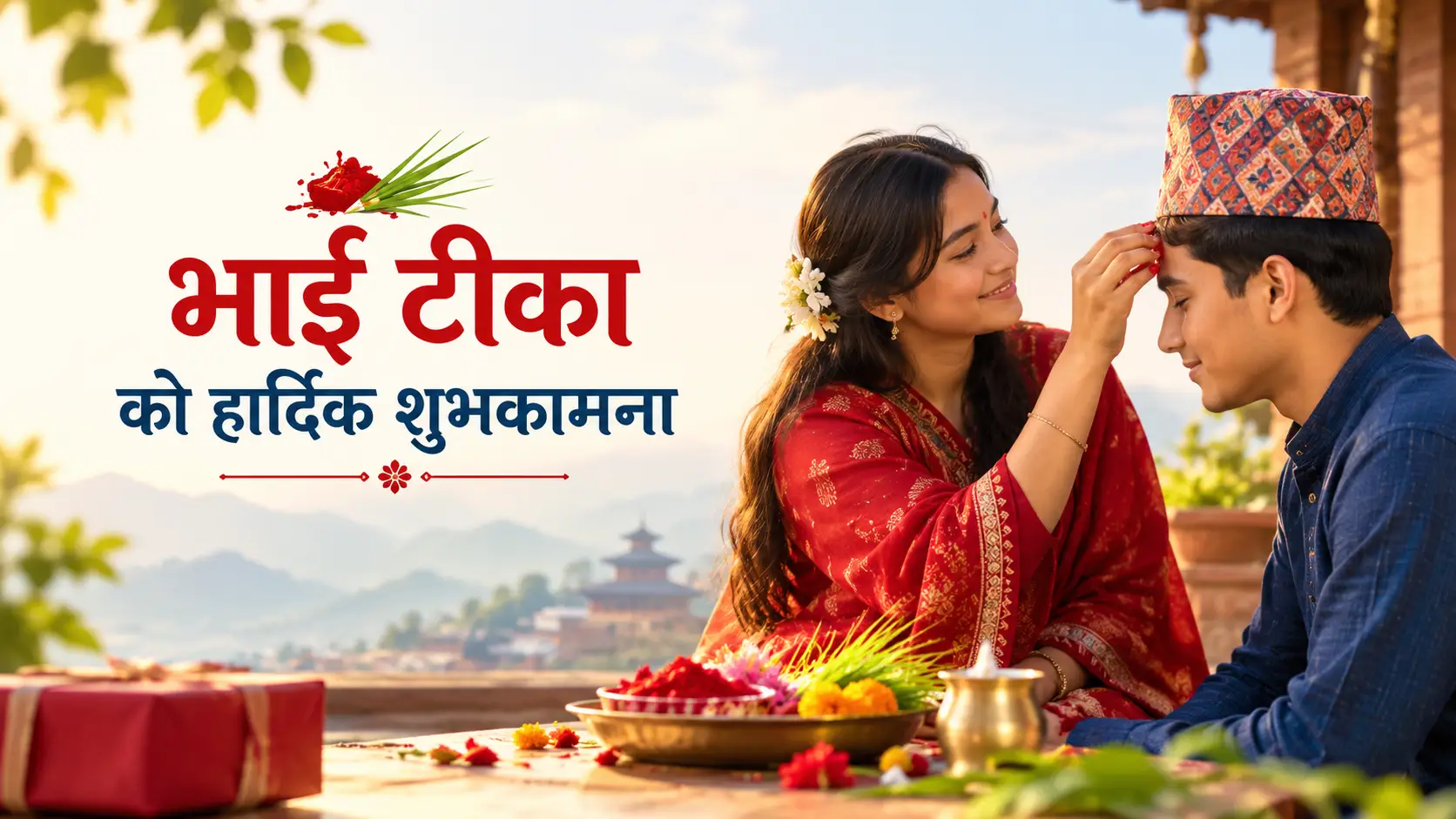
Bhai Tika Wishes in Nepali 2083: 75+ भाइटीकाको शुभकामना for Brother & Sister
Quick answer
Bhai Tika 2083 falls on Wednesday, 11 November 2026 (Kartik 25). The simplest wish for any brother or sister is भाइटीकाको हार्दिक शुभकामना (Bhai Tikako hardik shubhakamana). Below are 77 original Bhai Tika wishes sorted by who you’re sending them to — elder brother, younger brother, didi, bahini, a sibling abroad — each with romanized text and an English meaning.
Bhai Tika is the fifth and last day of Tihar, observed on Kartik Shukla Dwitiya (also called Yama Dwitiya). The date below is from Hamro Patro’s Kartik 25, 2083 page, which follows the Nepal Panchang Nirnayak Samiti calendar.
Bhai Tika 2083
Wednesday, 11 November 2026 · Kartik 25, 2083 BS
Tithi
Kartik Shukla Dwitiya (until 4:06 PM)
Shubha sait (auspicious time)
Not announced yet — the committee usually publishes it 1–3 weeks before Tihar. For reference: 11:39 AM in 2082, 11:37 AM in 2081.
Same day
Kija Puja (Newar community) · Falgunanda Jayanti
Rest of Tihar 2083
Kag Tihar 7 Nov · Kukur Tihar + Laxmi Puja 8 Nov · Gai Puja 9 Nov · Govardhan / Mha Puja 10 Nov
📅
10 or 11 November? A few calendars list Bhai Tika 2026 on 10 November. Nepal’s official calendar puts it on Wednesday, 11 November (Kartik 25) — send your wishes that morning. In past years the committee has also said tika can be given throughout the day, not only at the sait.
Basics
How to say “Happy Bhai Tika” in Nepali
In Nepali it’s written as one word, भाइटीका — with a short इ in भाइ. “भाई टीका” with a long ई is the Hindi spelling and looks off to Nepali readers.
भाइटीकाको शुभकामना
Bhai Tikako shubhakamana
Anyone
शुभ भाइटीका
Shubha Bhai Tika
Status, stories, SMS
भाइटीकाको हार्दिक मंगलमय शुभकामना
Bhai Tikako hardik mangalmaya shubhakamana
Elders, office, cards
दीर्घायु होऊ
Dirghayu hou
Sister’s blessing while giving tika
किजा पूजाको शुभकामना
Kija Pujako shubhakamana
Newar friends
यमद्वितीयाको शुभकामना
Yamadwitiyako shubhakamana
Traditional tone
For status & SMS
Short Bhai Tika wishes in Nepali
One or two lines each — easy to send to every sibling and cousin in the group chat.
01. शुभ भाइटीका! दाजुभाइ-दिदीबहिनीको माया सधैं यस्तै रहोस्।
Bhai, the makhamali I sent by parcel may arrive wilted, but my love will arrive fresh.
42. दाइ, यो वर्ष पनि घर आउन पाउनुभएन, तर आमाले टीकाको थालमा तपाईंको भाग छुट्याएर राख्नुभएको छ।
Dai, yo barsha pani ghar aauna paunubhaena, tara aamale tikako thalma tapaiko bhag chhutyaera rakhnubhaeko chha.
Dai, you couldn’t come home again this year, but Mom has set aside your share on the tika plate.
43. स्क्रिनमा तिम्रो निधार छोएर टीका लगाएँ — त्यो टीका तिमीसम्म पुगिसकेको छ। शुभ भाइटीका भाइ!
Screenma timro nidhar chhoera tika lagae — tyo tika timisamma pugisakeko chha. Shubha Bhai Tika bhai!
I touched your forehead on the screen and gave you tika — it has already reached you. Happy Bhai Tika, bhai!
44. विदेशमा भाइटीका मनाउने सबै दाजुभाइ-दिदीबहिनीलाई — घर टाढा भए पनि माया सधैं नजिकै रहोस्।
Bideshma Bhai Tika manaune sabai dajubhai-didibahinilai — ghar tadha bhae pani maya sadhai najikai rahos.
To every brother and sister celebrating Bhai Tika abroad — home may be far, but may love always stay close.
📱
Doing tika on a video call? Send your wish just before the call so it’s waiting when they pick up — and if they’re in another time zone, check the sait against their local time, not Nepal’s.
Longer messages
Heartfelt Bhai Tika wishes
For a card, a long caption or the message you’ll actually mean.
45. जन्मले हामीलाई दाजुभाइ-दिदीबहिनी बनायो, भाइटीकाले हरेक वर्ष त्यो नातालाई अझ बलियो बनाउँछ। शुभ भाइटीका!
Heartfelt Kija Puja wishes! May the love between siblings bloom all through Nepal Sambat 1147.
🛕
In Kathmandu, the Balgopaleshwar temple in the middle of Ranipokhari opens on Bhai Tika for people who have no brother or sister to exchange tika with.
Instagram & Facebook
Bhai Tika captions and status in Nepali
Short enough for a photo caption or a WhatsApp status.
#62
सप्तरंगी नाता 🌈
A seven-colour bond
#63
माइतीको आँगन, सधैंको माया
The maiti courtyard, a forever love
#64
टीका निधारमा, माया मुटुमा
Tika on the forehead, love in the heart
#65
दिदीको आशीर्वाद = मेरो सुरक्षा कवच
Sister’s blessing = my armour
#66
एउटा थाल, सात रंग, अनगिन्ती माया
One plate, seven colours, countless love
#67
आजको मुड: सेलरोटी + दक्षिणा 😄
Today’s mood: sel roti + dakshina
#68
मखमलीझैँ कहिल्यै नओइलाउने नाता
A bond that never wilts, like makhamali
#69
शुभ भाइटीका २०८३ ✨
Happy Bhai Tika 2083
For mixed groups
Bhai Tika wishes in English
For friends abroad, office groups or siblings who prefer English.
#70 Happy Bhai Tika! May the seven colours on your forehead bring seven kinds of happiness into your life.
#71 To my brother: as long as the makhamali stays fresh, may your life stay long and bright. Happy Bhai Tika!
#72 Didi, thank you for every tika, every prayer and every time you had my back. Happy Bhai Tika!
#73 Miles apart, but the tika still reaches you. Happy Bhai Tika to my brother abroad.
#74 Little sister, I’ve got your back today and every day after. Happy Bhai Tika!
#75 Bhai Tika: the one day a year we stop fighting long enough to bless each other.
#76 Wishing all brothers and sisters a joyful Bhai Tika and a bright Tihar 2083.
#77 Same courtyard, different roads, one bond. Happy Bhai Tika!
Replies
How to reply to a Bhai Tika wish
Someone wished you first? Here’s what to send back.
Reply in Nepali
Romanized
Use for
धन्यवाद! तपाईंलाई पनि भाइटीकाको हार्दिक शुभकामना।
Dhanyabad! Tapailai pani Bhai Tikako hardik shubhakamana.
Elders, colleagues
तिमीलाई पनि शुभ भाइटीका!
Timilai pani Shubha Bhai Tika!
Friends, younger siblings
ढोग दिदी, आशीर्वाद पाऊँ।
Dhog didi, ashirwad pau.
To an elder sister
माया पाएँ भाइ, सधैं खुसी रहू।
Maya pae bhai, sadhai khusi rahu.
To a younger brother
तपाईंको परिवारलाई पनि शुभकामना!
Tapaiko pariwarlai pani shubhakamana!
Neighbours, family friends
Know the day
What the Bhai Tika rituals mean
Knowing what each part of the ceremony stands for makes a wish sound like you mean it. Many of the wishes above refer to these.
Saptarangi tika सप्तरंगी टीका
A vertical tika in seven colours (some families use five — pancharangi) applied by the sister on her brother’s forehead.
Makhamali & dubo garland मखमली र दुबोको माला
Makhamali (globe amaranth) barely wilts and dubo grass stays green — the sister asks that her brother live as long as they last.
Line of oil तेलको धारो
The sister draws a ring of mustard oil around her brother as a protective boundary Yamaraj cannot cross.
Walnut ओखर
Cracked at the doorstep — breaking anything harmful on the way to her brother.
Sagun & sel roti सगुन र सेलरोटी
Sweets, dry fruits, nuts and sel roti given to the brother after the tika.
Tika and dakshina in return टीका र दक्षिणा
The brother puts tika on his sister and gives her dakshina or a gift with his blessing.
The day is also called Yama Dwitiya: the story goes that Yamaraj visited his sister Yamuna on this day, and she won the promise of a long life for brothers whose sisters bless them.
Need wishes for the other four days — Kag Tihar to Govardhan Puja?
Bhai Tika 2083 is on Wednesday, 11 November 2026 (Kartik 25, 2083 BS), on Kartik Shukla Dwitiya, according to Hamro Patro’s calendar based on the Nepal Panchang Nirnayak Samiti. Kija Puja falls on the same day.
What is the Bhai Tika sait for 2083?
The Nepal Panchang Nirnayak Bikas Samiti had not announced the 2083 sait as of 8 October 2026. It usually announces it one to three weeks before Tihar. The sait was 11:39 AM in 2082 and 11:37 AM in 2081, and the committee has said in past years that tika can be given throughout the day.
How do you write Happy Bhai Tika in Nepali?
Write शुभ भाइटीका (Shubha Bhai Tika) or भाइटीकाको शुभकामना (Bhai Tikako shubhakamana). For a more formal greeting, use भाइटीकाको हार्दिक मंगलमय शुभकामना. Nepali spells it भाइटीका with a short इ; भाई टीका is the Hindi spelling.
What should I write to a brother or sister abroad on Bhai Tika?
Mention the distance and the tika together, for example: स्क्रिनमा तिम्रो निधार छोएर टीका लगाएँ — त्यो टीका तिमीसम्म पुगिसकेको छ। (I touched your forehead on the screen and gave you tika — it has already reached you.)
What does a brother say to his sister on Bhai Tika?
Brothers usually thank their sister and promise to stand by her, for example: बहिनी, संसार जता फर्किए पनि तिम्रो दाइ सधैं तिम्रै पक्षमा उभिनेछ। For an elder sister: दिदी, मेरो हरेक सफलतामा तपाईंको प्रार्थना लुकेको छ। He also puts tika on her and gives dakshina or a gift.
What if I don’t have a brother or sister?
Many people exchange tika with cousins, mit siblings or friends they treat as siblings. In Kathmandu, the Balgopaleshwar temple in Ranipokhari opens on Bhai Tika for people without a brother or sister.
Is Bhai Tika the same as Bhai Dooj?
Both fall on Kartik Shukla Dwitiya and celebrate brothers and sisters, but Nepal’s Bhai Tika has its own rituals: the seven-colour tika, makhamali and dubo garlands, the ring of oil and the cracked walnut. Because calendars calculate the tithi differently, the dates in Nepal and India can differ by a day.
From our home to yours भाइटीकाको हार्दिक मंगलमय शुभकामना!
ChatGPT Price in Nepal (2026): Go, Plus & Pro Cost in NPR
By Wilson Shrestha · Last updated: 8 October 2026 · Prices checked against OpenAI’s official pricing page and Nepali reseller listings
Search “ChatGPT price in Nepal” and you get two kinds of pages: resellers selling an account, and news posts from 2025 still quoting launch-day prices. Neither tells you what you will actually pay, in rupees, this month.
This guide does. You’ll find every ChatGPT plan converted to Nepali rupees, the extra costs most articles skip (tax, bank conversion and the yearly dollar card cap), how official prices compare with eSewa and Khalti reseller deals, and a plain recommendation for students, freelancers and businesses.
Quick answer: ChatGPT price in Nepal (October 2026)
Free: Rs 0
Go: about Rs 770–1,230/month (OpenAI localizes Go, so check your upgrade screen)
Plus: $20 = about Rs 3,070/month
Pro: from $100 = about Rs 15,350/month
Resellers (eSewa/Khalti): about Rs 999 shared, Rs 3,300–4,200 private
Rupee figures use Rs 153.50 per US dollar, close to Nepal Rastra Bank’s recent selling rate. Check the NRB forex page for today’s rate.
All ChatGPT Plans and Their Price in Nepali Rupees
Free
Rs 0
Unlimited everyday text chats; small allowances for uploads, images and deep research.
Go
Rs 770–1,230
Higher limits than Free, longer memory. May show ads. Budget pick for students.
Plus
Rs 3,070
Advanced reasoning models, Projects, custom GPTs, Sites, Codex. Best value for work.
Pro
Rs 15,350+
Highest limits and the top Pro reasoning model in chat. For heavy daily users.
Plan
Official price (USD/month)
Approx. price in Nepal (NPR/month)
Best for
Free
$0
Rs 0
Casual questions, trying ChatGPT
Go
$8 in the US; localized lower in Nepal (about $5 at launch)
Before tax and bank charges, at Rs 153.50 per US dollar
Go (localized)~Rs 768
Go ($8)~Rs 1,228
Plus~Rs 3,070
Business (yearly, per user)~Rs 3,070
Pro (lower tier)~Rs 15,350
Pro (higher tier)~Rs 30,700
A note on Pro: OpenAI added a $100 tier in April 2026 alongside the original $200 plan, and its pricing page now describes Pro as a choice of three usage tiers. The $100 and $200 levels are the ones with confirmed prices; check the upgrade screen for the third.
What Each Plan Actually Gets You
OpenAI changes model names every few months, so instead of a list that will be outdated by Tihar, here is what separates the plans in practice.
ChatGPT Free (Rs 0)
Free now gives unlimited everyday text chats, plus small allowances for file uploads, image creation, voice, deep research and Codex. For asking questions, translating or drafting a short email, it is genuinely enough.
ChatGPT Go (about Rs 770–1,230)
Go is the budget paid plan: more messages with tools, more uploads, more image generation, more voice chats and longer memory than Free. Nepal was one of 16 Asian countries added to Go in October 2025, before OpenAI opened it worldwide in January 2026 at $8 in the US, with localized pricing in some markets.
The catch: Go may include ads, and it does not unlock the advanced reasoning models, custom GPTs, Sites or full deep research. Think of it as “Free with higher limits”, not “cheap Plus”.
ChatGPT Plus (about Rs 3,070)
Plus is where ChatGPT becomes a work tool. It removes ads and adds the advanced reasoning models (including GPT-6 Astra inside ChatGPT Work and Codex), expanded deep research, Projects, scheduled tasks, custom GPTs, ChatGPT Sites, interactive charts, and Office and Google Sheets extensions. Limits still apply, especially on the newest flagship model, but most people never hit them on everyday work.
ChatGPT Pro (from about Rs 15,350)
Pro raises every limit, puts the top Pro reasoning model directly in the chat window, and allows much longer Codex and Work sessions. Unless you code or research with ChatGPT for several hours a day and keep hitting Plus limits, you don’t need it.
ChatGPT Business (about Rs 3,070–3,840 per user)
Business adds a shared workspace, admin controls, company knowledge connectors, and your data is not used for training by default. It needs at least two seats, so a two-person agency billed yearly pays roughly Rs 6,140 a month.
Feature
Free
Go
Plus
Pro
Ads
Possible
Possible
No
No
Advanced reasoning models
No
No
Yes
Expanded
Deep research
Limited
Limited
Yes
Maximum
Custom GPTs and Sites
No
No
Yes
Yes
Codex (coding agent)
Limited
Limited
Yes
Expanded
Image generation
Limited
More
Yes, with Thinking
Unlimited
The Real Cost: What You Pay on Top of the Dollar Price
The sticker price is not the whole bill. Three things can push it up when you pay from Nepal.
1. Exchange rate and bank margin
Your card is charged in dollars, and your bank converts it at its own selling rate, which is usually slightly worse than the NRB reference rate. Some banks also add a small foreign transaction fee. Ask your bank for its exact charges before subscribing.
2. Tax on foreign digital services
Nepal applies 13% VAT to digital services sold to Nepali consumers, and foreign providers above a threshold also owe a separate 2% Digital Service Tax. Whether OpenAI adds VAT at checkout for your account can vary, so look at the final amount on the payment screen. If 13% is added:
Plan
Before tax
With 13% VAT
Go ($5 localized)
Rs 768
Rs 867
Go ($8)
Rs 1,228
Rs 1,388
Plus ($20)
Rs 3,070
Rs 3,469
Pro ($100)
Rs 15,350
Rs 17,346
3. The $500 yearly dollar card limit
Most people in Nepal pay foreign subscriptions with a prepaid dollar card, which NRB caps at $500 per year from the date of activation. That cap decides which ChatGPT plan you can realistically pay for yourself:
How much of your $500 yearly dollar card limit each plan uses
Annual cost compared with the $500 prepaid card cap
Go for 12 months ($60–96)up to 19%
Plus for 12 months ($240)48%
Plus + 13% VAT ($271)54%
Pro for 12 months ($1,200+)Not possible (240%+)
If you also pay for hosting, domains, Canva or SEO tools on the same card, plan your annual budget first. Our guide to the dollar card in Nepal explains which banks issue it, the documents you need, and how the limit works.
Official Subscription vs Nepali Resellers
Because many people don’t have an international card, a whole market of resellers sells ChatGPT access for eSewa, Khalti or QR payment. Here’s how typical October 2026 reseller prices compare with paying OpenAI directly (Plus at Rs 3,070):
Option
Typical price
vs official Plus
Privacy
Official Plus (your own card)
Rs 3,070 + any tax/bank fee
Baseline
Fully private
Reseller shared Plus login
Rs 900–999
About one-third the price
None: chats, memory and files visible to others
Reseller new private account
Around Rs 3,300
Slightly more expensive
Private, but the seller created the account
Reseller renewal on your own account
Around Rs 4,200
About 35–40% more expensive
Fully private
What most reseller pages won’t spell out
Only the shared plan is actually cheaper. Private reseller plans cost the same as or more than subscribing directly. You’re paying for local payment convenience, not a discount.
A private Plus account far below Rs 3,000 deserves questions. Ask how it is billed. Accounts paid through regional tricks, promo abuse or reused cards can be cancelled by OpenAI without warning, and you lose your chats.
Is a shared ChatGPT account safe?
It works, and for Rs 999 you get the Plus features. But everyone on the login can see your conversations, files and projects. ChatGPT’s memory also mixes everyone’s context, so answers can reference things you never said. The usage allowance is shared too, so heavy users on the same login can lock you out of the best models for hours.
Treat a shared account like a cyber café computer: fine for studying, general questions and practice. Never paste client work, passwords, bank details, citizenship numbers or anything private.
How to Buy ChatGPT Plus or Go from Nepal
Method 1: Pay OpenAI directly (recommended if you have a card)
STEP 1
Get a card
A prepaid dollar card or an international-enabled credit/debit card from your bank.
Click your profile, choose Upgrade plan, then pick Go, Plus or Pro.
STEP 4
Check total
Confirm the final amount, including any tax, before paying.
Tip: subscribing in the iPhone app bills through Apple, and Android may use Google Play billing; those prices can differ from the web. Compare before you pay, and turn on card alerts so you notice each monthly renewal.
Method 2: Through a Nepali reseller (eSewa, Khalti, QR)
Choose a reseller with a registered business, real reviews and a clear refund policy.
Prefer “renewal on your own account” if you already have chat history you care about.
Pay via eSewa, Khalti, mobile banking or QR, and keep the receipt.
Once active, change your password if you shared it, and turn on two-factor authentication.
Which ChatGPT Plan Should You Choose?
You are…
Choose
Monthly cost
A student doing homework help and revision
Free, then Go if you hit limits
Rs 0–1,230
A blogger or content writer
Plus
~Rs 3,070
A freelancer or developer using Codex
Plus (Pro only if you keep hitting limits)
~Rs 3,070
A small agency or company team
Business (2+ seats)
~Rs 3,070–3,840 per user
On a tight budget with nothing private to protect
Reseller shared Plus
~Rs 999
My honest default: start with Free for a week. If you keep running into limits on things that matter to your work, go straight to Plus. Go is good value for students, but most working professionals end up upgrading from it within a month.
For bloggers and SEO work
ChatGPT is great for outlines, drafts and brainstorming keyword angles, but it doesn’t give you real search volume or backlink data. If you’re budgeting for content tools, see our breakdown of Ahrefs vs Semrush vs Ubersuggest to decide where the rest of your dollar card limit should go.
For businesses thinking of using ChatGPT Sites
Plus includes ChatGPT Sites, which publishes a simple page from a chat. It’s handy for a quick landing page or portfolio, but it is not a replacement for a proper business website with your own domain, SEO setup and Nepali payment integration. For that, check our guide to website design cost in Nepal.
Is ChatGPT Plus Worth It in Nepal?
Rs 3,070 a month is a real expense here, roughly the cost of a good home internet plan. It pays for itself if ChatGPT saves you more than two or three hours of paid work a month, which is easy for freelancers, developers, marketers and writers. It’s harder to justify if you mainly chat casually, because Free has become generous for everyday text.
Whatever you choose, ChatGPT can still state wrong facts confidently. Check numbers, citations and anything legal or medical before relying on it. That applies on every plan, including Pro.
Frequently Asked Questions
What is the price of ChatGPT Plus in Nepal?
ChatGPT Plus costs $20 a month, about Rs 3,070 at Rs 153.50 per dollar. With 13% VAT, if applied, it is about Rs 3,470. Resellers charge around Rs 999 for a shared login and Rs 3,300 to 4,200 for a private one.
How much is ChatGPT Go in Nepal?
Go launched in Nepal in October 2025 at a localized price of about $5 a month. OpenAI’s US price is now $8 and Go is still localized in some markets, so expect roughly Rs 770 to 1,230. Your exact price appears on the upgrade screen.
Is ChatGPT free in Nepal?
Yes. The Free plan works in Nepal and includes unlimited everyday text chats, with limited uploads, images, voice and deep research.
Can I pay for ChatGPT with eSewa or Khalti?
Not directly. OpenAI accepts major international cards. To pay with eSewa or Khalti you need a Nepali reseller, or you can load a prepaid dollar card from your bank and use that.
Can I pay for ChatGPT with a dollar card in Nepal?
Yes. A prepaid dollar card from a Nepali bank works for ChatGPT, but it is capped at $500 per year, which covers a full year of Plus but not Pro.
Does ChatGPT charge VAT in Nepal?
Nepal applies 13% VAT to foreign digital services sold to consumers. Whether it shows on your ChatGPT invoice depends on OpenAI’s checkout for your account, so check the total before paying.
Is buying a shared ChatGPT account safe?
Shared logins go against OpenAI’s terms, which treat Plus as an individual plan, so the account can be suspended. It also offers no privacy. Use one only for non-sensitive tasks and accept the risk of losing access.
Is ChatGPT Pro worth it in Nepal?
For almost everyone, no. At about Rs 15,000 to 30,000 a month it only makes sense for developers or researchers who regularly exhaust Plus limits and earn enough from that work to cover the cost.
Final Word
The cheapest way to use ChatGPT in Nepal is the Free plan. The best value for most working people is Plus at about Rs 3,070 a month, paid with your own card so your data stays private. Shared reseller accounts are the only option that’s truly cheaper than official pricing, and they come with real privacy trade-offs.
Prices change often. Before you subscribe, check OpenAI’s official ChatGPT pricing page and today’s NRB exchange rate.
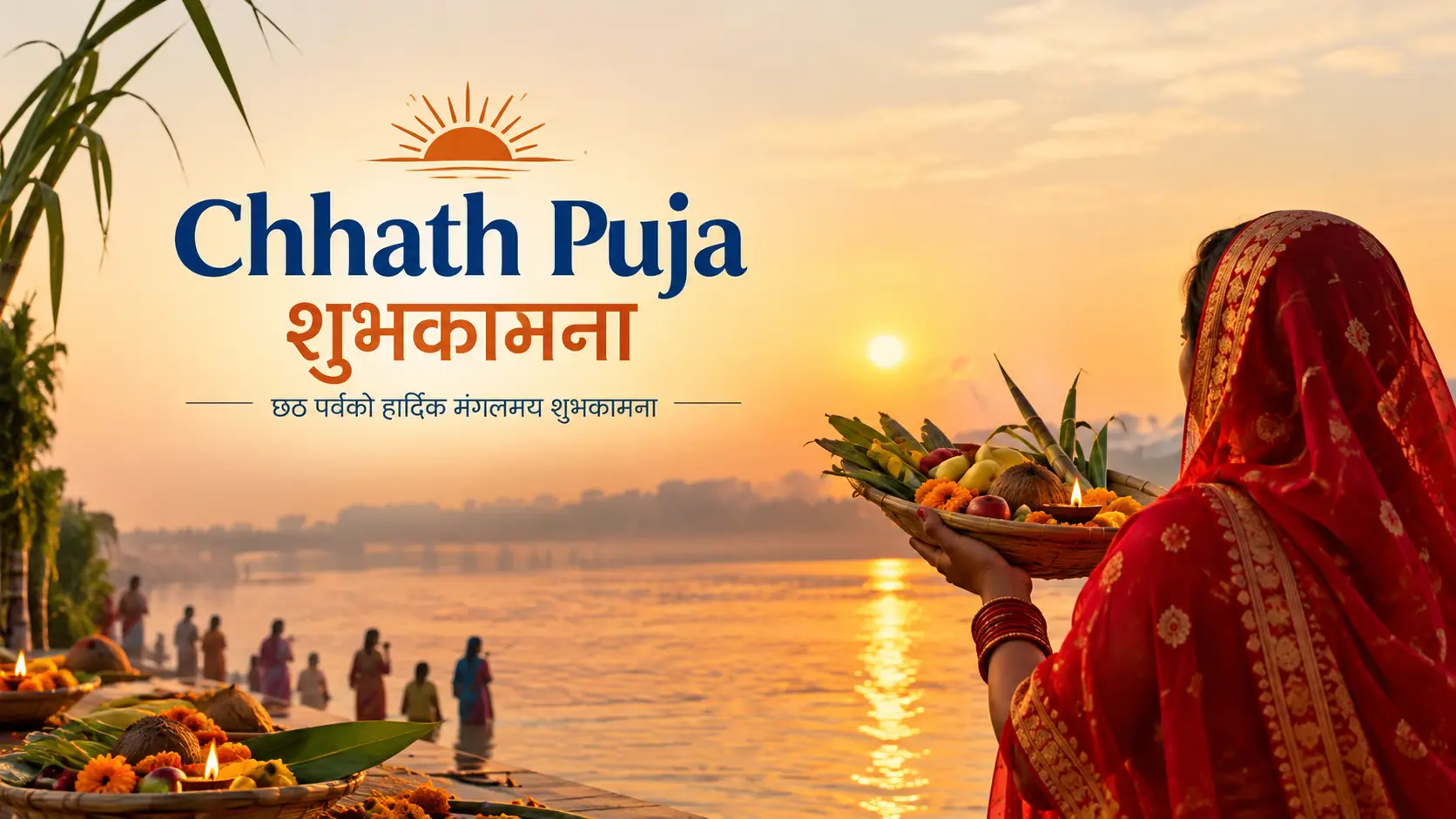
Chhath Puja Wishes in Nepali 2083: 75+ छठ शुभकामना (Nepali & Maithili)
Looking for Chhath Puja wishes in Nepali to send to your family, friends, or the vrati (व्रतालु) in your home? This page has 77 original छठ पर्वको शुभकामना — short status lines, a wish for each of the four days from Nahay Khay to Usha Arghya, formal messages for office and business pages, and a full section of Chhath wishes in Maithili. Long-press any wish to copy it into Messenger, Viber, WhatsApp or your Facebook status.
Chhath 2083 at a glance
Chhath runs from Kartik 27 to Kartik 30, 2083 (13–16 November 2026). The main day — Sandhya Arghya to the setting sun — is Kartik 29, Sunday (15 November 2026), a public holiday in Nepal.
Chhath is observed from Kartik Shukla Chaturthi to Saptami. Its name comes from षष्ठी — the sixth lunar day after the Kartik new moon, which falls about a week after Laxmi Puja. Here are this year’s dates according to the 2083 Nepali calendar:
DAY 1
नहाय-खाय
Nahay Khay
कात्तिक २७
13 Nov · Fri
Holy bath, one sattvik meal
DAY 2
खरना
Kharna
कात्तिक २८
14 Nov · Sat
Day fast, rasiya-kheer at dusk
DAY 3 · MAIN DAY
सन्ध्या अर्घ
Sandhya Arghya
कात्तिक २९
15 Nov · Sun
Offering to the setting sun
DAY 4
उषा अर्घ
Usha Arghya
कात्तिक ३०
16 Nov · Mon
Offering to the rising sun, paran
Day
Ritual
Nepali date (BS)
English date (AD)
1
नहाय-खाय (Nahay Khay)
कात्तिक २७, शुक्रबार
13 Nov 2026, Friday
2
खरना (Kharna / Lohanda)
कात्तिक २८, शनिबार
14 Nov 2026, Saturday
3
सन्ध्या अर्घ (Sandhya Arghya) — main day
कात्तिक २९, आइतबार
15 Nov 2026, Sunday
4
उषा अर्घ / पारण (Usha Arghya)
कात्तिक ३०, सोमबार
16 Nov 2026, Monday
The Government of Nepal’s 2083 holiday list marks Kartik 29 (Sunday) as the Chhath public holiday. Sunset in Kathmandu that evening is around 5:10 PM; check your local panchang for exact arghya times in the Terai.
Short Chhath Wishes in Nepali for Status (छोटो छठ शुभकामना)
Perfect for Facebook, Instagram or TikTok captions and quick Viber messages.
Day-by-Day Chhath Wishes (चार दिनका लागि छुट्टाछुट्टै शुभकामना)
Chhath lasts four days, and each day has its own mood. Sending the right wish on the right day shows you actually know the festival — something no other wish list we checked offers.
Day 1 — Nahay Khay Wishes (नहाय-खायको शुभकामना)
25. नहाय-खायसँगै सुरु भएको छठ महापर्व तपाईंका लागि शुद्धता र शान्ति लिएर आओस्। शुभ नहाय-खाय!
26. पवित्र स्नान र सात्विक भोजनसँगै सुरु भएको यो व्रत सफल होस्। छठी मैयाले सबै व्रतालुलाई शक्ति देऊन्।
27. आजदेखि सुरु भएको चार दिने महापर्वका लागि सबै व्रतालुलाई शुभकामना। जय छठी मैया!
Day 2 — Kharna Wishes (खरनाको शुभकामना)
28. खरनाको रसियाखीर र रोटीजस्तै तपाईंको जीवन सधैं मीठो होस्। खरनाको शुभकामना!
29. खरनापछि सुरु हुने निर्जला व्रत पूरा गर्न छठी मैयाले सबै व्रतालुलाई धैर्य र बल देऊन्।
30. खरनाको साँझ, घरभरि प्रसादको सुगन्ध — तपाईंको परिवारमा सधैं यस्तै मिठास रहोस्।
Day 3 — Sandhya Arghya Wishes (सन्ध्या अर्घको शुभकामना)
31. आज साँझ अस्ताउँदो सूर्यलाई दिइने अर्घसँगै तपाईंका सबै चिन्ता पनि बिदा होऊन्। छठ पर्वको हार्दिक शुभकामना।
32. घाटमा सूप उचालेर अर्घ दिँदा गरिएका सबै प्रार्थना छठी मैयाले सुनून्। जय छठी मैया!
33. अस्ताउँदो सूर्यलाई पनि सम्मान गर्न सिकाउने छठ पर्वको मुख्य दिनको मंगलमय शुभकामना।
53. महापर्व छठको उपलक्ष्यमा देश तथा विदेशमा रहनुहुने सम्पूर्ण नेपाली दाजुभाइ दिदीबहिनीमा सुख, शान्ति र समृद्धिको शुभकामना व्यक्त गर्दछौं।
54. आदरणीय सर/म्याडम, छठ पर्वको हार्दिक शुभकामना। सूर्यदेवले तपाईं र तपाईंको परिवारलाई आरोग्य र सफलता प्रदान गरून्।
55. सबै सहकर्मी साथीहरूलाई छठको शुभकामना। यो पर्वले हाम्रो टिममा नयाँ ऊर्जा र एकता ल्याओस्।
56.सूचना: छठ पर्वको उपलक्ष्यमा कात्तिक २९ गते आइतबार हाम्रो कार्यालय बन्द रहनेछ। सम्पूर्ण ग्राहक तथा शुभचिन्तकमा छठको हार्दिक शुभकामना। — [संस्थाको नाम]
Tihar and Chhath Wishes in Nepali (तिहार र छठको शुभकामना)
60. भाइटीकाको माया र छठको आस्थाले परिवारलाई अझ नजिक बनाओस्। तिहार र छठको शुभकामना।
61. चाडपर्वको यो लहरले तपाईंको वर्षभरिको मेहनत सफल बनाओस्। तिहार तथा छठको मंगलमय शुभकामना।
Chhath Wishes in Maithili (मैथिलीमा छठिक शुभकामना)
Chhath has its roots in Mithila, where it is lovingly called छठि पाबनि. If the person you’re wishing speaks Maithili, a greeting in their mother tongue means a lot more than a translated one.
62. छठि महापर्वक हार्दिक शुभकामना! छठि मैया अहाँक परिवारकेँ सुख, समृद्धि आ आरोग्य प्रदान करथि।
63. सूर्य देवक कृपा अहाँ पर सदिखन बनल रहय। छठि पाबनिक मंगलमय शुभकामना।
64. जय छठि मैया! अहाँक जीवनमे सदिखन इजोत आ आनन्द रहय।
72. Chhath parva ko hardik mangalmaya shubhakamana!
73. Chhathi Maiya ko aashirwad le tapainko ghar ma sadhai sukh, shanti ra samriddhi rahos. Shubha Chhath!
74. Astaundo surya lai argha, udaundo surya lai pranam — Chhath ko shubhakamana.
75. Jay Chhathi Maiya! Sabai ko manokamana pura hos.
76. Thekuwa jastai mitho hos jiwan. Happy Chhath!
77. Suryadev ko kripa le tapainko jiwan sadhai ujyalo hos. Chhath Puja ko shubhakamana.
Quick guide: which wish fits whom?
Sending to
Tone / pronoun
Section to use
Elders, parents, vrati mother
तपाईं, formal
Heartfelt / Family
Spouse
तिमी or तपाईं (your habit)
Family
Close friends
तिमी, playful
Friends / Short status
Boss, clients, customers
तपाईं, formal, no emoji
Office & business
Maithili-speaking friends & relatives
अहाँ
Maithili
What Does “Chhath” Mean? Is There a Full Form?
Chhath (छठ) is not an abbreviation, so it has no full form. The word comes from षष्ठी (Shashthi), meaning “sixth” — the main rituals fall on the sixth lunar day of the bright half of Kartik. That is why the festival is also called Surya Shashthi. Any letter-by-letter “full form” you see on social media is made up for fun, not traditional.
A few terms you’ll see in Chhath wishes:
छठी मैया (Chhathi Maiya)
the mother goddess worshipped during Chhath, believed to protect children and families.
अर्घ (Arghya)
the offering of water, milk and prasad to the sun — first at sunset, then at sunrise.
ठेकुवा (Thekuwa)
the signature Chhath prasad made from wheat flour, jaggery and ghee.
सूप / डाला (Soop, Dala)
bamboo trays and baskets used to carry fruits, sugarcane and prasad to the ghat.
चैते छठ (Chaite Chhath)
a smaller second Chhath observed in Chaitra (March–April).
Chhath is most strongly celebrated in Madhesh and the Mithila region (Janakpur, Birgunj, Rajbiraj), but in Kathmandu large crowds now gather at Kamalpokhari, Gaurighat, Thapathali and Ranipokhari. Nepal has observed Chhath as a public holiday since 2065 BS.
Want to Share Your Wish as an Image?
Text wishes are quick, but a designed card gets far more attention on Facebook and in family groups. Pick a wish from above and pair it with one of our Chhath Puja poster and banner designs — they’re ready to download and share. Celebrating Tihar too? Grab a Tihar greeting card design.
Tip: use तपाईं for elders, clients and colleagues, and तिमी only for close friends or younger family. Typing on a computer? Here’s how to type Nepali on a laptop.
Frequently Asked Questions
When is Chhath in 2083 (2026)?
Chhath 2083 runs from Kartik 27 to Kartik 30 (13–16 November 2026). The main day, Sandhya Arghya, is Kartik 29, Sunday (15 November 2026).
Is Chhath a public holiday in Nepal?
Yes. The Government of Nepal’s 2083 holiday list includes Chhath on Kartik 29 (Sunday, 15 November 2026).
What is the full form of Chhath?
There is no full form. “Chhath” comes from षष्ठी (Shashthi), the sixth lunar day, when the main worship of the sun takes place.
How do you say “Happy Chhath” in Nepali and Maithili?
In Nepali: छठ पर्वको हार्दिक शुभकामना or simply शुभ छठ. In Maithili: छठि महापर्वक हार्दिक शुभकामना or छठि पाबनिक शुभकामना.
Why is the setting sun worshipped first in Chhath?
Chhath is one of the few festivals where devotees offer arghya to the setting sun before the rising sun. It is seen as gratitude for the whole cycle of life — honouring the sun at the end of the day and welcoming it again at dawn.
When should I send Chhath wishes?
Most people send wishes on Sandhya Arghya day (Kartik 29), the main day. Day-specific wishes for Nahay Khay and Kharna are a thoughtful extra for families observing the vrat.
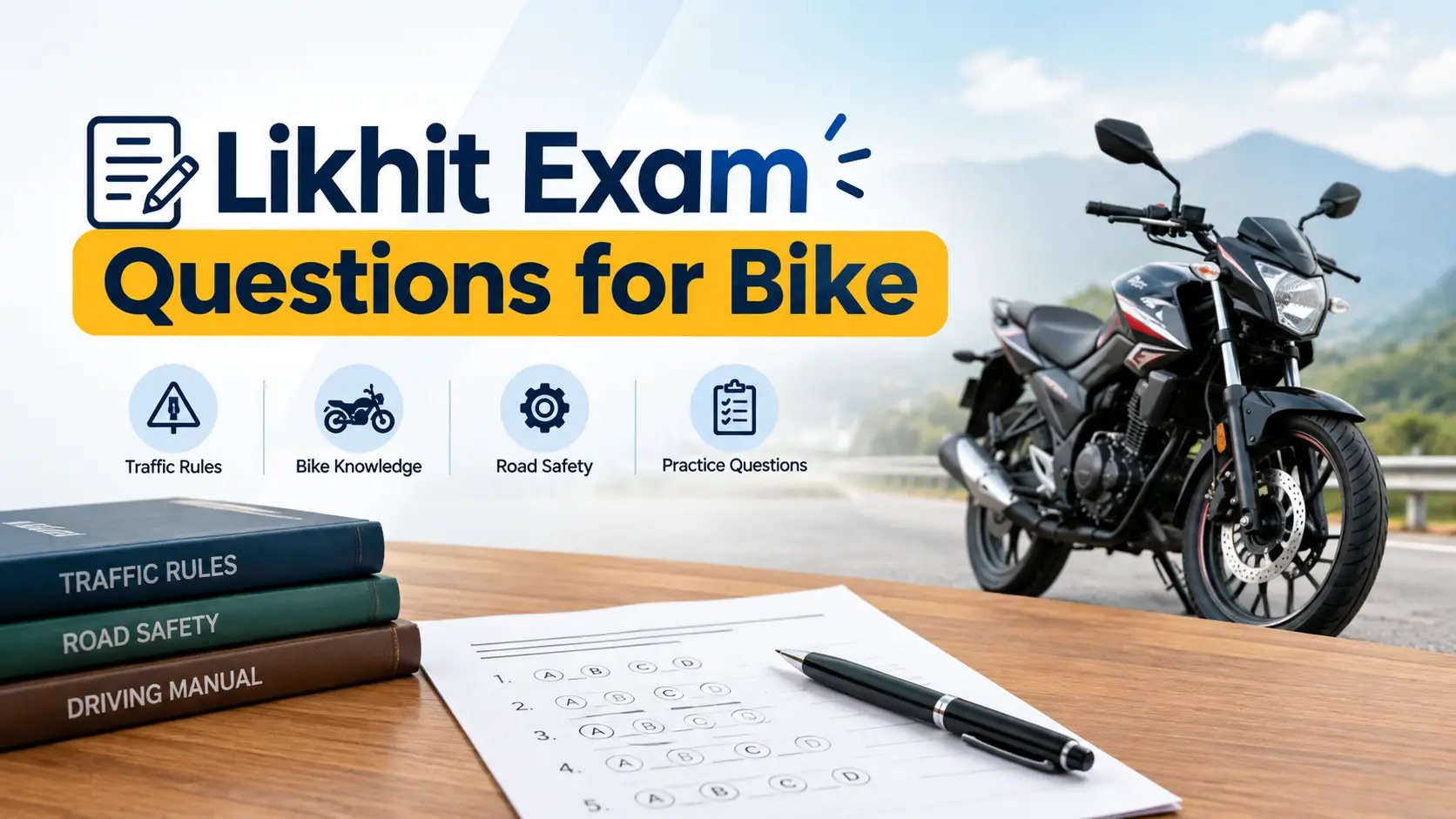
Likhit Exam Questions for Bike 2083: 71 Real DoTM Questions with Answers
If you are getting a licence for a motorcycle or scooter, your likhit (लिखित परीक्षा) questions come from one place: the Department of Transport Management’s Category A and K question bank. DoTM published the revised 2082/83 version on 1 Asoj 2083 (17 Sep 2026). It has exactly 500 questions, and every exam paper is built from it.
Below are 71 of those questions with answers and a one-line reason, grouped in the same six sections as the real paper. You will also find the exact exam format from DoTM’s own instructions, which sections give the most marks per hour of study, and what to do if you fail.
Quick answer: bike likhit exam format (2083) • 25 questions from a bank of 500 • 4 marks each • 30 minutes • Pass mark 60 / 100 = at least 15 correct (you can miss 10) • Fixed mix: 6 operation, 5 Act, 3 mechanical, 2 environment, 3 accident, 6 signs • Fail? You can sit it again after 3 months • Practise free: drivinglicensenepal.wilson.com.np
Checked against DoTM’s Category A & K booklet (Revision FY 2082/83) on 8 Oct 2026.
Bike likhit exam format: questions, marks and time
The last page of DoTM’s booklet is an instruction to transport offices. It fixes the exam: offices may only use questions from the booklet, the exam lasts 30 minutes, you need 60 marks to pass, and each section contributes a set number of questions.
Section
Questions in bank
Asked in exam
Marks
1. Vehicle operation
130
6
24
2. Vehicle Act & rules
90
5
20
3. Technical & mechanical
80
3
12
4. Environmental pollution
30
2
8
5. Accident awareness
60
3
12
6. Traffic signs & signals
110
6
24
Total
500
25
100
Why some websites say 20 questions or 80 marks: when the system started in 2021 (Directive 2077), news reports described 20 questions and different pass marks. The current booklet says 25 questions and 60 marks. Mock tests with 30 questions or a 24/30 pass mark don’t match DoTM’s format.
Which sections to study first
Every question is worth 4 marks, but the pools are different sizes. Divide the marks by the questions you need to learn and a clear study order appears:
Environment · 8 marks from 30 Qs2.7 marks per 10 Qs
Vehicle Act · 20 marks from 90 Qs2.2 marks per 10 Qs
Traffic signs · 24 marks from 110 Qs2.2 marks per 10 Qs
Accident · 12 marks from 60 Qs2.0 marks per 10 Qs
Vehicle operation · 24 marks from 130 Qs1.8 marks per 10 Qs
Mechanical · 12 marks from 80 Qs1.5 marks per 10 Qs
Marks available per 10 questions studied. Calculated from DoTM’s section table.
So: learn the 30 environment questions first, then the Act and the sign shapes. Leave the mechanical pool for last — 80 questions buy you only 3 on the paper. You need 15 right, not 25, so a solid hour on the high-value sections matters more than finishing all 500.
Category A or K: which bank is yours?
The bike bank is one shared booklet for both. DoTM’s own answers settle what each category covers:
Category
Vehicles (DoTM Q137, Q139)
Minimum age
A
Motorcycle, scooter, moped and e-scooter
16
K
Scooter and moped only (no geared motorcycle)
16
If there’s any chance you will ride a geared bike, apply for A — it covers everything K does. Car applicants (Category B) use a separate 500-question booklet, though rules and signs overlap.
Vehicle operation (6 questions in your exam)
The biggest pool (130). Most questions are common sense, but the bike-control ones — which hand or foot does what — catch people who ride a scooter.
1. Which gear should you use while riding a motorcycle up a steep hill?(Q4) (A) First gear · (B) Second gear · (C) Third gear · (D) Fourth gear ✓ A) First gear. First gear gives the most pulling power, so the bike climbs without stalling.
2. From which side should you overtake?(Q5) (A) Left side · (B) Right side · (C) Both sides · (D) All of the above ✓ B) Right side. Nepal drives on the left, so you always pass on the right.
3. A moving motorcycle has to stop suddenly. What should you do?(Q7) (A) Pull the clutch and press both brakes · (B) Press the rear brake hard · (C) Turn off the engine · (D) Shift down, pull the clutch and press both brakes together ✓ D) Shift down, pull the clutch and press both brakes together. The full answer wins: shift down, clutch in, both brakes together. Rear brake alone takes too long to stop.
4. When is using the headlight mandatory?(Q9) (A) Daytime only · (B) At night and in low visibility · (C) Only on empty roads · (D) In a traffic jam ✓ B) At night and in low visibility. Headlights are for darkness, fog, rain and dust.
5. How should you signal to the vehicle ahead before overtaking?(Q18) (A) Honk the horn · (B) Use the side indicator · (C) Both A and B · (D) None of the above ✓ B) Use the side indicator. The indicator tells everyone around you, not just the vehicle ahead.
6. A vehicle behind you is trying to overtake. What do you do?(Q23) (A) Speed up · (B) Honk · (C) Don’t give way · (D) Turn on the left indicator and slow down to give way ✓ D) Turn on the left indicator and slow down to give way. Let it pass safely; racing it is how accidents start.
7. What does a continuous line in the middle of the road mean?(Q41) (A) No stopping · (B) No parking · (C) No overtaking · (D) None of the above ✓ C) No overtaking. A solid centre line must not be crossed, so you cannot overtake.
8. Your phone keeps ringing while you ride. What should you do?(Q43) (A) Pull over safely and talk after stopping · (B) Hold the phone in your helmet and keep riding · (C) Stop in the middle of the road · (D) Any of the above ✓ A) Pull over safely and talk after stopping. Never ride and talk. Stop somewhere safe first.
9. What must you press every time you change gear on a motorcycle?(Q47) (A) Clutch · (B) Headlight · (C) Foot brake · (D) All of the above ✓ A) Clutch. The clutch disconnects the engine so the gear can change.
10. Between an uphill and a downhill vehicle, which gets priority?(Q48) (A) The downhill vehicle · (B) The uphill vehicle · (C) Either · (D) All of the above ✓ B) The uphill vehicle. The vehicle climbing has the harder restart, so the one coming down gives way.
11. How do you ride a motorcycle downhill more safely?(Q78) (A) Turn on the headlight · (B) Hold the clutch in · (C) Use first gear and brake gently · (D) None of the above ✓ C) Use first gear and brake gently. Low gear gives engine braking; holding the clutch in lets the bike free-wheel.
12. What happens when tyre pressure is low?(Q88) (A) Mileage increases · (B) Control improves · (C) Fuel consumption increases · (D) Speed increases ✓ C) Fuel consumption increases. Soft tyres drag on the road, so you burn more fuel (and lose grip).
13. In what order do traffic lights change?(Q91) (A) Green, Red, Yellow · (B) Red, Green, Yellow · (C) Green, Yellow, Red · (D) Yellow, Green, Red ✓ C) Green, Yellow, Red. Green to yellow (get ready to stop) to red.
14. What is the best thing for a two-wheeler rider to wear at night?(Q96) (A) Fluorescent / reflective jacket or bright clothing · (B) Life jacket · (C) Raincoat · (D) None of the above ✓ A) Fluorescent / reflective jacket or bright clothing. Being seen is the whole point at night.
15. On a geared petrol motorcycle, what does the left foot control?(Q97) (A) Clutch · (B) Brake · (C) Accelerator · (D) Gear ✓ D) Gear. Left foot = gear lever. Right foot = rear brake.
16. On a geared petrol motorcycle, what does the left hand control?(Q100) (A) Clutch · (B) Brake · (C) Accelerator · (D) Both A and B ✓ A) Clutch. Left lever = clutch on a geared bike.
17. What does the right hand control on a two-wheeler?(Q101) (A) Clutch · (B) Front brake · (C) Accelerator · (D) Both B and C ✓ D) Both B and C. Right grip is the throttle and the right lever is the front brake.
18. On a petrol motorcycle, which wheel does the foot brake work on?(Q102) (A) Both wheels · (B) Front wheel · (C) Rear wheel · (D) None of the above ✓ C) Rear wheel. Foot pedal = rear brake.
19. When should you switch from high beam to low beam?(Q115) (A) When no vehicles are visible · (B) When a vehicle comes from the opposite direction · (C) When the road ahead is unclear · (D) None of the above ✓ B) When a vehicle comes from the opposite direction. High beam blinds oncoming drivers.
Numbers and categories. These are pure memory, so read them twice.
20. Which vehicles can you ride with a Category A licence?(Q137) (A) Car · (B) Tractor · (C) Motorcycle, scooter, moped and e-scooter · (D) Auto-rickshaw ✓ C) Motorcycle, scooter, moped and e-scooter. A covers every two-wheeler, geared or not, petrol or electric.
21. Which vehicles can you ride with a Category K licence?(Q139) (A) Motorcycle and scooter · (B) Scooter and moped · (C) Motorcycle, scooter and moped · (D) Motorcycle and moped ✓ B) Scooter and moped. K is scooter and moped only, so no geared motorcycle.
22. What is the minimum age for a motorcycle licence?(Q144) (A) 16 years · (B) 17 years · (C) 18 years · (D) 20 years ✓ A) 16 years. 16 for two-wheelers; 18 for a car.
23. After passing the written test, how many times can you take the practical (trial) test?(Q158) (A) 1 · (B) 2 · (C) 3 · (D) 4 ✓ C) 3. Three chances in total; fail all three and you start again.
24. Which exams must you pass to get a driving licence?(Q163) (A) Written · (B) Practical · (C) Both A and B · (D) Neither ✓ C) Both A and B. Likhit first, then the trial.
25. Which documents must a rider carry at all times?(Q168) (A) Bluebook · (B) Driving licence · (C) Both A and B · (D) Neither ✓ C) Both A and B. Licence and bluebook, every ride.
26. Who does third-party insurance cover?(Q176) (A) Passengers · (B) Pedestrians (people outside your vehicle) · (C) The driver · (D) The co-driver ✓ B) Pedestrians (people outside your vehicle). The “third party” is someone other than you and the insurer, e.g. a pedestrian you hit.
27. Under which Act are driving licence provisions made?(Q194) (A) Motor Vehicle and Transport Management Act, 2049 · (B) Driver’s Licence Act · (C) Transport Management Act · (D) Traffic Act ✓ A) Motor Vehicle and Transport Management Act, 2049. The 2049 (1992) Act; the exam guidelines come from its Section 49.
28. Where is a licence issued by a Transport Management Office valid?(Q199) (A) Only in that province · (B) Only in that local level · (C) Throughout Nepal · (D) In any country ✓ C) Throughout Nepal. It is valid nationwide. Abroad you need an International Driving Permit.
29. According to the exam guidelines, how many questions are asked in the written exam?(Q200) (A) 15 · (B) 20 · (C) 25 · (D) 30 ✓ C) 25. DoTM’s 2082/83 booklet says 25 questions are asked. Older news reports said 20 — that was the 2021 rule.
30. On which side of the road do you drive in Nepal?(Q202) (A) Right · (B) Left · (C) Either · (D) All of the above ✓ B) Left. Keep left, overtake right.
31. What should you do if you lose your licence?(Q204) (A) Tell the Transport Management Office and apply for a duplicate · (B) Contact DoTM · (C) Get a duplicate from traffic police · (D) Get one from the District Administration Office ✓ A) Tell the Transport Management Office and apply for a duplicate. Duplicates come from the Transport Management Office.
32. How many marks do you need to pass the written exam for motorcycles and scooters?(Q215) (A) 50 · (B) 80 · (C) 70 · (D) 60 ✓ D) 60. 60 out of 100, i.e. 15 correct answers out of 25.
33. How many marks do you need to pass the practical exam?(Q216) (A) 50 · (B) 30 · (C) 80 · (D) 70 ✓ D) 70. 70 out of 100 in the trial.
Technical and mechanical knowledge (3 questions)
Only 3 questions come from 80, so don’t over-study — but know the basics below.
34. In which gear should a motorcycle be started?(Q231) (A) First · (B) Second · (C) Neutral · (D) Any gear ✓ C) Neutral. Start in neutral so the bike doesn’t lurch forward.
35. What is the usual voltage of a motorcycle battery?(Q237) (A) 18 V · (B) 12 V · (C) 15 V · (D) All of the above ✓ B) 12 V. 12 volts.
36. What is not found in a tubeless tyre?(Q238) (A) Air · (B) Tube · (C) Rubber · (D) Air valve ✓ B) Tube. The name gives it away.
37. In which gear does a vehicle have the most pulling power?(Q245) (A) First · (B) Second · (C) Third · (D) Fourth ✓ A) First. Lowest gear, most torque at the wheel.
38. What water is used in batteries?(Q246) (A) Mineral water · (B) Drinking water · (C) Distilled water · (D) All of the above ✓ C) Distilled water. Only distilled water; tap water damages the plates.
39. What does a spark plug do?(Q247) (A) Heats the engine · (B) Produces a spark · (C) Strengthens the engine · (D) Reduces fuel use ✓ B) Produces a spark. The spark ignites the fuel–air mix in a petrol engine.
40. What is the clutch used for?(Q249) (A) To brake · (B) To change gear · (C) To stop the vehicle · (D) To add fuel ✓ B) To change gear. It disconnects engine from wheel so you can shift.
41. What does a dipstick do?(Q251) (A) Checks engine oil level · (B) Checks water level · (C) Adjusts oil level · (D) None of the above ✓ A) Checks engine oil level. Pull it out, wipe, dip again, read the oil level.
42. What does the engine kill switch do?(Q260) (A) Turns on the light · (B) Shuts the engine off immediately · (C) Turns the tyre · (D) Heats the engine ✓ B) Shuts the engine off immediately. The red switch on the right handlebar — use it if the throttle sticks or you fall.
43. Your petrol bike emits black smoke when started. What do you do?(Q262) (A) Block the silencer · (B) Remove the silencer · (C) Take it to a workshop · (D) Add fuel ✓ C) Take it to a workshop. Black smoke means incomplete combustion — it needs repair.
44. Why doesn’t a scooter have gears?(Q268) (A) Because it is small · (B) Because it has automatic transmission · (C) Because it has manual transmission · (D) All of the above ✓ B) Because it has automatic transmission. Scooters use an automatic (CVT) transmission.
45. Your motorcycle’s accelerator gets stuck. What should you do?(Q288) (A) Pull the clutch and brake gradually while shifting down · (B) Grab the front brake at once · (C) Grab the rear brake at once · (D) Slam both brakes ✓ A) Pull the clutch and brake gradually while shifting down. Clutch in cuts drive to the wheel; then slow down gradually.
46. How is a two-wheeler’s front brake operated?(Q289) (A) Right hand · (B) Left hand · (C) Right foot · (D) Left foot ✓ A) Right hand. Right lever.
47. What is regenerative braking?(Q297) (A) Brakes that produce heat · (B) Sending energy back to the battery while braking · (C) Not braking · (D) Stopping the tyre ✓ B) Sending energy back to the battery while braking. Electric scooters recharge a little each time you slow down.
Environmental pollution (2 questions)
The smallest pool: 30 questions for 8 marks. Best return on your study time.
48. Which pollutes more, a two-stroke or a four-stroke engine?(Q303) (A) Two-stroke · (B) Four-stroke · (C) Both · (D) Neither ✓ A) Two-stroke. Two-strokes burn oil mixed with the fuel.
49. Which engine pollutes the least?(Q305) (A) Diesel · (B) Petrol · (C) Electric · (D) Both B and C ✓ C) Electric. No tailpipe at all.
50. What colour smoke comes from a poorly maintained motorcycle?(Q308) (A) Blue · (B) Black · (C) White · (D) Green ✓ B) Black. Black = too much fuel, poor combustion.
51. What does a catalytic converter do?(Q309) (A) Filters oil · (B) Treats exhaust smoke · (C) Increases engine capacity · (D) All of the above ✓ B) Treats exhaust smoke. It converts harmful exhaust gases into less harmful ones.
52. Smoke from which vehicle has the most carbon particles?(Q314) (A) Diesel · (B) Petrol · (C) LPG · (D) CNG ✓ A) Diesel. Diesel produces the most soot.
53. How does your vehicle cause noise pollution?(Q320) (A) Too much lighting · (B) Overusing the horn · (C) High speed · (D) Crowded areas ✓ B) Overusing the horn. The horn is the main culprit in Kathmandu.
54. What unit is noise measured in?(Q329) (A) PSI · (B) Decibel · (C) Bar · (D) Pascal ✓ B) Decibel. Decibel (dB).
Accident awareness (3 questions)
When in doubt, pick the answer that helps the injured person and slows you down.
55. Why is a helmet necessary?(Q340) (A) To avoid traffic police · (B) To protect your head in an accident · (C) Nothing happens · (D) All of the above ✓ B) To protect your head in an accident. Head injuries are the main cause of death in two-wheeler crashes.
56. Which is the most unsafe vehicle in terms of accidents?(Q342) (A) Jeep · (B) Truck · (C) Bus · (D) Motorcycle / scooter ✓ D) Motorcycle / scooter. Riders have no protective shell.
57. What should you do first for someone injured in an accident?(Q343) (A) Record a video · (B) Give first aid · (C) Run away · (D) Nothing ✓ B) Give first aid. Help first, and call 100 (police) or 102 (ambulance).
58. If an injured person vomits, how should they be positioned?(Q353) (A) Flat on their back · (B) Face down · (C) Any position · (D) Turned on their side (recovery position) ✓ D) Turned on their side (recovery position). Lying on the side keeps the airway clear.
59. What happens if you overtake from the left?(Q363) (A) You arrive faster · (B) Risk of accident increases · (C) Nothing much · (D) All of the above ✓ B) Risk of accident increases. Drivers don’t expect to be passed on the left.
60. The battery short-circuits and catches fire. What do you do first?(Q370) (A) Speed up · (B) Switch off the engine · (C) Run away · (D) Pour water on it ✓ B) Switch off the engine. Cut the electrics first. Water on an electrical fire is a bad idea.
61. What makes motorcycles fall most often?(Q381) (A) Using the front brake hard at high speed · (B) Turning right · (C) Using both brakes · (D) All of the above ✓ A) Using the front brake hard at high speed. A grabbed front brake at speed locks the wheel.
62. Should you give food or drink to an accident victim straight away?(Q383) (A) Yes, food · (B) Let them drink water · (C) No food or drink · (D) All of the above ✓ C) No food or drink. They may need surgery or may choke.
63. What happens if you ride in a zigzag on the road?(Q389) (A) Risk of accident increases · (B) Skill improves · (C) You arrive faster · (D) All of the above ✓ A) Risk of accident increases. Weaving is one of the most common causes of bike crashes.
Traffic signs and signals (6 questions)
These are the text questions. About 85 of the 110 sign questions are pictures — practise those with images (see the practice link below).
64. What does a stop line mean?(Q393) (A) Stop the vehicle completely · (B) Slow down · (C) Turn · (D) Speed up ✓ A) Stop the vehicle completely. Stop behind it, not on it.
65. What should you do when the light is red?(Q394) (A) Go immediately · (B) Stop the vehicle · (C) Get ready to move · (D) All of the above ✓ B) Stop the vehicle. Red means stop.
66. What does a triangular traffic sign mean?(Q396) (A) Information · (B) Warning (cautionary) · (C) Restriction · (D) All of the above ✓ B) Warning (cautionary). Triangle = warning of something ahead.
67. What does a rectangular or square sign mean?(Q397) (A) Information · (B) Warning · (C) Restriction · (D) Both B and C ✓ A) Information. Rectangles give information — parking, hospital, petrol pump.
68. What does a circular sign mean?(Q398) (A) Information · (B) Warning · (C) Restriction (an order) · (D) All of the above ✓ C) Restriction (an order). Circles tell you what you must or must not do.
69. Which colour is not used for road markings?(Q400) (A) White · (B) Yellow · (C) Red · (D) Black ✓ C) Red. Road markings use white, yellow and black.
70. What does a continuous white line in the centre of the road mean?(Q402) (A) Cannot be crossed · (B) Can be crossed · (C) Both · (D) None ✓ A) Cannot be crossed. Same rule as Q41 above: no crossing, no overtaking.
71. How many colours does a traffic signal have?(Q403) (A) 2 · (B) 3 · (C) 4 · (D) 5 ✓ B) 3. Red, yellow and green.
Nepali words you’ll see on the paper
Most offices run the exam in Nepali. If you studied in English, learn these words so the question doesn’t trip you up:
English
Nepali
Overtake
ओभरटेक / उछिनु
Clutch
क्लच
Accelerator
एक्सिलेटर
Brake
ब्रेक
Gear
गियर
Indicator
इन्डिकेटर
Zebra crossing
जेब्रा क्रसिङ
Pedestrian
पैदल यात्रु
Uphill / downhill
उकालो / ओरालो
Driving licence
सवारी चालक अनुमतिपत्र
Pollution
प्रदूषण
Accident
दुर्घटना
Traffic sign
यातायात संकेत चिन्ह
All of the above
माथिका सबै
A 7-day study plan
Day
What to do (about 1 hour)
1
Environment section (30 Qs) + the 4 sign shapes. Easiest marks first.
2
Vehicle Act & rules (90 Qs). Write the numbers on one page: ages, marks, attempts.
3
Sign pictures (Q416–500 in the DoTM PDF). Cover the options and name each sign.
4
Vehicle operation (130 Qs). Focus on hands, feet, gears and brakes.
Two timed 25-question mocks. Note every wrong answer.
7
Re-read only your wrong list, then one last mock. Aim for 20+ to be safe.
On exam day bring your citizenship certificate and the exam slip or receipt your office gave you, arrive early, and read every option — “All of the above” is correct surprisingly often in this bank.
If you fail the likhit exam
Under Section 49 of the Motor Vehicle and Transport Management Act, 2049, a candidate who fails the written test can sit it again after 3 months. Use that time to work through the whole bank rather than another “important questions” list.
Once you pass, you get three chances at the trial, and you need 70 out of 100 there. Your licence is then printed as a smart card — you can check your licence print status online instead of visiting the office.
25 questions, chosen from DoTM’s 500-question Category A and K bank: 6 vehicle operation, 5 Act and rules, 3 mechanical, 2 environment, 3 accident awareness and 6 traffic signs.
What is the pass mark for the bike likhit exam?
60 out of 100. Each question carries 4 marks, so you need at least 15 correct answers out of 25.
How much time do I get?
30 minutes for all 25 questions.
Is the bike likhit exam the same as the car exam?
No. DoTM publishes a separate 500-question bank for Category A and K (bike and scooter) and another for Category B (car and jeep). Traffic rules and signs overlap, but the vehicle and mechanical questions differ.
Can I take the likhit exam in English?
DoTM publishes the bike question bank in both Nepali and English, but most offices run the paper in Nepali. Ask your Transport Management Office whether an English paper is available, and learn the key Nepali terms either way.
What happens if I fail the likhit exam?
You can retake the written exam after 3 months, as provided in Section 49 of the Motor Vehicle and Transport Management Act, 2049.
Where can I get the official bike likhit questions PDF?
On DoTM’s website under “AK” class written test questions 2082-83 (published 1 Asoj 2083), with an English version linked from the same page.
Sources: Department of Transport Management, “Collection of objective questions and answers for the written examination for driving licenses of category A and K”, Revision FY 2082/83 (dotm.gov.np, 1 Asoj 2083); Onlinekhabar, 11 Asar 2078 (Directive 2077); Ekantipur, 29 Mangsir 2082 (retake rules). Questions are quoted from DoTM with lightly edited wording; the reasons are ours. Checked 8 Oct 2026.