
Dollar Card in Nepal (2026): Limit, Fees, Best Banks & How to Get One
By Wilson Shrestha · Updated 29 September 2026 · Includes the April 2026 Nepal Rastra Bank changes
Quick answer
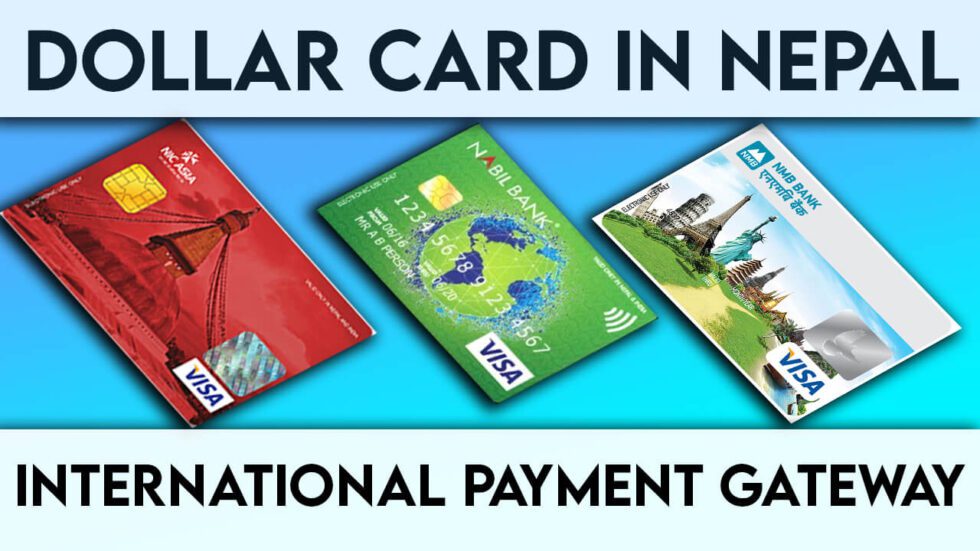
A dollar card in Nepal is a prepaid USD Visa or Mastercard issued by a Nepali bank. You load it with Nepali rupees, the bank converts them to US dollars, and you use it to pay foreign websites such as Netflix, Google, Facebook Ads, Udemy or hosting companies. As of September 2026, an individual can spend up to $500 per year. Since April 2026, IT and communication businesses can get prepaid cards of up to $3,000 a year, or $5,000 if they earn foreign currency from service exports. You need a bank account, updated KYC and a PAN, and a card usually costs a few hundred to about a thousand rupees to issue.
Key takeaways
- Nepal Rastra Bank (NRB) made prepaid dollar cards legal in 2021, ending the era of paying through relatives abroad or unofficial agents.
- The personal limit is still $500 per person per year, across all your dollar cards, not $500 per card.
- The April 2026 NRB circular raised limits for the IT sector only. Ordinary individuals did not get a higher card limit.
- Fees vary a lot. Loading through a mobile app (for example Global IME) can be free, while branch reloads at some banks cost Rs 100–500 each time.
- A virtual card is faster to get and safer for online payments. Get a physical card only if a merchant insists on one.
In this guide
What is a dollar card in Nepal?
Ordinary Nepali debit and credit cards work in rupees and are blocked for most international online payments. For years that meant freelancers, students and small businesses had to ask a relative abroad to pay for them, or use risky unofficial services.
In March 2021, NRB amended its foreign exchange directive and allowed banks to issue prepaid cards denominated in US dollars for paying foreign services. That product is what everyone calls a dollar card. Banks market it under different names: E-Com Card, USD Prepaid Card, International Pre-Paid Dollar Card or virtual dollar card. They all work the same way.
1
You pay NPR at your bank or in its app
2
The bank converts it to USD at its selling rate
3
USD is loaded on your prepaid Visa or Mastercard
4
You pay any foreign website that accepts cards
Because it is prepaid, you can only spend what you have loaded. There is no credit, no interest and no way to overspend, which is exactly why NRB was comfortable allowing it.
Dollar card limit in Nepal (updated for 2026)
This is where most articles online are outdated or confusing. Here is what the rules actually say after NRB’s Circular 10/2082/83 dated 6 April 2026, which amended the Unified Foreign Exchange Directive 2081.
Annual prepaid dollar card limit by user type (USD)
Individuals (personal use)
IT and communication industries
IT industries earning foreign currency from service exports
Source: NRB Circular 10/2082/83 (6 April 2026), as summarised by PKF TR Upadhya & Co.
What changed in April 2026 – and what didn’t
| Who | Facility | Annual limit | Status |
|---|---|---|---|
| Any individual | Prepaid dollar card | $500 | Unchanged |
| IT & communication industries | Prepaid card for software and online services | $3,000 | New (April 2026) |
| IT industries with service-export income | Same prepaid card, higher cap | $5,000 | New (April 2026) |
| Nepali citizens earning foreign currency online | Bank transfer for IT services used in their work (not a card) | $25,000 | New (April 2026) |
| IT businesses earning foreign currency | Bank transfer for software and IT services (not a card) | $100,000 | New (April 2026) |
Myth check: Some Nepali tech sites reported that the general $500 ceiling was “removed” in April 2026. The published summary of the circular lists only the IT-sector card and the bank-transfer facilities above – nothing about scrapping the individual limit – and banks such as Global IME and NMB still state $500 per year on their card pages and forms. Treat $500 as your limit unless your bank tells you otherwise in writing.
Three limit rules most people miss
- It is per person, not per card. Opening dollar cards at three banks does not give you $1,500. Banks treat the $500 as your personal yearly allowance.
- It resets once a year. Most banks track it by Nepal’s fiscal year, which starts in mid-July (Shrawan). Ask your bank exactly when your allowance renews before you plan big purchases.
- The number of transactions is not limited. You can load $10 at a time or $500 at once, and spend it in as many payments as you like, as long as the yearly total stays within the cap.
What can you pay for with a dollar card?
Anything sold online by a foreign merchant that accepts Visa or Mastercard and is legal under Nepali law. The most common uses I see among Nepali freelancers, students and small businesses:
✔ Allowed and popular
- Streaming and apps: Netflix, Spotify, YouTube Premium, Amazon Prime
- AI and software: ChatGPT, Canva, Adobe, Microsoft 365, Figma, and SEO tools like Ahrefs or Semrush
- Ads: Facebook and Instagram boosts, Google Ads, TikTok Ads
- Domains, web hosting and cloud servers
- Online courses: Udemy, Coursera, Skillshare
- Google Play Console fee to publish Android apps
- Game purchases and top-ups on international stores
- International e-commerce: Amazon, AliExpress, Alibaba
- E-visa fees charged through a foreign government portal
✘ Not allowed or won’t work
- Cryptocurrency purchases (crypto trading is illegal in Nepal)
- Online gambling and betting sites
- Forex or CFD trading deposits
- Receiving money – it is a spending card, not an income account
- Sending money to friends or family abroad
- Anything illegal under Nepali law, even if the website accepts the card
A note on PayPal: people often ask if they can “link” a dollar card to PayPal. Even where a card can be added for paying, receiving money through PayPal is still not available for Nepal, so a dollar card does not solve the freelancer income problem. For payouts, use Payoneer, a direct bank transfer (you will need your bank’s SWIFT code) or the platform’s own withdrawal methods.
If you mainly want the card for gaming, check the price in dollars before you load – big releases such as GTA 6 can eat a large share of your $500 yearly allowance on their own.
How to get a dollar card in Nepal (step by step)
Step 1 · Have an account with the bank
Any Class ‘A’ commercial bank or national-level Class ‘B’ development bank can issue the card, but only to its own account holders. A regular savings account is enough.
Step 2 · Update KYC and link your PAN
PAN is mandatory for dollar cards (you can check your PAN number online first). Most rejections I have heard about come from an old KYC or a missing PAN, so fix this first.
Step 3 · Apply at the branch or in the mobile app
Fill in the prepaid USD card form and state the purpose (for example, online subscriptions or IT services). Many banks now let existing customers apply entirely inside their app.
Step 4 · Receive the card
Virtual cards are often issued within minutes to a day; the card number usually comes by email and the CVV by SMS. Physical cards can be instant (non-personalised) or take a few working days.
Step 5 · Load dollars and activate e-commerce
Load USD from your rupee account at the branch or through mobile banking, and confirm that e-commerce and international use are switched on.
Step 6 · Pay online
Enter the card number, expiry and CVV at checkout, then approve the 3D Secure OTP sent to your phone.
Documents you need
- Citizenship certificate (copy)
- PAN card
- Passport-size photo (for branch applications)
- Filled application form, or the in-app request
- For businesses: company registration, PAN/VAT and a board decision or authorisation letter
- For the $3,000–$5,000 IT card: proof that the company is an IT or communication industry and, for the higher cap, evidence of foreign-currency export income
Dollar card charges: bank-by-bank comparison
Every bank sets its own fees, and they change with each new tariff sheet. The table uses figures published by the banks or reported in 2025–2026 coverage; confirm the latest schedule at your branch before applying.
| Bank / card | Issuance fee | Load fee | Other charges | Validity |
|---|---|---|---|---|
| Global IME E-Com Card (Visa) | Rs 500 virtual / instant; Rs 600 physical | Free via Global Smart Plus app; Rs 100 at branch | Rs 300 yearly renewal | 5 years |
| NIC Asia International Pre-Paid Dollar Card (what I paid in 2021) | Rs 750 | First load free, then Rs 250 | 0.5% per transaction | 3 years |
| NIC Asia (2082/83 tariff, as reported) | About Rs 1,000 | About Rs 500 per load | 0.5% e-commerce fee | Check with bank |
| Typical market range (Nabil, NMB, Siddhartha, Himalayan and others) | Rs 300–1,000 virtual; Rs 1,000–1,500 physical | Free to about Rs 500 | Subscription or renewal fee at some banks | 3–5 years |
What does $500 a year really cost you in bank fees?
Issuance fees get all the attention, but reload fees are what add up. Here is a simple example: you load your full $500 in four top-ups of $125 during the year. Exchange-rate margin is left out because it applies at every bank.
First-year bank fees for loading $500 in 4 top-ups (NPR)
Global IME virtual card, loaded in the app
Global IME physical card, loaded at a branch
NIC Asia at the 2021 fees I paid (plus 0.5% = $2.50 on $500)
NIC Asia at the reported 2082/83 tariff (plus 0.5%)
Calculated from the fees in the table above. Renewal fees from year two are not included.
The lesson: if you top up often, a bank with free app loading beats one with a cheaper card but paid branch reloads. If you load once a year, the difference is small.
My experience getting a dollar card from NIC Asia
I got my first dollar card from NIC Asia Bank in 2021, soon after NRB allowed these cards. When I asked the bank for details, this is what they gave me:
Yearly limit
$500
Issuance fee
Rs 750
Cash load fee
Rs 250
first load free
Transaction fee
0.5%
Validity
3 years
no renewal fee listed
The bank said the card could be issued instantly over the counter and could be used for international streaming (Netflix, Amazon Prime, Hotstar), social media advertising, international e-commerce platforms, newsletter and magazine subscriptions, and payments to international business institutions.
Back then, every reload meant a trip to the branch. That is the biggest thing that has improved since: several banks now let you apply and load inside the app. If I were getting a card today, these are the things I would check first:
- Can I load from the app? Free app loading saves both money and time.
- Is there a per-transaction fee? 0.5% sounds tiny, but it applies to every subscription renewal.
- Is there a yearly renewal or subscription fee? A cheap issuance fee can hide one.
- Can I move unused dollars back to my rupee account? Some banks allow it for a small fee; others make it slow.
Virtual Card in Nepal: Virtual vs Physical Dollar Card
| Feature | Virtual card | Physical card |
|---|---|---|
| How fast you get it | Minutes to 1 day | Instant (non-personalised) to a few days |
| Cost | Usually cheaper | Usually higher |
| Online payments | Yes | Yes |
| Risk if lost | Nothing to lose physically | Card can be lost or skimmed |
| Best for | Subscriptions, ads, software, courses | Merchants that ask for a physical card check |
For almost everyone, the virtual card is the better choice. It does everything the dollar card is legally meant to do, which is paying foreign websites.
Dollar card vs travel card vs FCY card
These three are often mixed up. They are different products with different rules:
Dollar (e-com) card
For paying foreign websites from Nepal. Loaded from your NPR account. $500 yearly for individuals.
Travel card
For spending and ATM withdrawals while abroad. Loaded against your passport’s travel foreign-exchange facility.
FCY account card
Linked to a foreign-currency account (for example NIC Asia’s FCY Freedom Card). Spends dollars you already legally hold, such as foreign earnings.
Since April 2026, banks can also issue a separate electronic card for paying refundable foreign-currency deposits required for visa processing, with its own documentation rules.
Why is my dollar card payment declined?
A declined card is the most common complaint in Nepali Facebook groups. Go through this checklist before calling the bank:
| Likely cause | What to do |
|---|---|
| Balance is short by a few cents | Keep $1–$2 extra for taxes, currency conversion and small verification charges. |
| E-commerce or international use not activated | Enable it in the bank app or ask the branch. |
| 3D Secure OTP not received | Check that your registered mobile number is active and can receive SMS. |
| Yearly $500 allowance already used | Wait for the reset or, for company expenses, apply for the IT-sector card. |
| Merchant does not accept prepaid cards | Some services block prepaid cards for trials or recurring billing. Try paying without a free trial, or pay through the app store. |
| Billing address or country mismatch | Use your real Nepal address, exactly as registered with your bank. |
Safety tips for using your dollar card
- Load only what you plan to spend soon; the card is only as exposed as its balance.
- Never share your card number, CVV or OTP with anyone, including “bank staff” who call you.
- Cancel free trials you do not want before they auto-renew.
- Turn on transaction alerts in your bank app and check them after every payment.
- Block the card from the app immediately if you see a charge you do not recognise.
Which bank’s dollar card is best?
There is no single best card; the right one depends on how you use it. Almost every commercial bank now offers one, including Global IME, Nabil, NIC Asia, NMB, Nepal Investment Mega, Siddhartha, Sanima, Kumari, Himalayan, Machhapuchhre and Nepal Bank.
- You top up often (subscriptions, ads): choose a bank with free in-app loading. Global IME is the clearest example today.
- You use it once or twice a year: stick with your current bank; the convenience of not opening a new account outweighs small fee differences.
- You run an IT company: ask your bank specifically for the April 2026 IT-sector prepaid card with the $3,000 or $5,000 limit.
- You earn dollars as a freelancer: look at a foreign-currency account and card, and the new $25,000 banking-channel facility for IT services.
For more practical guides on tools and tech in Nepal, browse my Technical Solutions section.
Frequently asked questions about dollar cards in Nepal
What is the dollar card limit in Nepal in 2026?
$500 per person per year for individuals. IT and communication industries can get up to $3,000, or $5,000 if they earn foreign currency from service exports, under NRB’s April 2026 circular.
Can I have dollar cards from more than one bank?
You can hold more than one card, but the $500 is your personal yearly allowance. Spending across all cards together must stay within it.
How do I get a virtual card in Nepal?
Apply through your bank’s mobile app or at a branch, with your KYC updated and your PAN linked, and choose the virtual (e-com) dollar card option. The card number usually arrives by email with the CVV by SMS within minutes to a day. You then load USD from your rupee account and switch on e-commerce and international use before paying online. Almost every commercial bank issues one, and Global IME’s in-app process is the quickest example today.
How long does it take to get a dollar card?
A virtual card can arrive within minutes to a day if your KYC and PAN are in order. Physical cards range from instant (non-personalised) to a few working days.
Can I withdraw cash from a dollar card?
No. The e-com dollar card is meant for online payments to foreign merchants. For spending cash abroad you need a travel card loaded against your passport facility.
Can I receive money from Upwork, Fiverr or YouTube on a dollar card?
No. A prepaid dollar card is for spending only. Receive foreign income into your bank account through the platform’s withdrawal methods.
Is using a dollar card legal in Nepal?
Yes, as long as the card is issued by a licensed Nepali bank and you use it for legal purchases within the limit. Using it for crypto, gambling or other prohibited payments breaks foreign-exchange rules.
Do I need a PAN card for a dollar card?
Yes. PAN and completed KYC are required by NRB for issuing prepaid dollar cards.
Can a business or company get a dollar card?
Yes. Banks such as Global IME issue it to individuals, firms, companies and institutions. IT and communication companies can now apply for the higher-limit IT prepaid card.
Sources
Disclaimer: Limits and fees in this article were checked on 29 September 2026. Banks revise their tariffs and NRB amends its circulars from time to time, so confirm the current figures with your bank before applying. Have a question about your own situation? Contact me.
Hello can we use dollar card for paytm,phonepe,amazonpay.