

No Results Found
The page you requested could not be found. Try refining your search, or use the navigation above to locate the post.

ARE YOU HERE TO LEARN NEWARI LANGUAGE?
Here, I will help you to learn the Newari Language which is simple and commonly spoken. I am Wilson Shrestha I belong to the Newari Ethnic group and who is a resident of Newari City Bhaktapur, Nepal. From my childhood I have been speaking the Newari language and created this article you let you know the simple words of the Newari language.
| English | Newari (नेपाल भाषा) |
|---|---|
| Hello | Jwa-ja-la-paa |
| Thank you | Su-bhaay |
| Welcome | La-sa-ku-sa |
| Good Bye | wane nhe |
| Best Wishes | Bhin-tu-naa |
| Happy New Year | nhu daya bhin-tu-na |
| Happy Birthday | janmadin ya bhin-tu-na |
| English | Newari (नेपाल भाषा) |
|---|---|
| What | Chuu |
| Who | Suu |
| How | Ga-thee |
| When | Ga-ba-le |
| Where | Ga-na |
| Which | Guu |
| Whose | Su-yaa |
| Why | Chya |
| English | Newari (नेपाल भाषा) |
|---|---|
| I Love You | jitaḥ cha napanu matina du |
Yes : Kha
No : Ma-khu
Beautiful : Baan laah
Love : Matina
Please come in : Jhaa-saa
Please have a seat : Di-shaa
I am sorry : Maph yaa-naa di-shaa
Maybe : Kha-ye-phu
Don’t know : Ma-siu
It’s ok : Jiu
It’s not ok : Ma-jiu
Never mind : Mawaah-la
Isn’t it? : Ma-khu laa
Don’t do that! : Yaa-ye-ma-te!
Give way : Bi-naa-bi
I am done for : Kaa phu-ta
Help : Gwa-li
Just a moment : Pa-lakh aa-se
Let’s go : Wa-ne-nu
Really : Dhaat-thenn khah
How are you? : Mhan –phu-laa?
I am fine : Mhan- phu
What is your Name? : Chan-gu Naa Chu?
My name is …… : Ji –gu naa……..khah.
This is my friend Wilson. : Thwa ji-mii paa-saa Wilson Khah.
Where do you live? : Chhigu chhen ga-na khah?
I live in Kathmandu. –> Ji-gu cheen Kathmandu kha.
Did you have dinner? : Jaa nee dhuna la?
Yes I have. : Dhuna.
| English | Newari (नेपाल भाषा) |
|---|---|
| Father | A-ba |
| Mother | A-ma |
| Brother | Dai-cha |
| Sister | A-ta |
| Lil-Sister | Khee |
| Lil Brother | Ki-jja |
| Son | Kyaa |
| Daughter | Mayha |
| Husband | Bha-taa |
| Wife | Mi-shaa |
| Friend | Paa-Saa |
| English | Newari (नेपाल भाषा) |
|---|---|
| House/Home | Cheen |
| Water | La |
| Meat | Laa |
| Rice | Jaa |
| Money | Dheba |
| English | Newari (नेपाल भाषा) |
|---|---|
| Head | Kappa |
| Face | Khowa |
| Eyes | Mikkha |
| Nose | Nhayaa |
| Mouth | Mhuttu |
| Teeth | Waa |
| Ears | Nhee-pa |
| Neck | Ka-kuu |
| Hands | Lhaa |
| Legs | Tutti |
Temples, rivers, rooftops and cafés. Photos from trips, picnics and slow afternoons around Nepal, and my latest posts on Instagram.
Tap any photo to see it full size.
An evening visit to Bouddha, just for fun, up on the rooftop of Gotama Restaurant.


A picnic at the Murkut Bhangyang picnic spot, organised by OPL in 2020. These count as some of my best memories with OPL.
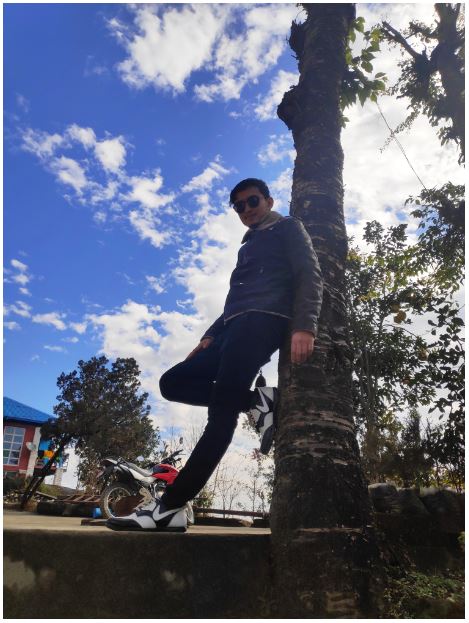
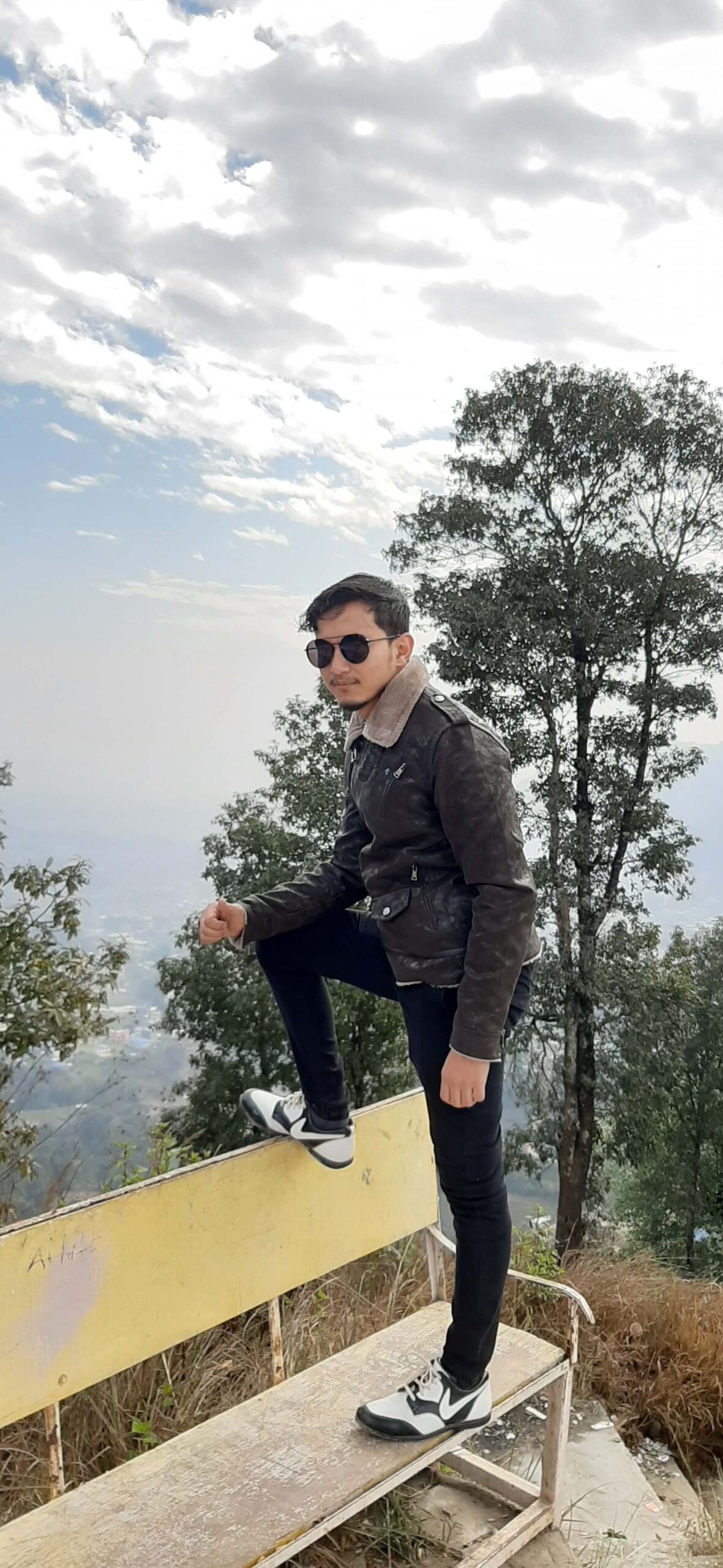

A park built in memory of the people who lost their lives in a plane crash.

A stop on the road up to Nagarkot.

A picture clicked in front of Nyatapola Temple.

A quick selfie in front of Swayambhu.

Posing on top of the big stones beside the Trisuli River, on a picnic trip to Kalinchowk Temple with family and neighbours.


Having an Americano and a slice of cheesecake, and just enjoying the time.

Travelling to a new place and looking for a little peace at Rani Jhula.

An afternoon at Idol Cafe, the pink restaurant in Boudha.

These Top Eleven Tips is a guide that will help you to understand the game and perform better on the Top Eleven Football Manager.
Here are some top tips for managing an Eleven team:
Team Mentality is a style of play for your squad to play passive or aggressive during the match. There are 5 types of Team Mentality:
Focus passing is the situation when we have ball possession, we will play that ball on that part of the field. We have 5 options for focus passing:
Force Counterattack is a tactic that allows you to counter your opponent while they are attacking your defense.
Turn ON if your opponent is having more possession on the stat.
Turn OFF if you have more possession.
A tactic to press the opponent high up the pitch or lower the pitch. If we press the opponent high up, your player will try to win the ball on the opponent’s half and press the opponent’s whole pitch. The high press will make your player tired fast by spending the energy of the players. The low press will press the opponent and try to win the ball when the ball is on your own half, it is not as tiring as high press.
This means how much you can be aggressive during defense while in the match. Easy tackle will produce less tackle and will have less number of fouls during the match. Normal tackle means slightly aggressive and will produce more tackles and fouls during the match. Hard tackle means full aggressive defense which will produce more tackle and fouls. Fouls will give the opponent the chance to score goals from free-kicks and penalties.
Zonal marking means the player will have to stay in the same position of the formation you choose for your squad.
Man-on-man marking means your player will mark the opponent’s attackers and the formation will be fluid according to the opponent’s attackers. Man-on-man marking will make our defenders fatigue soon.
Offside trap will try to make offside for the opponent’s attackers. Turn this ON if the opponent is playing more long balls to their attackers and turn this off if the opponent is playing short passes.
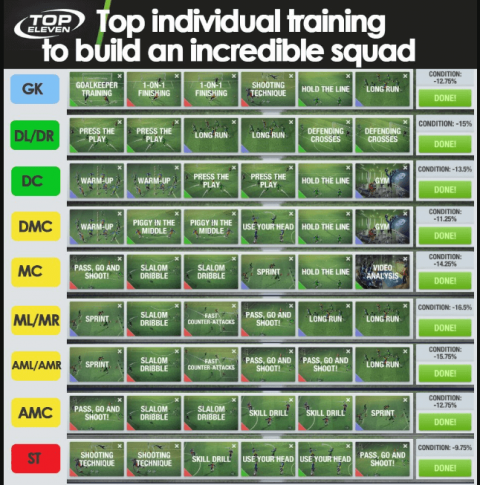
Always train your Squad before a match. Try easy training which reduce less condition and gives massive result.
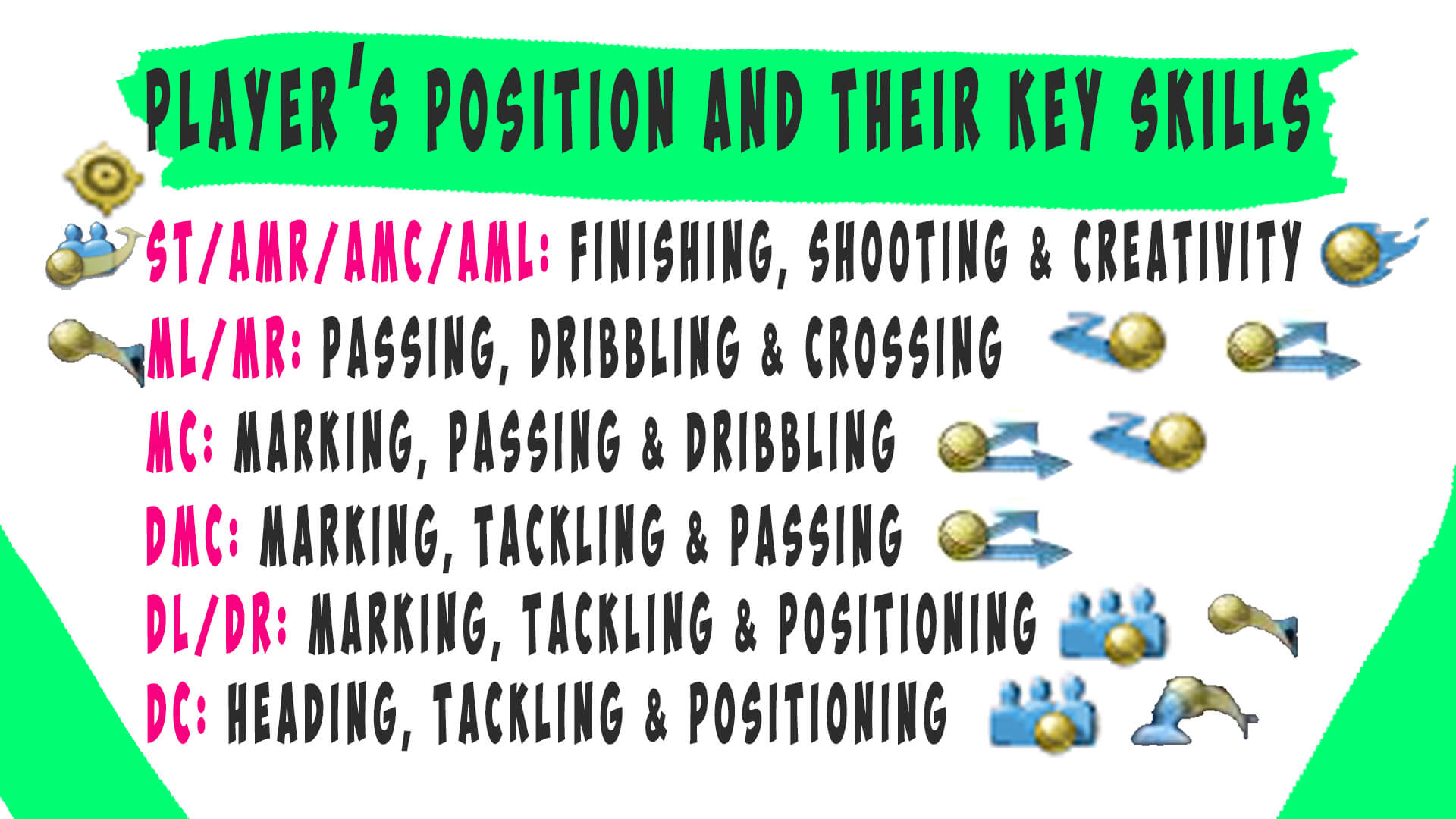
Different player position need different training drills.
Here are the training tips for all individual players.
Before starting the match, provide full Morale Boost and Fitness Condition Bouns to your players to perform better and win that match.
-If Opponent has 4 Defenders(DL-DC-DC-DR)
Use 2 ST to break them.
-If Opponents has 3 DC
Then use ST-AML-AMR.
-If the Opponents has DL-DC-DR
Then use 3 ST.
-If Opponent has 2 ST.
Use 3DC or DL-DC-DR to defend them.
-If Opponents has 1 ST.
Then use 2 DC to deal with that ST and mark all other attacking players that will provide the balls to the lone ST.
-If the opponent has ST-AML-AMR.
Use DL-3DC-DR to defend them.
Team Mentality: Normal
Pressing Style: Low
Focus passing: Mixed
Passing Style: Long Pass
Force counterattacks: ON
Offside Trap: OFF
Tackling Style: Normal
Marking Style: Zonal
*Forward Arrow To ST*
Always built your future players from youth academy. Try to get atleast three 6Star players form youth academy every season. These youth are very good players which will surely help your team to win trophys.
Buy Players from Auction-Do not Spend more than 30 tokens for a single player.
Spend at-least 15 token for youth academy per season.
Never buy assistance players more than 50 Tokens.
Only buy Scout players when you have enough tokens and the player is perfectly suitable for your squad.
Sign TV rights which gives Extra for dedication which gives extra token for coming back everyday.
Complete special sponsor mission to get more token which is available once in every top eleven season.
To get free tokens there is some sponsor that will provide you tokens if you complete there mission.
Invite friends to play top eleven and get refral bonus token.
As I say winning is most important in this game, if you are not winning the match you don’t want to play this game anymore. So for the most, you have to play to win every game. I have listed various winning tips here so, be sure to read each and everyone and apply them as well.

Watch More Videos of Top Eleven Tips and Tricks on My Youtube Channel.
The page you requested could not be found. Try refining your search, or use the navigation above to locate the post.

Author, Share Market Analyst
Education: Master’s in Finance & Investment, Tribhuvan University; post-graduate in Financial Planning, George Brown College (Canada); Canadian Securities Course.
Teaching: Taught finance and investment at Shanker Dev Campus (TU) for 13 years.
Work: One of the first people in Nepal to run share-market awareness training, which he has taken to many parts of the country. He has written 10+ books on shares, including Nepal ko Share Bazar, Share Mantra and Bittiya Swatantrata.
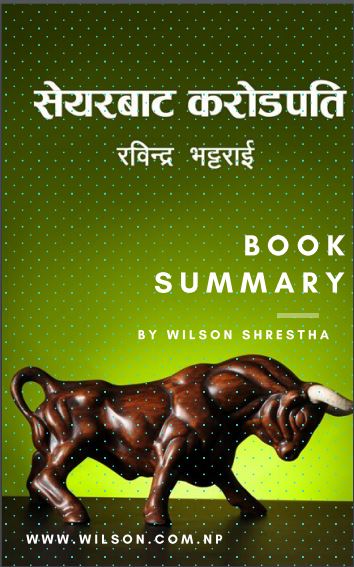
Share Bata Karodpati (सेयरबाट करोडपति, “Crorepati from Shares”) is a Nepali personal-finance book by share analyst Rabindra Bhattarai. Its message is simple: you do not need a large starting capital to build wealth. With patience, regular saving and about two hours of study a day, a small investor can grow thousands into lakhs, and lakhs into crores, through the share market. This Share Bata Karodpati book summary covers the book’s core money lessons and then updates its “how to enter the stock market” section with the rules that apply in Nepal in 2026.
Key takeaways in 30 seconds
| Detail | Information |
|---|---|
| Title | सेयरबाट करोडपति (Share Bata Karodpati) |
| Author | Rabindra Bhattarai |
| Publisher | FinePrint |
| Language / genre | Nepali / self-help, personal finance |
| Launched | 12 Jestha 2073 (May 2016) in Kathmandu, by novelist Amar Neupane, SEJON chair Gokarna Awasthi and the author |
| Editions | Several reprints; Thuprai lists a 6th edition paperback (ISBN 9789937790147) |
| Formats | Paperback and e-book (Thuprai, Sept 2026: Rs 450 paperback, Rs 300 e-book) |
| Best for | First-time and small investors who want to understand shares in plain Nepali |
The first half of the book is about mindset. Bhattarai argues that most people stay stuck because they only ever work for money. The way out is to climb, step by step, until money, knowledge and systems are doing the work for you.
If you never put your money to work, you will spend your life working for someone else to earn it. The share market is one place where your money can earn for you through dividends, bonus shares and price growth.
At the start, most of us have nothing to invest. So the first step is ordinary: earn through a job or business, cover your expenses, and set aside savings that can later be invested.
The book compares investors to sportspeople, who start earning young and retire early. The earlier you start, the longer compounding has to work, as the chart below shows.
In this example, the person who starts at 25 invests only Rs 6 lakh, less than half of the late starter, yet ends up with nearly twice as much. That is the “karodpati” effect the title points to. Note: the 10% return is an assumption used only to show how compounding works. It is not a forecast of NEPSE returns, which rise and fall from year to year.
A job gives a fixed income for a limited period. A business has no fixed income, but it can keep earning for a very long time, even across generations. Owning shares makes you a part-owner of a business.
Investment in knowledge pays the best interest. At the book’s launch, Bhattarai advised investors not to put money into just any company that is on offer. Study a company before you buy it.
Build a business or income source that runs without you having to be there every day. That is what financial freedom looks like.
If technology can replace manual work, use it. In 2026 this applies directly to investing: IPO applications, share transfers and trading are all done online.
The book explains the two doors into the share market. The ideas still hold, but the paperwork has changed a lot since 2016. Here is the updated version.
When a company sells new shares to the public for the first time, it is called an initial public offering (IPO). The book recommends that beginners start here because it is simple and the risk is lower than trading. IPO shares are usually issued at Rs 100 each, and the minimum application is normally 10 units (Rs 1,000). When an issue is oversubscribed, shares are allotted by lottery.
Once shares are listed, investors buy and sell them among themselves through brokers on the Nepal Stock Exchange (NEPSE), the country’s only stock exchange. NEPSE opened its trading floor on 13 January 1994 and had 263 listed companies as of March 2026. Note: investors do not have to “enlist” anything with NEPSE. Companies get listed; you only need a Demat account and a trading account with a broker.
The original book listed paper forms. Today the process is digital and follows this order:
| Account | What it does | Where / cost (approx.) |
|---|---|---|
| Demat account | Holds your shares electronically. You receive a 16-digit BOID. | Any Depository Participant (DP) under CDS and Clearing Ltd. (CDSC). Opening fee is about Rs 50 and renewal Rs 100 a year; charges vary slightly by DP. |
| MeroShare | CDSC’s online portal to apply for IPOs, see holdings and approve sales (EDIS). | meroshare.cdsc.com.np. Rs 50 registration and Rs 50 yearly renewal. |
| C-ASBA / CRN | Lets your bank block (not deduct) the IPO amount from your account. The CRN links your bank to MeroShare. | Your bank. Some banks charge a small fee per application. |
| Trading (TMS) account | Needed to buy and sell listed shares on NEPSE. | A SEBON-licensed broker. NEPSE had 90 member brokers as of October 2024. |
Documents usually needed: citizenship certificate copy, a recent photo, a bank account in your own name and a filled KYC form. Many banks and brokers now let you complete KYC online. Your bank account name must match your Demat name exactly, or IPO applications will be rejected.
One broker, one account: As the book says, a trading account belongs to one broker. To trade through a second broker, you open another account with that broker.
For a detailed walkthrough, read our step-by-step guide to opening a Demat account in Nepal.
Since April 2026, NEPSE trades Monday to Friday, following the government’s move to a Saturday-Sunday weekend. The regular session runs from 11:00 AM to 3:00 PM, after a short pre-open session. Trades settle on a T+2 cycle:
When you sell, remember to authorise the transfer through EDIS in MeroShare, or the settlement can fail.
Every trade carries three charges: broker commission, a SEBON fee of 0.015% and a DP charge of Rs 25 per company. Commission falls as the trade size grows:
Worked example: buying shares worth Rs 1 lakh
Broker commission 0.33% = Rs 330
SEBON fee 0.015% = Rs 15
DP charge = Rs 25
Total cost = Rs 370 (about 0.37% of the trade). Selling adds the same charges, plus capital gains tax if you made a profit.
CGT is charged only on profit when you sell, and it is deducted during settlement. For individual investors, the rate depends on how long you held the shares:
The FY 2083/84 budget raised both rates by 2.5 points from Shrawan 2083 and made CGT on listed shares the final tax. In September 2026 the government cut them to 5% for shares held 365 days or less and 3.75% for shares held longer, as published in the Nepal Gazette. Some news outlets reported the long-term rate as 3.5%, so check the current rate with your broker or CDSC before you sell. Either way, the book’s advice to hold for the long term is also the tax-efficient choice.
Yes, for the mindset. The lessons on saving first, starting early, learning before investing and letting money work are timeless, and they are explained in simple Nepali. The procedures in the book, such as paper forms and older fee rates, have changed, so pair it with the updated steps above.
| Topic | In the book (2016) | In 2026 |
|---|---|---|
| IPO application | Physical forms with photo and citizenship | Online via MeroShare with C-ASBA and CRN |
| Trading | Mainly through the broker’s office | Online through the broker’s TMS |
| Trading days | Sunday to Thursday | Monday to Friday (since April 2026) |
| Selling shares | Broker handles transfer | You approve via EDIS on MeroShare; settles T+2 |
| CGT (individuals) | Lower flat rates | 5% up to 365 days, 3.75% beyond (Sept 2026) |
Before you invest
Share prices can fall as well as rise, and past returns do not guarantee future ones. This summary is for education only and is not financial advice. Invest money you will not need for several years, and spread it across companies and sectors.
Rabindra Bhattarai, a Nepali share market analyst who taught finance and investment at Shanker Dev Campus for 13 years and has written more than 10 books on the share market.
Don’t become a slave to money; make money work for you. The book shows how a small investor can build wealth over time through the share market with patience and study.
It is published by FinePrint and sold in bookshops across Nepal. It is also available online on Thuprai as a paperback and an e-book.
An IPO application usually starts at 10 units, which is Rs 1,000 at the common Rs 100 issue price. You also need a bank account, a Demat account and MeroShare, which have small yearly fees.
Yes. At the launch, SEJON chair Gokarna Awasthi said the book presents the share market in simple language and is useful for small investors and people just starting out.
Last updated: 27 September 2026. Rates and rules change often; always confirm with SEBON, NEPSE, CDSC or your broker.

✔️ Kill the last man in TDM Pan Only Fight
Note: The given task must be completed. A screen record of “Visit to Sponsor’s Website” is Needed.