Select Page

List of Top 10 Pharmaceutical Companies in Nepal (2026): Rankings, Contacts & Maps

List of top 10 pharmaceutical companies in Nepal 2026 with contacts and Google Maps locations

List of Top 10 Pharmaceutical Companies in Nepal (2026): Rankings, Contacts & Google Maps

By Wilson Shrestha · Updated September 2026 · First published February 2021 · Every address re-checked against official company sources

The top 10 pharmaceutical companies in Nepal are Quest Pharmaceuticals, Nepal Pharmaceuticals Laboratory (NPL), National Healthcare, Deurali-Janta Pharmaceuticals, Arya Pharmalab, Asian Pharmaceuticals, Lomus Pharmaceuticals, Magnus Pharma, Time Pharmaceuticals and Amtech Med. This list ranks Nepali-owned manufacturers using IQVIA market-audit data, and for each company you get verified head-office, factory and marketing-office contacts plus an embedded Google Map, so you do not have to search for them one by one.

I first published this page in 2021 as a simple contact directory. This 2026 edition is a full rebuild: two missing companies were added, outdated addresses were corrected, and every ranking now points to a named data source instead of opinion.

Quick answer: top 10 Nepali pharma companies (2026)

  1. Quest Pharmaceuticals – Kathmandu / Birgunj
  2. Nepal Pharmaceuticals Laboratory (NPL) – Birgunj / Bara
  3. National Healthcare – Birgunj / Bara
  4. Deurali-Janta Pharmaceuticals – Kathmandu
  5. Arya Pharmalab – Bara / Birgunj
  6. Asian Pharmaceuticals – Rupandehi
  7. Lomus Pharmaceuticals – Kathmandu
  8. Magnus Pharma – Bara / Birgunj
  9. Time Pharmaceuticals – Gaindakot, Nawalpur
  10. Amtech Med – Biratnagar, Morang

NPR 406 cr

Quest’s 12-month sales, the highest in IQVIA’s June 2026 audit

6 of 10

Places in Nepal’s overall top 10 held by Nepali companies

65%

Share of domestic pharma industries that are WHO-GMP certified

51%

Share of essential medicines now made inside Nepal

How this list is ranked

Most “top pharma company” lists in Nepal give no basis for their order. This one uses IQVIA, the audit firm that tracks medicine sales through pharmacies, as reported by Pharma Info Nepal:

  • Ranks 1–6 use the IQVIA Nepal Audit for June 2026, measured as MAT (moving annual total, meaning sales over the latest 12 months).
  • Ranks 7–9 (Lomus, Magnus, Time) did not appear in the June 2026 top-10 table, so they are ordered by their most recent published IQVIA values from March 2024.
  • Rank 10 (Amtech Med) is taken from IQVIA’s July 2020 ranking of Nepali manufacturers, the latest public figure that includes it.
  • Only Nepali-owned manufacturers are ranked. Indian multinationals that sell in Nepal are covered in a separate section below.
Note: Figures from different IQVIA periods are not directly comparable, so treat ranks 7–10 as indicative. “Nepal” in the IQVIA table refers to Nepal Pharmaceuticals Laboratory.

Chart: Nepal’s top 10 pharma companies by sales (IQVIA, June 2026)

This is the whole market, including multinationals. Green bars are Nepali companies; grey bars are Indian companies. Values are 12-month sales in NPR crore, followed by year-on-year growth.

Quest
406 · +5%
NPL
385 · +15%
National
377 · −2%
Deurali-Janta
374 · +5%
Arya
316 · +10%
Sun (India)
310 · +17%
Aristo (India)
291 · +12%
Alkem (India)
270 · +10%
Cipla (India)
256 · +13%
Asian
248 · +5%

Source: IQVIA Nepal Audit Dataset, June 2026 (MAT, NPR crore), as published by Pharma Info Nepal.

Three things stand out. Quest led on both the 12-month and the single-month view. The gap between ranks 2 and 4 is only about NPR 11 crore, so NPL, National Healthcare and Deurali-Janta could swap places in the next audit. And National Healthcare, which topped the 2020 and 2024 lists, was the only company in the top 10 to shrink (−2%).

Comparison table: top 10 pharmaceutical companies in Nepal

RankCompanyFoundedFactory locationLatest IQVIA value
1Quest Pharmaceuticals2001Birgunj, ParsaNPR 406 cr (Jun 2026)
2Nepal Pharmaceuticals Laboratory1985 (2042 BS)Jeetpur, BaraNPR 385 cr (Jun 2026)
3National Healthcare–Chhatapipra, BaraNPR 377 cr (Jun 2026)
4Deurali-Janta Pharmaceuticals1988Bansbari, KathmanduNPR 374 cr (Jun 2026)
5Arya Pharmalab2000Bara districtNPR 316 cr (Jun 2026)
6Asian Pharmaceuticals1998 (2055 BS)Omsatiya, RupandehiNPR 248 cr (Jun 2026)
7Lomus Pharmaceuticals1986Gothatar, KathmanduNPR 222 cr (Mar 2024)
8Magnus Pharma–Rampur Tokani, BaraNPR 131 cr (Mar 2024)
9Time Pharmaceuticals1997 (2054 BS)Gaindakot, NawalpurNPR 127 cr (Mar 2024)
10Amtech Med2004Katahari, Morang9th Nepali maker (Jul 2020)

Profiles, contacts & Google Maps locations

Each profile below lists the company’s key facts, all published offices, and a live map. Use the “Open in Google Maps” buttons for turn-by-turn directions on your phone.

#1

1. Quest Pharmaceuticals Pvt. Ltd.

Quest is currently Nepal’s largest pharmaceutical company by sales. In the June 2026 IQVIA audit it recorded about NPR 406 crore over 12 months and NPR 39 crore in the month itself, leading both tables. The company has been operating since 2001 and holds WHO-GMP and ISO 27001 certification.

  • Company-reported scale: 80+ life-saving drugs, 500+ employees and 100+ distribution partners
  • Won the FNCCI National Excellence Award (medium-scale industry) in 2014
  • Best for job seekers: it runs a dedicated careers page

Kathmandu office: Daan Sadan, Sungabha Marg, Teku, Kathmandu
Tel: +977-1-5340304, 5339293
Email: contact@quest.com.np

Birgunj office: Adarshnagar-13, Birgunj, Parsa
Tel: +977-51-418235, 418177

Website: quest.com.np

Open in Google Maps

#2

2. Nepal Pharmaceuticals Laboratory Pvt. Ltd. (NPL)

NPL is the oldest company in this top 10. It was registered in Jestha 2042 BS (1985) and began production in Poush 2043 BS, and it grew 15% in the latest IQVIA year, the fastest among the top four. Its WHO-GMP plant is at Jeetpur in Bara district, and it specialises in tablets, capsules and liquid preparations.

  • Says it was the first to make cardiovascular, antidiabetic, psychotropic and veterinary medicines in Nepal
  • Reports the first bioequivalence studies by a Nepali company, run with Kathmandu University
  • Catalogue of roughly 270 products

Corporate office: Om Ashram-14, Birgunj, Parsa
Tel: +977-51-521097, 528689
Email: hrd@npl.com.np

Factory: Jeetpur, Bara
Tel: +977-53-520133, 521142

Marketing office: NPL House, Krishna Galli, Pulchowk, Lalitpur
Tel: +977-1-5429059, 5429434
Email: nplmkt@npl.com.np

Website: npl.com.np

Corporate office mapMarketing office map

#3

3. National Healthcare Pvt. Ltd.

National Healthcare was number one in IQVIA’s 2020 and 2024 rankings and slipped to third in June 2026 with about NPR 377 crore (−2%). Its single-month sales still grew 13%, so the dip may be temporary. The company is headquartered in Birgunj and manufactures at Chhatapipra, Bara, where it also runs a sterile plant.

  • Known brands from its own timeline include Niko, Nemox, Nedroxyl and Gloron
  • Listed as WHO-GMP certified by the Department of Drug Administration (DDA)

Head office: Shreepur, Birgunj, Parsa
Tel: +977-51-524336, 528537

Production facility: Chhatapipra, Bara
Tel: +977-51-580236, 580508

Marketing office: Kamalpokhari, Kathmandu
Tel: +977-1-4544878
Email: support@nationalhealthcare.com.np

Website: nationalhealthcare.com.np

Head office mapMarketing office map

#4

4. Deurali-Janta Pharmaceuticals Pvt. Ltd.

Deurali-Janta was set up in Kathmandu in 1988 by Hari Bhakta Sharma and began commercial operations in 1991. It is widely recorded as the first Nepali pharmaceutical company to earn WHO-GMP certification, and in June 2026 it sat just NPR 3 crore behind National Healthcare.

  • Specialist divisions: Suswasthya (cardiology and diabetes, 2005), Aarogyam (dermatology, 2011) and Nirog (2013)
  • One of the few large makers with its main site inside Kathmandu Valley

Corporate office: 679 Budhanilkantha Sadak, Bansbari-3, Kathmandu (GPO Box 4239)
Tel: +977-1-4018777, 4018503, 4018504
Email: info@deuralijanta.com

Website: deuralijanta.com

Open in Google Maps

#5 New in 2026

5. Arya Pharmalab Pvt. Ltd.

Arya was missing from the old version of this page, yet it is now Nepal’s fifth-largest drug maker at about NPR 316 crore. It was the fastest-growing company in IQVIA’s 2020 audit (+137%) and its monthly sales grew 23% in June 2026. Arya was incorporated in 2000, makes both human and veterinary medicines, and has separate production areas for penicillin and cephalosporin products.

  • Factory in Bara district, with offices in Birgunj and Kathmandu
  • Quality note: in February 2026 the DDA recalled one batch (FSBD 12016) of its Supramox CV children’s antibiotic after it failed a strength test. Check the DDA website for the current status of any recall.

Birgunj office: Adarsh Nagar, Birgunj, Parsa
Tel: +977-51-532178
Email: info@aryapharmalab.com

Kathmandu office: Kamaladi, Kathmandu
Tel: +977-1-4223383, 4223561

Website: aryapharma.com.np

Kathmandu office mapBirgunj office map

#6

6. Asian Pharmaceuticals Pvt. Ltd.

Asian is the only company in this top 10 manufacturing in Lumbini Province. Founded in 2055 BS (1998), it closed the June 2026 audit in 10th place overall with about NPR 248 crore. Its Rupandehi site covers about 2.3 hectares and makes non-sterile products: tablets, capsules, ointments, oral liquids and external solutions, with separate cephalosporin and veterinary units.

  • More than 240 medicines across Pharma, Animal Care and Cardio-Diabetic divisions
  • Its executive director, Shanker Ghimire, has led the Association of Pharmaceutical Producers of Nepal (APPON)

Factory & corporate office: Omsatiya-1, Rupandehi
Tel: +977-71-429152, 621558
Email: factory@asianpharmaceuticals.com

Marketing office: Kamal Pokhari, Kathmandu (GPO Box 4444)
Tel: +977-1-4423711, 4421650, 4416337

Website: asianpharmaceuticals.com

Factory mapMarketing office map

#7

7. Lomus Pharmaceuticals Pvt. Ltd.

Lomus started in 1986 as a small manufacturing unit and grew quickly in the 1990s after professional management took over. It was the seventh-largest company in Nepal’s market in IQVIA’s March 2024 figures (about NPR 222 crore) and is DDA-listed as WHO-GMP certified. Its factory is at Gothatar in Kathmandu, and its product range spans vitamins, antibiotics, cardiovascular, diabetes and cough-and-cold medicines.

  • Operates quality and environmental systems under ISO 9001 and ISO 14001
  • Official website has moved to thelomus.com (the old lomuspharma.com address is out of date)

Head office: Lomus House, Kailash Chour, Lazimpat, Kathmandu (P.O. Box 4506)
Tel: +977-1-4536396, 4520060, 4545755

Factory: Gothatar, Kathmandu
Tel: +977-1-4990496

Website: thelomus.com

Head office mapFactory map

#8

8. Magnus Pharma Pvt. Ltd.

Magnus is known for bringing newer molecules to Nepal first, such as the first local brands of roflumilast (for COPD) and the blood thinner rivaroxaban. It recorded about NPR 131 crore in the March 2024 IQVIA list and was the second-fastest-growing company in 2020 (+33%). Its plant sits at Rampur Tokani in Bara, about 11 km north of Birgunj, and the company says it was designed to WHO-GMP, UK-MHRA, US-FDA and TGA Australia guidelines.

  • Kathmandu marketing office has moved to Lekhnath Marg, Thamel (older listings still show Jyatha)

Head office: 2nd Floor, Alok Super Market, Adarsh Nagar, Birgunj-6, Parsa
Tel: +977-51-529108, 531886

Factory: Rampur Tokani, Jeetpursimara-23, Bara
Tel: +977-51-580493, 580365

Marketing office: Lekhnath Marg, Thamel, Kathmandu
Tel: +977-1-5366878, 4249929

Website: magnuspharma.com.np

Factory mapKathmandu office map

#9

9. Time Pharmaceuticals Ltd.

Time entered the market in Kartik 2054 BS (1997) with eight products, including the cold remedy Sinex that is still its best-known brand. Founded by G. Narayan Bahadur Chhetri, it now makes around 270 medicines at its WHO-GMP plant in Gaindakot, Nawalpur, and recorded about NPR 127 crore in IQVIA’s March 2024 list.

  • Popular brands include Sinex, Paraflam, Salif, Pulmarin and SITA-M
  • Now operates as Time Pharmaceuticals Limited, and its marketing office has moved from Bakhundol to Satdobato

Head office: Gaindakot-4, Nawalpur
Tel: +977-78-502004
Email: info@timepharma.com

Factory: Gaindakot-10, Nawalpur
Tel: +977-78-402004
Email: factory@timepharma.com

Marketing office: House No. 79, Sundarnagar Marga, Satdobato, Lalitpur-15
Tel: +977-1-5151826, 5151872
Email: marketing@timepharma.com

Website: timepharma.com

Factory mapMarketing office map

#10 New in 2026

10. Amtech Med Pvt. Ltd.

Amtech is the largest drug maker in eastern Nepal and the only Koshi Province company in this list. It was established in 2004, started production in 2005, and ranked ninth among Nepali manufacturers in IQVIA’s July 2020 audit. The factory at Katahari, about 5 km east of Biratnagar, is WHO-GMP certified and holds ISO 9001:2015 and 14001:2015.

  • Makes tablets, capsules, creams and ointments, oral liquids, and cephalosporin tablets and dry syrups
  • Reports a workforce of more than 250 people

Corporate office: Mahabir Plaza, 6th Floor, Hospital Chowk, Rangeli Road, Biratnagar
Tel: +977-21-590247, 590251, 512153
Email: amtechmed55@gmail.com

Factory: Katahari-4, Morang
Tel: +977-21-419030, 419040

Website: amtechmed.com.np

Factory mapCorporate office map

Where Nepal’s top pharma factories are located

Plot the ten companies and a clear pattern appears: most of Nepal’s big drug production sits in the Birgunj–Bara industrial corridor, close to the Indian border and the Birgunj dry port where imported raw materials arrive.

Madhesh Province

Birgunj–Bara corridor · 5

Quest (Birgunj office), NPL, National Healthcare, Arya, Magnus

Bagmati Province

Kathmandu Valley · 2

Deurali-Janta (Bansbari), Lomus (Gothatar)

Lumbini, Gandaki & Koshi

Other regions · 3

Asian (Rupandehi), Time (Nawalpur), Amtech (Morang)

Almost all ten keep a marketing office in Kathmandu or Lalitpur as well, because that is where most hospitals, distributors and medical representatives are based. If you are visiting for a job interview or a distributor meeting, check which office you actually need before you travel.

Nepali vs. multinational companies in Nepal’s market

A common mistake in other lists is mixing Nepali manufacturers with foreign brands. In the June 2026 IQVIA top 10, four places went to Indian companies, and they are growing faster than most local makers:

Company (origin)Overall rankMAT valueMAT growth
Sun Pharma (India)6NPR 310 cr+17%
Aristo (India)7NPR 291 cr+12%
Alkem (India)8NPR 270 cr+10%
Cipla (India)9NPR 256 cr+13%

Put simply, Nepali companies still hold the top five places, but three of the four Indian firms grew faster than every Nepali company except NPL. That competitive pressure is one reason the government is pushing the domestic production targets covered next.

Nepal’s pharma roadmap: WHO-GMP and local production targets

WHO-GMP (Good Manufacturing Practice) is the quality standard that tells you a factory makes medicines consistently and safely. According to the national roadmap summarised in August 2026, Nepal’s targets look like this:

WHO-GMP certified domestic industries

Now
65%
2027 target
90%
2030 target
100%

Essential medicines produced in Nepal

Now
51%
2027 target
60%
2030 target
70%

Source: National pharmaceutical roadmap, as summarised by Pharma Info Nepal (August 2026).

For patients this matters because a WHO-GMP factory is inspected against international standards. All ten companies above appear on the published list of WHO-GMP certified Nepali manufacturers, but certificates are renewed periodically, so always check the latest list on the Department of Drug Administration website.

What changed since the 2021 version of this list

When I rebuilt this page in September 2026, I checked every phone number and address against each company’s own website or contact page. Several details readers had been relying on were no longer correct:

  • Time Pharmaceuticals moved its marketing office from Bakhundol to Satdobato, Lalitpur, with new phone numbers.
  • Magnus Pharma moved its Kathmandu office from Jyatha to Lekhnath Marg, Thamel.
  • Quest, NPL and National Healthcare now publish updated Kathmandu-valley phone numbers.
  • Lomus changed its website to thelomus.com and lists a separate factory at Gothatar.
  • Arya Pharmalab and Amtech Med were added, so the list finally contains ten companies instead of eight.
  • Old “Apply for job” buttons that pointed to the wrong company were removed.

The lesson for anyone contacting these companies: phone numbers in Nepal change more often than people expect, especially in the Kathmandu Valley. Many company websites are also out of date, which is a problem for their own customers. If you run a business in this position, my guide to website design cost in Nepal shows what a proper refresh costs.

Tips for job seekers, MRs and distributors

  • Apply through official channels. Use the company’s careers page, its verified Facebook page, or the HR email listed above. Ignore unofficial “agents” who ask for a fee.
  • Match the office to the role. Production, QA and QC jobs are usually at the factory (Bara, Rupandehi, Nawalpur, Morang). Marketing and medical representative roles are usually in Kathmandu or Lalitpur.
  • Pharmacist roles need registration. Technical positions generally require registration with the Nepal Pharmacy Council.
  • Ask about benefits. Confirm your enrolment in the Social Security Fund (SSF) before you sign an offer letter.
  • For distributors: growth rates in the IQVIA tables are a useful signal. A fast-growing company is more likely to be expanding its distribution network.

If you are researching a specific medicine rather than a company, see my plain-language explainer on EVALAX Lactulose Solution as an example of how to read a medicine’s uses and precautions.

Other notable WHO-GMP manufacturers in Nepal

Nepal has dozens of other certified makers outside this top 10. Names on the published WHO-GMP list include Curex Pharmaceutical, CTL Pharmaceutical, Omnica Laboratories, Nova Genetica, Alive Pharmaceutical, Apex Pharmaceutical, Everest Parenterals and Maruti Pharma. Tell me in the comments if you want a separate directory for them.

Frequently asked questions

Which is the No. 1 pharmaceutical company in Nepal?

Quest Pharmaceuticals is number one by sales in the IQVIA June 2026 audit, with about NPR 406 crore over 12 months. National Healthcare held the top spot in the 2020 and 2024 IQVIA lists.

How many pharmaceutical companies in Nepal are WHO-GMP certified?

About 65% of domestic pharmaceutical industries are WHO-GMP certified, according to the 2026 national roadmap. The target is 90% by 2027 and 100% by 2030.

How much of Nepal’s medicine is made locally?

Domestic companies produce about 51% of Nepal’s essential medicines. The government aims for 60% by 2027 and 70% by 2030.

Which is the oldest company in this top 10?

Nepal Pharmaceuticals Laboratory (NPL), registered in 2042 BS (1985), is the oldest in this list, followed closely by Lomus Pharmaceuticals, founded in 1986.

Where are most pharmaceutical factories in Nepal?

Most large factories are in the Birgunj–Bara industrial corridor of Madhesh Province. NPL, National Healthcare, Arya and Magnus all manufacture there, and Quest has its Birgunj office there.

Are Indian companies among the top pharma companies in Nepal?

Yes. Sun Pharma, Aristo, Alkem and Cipla were ranked 6th to 9th in the overall IQVIA June 2026 table. Nepali companies held the other six places, including the top five.

Who regulates medicines in Nepal?

The Department of Drug Administration (DDA), under the Ministry of Health and Population, registers medicines, inspects factories, issues WHO-GMP certification and publishes recall notices.

Disclaimer: This page is for general information only and is not medical or investment advice. Sales figures are third-party audit estimates, and contact details can change without notice. Please confirm directly with the company before visiting.

Spotted a changed number or a company that belongs on this list? Leave a comment below and I will verify and update it.

Cheap Hotels in Nepal

Here are some of the cheap hotels in Nepal which I have mentioned by visiting that places.

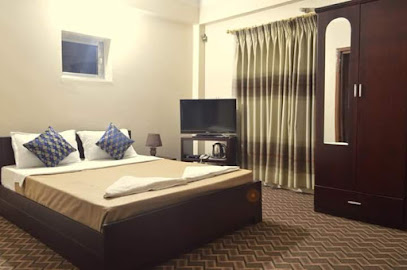
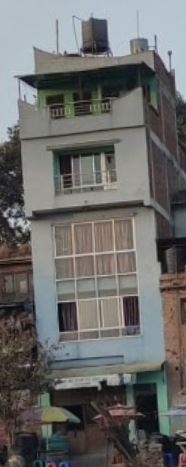
Cheap hotels in Nepal, Kantipur guest house and fast food bhaktapur

Kantipur Guest House & Fast Food

Location: Bhaktapur
Hotels Near Siddha Pokhari
Contact Number: 01-6615517
✅Free Wifi
✅Double Bed or 2 seperate beds are also Available.

For 1 Room Rs.700 only for 1day & 1 Night
Best for couple to spend some time, Friendly and 24hours services Available.

Cheap hotels in Nepal, Kantipur guest house and fast food bhaktapur

New Dungkar Guest house

Location: Boudha-6 Dharatole (4 min walk to Boudha stupa)
Contact Number: 01-4469601, 4460929, 9813392955

✅Double Beds or 2 separate beds are also available.
✅ Free Parking ✅ Sanitized Rooms
✅ 24 hr Check-in ✅ High-speed Wi-fi
✅ Restaurant ✅ Couple & family Friendly

Normal Room Rs.1276 Only

Offer price Rs.1500/- Standard Twins (2 pax)
Offer Price Rs.2000/- Double Deluxe (2 Pax)
All above prices are inclusive of taxes and service charges.
(No Hidden charges apply)

Stay Tune for more Cheap Hotels in Nepal

How to Start Investing in the Nepal Share Market Online (2026): Step-by-Step Guide

How to Start Investing in the Nepal Share Market Online: 2026 Step-by-Step Guide

Step-by-step roadmap to begin online investing in the share market in Nepal: bank account, Demat, MeroShare, CRN and TMS

By Wilson Shrestha · Last updated: September 2026 (Ashwin 2083) · Covers the latest CGT, trading-day and TMS changes

When I first wrote this guide in 2021, selling a share still meant walking into a broker’s office with two passport photos. That is no longer true. In 2026 you can open every account you need, apply for IPOs, buy shares and sell them entirely from your phone — without visiting a bank or a broker even once.

But the rules have also changed a lot this year: NEPSE now trades Monday to Friday, capital gains tax went up, a National ID number is now required for new Demat accounts, and TMS finally accepts after-market orders. This guide walks you through the whole journey in the right order, with diagrams, the real costs and the mistakes that trip up first-time investors.

Quick answer

To invest in NEPSE online you need four things, in this order:

  1. A bank account with mobile banking and ConnectIPS
  2. A Demat account (you get a 16-digit BOID)
  3. MeroShare + CRN (to apply for IPOs and transfer shares when you sell)
  4. A broker (TMS) account (to buy and sell on the secondary market)

Cost to hold: about Rs. 150 a year (Rs. 100 Demat + Rs. 50 MeroShare). Time: usually 3–7 working days from start to your first trade.

What Changed in 2026 (Most Guides Are Out of Date)

If you are reading an older blog post or watching a 2024 YouTube tutorial, these are the six changes it is probably missing:

APRIL 2026

Trading is now Monday–Friday

NEPSE moved from Sunday–Thursday to Monday–Friday from 6 April 2026, after the government made Saturday and Sunday public holidays.

SHRAWAN 1, 2083

Capital gains tax increased

For individuals: 10% if held 365 days or less, 7.5% if held longer (was 7.5% / 5%). It is now a final tax.

ASAR 2083

National ID required for Demat

New Demat accounts now need your National Identity (NID) number. Existing account holders are being asked to link it.

13 AUGUST 2026

After-market orders on TMS

You can now place orders between 5 PM and 10 AM. They queue and go to the market at the next open.

SHRAWAN 16, 2083

Unrenewed Demats blocked

CDSC started blocking accounts whose annual fee was not paid. Your shares stay safe; paying the fee restores access.

AUGUST 2026

Stricter T+2 for brokers

SEBON directed brokers to strictly follow T+2 settlement and keep client money in separate bank accounts.

The Big Picture: 4 Accounts, 1 Journey

Most confusion comes from not knowing which account does what. Here is the complete path. Each account depends on the one before it, so do them in this order.

Your share market roadmap in Nepal (1 → 2 → 3 → 4)

1

Bank account

Holds your money
+ ConnectIPS

2

Demat account

Holds your shares
You get a BOID

3

MeroShare + CRN

Apply IPOs
Transfer shares (EDIS)

4

TMS (broker)

Buy & sell on
NEPSE daily

After steps 1–3: you can apply for IPOs
After step 4: you can trade any listed share

Bank account

From: Any commercial / development bank

You get: Account number, mobile banking, ConnectIPS

Used for: Paying for shares, receiving sale money and dividends

Demat

From: A Depository Participant (DP): bank capital arm or broker, under CDSC

You get: 16-digit BOID

Used for: Holding shares electronically

MeroShare

From: CDSC, activated through your DP

You get: Username (DP + BOID) and password

Used for: IPO / right share applications, portfolio, WACC, EDIS

CRN

From: Your bank (C-ASBA member)

You get: Customer Reference Number

Used for: Lets MeroShare block money in your bank for IPOs

TMS

From: Any licensed NEPSE stockbroker

You get: Client code + TMS login

Used for: Buying and selling on the secondary market

Documents to Keep Ready

Scan or photograph these clearly before you start. Online forms reject blurry uploads, and the name must match exactly across every document.

✔ Required

  • Citizenship certificate (front and back)
  • National Identity (NID) number
  • Recent passport-size photo
  • Signature on white paper
  • Bank account in your own name

ⓘ Also useful

  • Mobile number and email you actively use (OTPs go here)
  • PAN number (asked by many brokers)
  • Nominee details
  • Location map of your address (some online KYC forms ask for it)

Step 1: Open a Bank Account With Mobile Banking and ConnectIPS

Any commercial bank works — Nabil, NIC Asia, Global IME, Siddhartha, NIMB, Himalayan, and so on. What matters more than the bank name is that it gives you three things:

  • Mobile banking, so you can check blocked IPO amounts and incoming sale money.
  • ConnectIPS access. TMS uses ConnectIPS to load money into your broker account, so register for it early.
  • C-ASBA membership (all major banks are). This is what lets MeroShare apply for IPOs directly from your account.

Tip: use one bank for everything

If your bank’s capital company (for example, NIC Asia Capital or Global IME Capital) is also a DP, you can often open the Demat, MeroShare and CRN in one go. Fewer institutions means fewer name-mismatch problems later.

Step 2: Open a Demat Account (Online in About 20 Minutes)

Your Demat account is where your shares live. It is opened through a Depository Participant (DP) — usually a bank’s capital company or a broker — and registered with CDSC (CDS and Clearing Limited). When it is approved you receive a 16-digit BOID, which is your permanent identity in the share market.

The online process with most DPs looks like this:

  1. Open the DP’s online KYC / Demat form.
  2. Fill in personal, address, bank and nominee details, including your NID number.
  3. Upload citizenship, photo and signature.
  4. Tick the boxes for MeroShare and C-ASBA/CRN on the same form if they are offered — it saves a second application.
  5. Pay the fee online and complete the short video KYC call.
  6. Receive your BOID by SMS or email, usually within 1–3 working days.

No NID number? Start there

Since Asar 2083, DPs are refusing new Demat applications without a National ID number. If you have not registered for your NID yet, do that first, or your application will sit in “pending”.

I have covered every detail — choosing a DP, the branch route, special cases for minors and NRNs, and the seven mistakes that get applications rejected — in a separate guide: How to Open a Demat Account in Nepal: 2026 Step-by-Step Guide.

Step 3: Activate MeroShare

MeroShare is CDSC’s investor portal and app. You do not need a paper form anymore — if you ticked MeroShare while opening the Demat, your login details arrive by SMS or email. Otherwise, request it from your DP (online form or branch) and pay the Rs. 50 registration fee.

  1. Go to the official site only: meroshare.cdsc.com.np, or install the official MeroShare app.
  2. Choose your DP from the list, then enter your username and temporary password.
  3. Change your login password and set a separate transaction PIN.
  4. Open My Details and confirm your name, BOID and bank are correct.

What you can do in MeroShare: apply for IPOs, FPOs and right shares; see your holdings; check allotment results; update your purchase price (WACC); and transfer shares to your broker after selling (EDIS). You cannot buy or sell on the secondary market here — that happens in TMS.

Step 4: Get Your CRN and Link Your Bank (C-ASBA)

The CRN (Customer Reference Number) comes from your bank, not from CDSC. It tells the C-ASBA system that your bank account is allowed to be used for IPO applications. Request it through your bank’s C-ASBA form, online portal or branch.

Once you have the CRN, log in to MeroShare, go to My ASBA and you will be prompted to select your bank, account number and CRN the first time you apply. After that, MeroShare remembers it.

Milestone reached

With a bank account, Demat, MeroShare and CRN, you can now apply for IPOs online. You only need the next step (TMS) to buy and sell shares that are already listed.

How to Apply for an IPO on MeroShare

For most beginners in Nepal, the first investment is an IPO. Here is how an application moves from your phone to your Demat account:

1 · APPLY

My ASBA → Apply for Issue → choose the open issue → enter units → confirm with PIN

2 · BLOCKED

Your bank blocks the amount (units × price). It is not debited yet.

3 · ALLOTMENT

If oversubscribed, units are allotted by lottery. Check under My ASBA → Application Report.

4 · CREDIT / RELEASE

Allotted: shares land in your Demat. Not allotted: the blocked money is released.

  • Fixed-price IPOs for the general public usually have a minimum of 10 units. Most retail investors apply for the minimum because allotment is by lottery.
  • Apply only once per BOID per issue. Duplicate applications from the same person are rejected.
  • Keep enough balance in your bank until the result is published — the amount stays blocked.
  • Read the prospectus summary before applying. “IPO = guaranteed profit” is a myth; some listings trade below expectations.

Step 5: Open a Broker (TMS) Account Online

To buy or sell shares that are already listed on NEPSE, you need a client account with a licensed stockbroker. Every broker gives you a login to NEPSE’s Trade Management System (TMS). Each broker has its own TMS address in this format: tmsXX.nepsetms.com.np, where XX is the broker number.

How to open it online:

  1. Pick a broker (see tips below) and open its TMS site. Click Online Registration / Client Registration.
  2. Fill in general, address, bank and depository (BOID) details.
  3. Upload citizenship, photo and signature, and accept the user agreement.
  4. Complete any KYC verification the broker asks for (some do a video call).
  5. Receive your client code and TMS username/password by email, usually within a few working days.

How to choose a broker: all brokers charge the same SEBON-capped commission, so compare the things that actually affect you:

  • How quickly they answer phone and email (you will need them during settlement problems).
  • How fast they pay out sale proceeds to your bank.
  • Whether they also offer Demat services, margin lending or a branch near you.

Good to know

Opening a TMS account is usually free. Your login works only with that one broker; to use another broker you open a separate account. You can hold accounts with more than one broker if you want.

How to Buy Shares Online Through TMS

  1. Load funds (collateral). In TMS, open the fund/collateral section and transfer money from your bank through ConnectIPS. Your buying limit is based on this balance.
  2. Find the stock. Search the symbol (for example NABIL, NTC, UPPER) and check the last traded price and market depth.
  3. Place the order. Choose Buy, enter quantity and a limit price, then submit. Beginners should avoid chasing the price — set the price you are willing to pay.
  4. Watch the order book. The order may fill fully, partly or not at all. Unfilled orders expire at the end of the day.
  5. Receive shares. After settlement, the shares appear in your Demat and in MeroShare’s My Portfolio.

When can you trade? Here is a typical NEPSE trading day since the 2026 changes:

NEPSE trading day (Monday–Friday, Nepal time)

Closed
Pre
Live trading
AMO
12 AM10:3011 AM3 PM5 PM12 AM
Pre-open 10:30–11:00 – orders collected, opening price found
Continuous 11:00–3:00 – live matching
After-market orders 5 PM–10 AM – queued for next open

Closed on Saturdays, Sundays and public holidays. After-market orders also queue across weekends. Timings can change by NEPSE notice, so check your TMS “Active Sessions” strip.

How to Sell Shares Online (No Broker Visit Needed)

Selling is where most beginners get fined, because it takes two systems: you sell in TMS, then you release the shares in MeroShare. Miss the second part and the trade goes into close-out.

Selling timeline: T = the day your sell order executes

T

Sell in TMS

Place a sell order. Once it executes, go straight to MeroShare the same day.

T or T+1

WACC + EDIS in MeroShare

Update purchase source (WACC), then transfer shares via My EDIS. Deadline: next day at the latest.

T+2

Settlement

Trade settles. Your broker pays the proceeds (after commission, fees and CGT) to your bank.

Step by step:

  1. TMS: choose Sell, enter the symbol, quantity and limit price, and submit. Shares must already be in your Demat.
  2. MeroShare → My Purchase Source: make sure each lot has a purchase price and date. For IPO or bonus shares this is filled automatically; for secondary-market buys, confirm it. This sets your WACC and holding period, which decides your tax.
  3. MeroShare → My EDIS → Transfer Shares: select the sold scrip and quantity, enter your PIN and submit.
  4. Check the status shows “transferred”, not “pending”. Then wait for T+2 settlement and the money in your bank.

The close-out fine is expensive

If the sold shares do not reach the clearing system in time, the trade is closed out and the seller is fined 20% of the close-out amount — a quarter goes to the government and the rest to the buyer. On a Rs. 1 lakh sale that could be Rs. 20,000. Do your EDIS the same day. Note that EDIS is not generated during a company’s book-closure period, so avoid selling a scrip right before its book closure if you are unsure.

What It Costs: Charges and Capital Gains Tax in 2026

1. Broker commission (charged on both buy and sell)

SEBON sets the maximum commission by transaction size. These rates have applied since Jestha 1, 2081 and are still current:

Broker commission by trade value (per transaction)

Up to Rs. 50,000
0.36%
50K – 5 lakh
0.33%
5 – 20 lakh
0.31%
20 lakh – 1 crore
0.27%
Above 1 crore
0.24%

Rates are for equity shares. Government and corporate bonds have lower slabs. The commission includes NEPSE’s and SEBON’s share.

2. Other charges

ChargeAmountWhen
SEBON transaction fee0.015% of trade valueEvery buy and sell
DP chargeRs. 25 per company, per settlement dayCharged on selling (confirm with your broker whether it also applies to buys)
Demat annual fee (AMC)Rs. 100 / yearEvery fiscal year, due by end of Asar
MeroShareRs. 50 registration + Rs. 50 / yearRenews yearly from your registration date
TMS accountUsually free—
Capital gains tax (CGT)7.5% or 10% of profit (individuals)Only on profitable sales, deducted at settlement

You can renew Demat and MeroShare together (Rs. 150) through eSewa, Khalti, ConnectIPS or your DP, and many DPs let you prepay several years at once.

3. Capital gains tax: before vs after Budget 2083/84

From Shrawan 1, 2083 (17 July 2026), CGT on listed shares for resident individuals went up by 2.5 percentage points and became a final tax (no further settlement in your annual return). Institutions pay 10%.

CGT rate for individuals (% of net profit)

Held 365 days or less (short-term)

Until FY 82/83
7.5%
Now
10%

Held more than 365 days (long-term)

Until FY 82/83
5%
Now
7.5%

Holding for more than a year still saves you a quarter of the tax on the same profit.

4. Worked example: buying and selling Rs. 1 lakh of shares

Say you buy 100 shares at Rs. 1,000 and later sell them at Rs. 1,200.

ItemBuy (Rs.)Sell (Rs.)
Trade value1,00,0001,20,000
Broker commission (0.33%)+ 330− 396
SEBON fee (0.015%)+ 15− 18
DP charge—− 25
Total cost / proceeds before tax1,00,345
WACC ≈ Rs. 1,003.45/share
1,19,561
Taxable profit19,216
CGT if held ≤ 365 days (10%)− 1,921.60 → net profit 17,294.40
CGT if held > 365 days (7.5%)− 1,441.20 → net profit 17,774.80

So a Rs. 20,000 price gain becomes about Rs. 17,300–17,800 in your pocket. Waiting past one year was worth about Rs. 480 here.

5. Why tiny trades are expensive

The Rs. 25 DP charge is flat, so on small sales it eats a big share. Here are the selling costs (commission + SEBON fee + DP charge, before tax) as a percentage of trade size:

Sell-side cost as % of trade value

Rs. 2,000
1.62%
Rs. 10,000
0.62%
Rs. 50,000
0.43%
Rs. 1 lakh
0.37%
Rs. 5 lakh
0.35%

Calculated from the SEBON commission slabs, 0.015% SEBON fee and Rs. 25 DP charge. Trading in and out with a few thousand rupees means you need a big move just to break even.

Basic Analysis Before You Buy Your First Share

Opening accounts is the easy part; picking what to buy is the real work. Start with these four numbers, which you can find in every company’s quarterly report:

EPS (Earnings per Share)

Net profit ÷ Number of shares

How much the company earned for each share in a year (annualise quarterly figures).

P/E Ratio

Market price ÷ EPS

How many years of earnings you are paying for. Compare only with companies in the same sector.

Book Value (Net Worth) per Share

(Total assets − Total liabilities) ÷ Total shares

What each share would be worth on paper. Useful for banks and insurers (P/B ratio).

Dividend Yield

(Annual dividend per share ÷ Price) × 100

Your cash return from dividends. Remember bonus shares are not cash.

A common rule of thumb is that a P/E below ~15 may be cheap and above ~25 may be expensive, but in NEPSE this varies a lot by sector (hydropower and microfinance often trade at very different multiples from commercial banks). Never buy on one number alone.

Go deeper with my fundamental analysis of NEPSE companies, plan position size with the NEPSE Risk Manager, and track holdings with GoldenEdge portfolio manager. If you prefer reading first, start with my Share Bata Karodpati book summary and A Beginner’s Guide to the Stock Market summary. Not ready to pick stocks yourself? Mutual fund SIPs are a simpler start — try the SIP Calculator Nepal.

8 Mistakes First-Time Investors Make

1. Forgetting EDIS after selling

The most expensive beginner mistake. Sell in TMS, then transfer in MeroShare the same day.

2. Letting the Demat or MeroShare renewal lapse

An expired account cannot apply for IPOs or transfer shares. Pay the Rs. 150 before Asar ends, or prepay several years.

3. Name mismatch between bank, citizenship and Demat

Causes rejected IPO applications and failed credits. Fix it at the bank first.

4. Not updating WACC / purchase source

Without it, EDIS can stall and tax may be calculated on the wrong cost or holding period.

5. Logging in through fake links

Only use meroshare.cdsc.com.np and your broker’s official tmsXX.nepsetms.com.np address. Never share OTPs, PINs or passwords — no bank, broker or CDSC staff will ask for them.

6. Buying on tips from Telegram, TikTok or Facebook groups

“Sure-shot” calls are how retail investors end up holding the bag. Check the numbers yourself.

7. Trading very small amounts often

As the chart above shows, fixed charges make tiny, frequent trades costly.

8. Investing money you will need soon

NEPSE can fall for months. Invest only money you can leave alone, and keep an emergency fund separately.

Your Start-to-First-Trade Checklist

☐ Bank account in your exact citizenship name, with mobile banking and ConnectIPS

☐ National ID (NID) number in hand

☐ Demat account opened — BOID noted down

☐ MeroShare activated, password and transaction PIN changed

☐ CRN received and bank linked in MeroShare

☐ First IPO applied (optional)

☐ TMS account opened with a broker, login received

☐ Funds loaded to TMS via ConnectIPS

☐ Know the sell routine: TMS sell → WACC → EDIS same day

☐ Renewal reminder set for Asar every year

Frequently Asked Questions

Can I start investing in the Nepal share market completely online?

Yes. Most DPs offer online Demat opening with video KYC, MeroShare credentials arrive by SMS/email, CRN can be requested online at most banks, and every broker has an online TMS registration form. Selling is also fully online through TMS and MeroShare EDIS.

What is the minimum amount needed to start?

There is no official minimum investment. An IPO application for 10 units at Rs. 100 costs Rs. 1,000 plus the small account fees. In the secondary market you can buy a small number of shares, but remember the flat Rs. 25 DP charge makes very small trades costly.

What is the difference between MeroShare and TMS?

MeroShare (by CDSC) is for IPOs, right shares, viewing holdings, WACC and EDIS transfers. TMS (by NEPSE, through your broker) is where you actually buy and sell listed shares. You need both to trade.

On which days and at what time does NEPSE trade?

Since April 2026, Monday to Friday. Pre-open runs from 10:30 to 11:00 AM and continuous trading from 11:00 AM to 3:00 PM. You can place after-market orders on TMS from 5 PM to 10 AM; they are sent to the market at the next open.

How much capital gains tax do I pay on shares in 2026?

For resident individuals, 10% of profit if you held the shares for 365 days or less, and 7.5% if held longer, effective from Shrawan 1, 2083. It is deducted at settlement and treated as a final tax.

When do I get money after selling shares?

NEPSE settles on T+2 (two working days after the trade). Your broker then transfers the proceeds to your linked bank account, as long as you completed EDIS on time.

Can I use one Demat account with different brokers?

Yes. Your Demat (BOID) is independent of your broker. You can register the same BOID with more than one broker and sell through the broker you used, transferring shares via EDIS to that broker.

Can students or minors invest?

Anyone 18 or older with citizenship can open accounts in their own name. For minors, a parent or guardian can open and operate a minor’s Demat account; TMS trading is done by the guardian.

My Demat shows “expired”. Are my shares lost?

No. CDSC keeps your holdings and BOID. Pay the pending annual fee through eSewa, Khalti, ConnectIPS or your DP and access is usually restored within a day.

Final Word

Getting into NEPSE in 2026 is simpler than it has ever been: a bank account, a Demat, MeroShare with a CRN, and a TMS login — all online. The rules that trip people up are the new ones: the NID requirement, the higher capital gains tax, and the EDIS step after every sale. Get those right, start with IPOs or small, well-researched positions, and give your investments time.

For daily market moves, follow my NEPSE Update page, and see NEPSE online trading for broker TMS links.

Disclaimer: This guide is for education only and is not financial advice. Share prices can go down as well as up. Fees, tax rates and trading hours are as published by SEBON, NEPSE, CDSC and the Finance Act 2083 at the time of writing; always confirm current rates with your broker or DP before trading.

Sources: NEPSE Monday–Friday notice; CGT change in Budget 2083/84; SEBON broker commission rates; NEPSE after-market orders; NID mandatory for Demat; CDSC renewal notice; close-out fine rules; SEBON broker directives (T+2).

Connect your Personal WorldLink’s WI-FI on Public Network

Connect Personal Worldlink’s WI-FI in Public Worldlink’s WI-FI

Access Worldlink’s Super Fast WI-FI Anywhere, Anytime.

Connect in Android Devices

  1. Go to Settings and Select Wi-Fi
  2. Select “myWorldLink” SSID from the List
  3. Select “PEAP” in EAP Method
  4. Select “MSCHAPV2” in Phase 2 authentication
  5. Select “Do not validate” or “Unspecified” in CA certificate
  6. Type your WorldLink Account username in Identity
  7. Ignore other fields
  8. Type your WorldLink account password in Password
  9. Click “CONNECT”

Connect in iPhone / Windows / Mac

  1. Go to Settings and Select WI-FI
  2. Select “myWorldLink” SSID from the list
  3. Type your WorldLink account “Username & Password”
  4. Click “CONNECT”

Note: To Change / reset worldlink online password,

Through SMS: Type “wl reset <username> and send to 35465.

Through myworldlink app: In Home screen, Tap on “customer login password” and “Reset Request“

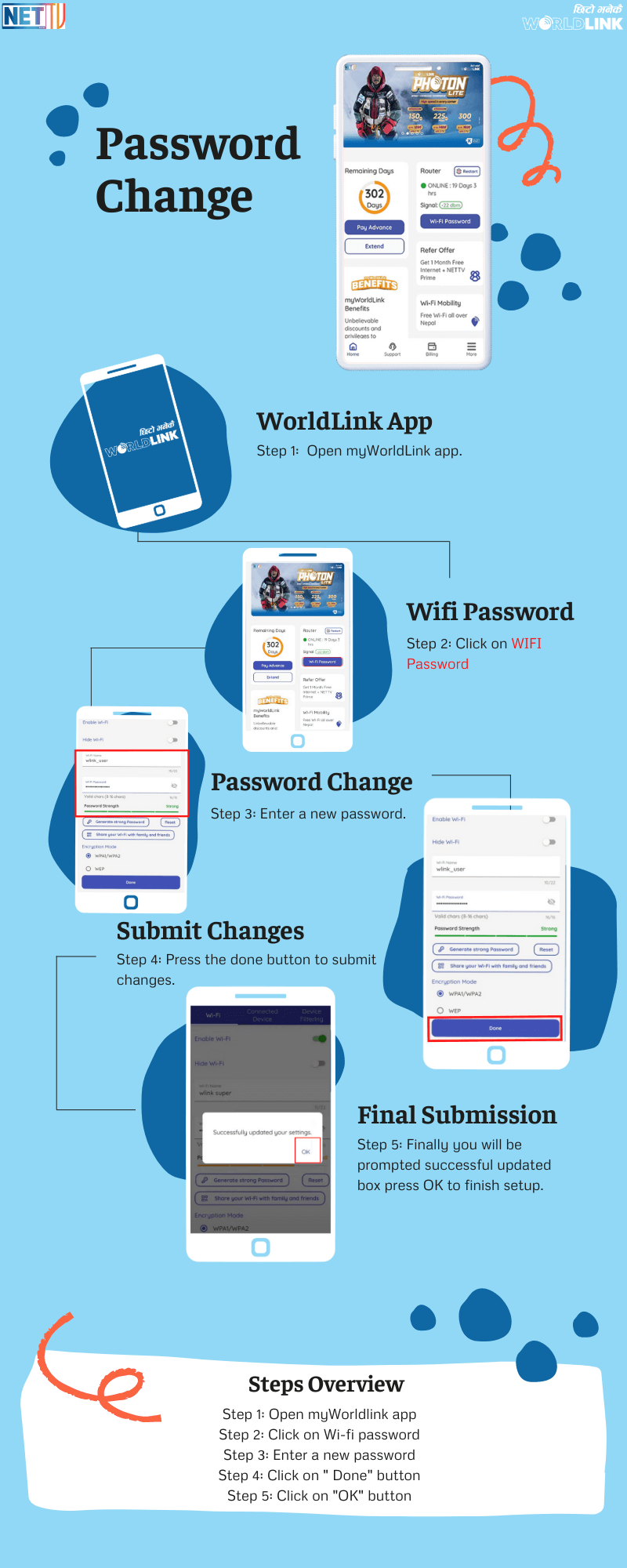
Change worldlink wifi password

2 Simple Steps to Fix Url Injection | How to Fix Url Injection

What is URL Injection?

URL injection occurs when a hacker gets hacked into your site and create or inject a new random blank pages URL. These pages often contain redirection code that redirects your site to another third party site like porn, business sites, etc.

These injections can happen due to:

  • An unsecured server file directory in Cpanel
  • WordPress Nulled or Cracked Themes and Plug-ins
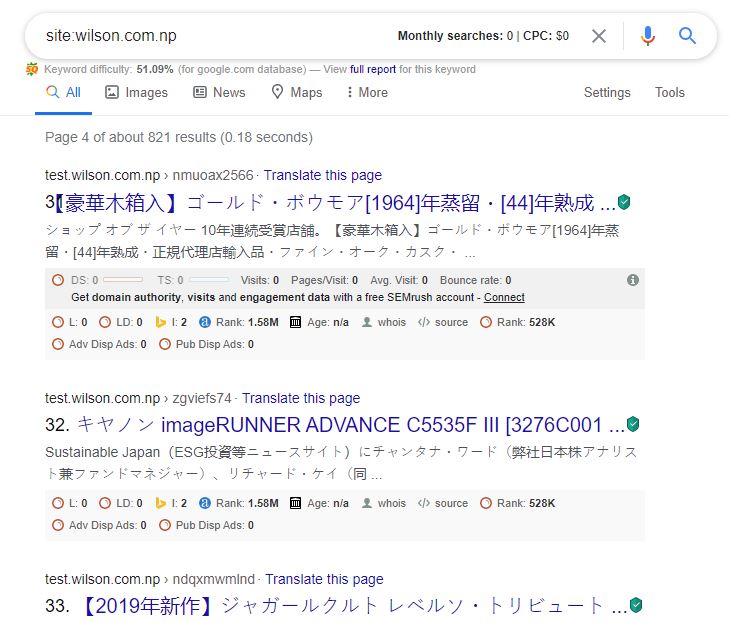
Url injection bot traffic on website

What happens when URL injection happens to your site?

  • Random URL will be index in Google Search Engine (Which will have an effect on SEO and Adsense will get deactivate from your site.)
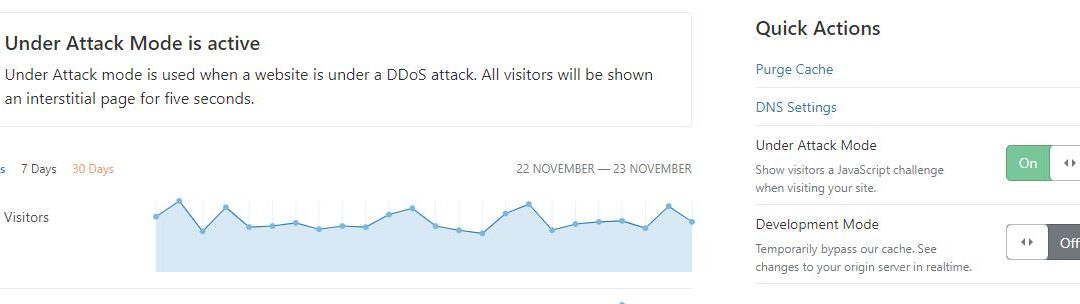
  • Lots of Bot Traffic will visit your site. It will have an effect on Google Analytics report. (Unreal Bounce Rate, Unreal Page Views, Lots of 404 page redirection, etc.) It is also known as a DDoS attack.
Fix url injection on website by using cloudflare, bot traffic fix problem

How to Fix Url Injection?

2 Simple Steps to fix this:

  1. Create a Cloudflare account and register your site to Cloudflare.
  2. Enable Under attack Mode.

Then Just need to wait for a few days, the bot traffic will be blocked from your site.

Then Go to Google Search Console and remove unwanted random URL created by URL injection.