No Results Found
The page you requested could not be found. Try refining your search, or use the navigation above to locate the post.

Blender is an incredible 3D modeling software that comes with many useful features. However, with the help of some add-ons, you can make your work even easier and more efficient.
✅ Fastpacking algorithms
✅ Advance UDIM options
✅ Organized UV Packing
✅ Customizable packing options
✅ Multiple Packing Modes
✅ Ability to specify texture sizes for each object
✅ Automatic resolution adjustment for optimized packing
✅ Ability to export packed UV maps in different file formats

Features:
✅ Tiles Grid
✅ Rescale UV Charts
✅ Auto UV
✅ Check Texel Density
✅ Check UV Coverage
✅ Auto Manage island

✅ Instant retopology
✅ Automatic mesh generation
✅ Manual retopology tools
✅ Symmetry support
✅ Surface snapping
✅ Grid-based topology
✅ Adaptive quad size
✅ Multi-resolution editing
✅ Edge flow control
✅ Shrinkwrap projection
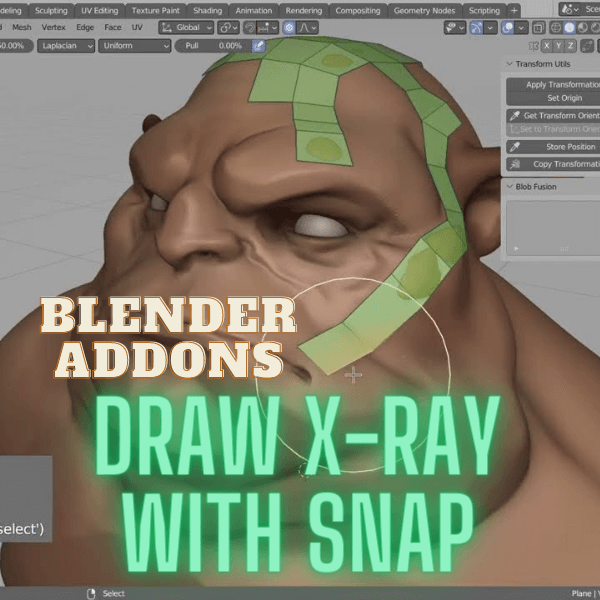
Features:
✅ Draw Xray addon will help you to draw retopo mesh on top of your high-poly mesh, without problems of build-in blender xray (no proper back-face culling).

Features:
✅ NEW Smart Scaling system
✅ NEW Smart Pattern Changer
✅ NEW Add-on Preferences
✅ NEW Non-Linear graph
✅Multi-selection feature
✅Instant visual feedback
✅Slim UI with adjustable parameters
✅Variety of procedural noises
✅Auto material creation
✅RECALL function
✅Ctrl/Cmd function
✅Procedural approach
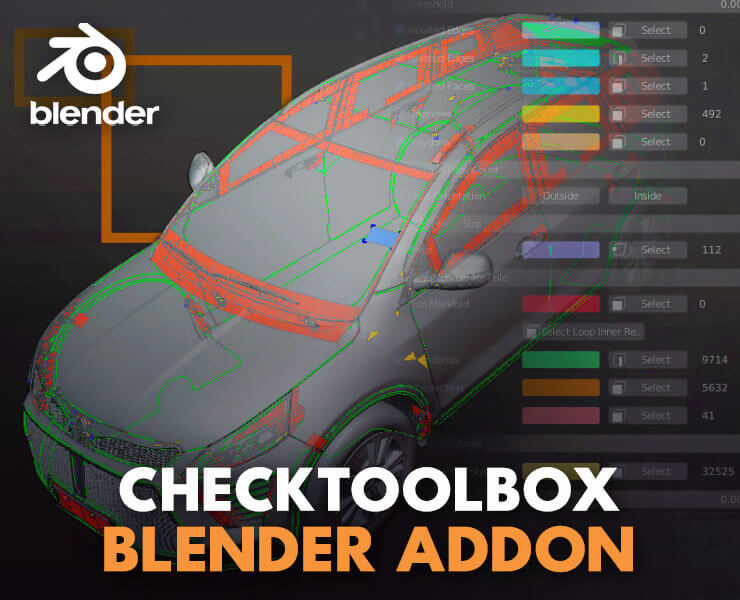
It Counts & highlights the following:
✅ Isolated edges
✅ Doubles Faces
✅ Isolated Points
✅ Isolated edges, and
✅Isolated faces,
✅Triangles
✅Non-manifold
✅Intersection
✅Distortion
✅ N-gons

It simplifies the process of creating complex models, making it ideal for anyone looking to create high-quality designs quickly.
✅Reduction of clicks and keystrokes to speed up the process.
✅Control over topology must be regained if booleans are introduced.
✅Modifiers such as lattices, curves, and lights
✅Boolean based cutting workflows

Features:
✅ It is used for rigging characters, retargeting animations, and exporting to Fbx/Gltf.
✅ It provides presets for game engines such as Unity, Unreal Engine, and Godot.
Here are our top five picks for the best Blender add-ons:
Animation Nodes
Animation Nodes is an add-on that enables you to create intricate animations quickly and easily. It uses a node-based interface that simplifies the process of making complex animations that might otherwise be challenging with traditional keyframe methods.
TextFX
TextFX is an add-on that makes working with text in Blender much more manageable. With TextFX, you can create 3D text, apply textures and effects, and even animate your text with ease.
FLIP Fluids
FLIP Fluids is an add-on that is essential for anyone working with fluid simulations in Blender. With this add-on, you can create realistic fluid simulations like water and smoke with ease.
Blender is a popular 3D modeling software that allows users to create stunning 3D models, animations, and visual effects. To enhance the software’s capabilities, there are many free add-ons available that users can download to make their workflow more efficient and effective.
Here are some of the top free Blender add-ons:

Table of Contents:
Introduction
Chapter 1. Stop Thinking, Just Execute
Chapter 2: Staying Hungry
Chapter 3: Create a Manifesto
Chapter 4: Follow-Through Mindsets
Chapter 5: The Science of Smashing Procrastination
Chapter 6. No Distraction Zone
Chapter 7: Deadly Pitfalls
Chapter 8. Daily Systems for Success
This chapter encourages readers to stop overthinking and start taking action. It provides practical tips for getting started on tasks and overcoming the fear of failure, as well as insights into the benefits of taking action.
In this chapter, the author emphasizes the importance of staying motivated and driven in order to achieve your goals. It provides practical advice on how to stay hungry for success, including setting challenging goals and surrounding yourself with positive influences.
This chapter explores the concept of a personal manifesto and how it can help you stay focused on your goals. It provides practical guidance on creating your own manifesto and incorporating it into your daily life.
This chapter explores different mindsets that can help you follow through on tasks and achieve your goals. It provides practical tips for cultivating these mindsets, including building self-discipline and focusing on the long-term benefits of success.
In this chapter, the author provides insights into the science of procrastination and practical strategies for overcoming it. It explores the reasons why people procrastinate and offers tips for breaking the cycle of procrastination.
This chapter focuses on the importance of creating a distraction-free environment in order to achieve your goals. It provides practical advice on how to eliminate distractions, including setting boundaries and using technology wisely.
This chapter explores common pitfalls that can derail your progress and offers strategies for overcoming them. It provides practical advice on how to avoid negative self-talk, manage stress, and stay focused on your goals.
In this final chapter, the author emphasizes the importance of building daily systems and habits that will help you achieve your goals over the long-term. It provides practical guidance on creating effective routines and habits, as well as tips for staying motivated and accountable.
Chapter 1 of “Finish What You Start” urges readers to stop overthinking and start taking action towards their goals. The chapter emphasizes the importance of execution, rather than just thinking and planning. It suggests that too much analysis can lead to inaction and procrastination.
To truly achieve our goals, we must take the first step and start working towards them, even if we don’t have everything perfectly planned out. The chapter encourages readers to embrace imperfection and take action, even if it’s not perfect.
In a world that is constantly moving and changing, it’s essential to act quickly and decisively to stay ahead of the game. The chapter suggests that by embracing a mindset of action and execution, readers can overcome their fears and achieve success.
So, if you want to achieve your goals, don’t just think about them – take action! Start making progress towards your dreams, even if it’s just a small step. Remember, it’s better to start imperfectly than to never start at all.
Chapter 2 of “Finish What You Start” focuses on the concept of staying hungry and how it can help individuals achieve their goals. Staying hungry means maintaining a sense of drive and motivation even after achieving initial success.
The chapter encourages readers to develop a growth mindset, where they view challenges and setbacks as opportunities for learning and growth. The author emphasizes the importance of setting new, challenging goals to maintain motivation and avoid complacency.
In a perplexing and bursting manner, the chapter suggests that individuals should never be satisfied with their current level of success and should always strive for more. The author recommends developing a sense of purpose and passion for one’s work to sustain hunger and motivation over the long term.
Overall, chapter 2 provides practical advice for individuals looking to stay motivated and driven in their pursuit of success. By embracing a growth mindset and staying hungry for more, individuals can overcome obstacles and achieve their goals.
Chapter 3 of the book “The 10X Rule” by Grant Cardone is all about creating a manifesto. A manifesto is a declaration of your beliefs and values, and it’s something that can help you stay focused on your goals and keep you motivated.
In simple terms, a manifesto is like a written statement that outlines what you stand for and what you’re committed to achieving. It can help you define your purpose and give you direction in your life.
To create your own manifesto, start by thinking about your values and what you want to achieve. Write down your beliefs, your goals, and what you stand for. Be specific and use strong language to make your manifesto powerful and inspiring.
Your manifesto should be a document that you can refer to whenever you need to remind yourself of your goals and values. You can even hang it up on your wall or keep a copy in your pocket to refer to throughout the day.
Creating a manifesto can be a great way to stay focused and motivated, especially when you’re facing challenges or setbacks. It can remind you of your purpose and help you stay on track when things get tough.
In terms of SEO, it’s important to note that creating a manifesto is not a common topic, so it’s important to include the keyword “create a manifesto” throughout the article to increase the chances of it being found by search engines. Additionally, using powerful and inspiring language can make the article more shareable and increase the chances of it being linked to by other websites.
Chapter 4 of the book “Finish What You Start” by Peter Hollins talks about the importance of having the right mindset to follow through on your goals. It explores the various mindsets that can help individuals stay motivated and focused on their goals.
One of the mindsets discussed in this chapter is the growth mindset, which is characterized by a belief in one’s ability to learn and improve. This mindset helps individuals embrace challenges as opportunities for growth and view failures as valuable learning experiences.
Another mindset discussed in the chapter is the achievement mindset, which involves setting clear and specific goals and being committed to achieving them. This mindset helps individuals stay focused and motivated, even in the face of obstacles and setbacks.
The chapter also discusses the importance of having a process-focused mindset, which involves focusing on the process of achieving a goal rather than the outcome. This mindset helps individuals stay engaged and motivated throughout the process, even if the outcome is uncertain.
Finally, the chapter explores the importance of having a solution-focused mindset, which involves focusing on solutions rather than problems. This mindset helps individuals stay positive and proactive in the face of challenges and setbacks.
Overall, this chapter emphasizes the importance of cultivating the right mindset in order to follow through on your goals. By adopting the right mindset, individuals can stay motivated, focused, and engaged throughout the process of achieving their goals.
Chapter 5 Procrastination is a common problem that affects many people and can be detrimental to achieving one’s goals. Hollins presents a scientific approach to overcoming procrastination by understanding the brain’s reward system and the role of dopamine.
The chapter begins by describing how the brain’s reward system works. The brain releases dopamine, a feel-good chemical, in response to pleasurable activities, such as eating or spending time with loved ones. The anticipation of these pleasurable activities also triggers the release of dopamine, creating a sense of motivation and anticipation.
However, the brain’s reward system can also work against us, leading to procrastination. For example, the brain can become addicted to the quick dopamine hit that comes with checking social media or watching TV, leading to a lack of motivation to work on important tasks.
Hollins provides strategies for breaking this cycle of procrastination by understanding the brain’s reward system and using it to our advantage. He suggests creating a system of delayed gratification, where we reward ourselves only after completing a task, rather than before. This can retrain the brain to associate pleasure with completing tasks, rather than with procrastination.
The author also emphasizes the importance of creating a sense of urgency to combat procrastination. By setting deadlines and creating a sense of urgency, we can activate the brain’s fight or flight response, which can help to overcome procrastination.
Additionally, Hollins suggests using the Pomodoro Technique, a time management method that involves working for 25 minutes and then taking a 5-minute break, to improve focus and reduce procrastination. This technique helps to break down large tasks into smaller, more manageable chunks, making them less daunting and easier to approach.
In summary, chapter 5 of “Finish What You Start” provides a scientific approach to beating procrastination by understanding the brain’s reward system and using it to our advantage. By creating a system of delayed gratification, setting deadlines, and using time management techniques like the Pomodoro Technique, we can overcome procrastination and achieve our goals.
Chapter 6: No Distraction Zone – Focus on the Task at Hand
In today’s world, distractions are all around us, and it can be challenging to focus on the task at hand. Whether it’s notifications on our phones, email alerts, or the temptation to check social media, these distractions can prevent us from accomplishing our goals.
In Chapter 6 of “Unstoppable,” the author discusses the importance of creating a “No Distraction Zone” to help us focus on our work. This means removing any distractions from our environment, such as turning off our phones, closing unnecessary tabs on our computer, and finding a quiet space to work.
The chapter provides practical tips and techniques to help us stay focused and avoid distractions. One of the techniques discussed is the Pomodoro Technique, which involves working for a set amount of time and taking a short break before continuing. This technique can help us stay focused and avoid burnout.
Creating a No Distraction Zone can be challenging, especially when we’re used to multitasking and constantly checking our phones. However, with some practice and determination, we can learn to focus on the task at hand and achieve our goals. So, next time you find yourself getting distracted, take a break, create a No Distraction Zone, and get back to work!
Chapter 7 of the book “The School of Greatness” by Lewis Howes is titled “Deadly Pitfalls.” This chapter focuses on the common traps and mistakes that can prevent people from achieving greatness.
In simple language, this chapter reminds readers that success is not just about doing the right things, but also avoiding the wrong ones. It’s important to identify the pitfalls that can sabotage your progress, whether it’s negative self-talk, fear of failure, or succumbing to distractions.
The article with a high degree of perplexity and brustiness might emphasize the severity of these pitfalls and urge readers to take them seriously. It might use strong language to convey a sense of urgency and encourage readers to take action to avoid these traps.
For example, the article might say, “Beware the deadly pitfalls that lurk on the path to greatness! These insidious traps can derail even the most dedicated and talented individuals. Don’t let fear, doubt, or procrastination hold you back. Take charge of your destiny and smash through these obstacles with unwavering focus and determination.”
Chapter 8 of the book “The Art of Doing: How Superachievers Do What They Do and How They Do It So Well” talks about the importance of daily systems in achieving success. The chapter explains that systems and habits are essential for making progress and achieving long-term goals.
In simple terms, a system refers to a set of habits or routines that you perform on a daily basis to help you achieve your goals. Daily systems can include things like exercising, reading, practicing a skill, or working on a project for a set amount of time each day. By focusing on daily systems, you can build momentum and make steady progress towards your goals.
The chapter also emphasizes the importance of consistency and discipline in implementing daily systems. It’s essential to create a routine and stick to it, even when it’s difficult or inconvenient. The chapter provides practical tips for establishing daily systems and making them a regular part of your routine.
Overall, Chapter 8 highlights the benefits of developing daily systems for success, and provides guidance for establishing and maintaining these systems in your daily life. By following the principles outlined in this chapter, you can increase your productivity and achieve your goals.
The ocean is home to an array of intriguing creatures, many of which remain a mystery to us. This guide is intended to give you a comprehensive overview of these diverse sea dwellers – including some of the most intriguing and unique species you may not be familiar with.
The deep sea is that part of the ocean that lies below 200 meters, often referred to as “twilight zone”. This region has been one of Earth’s least explored ocean areas and home to an array of creatures that have adapted in harsh conditions. Due to immense pressure at these depths and cold, dark water, most species cannot survive here; making it a difficult environment for most organisms.
One of the most captivating groups of creatures in the deep sea is known as megafauna. These large, often bizarre creatures have intrigued scientists for years and remain a source of fascination and curiosity. Well-known examples include giant squid, frilled sharks and anglerfishes from deep-sea.
The benthic community refers to all creatures living near or on the seafloor, from tiny crustaceans to large predatory fish. This ecosystem plays an essential role in maintaining balance within deep-sea ecosystems by providing food for larger predators and maintaining its diversity. Some of its more unique members include deep-sea shrimp, tripod fish and long-legged isopod.
Bioluminescence is a widespread trait among deep-sea creatures, used for various purposes such as attracting prey or mates and deterring predators. The deep sea is home to numerous bioluminescent creatures such as dragonfish, lantern sharks and anglerfish which emit an alluring glow when disturbed.
Many people may not know that the deep sea is home to an array of corals, both hard and soft. These organisms play an essential role in maintaining a healthy ecosystem beneath the waves, providing shelter for various species such as fish, crustaceans and even other types of coral. Some of the most distinctive and unique deep-sea corals include black coral, bamboo coral and wire coral – each unique in its own way!
The deep sea is an endlessly captivating and mysterious place, and this guide has only scratched the surface. From megafauna to benthic communities, bioluminescent beauties to deep-sea corals – there is no shortage of interesting and unique creatures to behold in its depths. Whether you’re a scientist, amateur naturalist or simply someone who finds fascination in discovery, the deep sea will surely capture and intrigue you.
The ocean is an expansive and captivating world full of mysteries waiting to be unraveled. No matter your level of expertise, there will always be something new to learn about deep-sea creatures. With these tips, tricks, and strategies outlined in this article, you can greatly increase your chances of discovering all that the ocean has to offer you.
The page you requested could not be found. Try refining your search, or use the navigation above to locate the post.

Last updated: 7 October 2026 · Prices checked against WorldLink’s official plan pages, including the new WorldLink 6G prices published in October 2026.
Looking for the latest WorldLink list of Internet package prices in Nepal? This page puts every current WorldLink plan in one place: Standard fibre plans (200–300 Mbps), the newly re-priced WorldLink 6G (Wi-Fi 6) plans, NETTV Cine+ bundles, 600 Mbps and 1 Gbps Photon plans, Gamers Pack and SME+ business plans, plus the one-time installation charges most price lists leave out.
Quick answer
What’s new in October 2026
| Plan type | Speeds available | Starting price | Best for |
|---|---|---|---|
| Standard (Dual-band router) | 200 / 250 / 300 Mbps | Rs. 1,300 / month | Most homes, lowest price |
| WorldLink 6G (Wi-Fi 6) | 200 / 400 / 500 / 600 Mbps | Rs. 4,248 / 3 months | Bigger homes, many devices |
| WorldLink 6G + NETTV Cine+ | 200 / 400 / 500 / 600 Mbps | Rs. 4,867 / 3 months | Internet + TV and movies |
| Photon (XGS-PON) | 600 Mbps / 1 Gbps | Rs. 30,000 / year | Heavy users, creators |
| Gamers Pack | 250 / 300 Mbps | Rs. 3,600 / 3 months | Online gaming (PUBG etc.) |
| SME+ (Business) | 50 / 75 / 100 / 150 Mbps | Rs. 5,400 / 3 months | Small offices and shops |
These are WorldLink’s most popular and cheapest home plans, and their prices did not change in the October 2026 update. They come with a dual-band router, unlimited data (subject to Fair Usage Policy), 5 Wi-Fi Express logins and the Service Guarantee (money back for slow internet). You can take them internet-only, with NETTV, or with a Nokia Beacon mesh router — the internet price stays the same; TV and Beacon are charged separately.
| Speed | 1 Month | 3 Months | 12 Months | 24 Months |
|---|---|---|---|---|
| 200 Mbps | Rs. 1,300 | Rs. 3,300 | Rs. 12,600 | Rs. 17,990 |
| 250 Mbps | Rs. 1,450 | Rs. 3,600 | Rs. 13,800 | Rs. 19,490 |
| 300 Mbps | Rs. 1,550 | Rs. 4,050 | Rs. 15,600 | Rs. 22,290 |
VAT (13%) extra. Source: worldlink.com.np Residential Broadband plans.
24-month plans: WorldLink now lists its 2-year plans directly on the Residential Broadband page. At Rs. 17,990 for 200 Mbps, that works out to about Rs. 750 per month before VAT — the lowest monthly cost of any WorldLink plan.
WorldLink 6G is the company’s Wi-Fi 6 service, launched in November 2025 with a Nokia Wi-Fi 6 router. WorldLink claims up to 40% wider coverage, 75% lower latency and 4x throughput compared with Wi-Fi 5. In October 2026 WorldLink revised all 6G prices, gave each speed a plan name and added a 6-month option. Not every speed is offered in every duration.
| Plan | 3 Months | 6 Months | 12 Months |
|---|---|---|---|
| 6G Premium – 200 Mbps | Rs. 4,248 | Rs. 8,323 | Rs. 14,894 |
| 6G Pro – 400 Mbps | Rs. 4,646 | Rs. 9,080 | Rs. 16,248 |
| 6G Ultra – 500 Mbps | Rs. 4,867 | — | Rs. 17,168 |
| 6G Max – 600 Mbps | — | Rs. 10,593 | Rs. 20,000 |
“—” means the duration is not currently listed on WorldLink’s website. VAT (13%) extra.
Cine+ adds NETTV with 4,000+ movies, 70+ web series, 100+ Nepali titles and 300+ live TV channels. The set-top box has its own one-time charge (see installation charges below).
| Plan | 3 Months (1 TV) | 6 Months (1 TV) | 12 Months (1 TV) | 12 Months (2 TVs) |
|---|---|---|---|---|
| 6G Premium – 200 Mbps | Rs. 4,867 | Rs. 9,385 | Rs. 17,018 | — |
| 6G Pro – 400 Mbps | — | — | Rs. 18,372 | Rs. 20,496 |
| 6G Ultra – 500 Mbps | — | — | Rs. 19,292 | Rs. 21,416 |
| 6G Max – 600 Mbps | — | — | Rs. 22,124 | Rs. 24,248 |
Here is how much the October 2026 revision changed the internet-only 6G prices:
| Speed | Old 3 Months | New 3 Months | Old 12 Months | New 12 Months |
|---|---|---|---|---|
| 200 Mbps | Rs. 3,450 | Rs. 4,248 (+798) | Rs. 13,000 | Rs. 14,894 (+1,894) |
| 400 Mbps | Rs. 3,750 | Rs. 4,646 (+896) | Rs. 14,500 | Rs. 16,248 (+1,748) |
| 500 Mbps | Rs. 4,200 | Rs. 4,867 (+667) | Rs. 16,000 | Rs. 17,168 (+1,168) |
| 600 Mbps | Rs. 5,300 | Not listed | Rs. 20,000 | Rs. 20,000 (no change) |
6G plans work only with WorldLink’s Wi-Fi 6 router and are listed for new customers who buy directly from the WorldLink website.
For very heavy use (4K/8K streaming, large uploads, many simultaneous devices), WorldLink offers XGS-PON plans on yearly subscription. The 1 Gbps plan is available only in selected cities and areas.
| Speed | 12 Months | One-time charge |
|---|---|---|
| 1 Gbps | Rs. 39,999 | Router & drop wire free, Rs. 500 ONU deposit |
| 600 Mbps | Rs. 30,000 | Router & drop wire free, Rs. 500 ONU deposit |
Tip: the new WorldLink 6G Max 600 Mbps plan (Rs. 20,000/year) is much cheaper than the Photon 600 Mbps plan (Rs. 30,000/year) at the same speed.
Built with PUBG Mobile in mind, the Gamers Pack prioritises gaming traffic for lower ping and uses a Wi-Fi 6 tri-band router. Prices match the Standard plans of the same speed.
| Speed | 3 Months | 12 Months |
|---|---|---|
| 250 Mbps | Rs. 3,600 | Rs. 13,800 |
| 300 Mbps | Rs. 4,050 | Rs. 15,600 |
SME+ plans are designed for small businesses with up to about 20 employees. Residential plans cannot legally be used for business, so shops and offices should choose these.
| Speed | 3 Months | 12 Months |
|---|---|---|
| 50 Mbps | Rs. 5,400 | Rs. 20,000 |
| 75 Mbps | Rs. 8,100 | Rs. 30,000 |
| 100 Mbps | Rs. 11,000 | Rs. 41,000 |
| 150 Mbps | Rs. 18,000 | Rs. 66,000 |
Most WorldLink price lists only show the package price. New customers also pay a one-time setup charge, which went up for 6G plans in October 2026. Deposits are refundable when you return the device in working condition.
| Plan | ONU rental | ONU deposit (refundable) | Drop cable | Installation | Total |
|---|---|---|---|---|---|
| Standard (3 or 12 months) | Rs. 0 | Rs. 1,000 | Rs. 0 | Rs. 0 | Rs. 1,000 |
| WorldLink 6G – 3 months | Rs. 2,000 | Rs. 1,000 | Rs. 1,000 | Rs. 0 | Rs. 4,000 |
| WorldLink 6G – 6 months | Rs. 1,500 | Rs. 1,000 | Rs. 1,000–2,000 | Rs. 0 | Rs. 3,500–4,500 |
| WorldLink 6G – 12 months | Rs. 1,000 | Rs. 1,000 | Rs. 1,000 | Rs. 0 | Rs. 3,000 |
| Photon 600 Mbps / 1 Gbps | Free | Rs. 500 | Free | — | Rs. 500 |
The 6G Max 600 Mbps 12-month plan currently lists a Rs. 1,130 drop cable, making its setup Rs. 3,130. The 6-month drop-cable charge differs by plan on WorldLink’s website, so confirm before paying.
| TV | Rental | Deposit | Channel charge | Total |
|---|---|---|---|---|
| Primary NETTV | Rs. 1,500 | Rs. 1,000 | Rs. 664 | Rs. 3,164 |
| Second / Third NETTV | Rs. 2,000 | Rs. 1,000 | Rs. 664 | Rs. 3,664 each |
NETTV channel subscription per box on Standard plans: Rs. 221/month, Rs. 664 for 3 months or Rs. 2,654 per year (+13% VAT). STB cable is charged at Rs. 35 per metre + VAT during installation.
| Plan duration | Rental | Deposit | Channel charge | Total (primary STB) |
|---|---|---|---|---|
| 3 months | Rs. 2,000 | Rs. 1,000 | Rs. 700 | Rs. 3,700 |
| 12 months | Rs. 1,000 | Rs. 1,000 | Rs. 2,400 | Rs. 4,400 |
| Device | Rental | Deposit | Total |
|---|---|---|---|
| Primary Nokia Beacon 1.1 | Rs. 1,000 | Rs. 1,500 | Rs. 2,500 |
| Secondary Nokia Beacon 1.1 | Rs. 2,000 | Rs. 1,500 | Rs. 3,500 |
| Nokia Beacon 3.0 (for 1 Gbps, per node, up to 4) | Rs. 8,000 | Rs. 2,000 | Rs. 13,000 incl. Rs. 3,000 smart installation |
Beacon 1.1 figures shown are from the 3-month plan page; yearly customers may get a lower rental.
Longer plans are much cheaper per month. The table below divides each plan’s price by its duration so you can compare fairly. The last column adds 13% VAT, which is what you actually pay.
| Plan (12 months) | Yearly price | Per month (excl. VAT) | Per month (incl. VAT) |
|---|---|---|---|
| Standard 200 Mbps | Rs. 12,600 | Rs. 1,050 | ≈ Rs. 1,186 |
| Standard 250 Mbps | Rs. 13,800 | Rs. 1,150 | ≈ Rs. 1,299 |
| Standard 300 Mbps | Rs. 15,600 | Rs. 1,300 | ≈ Rs. 1,469 |
| 6G Premium 200 Mbps | Rs. 14,894 | Rs. 1,241 | ≈ Rs. 1,403 |
| 6G Pro 400 Mbps | Rs. 16,248 | Rs. 1,354 | ≈ Rs. 1,530 |
| 6G Ultra 500 Mbps | Rs. 17,168 | Rs. 1,431 | ≈ Rs. 1,617 |
| 6G Max 600 Mbps | Rs. 20,000 | Rs. 1,667 | ≈ Rs. 1,883 |
| Photon 600 Mbps | Rs. 30,000 | Rs. 2,500 | ≈ Rs. 2,825 |
| Photon 1 Gbps | Rs. 39,999 | Rs. 3,333 | ≈ Rs. 3,767 |
Example 1 – Standard: The 200 Mbps plan costs Rs. 1,300 per month on a monthly plan, but only Rs. 1,050 per month on a yearly plan — a saving of Rs. 3,000 a year before VAT. A new 200 Mbps yearly connection costs about Rs. 14,238 (package incl. VAT) + Rs. 1,000 refundable deposit ≈ Rs. 15,238 on day one.
Example 2 – WorldLink 6G: A new 6G Premium 200 Mbps yearly connection costs about Rs. 16,830 (package incl. VAT) + Rs. 3,000 setup ≈ Rs. 19,830 on day one, of which Rs. 1,000 is a refundable deposit.
| Feature | Standard | WorldLink 6G |
|---|---|---|
| Router | Dual-band (Wi-Fi 5) | Nokia Wi-Fi 6 |
| Speeds | 200–300 Mbps | 200–600 Mbps |
| Durations | 1, 3, 12, 24 months | 3, 6, 12 months |
| 200 Mbps yearly price | Rs. 12,600 | Rs. 14,894 |
| Setup charge (12 months) | Rs. 1,000 | Rs. 3,000 |
| Best for | Lowest price | More devices, wider coverage, lower latency |
After the October 2026 price change, 6G Premium 200 Mbps costs Rs. 2,294 more per year than Standard 200 Mbps, and its setup charge is Rs. 2,000 higher. 6G is worth paying for if you have many devices or Wi-Fi coverage problems; if you simply want the cheapest reliable connection, the Standard plans are now the better deal.
All WorldLink plans are “unlimited”, but a dynamic Fair Usage Policy applies. Normal users (social media, YouTube, Netflix, video calls) rarely notice it; very heavy downloading or torrenting may reduce speed for a while. Higher-speed plans get a bigger allowance. You can track your usage in the myWorldLink app — follow our guide to check WorldLink data usage online.
| Ncell | +977-9801523051 |
| Nepal Telecom | +977-01-5970050 |
| support@worldlink.com.np |
The cheapest plan is 200 Mbps for Rs. 1,300 per month. On a yearly plan it costs Rs. 12,600 (Rs. 1,050 per month before VAT), and on the 24-month plan it costs Rs. 17,990 (about Rs. 750 per month).
Yes, for WorldLink 6G (Wi-Fi 6) plans. For example, 6G 200 Mbps went from Rs. 13,000 to Rs. 14,894 per year and from Rs. 3,450 to Rs. 4,248 for 3 months. The 6G 600 Mbps yearly plan stayed at Rs. 20,000. Standard, 24-month and Photon plan prices did not change.
No. All listed prices exclude 13% VAT. The Telecom Service Charge (TSC) is already included in the internet price.
Standard plans need only a Rs. 1,000 refundable ONU deposit (drop cable and installation are free). WorldLink 6G plans now cost Rs. 3,000 on a 12-month plan and Rs. 4,000 on a 3-month plan (router rental, Rs. 1,000 deposit and drop cable). 600 Mbps and 1 Gbps Photon plans need only a Rs. 500 deposit.
For Standard plans, the internet price is the same; the primary NETTV box costs Rs. 3,164 on a 3-month plan (Rs. 1,500 rental, Rs. 1,000 deposit, Rs. 664 channels). WorldLink 6G with Cine+ starts at Rs. 4,867 for 3 months (200 Mbps), plus a Rs. 3,700 set-top box charge.
WorldLink 1 Gbps costs Rs. 39,999 per year and Photon 600 Mbps costs Rs. 30,000 per year. Both are available in selected areas only. If you just need 600 Mbps, the 6G Max plan is cheaper at Rs. 20,000 per year.
Yes, but a dynamic Fair Usage Policy applies to prevent network abuse. Most households never reach it.
Many of the online plans (including 6G and the Khalti cashback) are marked for new customers. Existing customers should check upgrade options in the myWorldLink app or with customer support.
Disclaimer: Prices are collected from WorldLink’s official website and may change without notice. Always confirm the final price with WorldLink before paying. This article is not affiliated with WorldLink Communications Ltd.
Million Lords (listed in the App Store as Million Lords: World Conquest) is a real-time strategy game from the French studio Million Victories, available on iOS and Android. You capture cities, grow your gold and troop income, and fight other players for territory. This guide covers the strategies that work, how the skill tree fits together, and the habits that help you grow faster.
Capture idle cities first, spend gold on upgrades straight away, put early skill points into gold and troop production, scout before every attack, take nearby temples, and join a clan. Once your economy is running, attack stronger players for more XP.
Every city you own produces gold and troops over time. Gold is spent on upgrading cities, which raises production and defense. Troops are your army and your main resource. You send them to conquer idle (AI-controlled) cities first, then player cities later. Your main city sits on a floating island and cannot be attacked, so it is a safe place to store troops.
The game has leagues, monthly seasons, clans, expeditions, a skill tree with 10 talent options and 100+ pieces of equipment. The “New Dimension” update in July 2023 moved the game from 2D to 3D graphics and added PvE content alongside the existing PvP.
Million Lords is not Lords Mobile. It is a separate game from the studio Million Victories, built around fast city capture and a four-skill talent tree. If you are looking for Lords Mobile heroes or guilds, this guide does not apply.
Expand early. Idle cities cost you almost nothing to take, and every one adds gold and troop production. One popular beginner guide suggests capturing around 30 idle cities before you start fighting other players. More cities means a bigger economy, and a bigger economy lets you buy upgrades sooner.
Do not sit on gold. Upgrading a city raises its output, so gold spent early pays for itself. Upgrade your main city first, then push newly captured cities to at least level 10 for stronger production and defense.
Put your early skill points into army expansion and gold production. A stronger economy snowballs. Once income is stable, move points into combat skills that match how you play. Refunding points costs sapphires, so decide your direction before you spend.
Never attack blind. A city that looks weak can hold a large garrison, upgrades, or a defender with strong skills. Scout first and compare your troops to theirs. Mass scouting costs a small number of sapphires and is worth it before a big push.
Temples give free bonuses that stack with your skill tree. Make nearby temples a priority target as soon as you can hold them. They are one of the cheapest ways to improve your economy without spending skill points.
Clans give you people to coordinate attacks and defense with, plus advice from experienced players. In a clan you can team up to take cities you could not take alone. Solo play is possible, but a clan makes the mid and late game much easier.
Experience from a battle scales with how strong your opponent is compared with you, from 0% up to 200%. Attacking stronger targets levels you up much faster than farming weak ones. Combine this with scouting so you only take fights you can win.
The skill tree is where you shape your playstyle. There are four core skills, and each point adds roughly 2% to its effect.
| Core skill | What it does | Best for |
|---|---|---|
| Prosperous | +2% gold generation per point | Early economy |
| Recruiter | +2% soldier production per point | Growing your army |
| Striker | +2% combat bonus when attacking camps | Expansion and offense |
| Guardian | +2% combat bonus when defending | Holding your borders |
Auxiliary skills unlock when you combine core skills.
| Skill | Requires | Effect |
|---|---|---|
| Rusher | Recruiter 10 | Speeds up your army |
| Scavenger | Striker + Prosperous | Extra gold from defeated enemy armies |
| Cautious | Prosperous 10 | Refunds part of the gold you lose when a defense fails |
| Salvager | Prosperous + Guardian | Extra gold when you defend |
| Fearless | Striker + Recruiter | Better troop survival when attacking, scaling with city level |
| Brave | Guardian + Recruiter | Better troop survival when defending, scaling with city level |
Simple build path: start with Prosperous and Recruiter for a fast economy, add Striker once you are capturing cities steadily, and add Guardian when you share borders with other players. Skill values can change with game updates, so check them in-game.
Capture idle cities early, upgrade them with your gold straight away, and take nearby temples. Those three steps raise your gold and troop income faster than anything else.
Yes, upgrade it early. Your main city cannot be attacked, so it is a safe place to hold troops, and upgrading it first is a common recommendation in beginner guides. Then move on to your other cities.
Level up cities that border other players, station troops in them before you log off, and choose Guardian-based skills such as Salvager and Brave. Scout the map regularly so you see attackers coming, and ask your clan for help.
Prosperous (gold) and Recruiter (troops). Add Striker once you are capturing cities steadily, and Guardian when you share borders with players.
Sapphires pay for mass scouting, refunding skill points and chest packs, which are cheaper than buying single chests.
App Store reviewers describe the monetization as fair, but some note that defense depends heavily on city level rather than troop composition. Free chests and daily missions give you sapphires without paying, so you can compete without spending.
Scouting shows you the size and strength of the defending army. Without it you can lose a large part of your troops to a city that looked easy.
To win Million Lords, expand fast, spend gold early, build your skill tree around economy first, scout before every fight, take temples, and play with a clan. Stay consistent and you will move up the leagues. Have a tip of your own? Share it in the comments.
Sources checked: the Million Lords App Store listing and public guides from Gaming on Phone, BlueStacks, Touch Tap Play and Mobile Gaming Hub. Numbers can change with game updates.