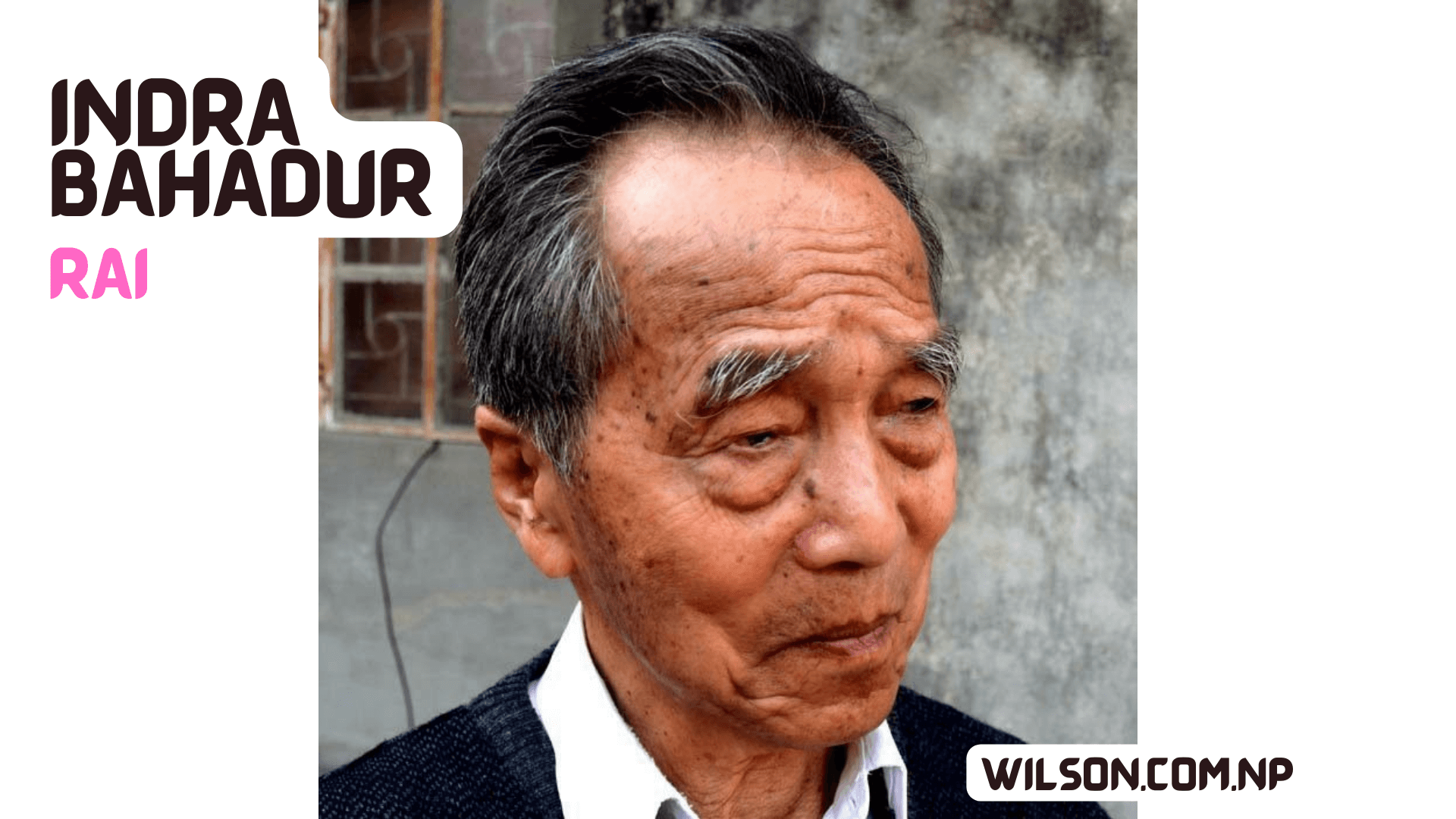
Indra Bahadur Rai: Biography

| Name | Indra Bahadur Rai |
| DOB & DOD | February 3, 1927 – March 27, 2018 |
| Spouse | Durga Rai |
| Children | 2 sons, 2 daughters |
| Address | Darjeeling, India |
| Creations | Novels, short stories, essays |

| Name | Indra Bahadur Rai |
| DOB & DOD | February 3, 1927 – March 27, 2018 |
| Spouse | Durga Rai |
| Children | 2 sons, 2 daughters |
| Address | Darjeeling, India |
| Creations | Novels, short stories, essays |

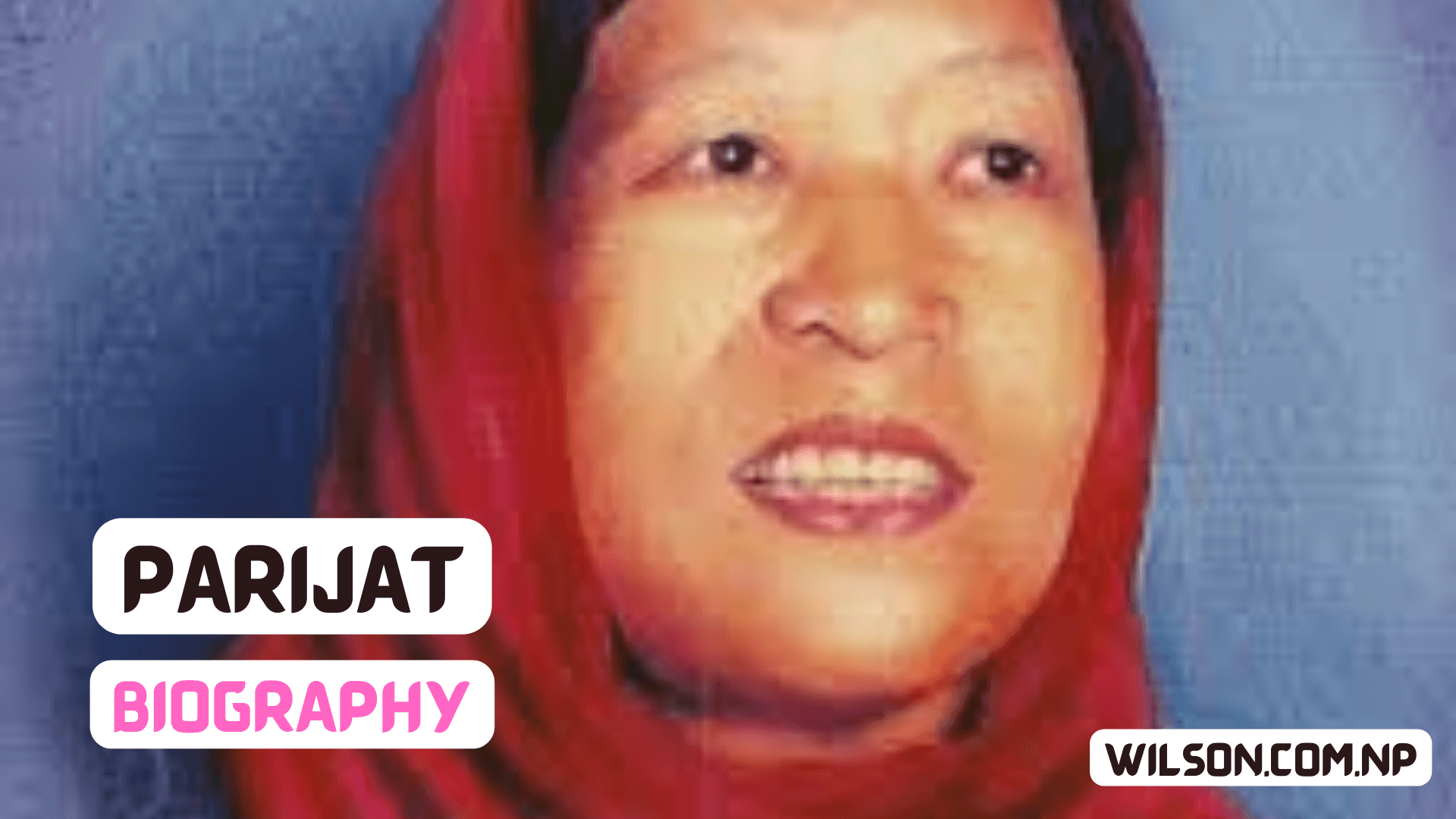
Name: Parijat’s real name was Bishnu Kumari Waiba. For her writing career, however, she chose the pen name ‘Parijat’.
Date of Birth and Death: Parijat was born on September 16, 1937 in Darjeeling, India and passed away on December 4, 1993 in Kathmandu, Nepal.
Spouse’s Name: Parijat never married and did not have a spouse.
Children’s Names: Parijat did not have any children.
Living Address: Parijat lived in several places during her life. She spent her childhood years in Darjeeling, India before moving to Nepal where she settled for most of adulthood.
Creations: Parijat was an accomplished writer and novelist best known for her iconic work “The Blue Mimosa,” published in 1966. This book achieved worldwide acclaim and has been translated into numerous languages. Additionally, Parijat wrote numerous other novels, short stories, and poems that remain timeless classics today.
Parijat was an accomplished writer and novelist best known for her groundbreaking work “The Blue Mimosa,” published in 1966. This book enjoyed immense popularity, being translated into numerous languages. Additionally, Parijat created numerous other novels, short stories, and poems throughout her career.
Thus, to summarize: Parijat was a renowned Nepali writer and novelist renowned for her works that earned her worldwide recognition. Although she never married or had children, her literary creations left behind an incredible legacy. Throughout her life, Parijat lived in various places such as Darjeeling and Kathmandu but her most renowned work “The Blue Mimosa” has been translated into many languages and continues to motivate readers around the globe. Additionally, Parijat produced several other novels, short stories, poems which demonstrate her exceptional talent as a writer. Overall, her contributions to Nepali literature have cemented her place among one of Nepal’s most revered authors of all time.
Her unique writing style captured the essence of Nepali society and culture perfectly; her most acclaimed novel “Shirish Ko Phool” (The Blue Mimosa) is considered to be a classic classic work in this genre, chronicling the life of a young widow living within conservative Nepali society. Parijat’s use of straightforward yet powerful language combined with her capacity for capturing raw human emotions made her works popular; even recognition from within Nepal itself through several honorable awards from government institutions throughout the country.
Parijat Nepali was renowned for her strength of character and indomitable spirit. Despite facing numerous hardships in her personal life – including polio that left her disabled – Parijat never wavered from writing. A feminist at heart, Parijat’s works often highlighted women’s struggles within Nepali society. Additionally, her works displayed great empathy towards others with great sensitivity and understanding; testament to how passionately she pursued literature with this commitment that continues to inspire aspiring authors around Nepali and beyond.
Personal life was filled with struggles and difficulties. She was born in 1937 in Darjeeling, India but moved to Nepal as a child when her family relocated. At 20 years old, Parijat contracted polio which left her disabled for life; yet despite this she pursued writing passionately and became an influential literary figure in Nepal. Married twice but both marriages ended in divorce; unfortunately there were no children born to her until 1993 when tragically she passed away at 56 due to falling from a flight of stairs at age 56 years old. Despite facing numerous personal obstacles throughout her lifetime, Parijat’s legacy as a writer continues to inspire generations of Nepali writers and readers alike.

Changunarayan Temple is an ancient Hindu temple situated atop a hilltop in Bhaktapur district of Nepal and dedicated to Lord Vishnu, believed to be the preserver of the universe in Hindu mythology. Dating back to 4th century, this is considered one of Nepal’s oldest temples and was constructed by King Hari Datta Verma during Licchavi era; it has been listed as a UNESCO World Heritage Site since 1979. Some sources attribute its construction to King Hari Datta Verma while others credit King Manadeva – but it could have involved both as it has undergone numerous renovations and additions over time – its exact origins may never be fully known.
Changunarayan Temple is a revered and holy site for those seeking blessings from Lord Vishnu. Art and history buffs alike appreciate the temple’s ancient architecture and artwork, located only 12km east of Kathmandu by road. A visit to Changunarayan Temple provides an unforgettable opportunity to learn about Nepal’s vibrant cultural and religious heritage.
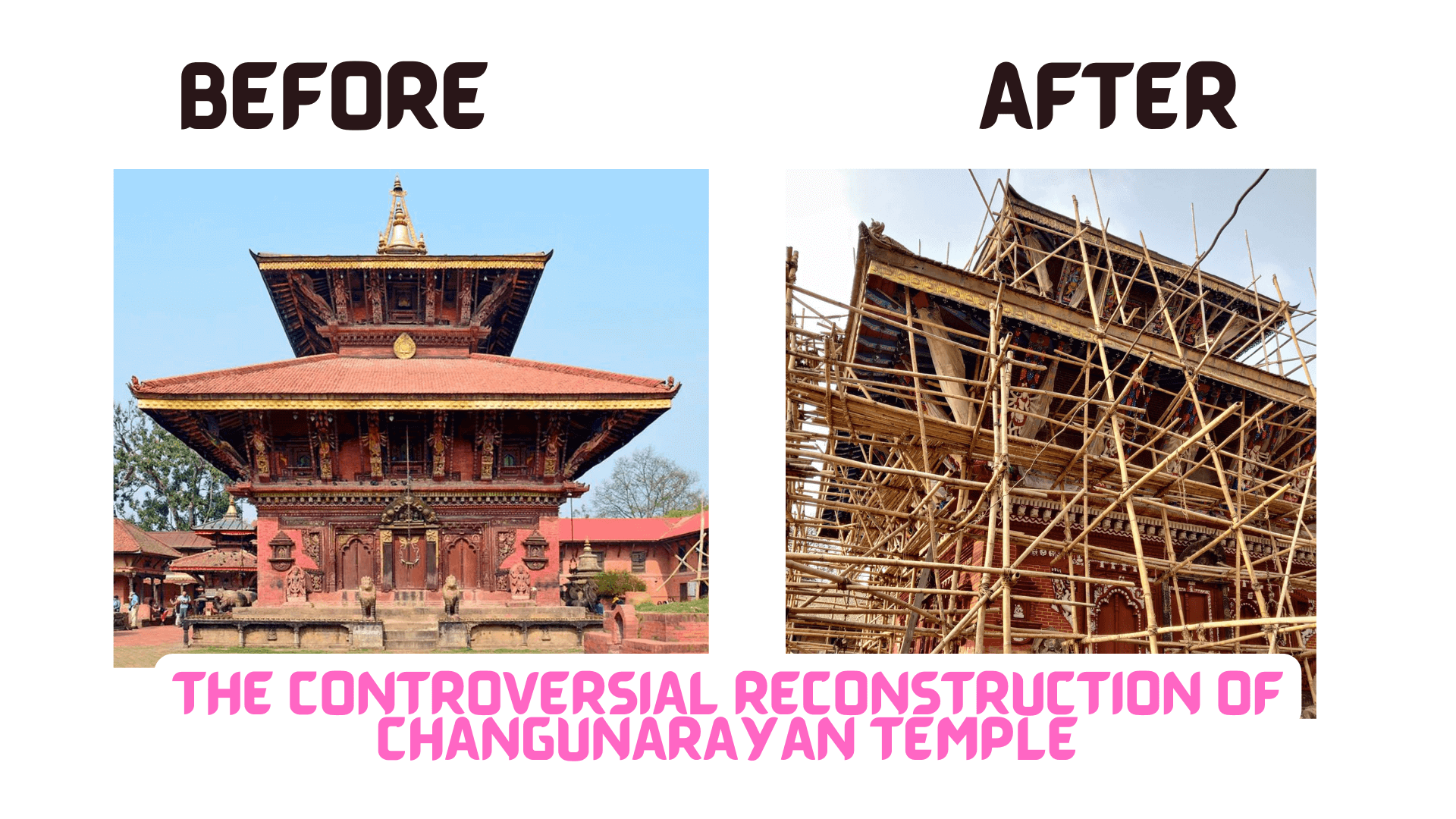
After the earthquake damage, reconstruction efforts for the Changunarayan Temple were necessary. Unfortunately, I’m not entirely convinced about the modern style in which it’s been rebuilt. The use of various colors on its wooden statue takes away from its traditional and historical appeal. Personally, I preferred when the statue was covered in gold metal for a timeless and majestic appearance.
My opinion is that the reconstruction could have been done more successfully if it had kept the temple’s traditional design and architecture while also using modern materials and techniques for durability and safety. Nonetheless, I applaud the authorities’ efforts to preserve its cultural and historical significance and guarantee visitors continue to feel awed and reverence when visiting.
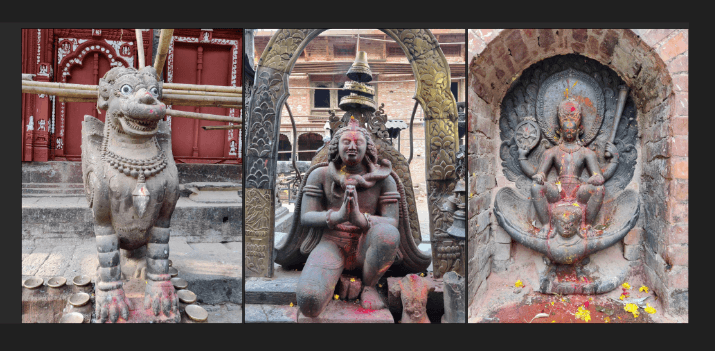
The ancient Changunarayan temple showcases the skills of ancient Nepalese artisans through its stone sculptures, wood carvings, and metalwork. It also houses an iconic idol of Lord Vishnu in a reclining position on Shesha, an infamous serpent.
Contrastingly, the new Changunarayan temple offers contemporary amenities like a paved courtyard, museum and parking lot. This was constructed after the old temple was damaged by an earthquake in 2015.
Changunarayan Temple is an ancient temple located in Nepal built during the 4th century AD to honor Lord Vishnu. Legend has it that it was originally situated along the banks of the Vishnumati River but later relocated due to fears of flooding.
One of the most beloved legends associated with this temple is that of Lord Vishnu and Garuda, his mythical bird vehicle. Legend has it that Garuda was inspired by the beauty and sanctity of the place and settled at its base where today’s main deity stands – depicted reclining on serpent Shesha with his consort Lakshmi at his feet.
Over centuries, this temple has undergone many renovations and restorations, including a major reconstruction after the 2015 earthquake. Despite all of the damage, Nepalese government officials and international organizations worked diligently to restore the temple back to its former glory.
Today, Changunarayan Temple remains a beloved pilgrimage site and cultural and architectural treasure of Nepal. With intricate wood carvings, stone sculptures, and metalwork showcased by Nepalese artisans, visiting this spiritual landmark offers visitors an insight into Nepal’s rich cultural heritage. Visiting Changunarayan Temple is more than just an experience; it’s an opportunity to embrace oneself in spirituality.
Changu Narayan Temple’s story is linked to the demise of Sati in Nepal. Legend has it that Raja Prithvi Narayan Shah, a king in the 18th century, saw a widow about to perform Sati – which involved burning herself on her husband’s funeral pyre. He was horrified and intervened, stopping her from performing it. Subsequently he issued a royal decree banning Sati throughout Nepal and eventually it disappeared from society altogether.
Today, the temple stands as a testament to progress and hope as it was instrumental in ending Sati, Nepal’s barbaric practice of ritualistic killing. People from around the globe visit this iconic site to pay their respects to Lord Vishnu and gain insight into Nepal’s vibrant culture and history.

Changunarayan Temple is a must-visit for those interested in Nepal’s cultural and religious heritage. With its ancient architecture, stunning artwork, and captivating legends, it provides an unforgettable experience for all visitors. Whether you’re spiritual, an art enthusiast, or simply curious about Nepal’s past – visiting Changunarayan Temple will be an unforgettable journey. As one of Nepal’s oldest and most respected temples, it stands as testament to their country’s vibrant culture that the Nepalese people are proud of.
Announcing my new book, “The Enigma of Changunarayan Temple,” a captivating exploration of the history, legends, and cultural significance of Nepal’s revered temple.
You can Directly read it from here.
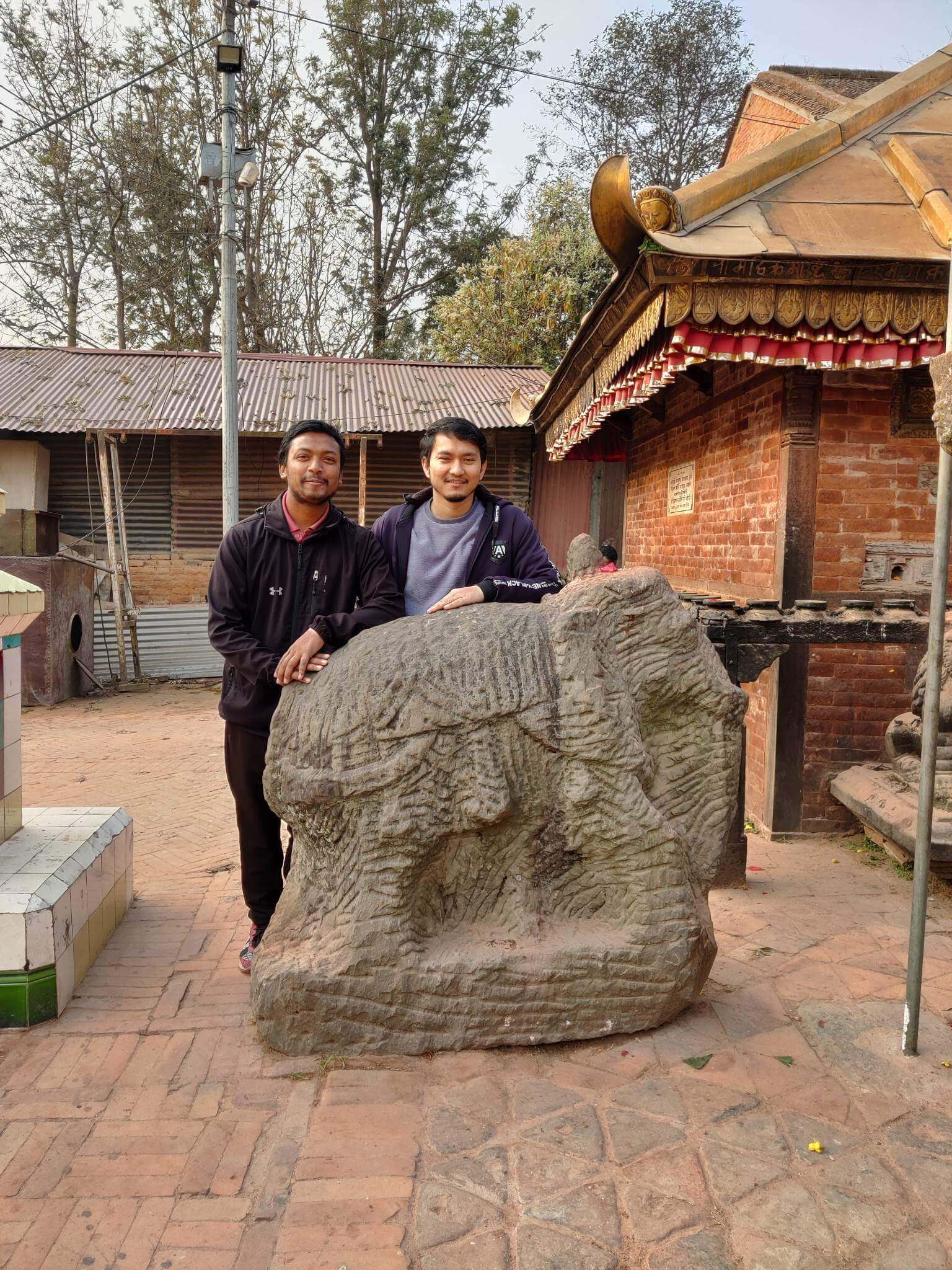
During my recent trip to Changunarayan Temple with my friends, we had a hilarious moment when we stumbled upon the incomplete elephant statue. We couldn’t resist taking a few photos with it. We even joked that maybe the sculptor was just like us, who could not provide a finished art. Despite its unfinished state, the elephant still looked majestic and regal, and we couldn’t help but admire its intricate details. It was definitely one of the highlights of our trip, and we left with some great memories and even greater laughs.

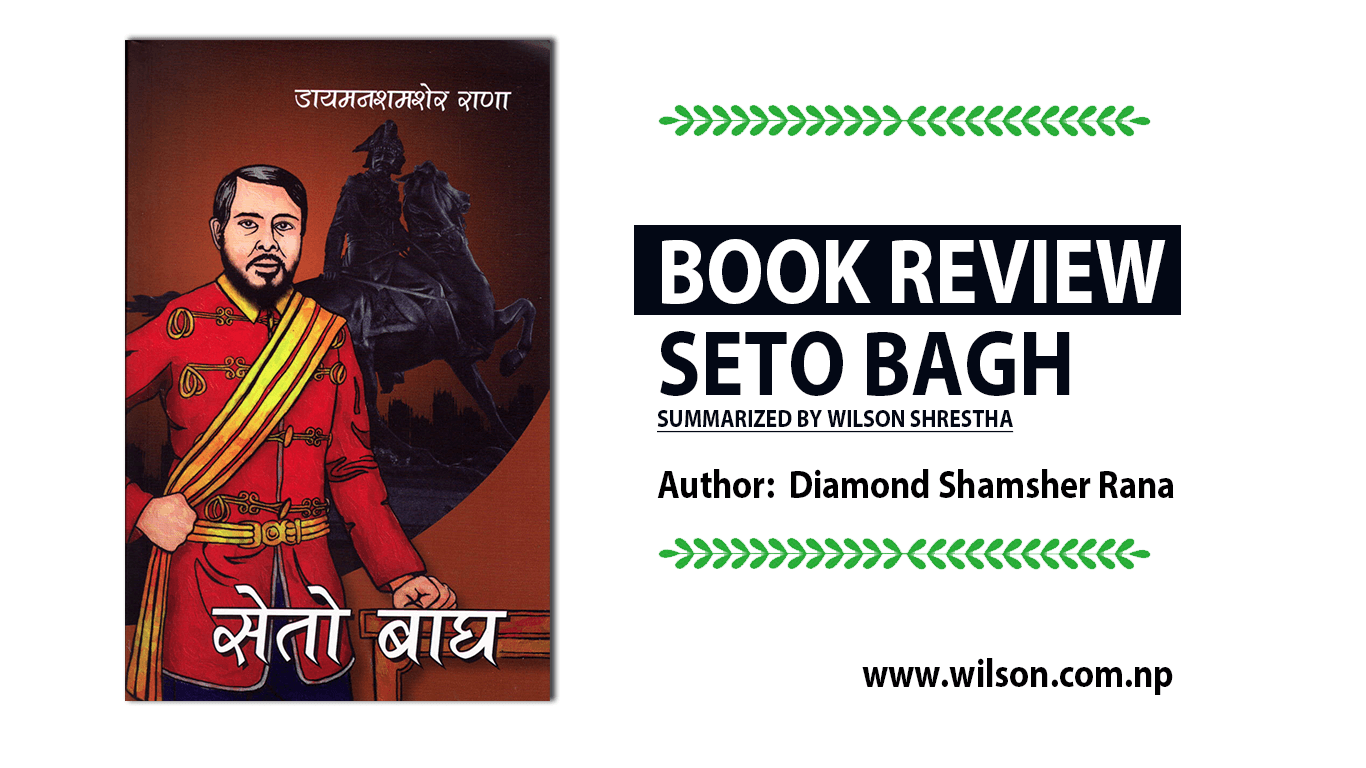
“Seto Bagh” is a historical novel by Diamond Shamsher Rana that tells the story of the Nepalese monarchy during the 19th century Rana dynasty. The book focuses on Jung Bahadur Rana, the founder of the dynasty and Nepal’s prime minister.
The novel explores themes of power, ambition, and betrayal through Jung Bahadur’s perspective. It starts with his rise from a low-ranking soldier to Nepal’s prime minister, and how he consolidates his power by eliminating his rivals.
Throughout the story, we meet various characters with their own motivations, such as Jung Bahadur’s brothers and cousins who are also vying for power. The novel also explores Jung Bahadur’s personal life, including his relationships with his wife, mistress, and children.
“Seto Bagh” provides an intriguing glimpse into Nepalese history during the Rana dynasty. It is a must-read for those interested in Nepalese history or anyone looking for an engaging and thought-provoking novel.
Here is the table of contents for the book “Seto Bagh” by Diamond Shamsher:
Part 1 of “Seto Bagh” is called “The Rise of Jung Bahadur” and it covers the events that led to his rise to power in Nepal. Chapter 1 describes the declining state of the Shah dynasty, the ruling family of Nepal, and the increasing power struggles among the nobility. Chapter 2 talks about the attack by the British East India Company on Birgunj, a town on the border with India, which made the Nepali court worry about further British aggression. In Chapter 3, Mathabar Singh Thapa, one of the most powerful nobles, is assassinated, leading to more instability. Chapter 4 talks about the coup against King Rajendra Bikram Shah, in which Jung Bahadur played a major role. Chapter 5 explains how Jung Bahadur consolidated his power and established the Rana regime, which would rule Nepal for over a century.
“Seto Bagh” provides a vivid account of the political turmoil in Nepal during the 19th century. Part 1 sets the stage for the rise of Jung Bahadur Rana and the establishment of the Rana dynasty, which would shape the country’s history for many years to come. Anyone interested in the history of Nepal or political intrigue will find “Seto Bagh” a captivating read.
Part 2 of “Seto Bagh” is called “The Reign of Jung Bahadur” and it covers the years when Jung Bahadur Rana ruled Nepal and established the Rana regime. Chapter 6 explains how he consolidated his rule and implemented various reforms in the initial years of his power. Chapter 7 talks about the visit of the British envoy to Nepal, which helped establish friendly relations between the two countries. Chapter 8 details the construction of the grand Rana Palace, which symbolized the Ranas’ power and wealth. Chapter 9 explains how the Rana regime was built through the suppression of dissent and consolidation of power. Chapter 10 discusses the brutal assassination of the Nepali court known as the Kot massacre. Chapter 11 covers the lasting legacy of Jung Bahadur, who remained a powerful figure in Nepal even after his death.
“Seto Bagh” is an insightful account of the political and cultural history of Nepal during the Rana dynasty. Part 2 provides a fascinating glimpse into the reign of Jung Bahadur and the establishment of the Rana regime, which brought about significant changes in Nepalese society. Anyone interested in the history of Nepal, the Rana dynasty or the politics of power will find “Seto Bagh” an engaging read.
Part 3 of “Seto Bagh” is titled “The Fall of the Rana Regime” and covers the events that led to the end of the Rana regime in Nepal. Chapter 12 talks about the early 1900s, when the Rana regime faced many challenges from different groups. Chapter 13 details King Edward VIII’s visit to Nepal, which showed the world how isolated and undeveloped the country was. Chapter 14 talks about the growing unrest in Nepal, including protests and rebellions against the Rana regime. Chapter 15 describes the revolution of 1950, which led to the overthrow of the Ranas and the establishment of a constitutional monarchy. Chapter 16 covers the end of the Rana regime and the beginning of a new era in Nepal’s history. This part of the book is a fascinating look at the changes and struggles that Nepal went through during this time.
Part 4 of the book, “The Aftermath,” discusses what happened after the fall of the Rana regime. Chapter 17 covers the establishment of the constitutional monarchy in Nepal and the early years of democracy. Chapter 18 describes the first democratic elections in Nepal and the challenges faced by the new government. Chapter 19 discusses the Maoist insurgency in Nepal, which was a violent conflict that lasted for over a decade. Chapter 20 covers the Royal Massacre of 2001, in which several members of the Nepali royal family were killed. Chapter 21 describes the end of the monarchy in Nepal and the establishment of a republic. The section explores the challenges faced by Nepal in the post-monarchy era, including the establishment of a new government, economic development, and political stability. The book provides an in-depth look at the history and politics of Nepal and is a valuable resource for those interested in the country’s past and present.
Part 5 of this article is titled “The Future of Nepal.” It talks about the current state of Nepal and what might happen in the future. Chapter 22 talks about the challenges Nepal faces with democracy. It covers corruption, political instability, and ethnic tensions. Chapter 23 talks about what happened after the Maoist insurgency ended. It covers the challenges of reintegrating former rebels into society. Chapter 24 covers the earthquake in 2015 that caused a lot of damage and loss of life. Chapter 25 talks about Nepal’s current political landscape. It covers the challenges the ruling government faces and debates over federalism and secularism. Chapter 26 explores what might happen in Nepal’s future. It talks about the potential for economic growth, political stability, and social development. The section concludes with a reflection on Nepal’s past, present, and future.

Welcome to Hunt Royale – a game that’s so addictive, you’ll forget to eat, sleep, and basically do anything else! But don’t worry, we’ve got you covered. In this blog, we’ll guide you through the wild world of Hunt Royale, from catching your first prey to battling other players like a pro.
Now, if you’re a beginner, you might be thinking, “Oh no, I’ll never survive this game!” But fear not, my fellow hunter, we’ve got some tricks up our sleeve that even the pros will envy. And if you’re already a seasoned player, stick around, because we’re about to unleash some secret tips that’ll take your gameplay to the next level.
So buckle up and get ready for a wild ride. We promise to make you laugh, cry, and maybe even snort out loud as we explore the exciting world of Hunt Royale together. Let’s get started!
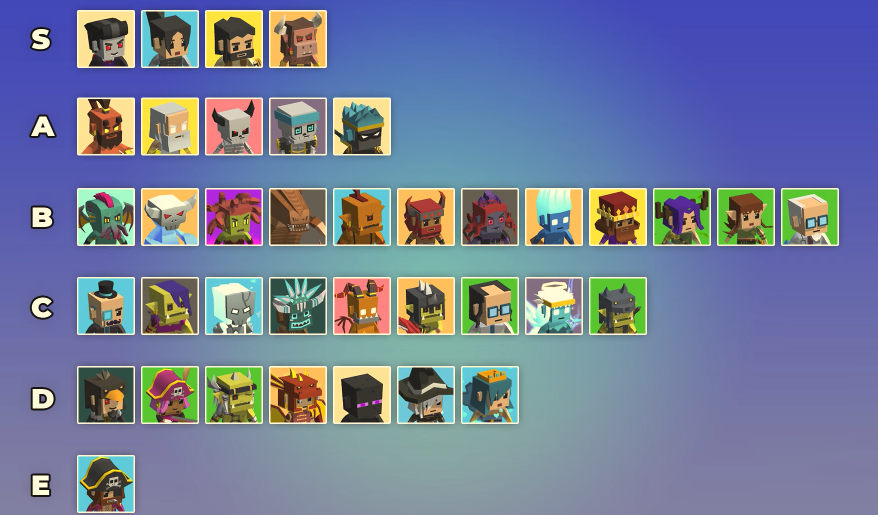
E Tier: Captain Hook
D Tier: Crow, Pirate, Axe Master, Dragonite, Render Man, Wizard, Frozen Queen
C Tier: Gentlemen, Sniper, Protector, Voodoo, Imp Master, Raging Orc, Engineer, Angel, Grey Wolf
B Tier: Ancient One, Phantom, Gorgon, Huntelisk, Rocky, Barbarian, Spider Queen, Roller King, Druid, Elf Archer, Mad Doctor
A Tier: Dragon, Shadow, Iron Knight, Blaster, Necromancer, Raccoon, Big Mama, Cyber Medic, Robot
By following these tips, you can increase your chances of winning in Hunt Royale and have more fun while playing.