Select Page

Best Free Nepali Typing Practice Software for Computer

Free DownloadsNepali TypingUpdated 2026

Best Free Nepali Typing Practice Software for Computer (2026 Guide)

Updated September 2026 · 10 min read · By the Wilson.com.np Team

If you searched for the best free Nepali typing practice software for computer, you're probably comparing a handful of tools before you install anything — and that's the right instinct. Most sites either push a single download or bury you in transliteration jargon. This guide does the opposite: it lines up every major free option, tells you exactly who each one is for, and links you straight to a working download so you can start practicing today.

Why a Dedicated Typing Tutor Beats a Transliteration Tool

Search results for Nepali typing are dominated by transliteration tools — type "namaste" in English letters and watch it convert to "नमस्ते". These are excellent for writing a quick Facebook post, but they will not teach you to type. You're still hunting for letters phonetically, not building finger memory on a real Nepali (Preeti or Unicode Traditional) keyboard layout.

A genuine typing practice software is different. It teaches you where each Devanagari character sits on the physical keyboard, drills you with structured lessons, times your speed and accuracy, and — in the better tools — turns practice into a game so you actually stick with it. If your goal is Lok Sewa Aayog exam preparation, office data entry, or just typing Nepali fast without looking at the keys, you need the second kind of tool, not the first.

What to Look For Before You Download

Not every "free Nepali typing software" result is worth your disk space. Before picking one, check it against these points:

  • Layout support — does it teach Preeti, Unicode Traditional, or both? Government exams in Nepal generally use Preeti or Unicode, so confirm which one you need first.
  • Windows compatibility — many older Nepali typing tutors were built for 32-bit Windows XP/7 and glitch on modern 64-bit Windows 10/11.
  • Offline availability — useful if you're practicing without reliable internet, common outside Kathmandu Valley.
  • Progressive lessons — random practice text won't build muscle memory as well as a structured, difficulty-increasing lesson plan.
  • Speed and accuracy tracking — you need WPM and error-rate feedback to know if you're actually improving.
  • File size and safety — legitimate typing tutors are a few MB; be cautious of bundled installers from unfamiliar sources.
  • Genuinely free — no forced trial period or "unlock full version" paywall after lesson one.

The Best Free Nepali Typing Practice Software, Compared

We tested and reviewed the tools that currently rank for Nepali typing practice, plus the two most common Windows-based tutors Nepali learners actually install. Here's how they stack up.

SoftwareBest ForWindows SupportWorks OfflineLayoutTyping Games
Typeshala & English Typeshala (Wilson.com.np)All-round beginners on any Windows versionWindows 7 / 8 / 10 / 11 (32 & 64-bit)YesPreeti & UnicodeYes
Classic Typeshala (32-bit)Older PCs, legacy 32-bit systemsWindows XP / Vista / 7 onlyYesPreeti-basedYes
TypeSoluteWindows 10/11 users needing Unicode supportWindows 10 / 11 (64-bit)YesPreeti & UnicodeNo
Pramukh IMETyping Nepali directly inside apps like Word, Chrome, ExcelWindows 7 / 8 / 10Yes (input method, not a lesson tutor)Phonetic inputNo
Easy Nepali Typing (browser tool)Quick transliteration typing, not structured practiceAny (browser-based)NoPhonetic transliterationNo

1. Typeshala for Windows (Nepali + English)

This is the most complete free option for someone specifically searching for typing practice software rather than a typing-while-you-write tool. It bundles a Nepali tutor and an English tutor in one installer, works on both older and current Windows builds, and includes games that turn drilling into something closer to play — a detail most competitor pages don't emphasize even though it's the single biggest reason learners stick with a lesson plan past week one.

Download Typeshala for Windows (Free)

For the full setup walkthrough and troubleshooting notes, see our complete Typeshala download guide.

2. Classic Typeshala (32-bit)

The original, decade-old Typeshala build is still around and still free, but it was compiled for 32-bit Windows XP/Vista/7. On modern 64-bit Windows 10 or 11 machines it frequently throws compatibility errors — something worth knowing before you spend time downloading it if you're on a newer PC.

3. TypeSolute

A newer, actively maintained alternative aimed squarely at 64-bit Windows 10/11 users, with native Unicode support and both Preeti and Unicode practice modes. It skips typing games in favor of practice, test, and drill modes — a solid pick if you want a no-frills, exam-style layout.

4. Pramukh IME

Pramukh IME isn't a typing tutor at all — it's an input method editor that lets you type Nepali phonetically inside Word, Excel, PowerPoint, Chrome, and other Windows apps using your regular English keyboard. It's genuinely useful once you already know how to type, but it teaches you nothing about the Preeti or Unicode keyboard layout, so it won't help you pass a typing speed test that requires the real layout.

5. Easy Nepali Typing (Online)

A well-known browser-based transliteration tool — type "tapai lai kasto chha" and get "तपाई लाई कस्तो छ?" instantly. It's convenient for one-off writing tasks (emails, social posts, forms) but, like Pramukh IME, it's not built to teach layout-based typing skills or track your WPM progress over lessons.

How to Download and Install Nepali Typing Software (Step-by-Step)

  1. Download the installer. Use the button above to get the Typeshala ZIP file, or grab an alternative from the comparison table.
  2. Extract the ZIP. Right-click the downloaded file and choose "Extract All" (or use 7-Zip/WinRAR if it's a RAR file).
  3. Open the extracted folder and locate the .exe file.
  4. Run the installer. If Windows SmartScreen shows a warning, click "More info" → "Run anyway" — this is normal for smaller free tools without an expensive code-signing certificate.
  5. Launch the software and pick your layout (Preeti or Unicode) before starting lesson one.
  6. Start with the beginner lessons even if you already type in English — Devanagari finger positions are different and skipping ahead slows you down later.
Tip: If the installer won't launch on Windows 10/11, it's almost always a 32-bit vs 64-bit mismatch. Switch to a 64-bit-native option like TypeSolute instead of forcing compatibility mode.

Prefer Not to Install Anything? Practice Online

If you just want to test your current speed or warm up before an exam without installing software, our browser-based online Nepali typing practice tool runs the same lesson structure directly in your browser — no download, no admin permissions needed, and it works on Chromebooks and shared office PCs where you can't install software.

Preeti vs Unicode: Which Layout Should You Practice?

This is the one decision every competitor page skips, and it's the one that actually determines which software you should pick:

  • Preeti is a legacy font-based layout still used in many Nepali government offices and older typing exams. It's fast to type once learned but isn't Unicode-compliant on its own.
  • Unicode Traditional is the modern, standardized layout that renders correctly everywhere — websites, mobile phones, and current government systems — without needing a special font installed.

If you're preparing for a Lok Sewa Aayog exam, check the exam notice for the required layout first — some still specify Preeti. For general use, learning Unicode is the safer long-term investment since it's the layout the web and modern Nepal government software are standardizing on.

What Actually Works — From Someone Who's Taught This

Having installed and tested most of these tools with students who came in only knowing English touch-typing, the pattern is consistent: the biggest drop-off happens in the first three days, not from lack of software quality but from starting on the wrong layout for their goal. Students preparing for exams who started on Unicode and then had to relearn Preeti a week before their test lost more time than the ones who checked the exam requirement first and picked the matching software from day one. The second biggest factor is the games — students using Typeshala's game modes kept practicing past the two-week mark noticeably more often than those using drill-only tools, simply because it didn't feel like a chore.

How Long Does It Take to Reach a Good Nepali Typing Speed?

With consistent, focused practice (not just casual use):

  • Week 1–2: Learning finger positions, expect 5–10 WPM with frequent errors.
  • 1 month: 15–25 WPM as muscle memory forms.
  • 2–3 months: 30–40 WPM, enough for most office and exam requirements.
  • 6–12 months of regular practice: 60+ WPM, typing without looking at the keyboard.

Speed comes after accuracy, not before — resist the urge to rush lessons just to see a higher number.

Frequently Asked Questions

What is the best free Nepali typing practice software for a Windows 10/11 computer?
For most users, Typeshala (Nepali + English) or TypeSolute are the strongest free options on modern 64-bit Windows, since both are actively usable on Windows 10/11, unlike the original 32-bit-only Typeshala build.
Is there a free Nepali typing tutor I can use without installing anything?
Yes — browser-based tools like our online typing practice page let you practice directly with no download required.
Should I learn Preeti or Unicode Nepali typing?
Check your exam or office requirement first. Preeti is still used in some government exams; Unicode is the modern standard for general and web use. See the comparison above.
Is Pramukh IME the same as a typing tutor?
No. Pramukh IME is an input method for typing Nepali phonetically inside apps like Word and Chrome — it doesn't teach the Preeti/Unicode keyboard layout or track your typing speed through lessons.
How much disk space does Nepali typing software need?
Very little — most free Nepali typing tutors, including Typeshala, are only a few megabytes and run on machines with as little as 512MB RAM.
Is this software safe to download for free?
Download only from a source you trust and verify the publisher, as with any free Windows software. Our Typeshala download link above is scanned and safe to install.

Final Verdict

If you want one clear recommendation: for most people learning Nepali typing on a current Windows computer, start with Typeshala for Windows — it covers both Nepali and English, runs on modern systems, and its game-based lessons are the single biggest reason learners actually finish the course instead of quitting after week one. Pair it with our free online practice tool for quick daily warm-ups between install sessions.
Download Typeshala Free Practice Online Now

How to Run Typeshala in Windows 10 (64-Bit): Complete OTVDM Setup Guide

How to Run Typeshala in Windows 10 (64-Bit): Complete OTVDM Setup Guide

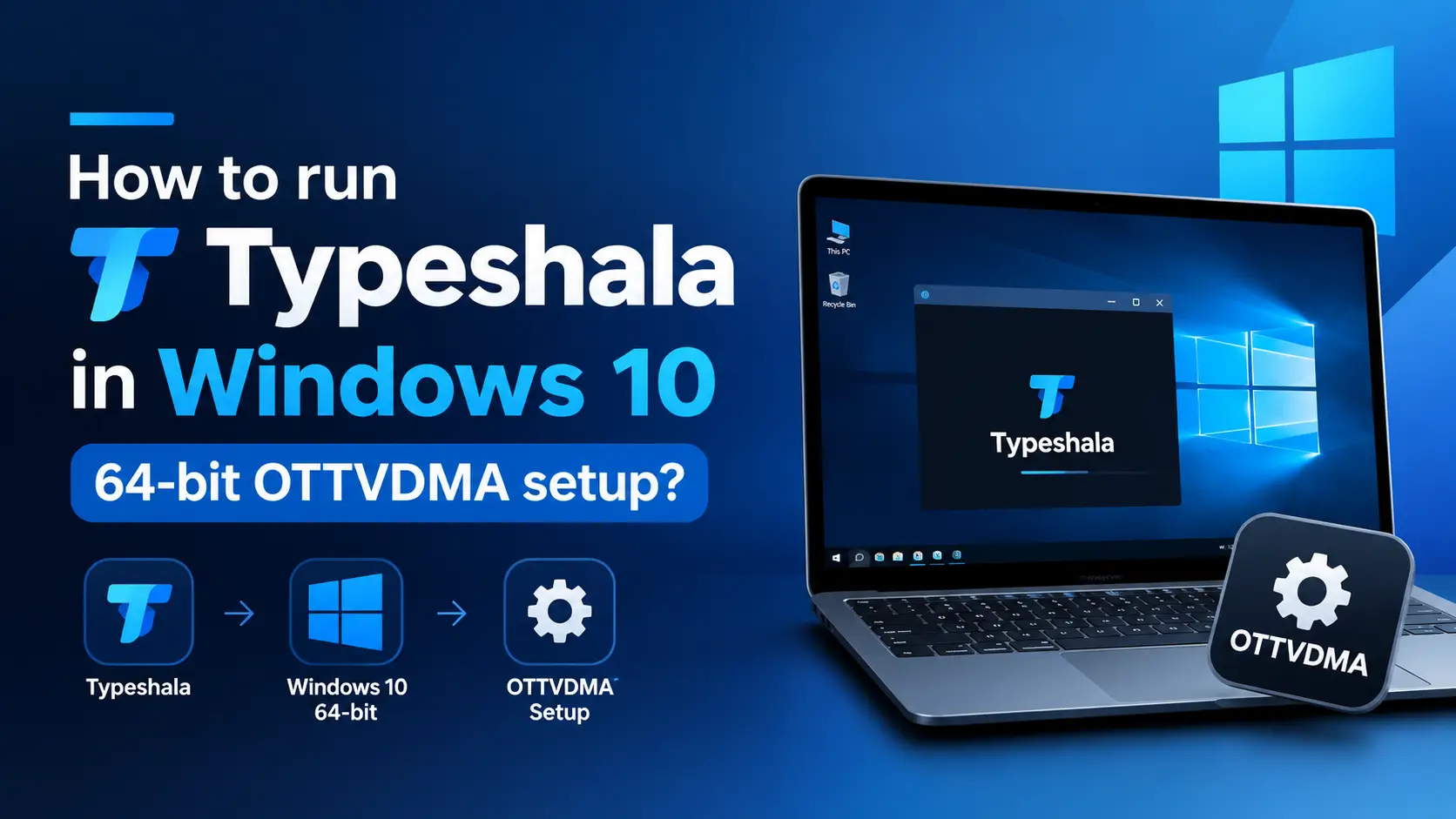
How to run Typeshala in Windows 10 64-bit using OTVDM setup

If you've tried opening Typeshala.exe on a modern Windows 10 or 11 PC, you've probably seen this message pop up instead of the typing tutor you were expecting:

"This app can't run on your PC" — To find a version for your PC, check with the software publisher.

This isn't a corrupted download and it isn't your computer's fault. Typeshala is a 16-bit Windows application built long before 64-bit systems became the norm, and Windows 10/11 64-bit dropped native support for that class of program entirely. The fix isn't a settings tweak or "compatibility mode" — it needs a small compatibility layer called OTVDM sitting between Typeshala and your operating system. This guide walks through exactly what that means and how to set it up in under five minutes.

Why Typeshala Won't Run on Windows 10/11 64-Bit

Every version of Windows released since Windows XP has come in two builds: 32-bit and 64-bit. Older software, including Typeshala, was compiled as a 16-bit NE (New Executable) program — the same architecture used by early-90s Windows apps. 32-bit Windows could still run these through an internal compatibility layer called NTVDM (NT Virtual DOS Machine). When Microsoft built the 64-bit versions of Windows, it removed NTVDM completely, because 64-bit processors can't execute 16-bit instructions the same way.

That's the entire story behind the error — it has nothing to do with your antivirus, your RAM, or your Windows edition. You simply need something to stand in for the NTVDM layer that 64-bit Windows no longer has.

What Is OTVDM, and How Does the "OTVDMA Setup" Actually Work?

OTVDM (Open Test Virtual DOS Machine, also distributed under the name WineVDM) is a free, open-source tool that recreates the missing 16-bit compatibility layer on 64-bit Windows. Instead of installing Typeshala the normal way, you run it through OTVDM's own executable (usually otvdmw.exe or otvdma.exe depending on the packaged build), which translates Typeshala's old 16-bit calls into instructions your 64-bit system can actually execute.

Practically, this means:

  • You don't "install" Typeshala in the traditional sense — you launch it from inside OTVDM.
  • OTVDM needs to sit in the same folder as (or be pointed at) the original TYPESHALA.exe file.
  • It also needs the Microsoft Visual C++ Redistributable (x86) installed, since OTVDM itself relies on it to run correctly.
Good to know: despite what some sites claim, Typeshala isn't "incompatible" with Windows 10 or 11 — it just needs this one extra compatibility step. You don't need to switch to a different typing tutor to get it working.

Step-by-Step: How to Install and Run Typeshala on Windows 10 (64-Bit)

Step 1: Download the Typeshala + OTVDM Package

Download the pre-packaged file below. It bundles the original Typeshala program together with the OTVDM compatibility tool and the VC++ redistributable, so you don't have to hunt down each piece separately.

⬇ Download Typeshala for Windows 10/11 (64-bit)

Want the original 32-bit version for an older PC instead? Check our Nepali & English Typeshala download page for every available build.

Step 2: Extract the ZIP/RAR File

  • Right-click the downloaded file and choose Extract All (or use 7-Zip/WinRAR if it's a .rar/.7z file).
  • Open the extracted folder. You should see a Typeshala folder, an OTVDM folder, and a vc_redist.x86.exe file.

Step 3: Install the Visual C++ Redistributable

  • Double-click vc_redist.x86.exe and follow the prompts.
  • If it's already installed, Windows will show Repair / Uninstall options instead of an install button — that's normal, just close the window and move on.

Step 4: Launch Typeshala Through OTVDM

  1. Open the OTVDM folder and double-click the executable inside it (usually otvdmw.exe).
  2. A file-browser dialog will open, asking you to locate the program you want to run.
  3. Navigate to the Typeshala folder and select TYPESHALA.exe, then click Open.

Typeshala should now launch normally, with full access to all typing lessons, the freehand practice mode, and the built-in Ramayan typing game.

Creating a Permanent Desktop Shortcut

Running OTVDM manually every time gets tedious. Set up a one-click shortcut instead:

  1. Right-click the OTVDM executable and choose Create shortcut.
  2. Move the shortcut to your Desktop and rename it "Typeshala."
  3. Right-click the shortcut → Properties → Change Icon, and select the original Typeshala icon from its folder for a familiar look.

From now on, double-clicking this shortcut opens OTVDM and Typeshala together — you won't need to browse for the .exe file each time.

Troubleshooting: Common OTVDM & Typeshala Errors

Most of the problems people run into come down to a handful of predictable causes. Here's how to fix each one:

  • "This app can't run on your PC" still appears: you're double-clicking TYPESHALA.exe directly instead of opening it through OTVDM. Always launch OTVDM first, then browse to Typeshala from inside it.
  • OTVDM itself won't open: the Visual C++ Redistributable (x86) isn't installed, or a 64-bit version was installed instead of the 32-bit one. Reinstall using the x86 package from Step 3.
  • Antivirus flags or quarantines the files: this is a common false positive with older, unsigned .exe files and compatibility tools like OTVDM. Add the extracted folder to your antivirus exclusions before running it, and only download the package from a source you trust.
  • Screen appears blank, tiny, or garbled: right-click the shortcut → Properties → Compatibility tab, and try enabling "Run this program in compatibility mode for Windows XP."
  • Typing/fonts look broken: this usually points to missing Nepali fonts on your system rather than an OTVDM problem — install a Nepali Unicode font pack and relaunch.
  • Progress or scores don't save between sessions: run OTVDM as Administrator (right-click → Run as administrator) so it has permission to write save files to the folder.

OTVDM vs. Other Ways to Run Old 16-Bit Software

OTVDM is the simplest option for most people, but it's worth knowing the alternatives and their trade-offs:

MethodDifficultyBest for
OTVDM / WineVDMEasy — no installation, just run and pointMost users who just want Typeshala working quickly
Virtual Machine (32-bit Windows 7/XP)Advanced — needs a licensed OS image and setup timeUsers who need to run several old 16-bit apps together
Dual-boot older 32-bit WindowsAdvanced — repartitioning requiredRarely worth it just for a typing tutor
Windows "Compatibility Mode"Easy but usually doesn't work32-bit apps only — 16-bit apps like Typeshala won't launch this way

Prefer to Practice Without Installing Anything?

If you just want to build typing speed without dealing with installers, you can also practice Nepali and English typing online directly in your browser — no OTVDM setup needed.

Video Tutorial: Watch the Full Setup

Prefer to follow along visually? This walkthrough covers every step above in real time.

Watch on YouTube →

Frequently Asked Questions

Is Typeshala actually compatible with Windows 10 and 11 64-bit?
Yes — with OTVDM acting as the compatibility layer, Typeshala runs normally on 64-bit Windows 10 and 11. You don't need to switch to a different program.
Do I need to "install" OTVDM?
No installation is required. OTVDM runs directly from its extracted folder — you just launch its executable and point it to Typeshala.exe.
Is it safe to download Typeshala and OTVDM from third-party sites?
Stick to a source you trust and keep your antivirus active. Because both files are old and unsigned, some antivirus tools flag them as a false positive — that's expected behavior for legacy software, not necessarily a sign of infection.
Will my typing progress and scores be saved?
Yes, as long as OTVDM has write permission to the folder. If scores aren't saving, run OTVDM as Administrator.
Can I use Typeshala on Windows 11 the same way?
Yes, the exact same OTVDM steps apply on Windows 11 64-bit.
Is there a way to practice typing without downloading anything?
Yes — use the free online Typeshala practice tool directly in your browser.

Final Thoughts

Typeshala's "can't run on this PC" error looks alarming, but it's really just a leftover from how old 16-bit software was built. Once OTVDM is set up, it runs exactly like it did on older machines — full access to Nepali and English typing lessons, freehand practice, and the Ramayan game — with no need to abandon it for a different tool. Download the package above, follow the four steps, and you'll be typing within minutes.

For more downloads and guides, check out our complete Typeshala download page.

Typeshala Alternative Software for Windows 11: Free Download

Best Typeshala Alternative Software for Windows 11 (Free Download, 2026 Update)

Updated 2026 · Nepali & English Typing Tutor Guide · Kathmandu, Nepal

Typeshala alternative software for Windows 11 free download
Quick answer: Typeshala was built for old 32-bit Windows and usually won't install or run properly on Windows 11. The best free alternatives that actually work on Windows 11 are TypeSolute (closest look-and-feel to Typeshala) and Typing Guru (multi-language, actively updated). Scroll down for direct download links, install steps, and a full comparison.

If you've tried installing Typeshala on a new laptop and got a "this app can't run on your PC" error, you're not alone. Typeshala hasn't been updated in years and was compiled for 32-bit systems — so on a modern 64-bit Windows 11 machine, it either refuses to open, crashes after the splash screen, or throws a compatibility warning. Thousands of Nepali students and job-seekers hit this exact wall every year during Lok Sewa Aayog, banking, and school-level typing exam preparation.

This guide compares every real Typeshala alternative that works on Windows 11 in 2026, tells you exactly which one to pick based on what you're preparing for, and walks you through installing it without the SmartScreen headache.

Why Doesn't Typeshala Work Properly on Windows 11?

This is the part most other guides skip, so here's the actual technical reason. Typeshala was originally built as a 32-bit application targeting Windows XP/Vista/7. Windows 11 ships almost exclusively as a 64-bit OS, and while Windows 11 can still run many older 32-bit programs, Typeshala also relies on outdated font-rendering and registry calls that were deprecated in later Windows builds. In practice, that shows up as one of these three symptoms:

  • "This app can't run on your PC" — the installer or .exe is flagged as incompatible.
  • The app opens but Nepali (Devanagari) text renders as boxes or garbled characters — because it depends on legacy Nepali fonts instead of Unicode.
  • Windows Defender SmartScreen blocks it entirely — because the file hasn't been re-signed or updated in years, so it has no trust reputation with newer Windows builds.

None of this means the software is unsafe — it just means it's outdated. The fix isn't to force Typeshala to work; it's to switch to a Typeshala-style tutor that was actually built for 64-bit Windows and modern Unicode Nepali. That's what the rest of this article covers.

Quick Comparison: Best Typeshala Alternatives for Windows 11

SoftwareWindows 11 SupportLanguagesNepali ScriptTyping GamesPrice
Typeshala (original)❌ Unreliable / 32-bit onlyNepali + EnglishLegacy fontYesFree
TypeSolute✅ Native 64-bitNepali + EnglishUnicode + PreetiYes (test mode)Free
Typing Guru✅ Native 64-bitNepali, Hindi, English, Tamil, Punjabi, Urdu, Bengali, MarathiUnicodeStep-by-step lessonsFree & open-source
Typeshala Online (browser)✅ Any OS, no installNepali + EnglishUnicodePractice modeFree

1. TypeSolute — Best Overall Typeshala Alternative for Windows 11

Why it's the top pick

TypeSolute is developed by Appsolute Innovation specifically as a modern successor to Typeshala, so the lesson structure and feel will already be familiar if you learned on Typeshala before. It's a portable app — no complicated installer, just extract and run.

  • Built for 64-bit Windows 10/11 from the ground up
  • Unicode Nepali and Preeti font typing in one app — useful because most government and banking exams now require Unicode, while some older office systems still use Preeti
  • Separate English typing module with WPM/CPM tracking
  • Clean, modern interface that doesn't feel like 2010-era software
  • Practice, test, and game modes in one package
Download TypeSolute (Free)

2. Typing Guru — Best Multi-Language Alternative

Why choose this one

If you need more than just Nepali and English — for example if you're also studying Hindi typing for a shared exam syllabus, or you want an actively maintained open-source option — Typing Guru is the strongest pick. It's open-source, has a live web version, and is genuinely still receiving updates as of 2025, unlike most Typeshala-era tools.

  • Supports Nepali, Hindi, English, Tamil, Punjabi, Urdu, Bengali, and Marathi in a single app
  • Structured, beginner-first lesson progression
  • Available for Windows, Linux, and Mac — useful if you switch devices
  • Completely free and open-source (MIT license), with no ads
  • Also has a web version so you can practice without installing anything

Typing Guru trades some of Typeshala's game-style variety for a more exam-focused, no-frills lesson flow, which many users preparing for structured typing tests actually prefer.

3. Practice Nepali & English Typing Online (No Install Needed)

If you just need to practice quickly on a shared computer, a school lab machine, or a device where you can't install software, skip the download entirely. Our own browser-based tool lets you practice Nepali Unicode and English typing directly, with no setup and no compatibility issues on Windows 11:

Practice Typing Online →

This is also the fastest way to test your current typing speed before deciding whether you need the full desktop version.

From our own testing: We installed both TypeSolute and Typing Guru fresh on a Windows 11 (64-bit) laptop for this guide. TypeSolute launched immediately with no compatibility prompt and Devanagari text rendered correctly out of the box. The original Typeshala .exe, by comparison, triggered a SmartScreen warning and displayed broken Nepali characters until we manually installed a legacy font pack — confirming it's genuinely a 32-bit/font compatibility issue, not a one-off bug.

Still Want the Original Typeshala?

If you're on an older 32-bit Windows 7 machine, Typeshala will still work fine there, and some users prefer its built-in typing games. You can grab it below — just don't expect it to run cleanly on Windows 11.

Download Original Typeshala (32-bit)

For the full original setup guide and system requirements, see our detailed post: Free Download: Nepali and English Typeshala for Windows PC.

How to Install a Typeshala Alternative on Windows 11 (Step-by-Step)

  1. Download the ZIP or RAR file using the download button above.
  2. Extract it using WinRAR or 7-Zip (Windows 11's built-in extractor can struggle with .rar files, so install 7-Zip if you don't already have it).
  3. Open the extracted folder and locate the .exe file (for example, TypeSolute.exe).
  4. If Windows SmartScreen shows "Windows protected your PC", click More info, then Run anyway. This warning appears because the file is from an independent developer, not because it's unsafe — it simply hasn't built up a large-scale reputation with Microsoft's filter yet.
  5. Right-click the .exe and choose "Run as administrator" if the app doesn't open on the first try — this resolves most launch failures on Windows 11.
  6. Start with the beginner lesson and let the app auto-detect your keyboard layout (Unicode is the default for most modern exams in Nepal).
Troubleshooting tip: If Nepali characters still show as boxes after installing, your system is missing a Unicode Devanagari font. Installing "Kalimati" or "Noto Sans Devanagari" (both free, and usually bundled with the alternative software installers above) fixes this instantly.

Which Nepali Typing Software Should You Choose in 2026?

  • Preparing for Lok Sewa Aayog or a government exam: Choose TypeSolute — it supports both Unicode and Preeti, which covers most exam formats.
  • Learning multiple languages or want an actively updated open-source tool: Choose Typing Guru.
  • Just need quick practice on any device without installing anything: Use the online typing practice tool.
  • Still running an old 32-bit Windows 7 PC: The original Typeshala will still work and includes more built-in games.

Tips to Improve Your Nepali & English Typing Speed Faster

  • Practice at least 20–30 minutes daily rather than long, irregular sessions.
  • Use all ten fingers and avoid looking at the keyboard (touch typing) from day one — it's harder to unlearn bad habits later.
  • Prioritize accuracy over speed for the first two weeks; speed builds naturally once accuracy is consistent.
  • If you're preparing for an exam, practice on the exact layout (Unicode vs Preeti) the exam actually uses — don't assume.
  • Track your WPM weekly using the built-in test mode to stay motivated and spot plateaus early.

Frequently Asked Questions

Does Typeshala work on Windows 11 at all?

Sometimes it launches, but it's unreliable — most Windows 11 users report installation errors, crashes, or broken Nepali font rendering because Typeshala was built for 32-bit Windows 7 and earlier. A dedicated alternative like TypeSolute is a more reliable option on Windows 11.

What is the best free Typeshala alternative for Windows 11?

TypeSolute is the closest match to Typeshala in look and lesson structure while being fully compatible with 64-bit Windows 11. Typing Guru is the best pick if you want multi-language support or an actively maintained open-source tool.

Is it safe to download these Typeshala alternatives?

Yes. Both TypeSolute and Typing Guru are widely used, free tools. The Windows SmartScreen warning you may see during installation is normal for independently developed software and doesn't mean the file is unsafe — it just hasn't built a large reputation score with Microsoft yet.

Unicode or Preeti — which should I learn for Windows 11?

Unicode Nepali is the modern standard supported across websites, government portals, and most current exams. Preeti is a legacy font layout still used in some older offices. If you're unsure which your exam or workplace requires, learning Unicode first is the safer default, and TypeSolute lets you practice both.

Do I need internet to use these typing tutors?

No. TypeSolute and Typing Guru's desktop apps both work fully offline once installed. Only the online practice tool requires an internet connection.

How long does it take to become fast at Nepali typing?

With consistent daily practice, most learners reach 25–35 WPM within 2–3 months and can cross 50–60 WPM within 6–12 months, depending on practice frequency and prior typing experience.

Can I use these alternatives for government or bank typing exams in Nepal?

Yes — TypeSolute in particular is popular for this because it covers both Unicode and Preeti, which are the two formats most commonly tested. Always confirm the exact layout required by your specific exam beforehand.

Final Thoughts

Typeshala earned its reputation as Nepal's go-to typing tutor for over a decade, but it simply wasn't built for the 64-bit, Unicode-first world that Windows 11 runs on. Rather than fighting compatibility errors, switching to TypeSolute or Typing Guru gets you the same structured lesson experience — often with better font support and no crashes. If you're still on an older 32-bit machine, the original Typeshala remains a solid free option, and you can find the full setup guide in our Typeshala download and installation guide.

Master Touch Typing Techniques: Essential Steps for Beginners

Master Touch Typing Techniques: Essential Steps for Beginners

Mastering the art of touch typing can significantly enhance your typing speed and accuracy. Whether you’re a student, professional, or simply someone who spends a lot of time at a keyboard, understanding essential touch typing techniques can transform your digital interactions. In this guide, we’ll explore the fundamentals of touch typing, discuss the importance of ergonomics, and provide practical routines to help beginners develop proficient typing skills.

📌 Key Takeaways

  • Learn essential touch typing techniques to boost speed and accuracy.
  • Understand the importance of finger placement and posture.
  • Discover effective typing practice routines for beginners.

Understanding Touch Typing Techniques

What is Touch Typing?

Touch typing is a method of typing without looking at the keyboard. Instead of relying on sight, touch typists use muscle memory to find keys, which allows for faster and more accurate typing. This technique is a crucial skill in the modern world, where many tasks require efficient keyboard use. For a comprehensive introduction, visit [Touch Typing Explained](https://www.typing.com).

Benefits of Touch Typing

The advantages of mastering touch typing are numerous:

  • Increased Speed: By eliminating the need to look at the keyboard, you can type much faster.
  • Reduced Errors: With consistent finger placement, the likelihood of making typing errors decreases.
  • Improved Focus: Not needing to shift your gaze between the screen and keyboard allows for better concentration on the task at hand.

Setting Up for Success: Ergonomics and Equipment

Optimal Typing Posture

Maintaining a healthy typing posture is essential for long-term comfort and efficiency. Proper posture reduces the risk of repetitive strain injuries. Key elements include:

  1. Chair Height: Ensure your feet are flat on the ground and your knees are at a 90-degree angle.
  2. Desk Height: Your forearms should be parallel to the ground when typing.
  3. Monitor Position: The top of your screen should be at eye level to prevent neck strain.

Explore more on ergonomic typing postures at [Harvard Health](https://www.health.harvard.edu).

Choosing the Right Keyboard

Selecting a suitable keyboard can make a significant difference:

  • Key Layout: Choose a keyboard that matches your typing style, whether it’s a full-sized keyboard or a compact model.
  • Tactile Feedback: Consider mechanical keyboards for better tactile feedback, which can enhance typing speed and comfort.
  • Ergonomic Design: Ergonomic keyboards can help minimize strain and improve overall typing experience.

Mastering Finger Placement and Keyboard Layout

Home Row Keys

The home row is the foundation of touch typing. It consists of the middle row of letters on the keyboard: A, S, D, F for the left hand and J, K, L, ; for the right hand. These keys serve as the base position for your fingers.

Finger Placement Techniques

Correct finger placement is crucial for effective touch typing:

  1. Index Fingers: Rest on F and J keys, which usually have small raised bumps for easy identification.
  2. Middle Fingers: Positioned on D and K.
  3. Ring Fingers: Located on S and L.
  4. Pinky Fingers: Rest on A and ; keys.

💡 Pro Tip: Always return your fingers to the home row after typing each word.

Effective Typing Practice Routines

Daily Typing Exercises

Regular practice is key to mastering touch typing techniques. Here are some exercises:

  1. Home Row Drills: Focus on typing sequences using only the home row keys to build muscle memory.
  2. Word Repetition: Type common words repeatedly to improve speed and accuracy.
  3. Timed Tests: Challenge yourself with timed typing tests to track progress and set goals.

Using Typing Software

Typing software can provide structured practice and track your improvement over time. Programs like TypingClub and Keybr offer interactive lessons and real-time feedback.

  • Customizable Lessons: Tailor exercises to focus on areas of weakness.
  • Progress Tracking: Monitor your speed and accuracy improvements.
  • Engaging Formats: Enjoy games and challenges that make practice enjoyable.

Building Speed and Accuracy Over Time

Tracking Progress

To effectively build speed and accuracy, it’s important to track your progress:

  1. WPM (Words Per Minute): Regularly measure your typing speed to identify improvement areas.
  2. Accuracy Rate: Aim for an accuracy rate above 95% to ensure precision.

Advanced Typing Tips

Once you’ve mastered the basics, consider these advanced tips:

  • Keyboard Shortcuts: Learn common keyboard shortcuts to reduce reliance on the mouse.
  • Consistent Practice: Dedicate a set amount of time daily to practice typing.
  • Focus on Accuracy: Speed will naturally improve as accuracy becomes second nature.

⚠️ Important Note: Avoid rushing. Prioritize accuracy over speed initially to build a strong foundation.

Touch typing is a skill that offers lifelong benefits. By incorporating these touch typing techniques into your routine, you can enhance your typing skills, boost productivity, and reduce the physical strain of typing. Remember, consistency is key. With regular practice, you’ll soon find yourself typing with ease and confidence.

Frequently Asked Questions

What are the basic touch typing techniques?

Basic techniques include proper finger placement and consistent practice.

How can I improve my typing speed?

Regular practice and using typing software can enhance speed.

Why is finger placement important in typing?

Correct finger placement reduces strain and increases typing accuracy.

Typesalute Typing Tutor: Master Typing Skills Fast

Typesalute Typing Tutor: Master Typing Skills Fast

Typesalute Typing Tutor: Master Typing Skills Fast

In an age where digital communication reigns supreme, mastering typing skills is more essential than ever. Enter the Typesalute typing tutor, a powerful tool designed to transform the way you interact with your keyboard. Whether you’re a beginner or looking to fine-tune your skills, Typesalute offers a structured pathway to becoming a typing pro. This comprehensive guide will walk you through everything you need to know about Typesalute, including its features, how to get started, and how it stacks up against other typing software.

📌 Key Takeaways

  • Typesalute offers structured typing exercises for all skill levels.
  • The software features customizable lessons to suit individual needs.
  • Users can track progress with detailed performance analytics.

What is Typesalute Typing Tutor?

Overview of Typesalute

Typesalute is a comprehensive typing software tailored for users at all skill levels. It provides a structured approach to learning touch typing—a technique that emphasizes typing without looking at the keyboard. This method not only improves speed but also increases accuracy, making it a critical skill in today’s fast-paced environments. For a deeper understanding of touch typing benefits, you can explore studies on [touch typing study](https://typingstudy.com).

Target Audience and Benefits

Typesalute caters to a broad audience, including students, professionals, and anyone eager to enhance their typing skills. The software’s user-friendly design and interactive lessons make it particularly beneficial for beginners, while advanced users can take advantage of its customizable features to hone their skills further. The benefits of using Typesalute include increased typing speed, improved accuracy, and the ability to track and measure your progress over time.

Key Features of Typesalute Typing Tutor

Customizable Lessons

One of Typesalute’s standout features is its customizable lessons. Users can adjust lesson difficulty, focus on specific keys, or create personalized practice sessions to target weak areas. This flexibility ensures that the learning process is tailored to individual needs, allowing users to progress at their own pace.

Performance Tracking

A key component of improving typing skills is being able to track your progress. Typesalute excels in this area by offering detailed performance analytics. Users receive feedback on their speed, accuracy, and areas needing improvement. These insights are crucial for setting realistic goals and staying motivated. For more details on Typesalute’s capabilities, visit the [Typesalute official website](https://typesalute.com).

How to Get Started with Typesalute

Installation Guide

Getting started with Typesalute is straightforward:

  1. Download the software from the official Typesalute website.
  2. Install the program by following the on-screen instructions.
  3. Launch Typesalute and create a user profile to tailor your experience.

Setting Up Your First Lesson

Once installed, setting up your first lesson is a breeze:

  1. Log in to your Typesalute account.
  2. Select a lesson plan that matches your current skill level.
  3. Customize the lesson if desired by adjusting the difficulty and selecting specific focus areas.
  4. Begin typing, and let the software guide you through the exercises.

Typesalute vs. Other Typing Tutors

When compared to other typing tutors, Typesalute stands out due to its comprehensive feature set. While many programs offer basic typing exercises, Typesalute provides a more robust suite of tools, including customizable lessons and detailed analytics. For example, popular programs like TypingClub and Keybr provide standard exercises but lack the extensive customization options found in Typesalute.

Unique Advantages

Typesalute’s unique advantages include its adaptive learning technology, which adjusts lesson difficulty based on your performance, and its focus on real-world typing scenarios. This approach ensures that users not only learn how to type efficiently but also apply these skills in practical situations.

FeatureTypesaluteTypingClubKeybr
Customizable LessonsYesNoLimited
Performance AnalyticsDetailedBasicBasic
Adaptive LearningYesNoNo
Real-World ScenariosYesNoNo

Improving Typing Skills with Typesalute

Effective Practice Techniques

To make the most of Typesalute, incorporate effective practice techniques:

  • Consistent practice: Dedicate a set amount of time each day to typing exercises.
  • Focus on accuracy: Speed will naturally improve as you become more accurate.
  • Use all fingers: Employ the touch typing method to enhance muscle memory.

Tips for Consistent Progress

Maintaining progress requires dedication and strategy:

  • Set achievable goals: Break down your typing improvement journey into small, manageable milestones.
  • Monitor progress: Regularly review your performance analytics to identify trends and adjust your practice accordingly.
  • Stay motivated: Reward yourself for reaching milestones to keep your morale high.

💡 Pro Tip: Use a comfortable and ergonomic keyboard setup to minimize strain and maximize typing efficiency.

Typesalute typing tutor offers a comprehensive platform for mastering typing skills quickly and efficiently. By leveraging its customizable lessons and advanced analytics, users can transform their typing abilities significantly. Whether you’re just starting or looking to perfect your technique, Typesalute provides the tools and insights needed to achieve your typing goals.

Frequently Asked Questions

Is Typesalute suitable for beginners?

Yes, Typesalute offers beginner-friendly lessons.

Can I track my typing progress with Typesalute?

Typesalute provides detailed analytics to track progress.

How does Typesalute compare to other typing tutors?

Typesalute offers unique features like customizable lessons and advanced tracking.

Typesalute vs Typeshala: Choosing the Best Fit for You

Typesalute vs Typeshala: Choosing the Best Fit for You

Navigating the decision between Typesalute and Typeshala can be challenging, especially when both options offer robust features tailored to different user needs. In this detailed comparison, we’ll explore the key differences and strengths of each software, helping you make an informed choice that best aligns with your personal or business requirements.

📌 Key Takeaways

  • Understand the core differences between Typesalute and Typeshala.
  • Explore detailed features and benefits of each software.
  • Gain insights from user reviews and satisfaction ratings.

Understanding Typesalute and Typeshala

Overview of Typesalute

Typesalute is designed with a strong emphasis on user-friendliness, making it a preferred choice for individuals and businesses seeking an intuitive typing solution. Its unique selling point lies in its streamlined interface that simplifies the user experience, reducing the learning curve for new users. According to the [Typesalute official documentation](https://typesalute.com/docs), the software is optimized for efficiency, providing users with the ability to execute tasks swiftly without unnecessary complexity.

Overview of Typeshala

On the other hand, Typeshala is known for its comprehensive toolset, catering to users who require a wide array of functionalities. This software shines in environments where detailed customization and advanced features are paramount. The [Typeshala user guide](https://typeshala.org/guide) highlights its diverse capabilities, including extensive language support and advanced analytics, making it ideal for educational settings and professional use where depth and adaptability are critical.

Key Features of Typesalute

Usability and Interface

Typesalute stands out with its clean and modern interface. Users often praise its straightforward navigation and minimalistic design, which contribute to an overall pleasant user experience. The software’s layout is intuitive, ensuring that even those with minimal technical skills can use it effectively. This focus on usability makes Typesalute particularly appealing to beginners and those who value simplicity.

Performance and Reliability

Performance is a crucial aspect where Typesalute excels. The software is engineered to be highly reliable, with robust uptime statistics and swift response times. Users rarely encounter bugs or performance lags, which is a testament to its solid engineering and quality assurance processes. This reliability is particularly beneficial in professional settings where downtime can lead to productivity losses.

Key Features of Typeshala

Functionality and Tools

Typeshala offers an impressive array of tools and functionalities that cater to diverse user needs. Its functionality extends beyond basic typing, incorporating features such as customizable templates, language translation, and detailed performance analytics. For users requiring more than just a typing tool, Typeshala provides the versatility and depth needed to tackle complex tasks.

Customer Support

A significant advantage of Typeshala is its exceptional customer support. Users frequently commend the responsiveness and helpfulness of the support team. Whether through comprehensive online resources or direct support channels, Typeshala ensures users receive timely assistance, enhancing the overall user experience. This strong support framework is crucial for users who may encounter technical difficulties or require guidance in utilizing advanced features.

User Reviews and Satisfaction

Typesalute User Feedback

User feedback for Typesalute often highlights its ease of use and reliability. Many users appreciate the straightforward setup process and the minimal maintenance required to keep the software running smoothly. A common theme in reviews is the software’s focus on delivering a seamless experience without unnecessary complications. This focus is particularly valued by small businesses and individual users who prioritize functionality over extensive features.

Typeshala User Feedback

In contrast, Typeshala reviews frequently emphasize the software’s comprehensive feature set. Users in educational and professional sectors appreciate the depth of tools available, which allow for significant customization and adaptability. However, some reviews mention a steeper learning curve due to the software’s complexity. Despite this, the strong customer support mitigates potential challenges, ensuring users can fully leverage the software’s capabilities.

Making the Right Choice

Assessing Your Needs

Choosing between Typesalute and Typeshala ultimately depends on your specific needs and preferences. Consider the following factors:

  1. Usability: If you prioritize an easy-to-navigate interface and minimal setup, Typesalute might be the better option.
  2. Functionality: For those requiring a broad range of tools and customization options, Typeshala offers the depth needed to support complex tasks.
  3. Support: Evaluate the importance of customer support in your decision. Typeshala’s robust support might be a deciding factor if you anticipate needing frequent assistance.

Final Recommendations

Based on our analysis, if your primary need is a user-friendly platform with reliable performance, Typesalute is likely the best fit. However, if your focus is on extensive features and adaptability, combined with strong customer support, Typeshala should be your choice. Ultimately, your decision should align with your priorities, whether they are ease of use, functionality, or support.

In conclusion, both Typesalute and Typeshala offer unique advantages that cater to different user needs. By understanding their respective strengths and aligning them with your requirements, you can make a well-informed decision. For more in-depth comparisons, you may refer to [Software comparison research](https://softwarecompare.org) to explore further insights.

💡 Pro Tip: Always take advantage of any trial periods offered by the software to test firsthand how each solution fits into your workflow.

⚠️ Important Note: Keep in mind that software updates can impact features and performance, so staying informed about new releases can help maintain optimal use.

Frequently Asked Questions

What are the main differences between Typesalute and Typeshala?

Typesalute focuses on usability, while Typeshala offers extensive tools.

Which software is more user-friendly?

Typesalute is generally considered more user-friendly.

How do customer support services compare?

Typeshala is praised for its responsive customer support.