



No Results Found
The page you requested could not be found. Try refining your search, or use the navigation above to locate the post.

Nothing is more frustrating in Soccer Manager than losing to a team you should beat. Often the problem is not your players. It is the shape your opponent picked and the space it gave them. This guide gives you a quick-reference table of counter formations, shows why each one works, and covers what most guides skip: when a counter fails and how to fix it.

Quick answer
A counter formation is a shape chosen to exploit the weak spots of the formation your opponent uses. Every setup trades something away. A back three gives up the wide areas. A front three leaves the midfield thin. A lone striker is easy to double up on. A counter formation puts more of your players where the opponent has fewer.
People searching for this usually want one thing: I am about to play a team with formation X, so what should I pick? The table below answers that first, and the sections after it explain the reasoning so you can adapt.
| Opponent plays | Your best counter | Why it works | Main risk |
|---|---|---|---|
| 4-4-2 | 4-2-3-1 (alt: 4-3-3) | Three central midfielders face their two. Your attacking midfielder sits between their lines. | Their two strikers can punish you if both of your holding midfielders push up. |
| 4-3-3 | 4-4-2 or 5-3-2 (alt: 4-5-1) | Wide midfielders or wing-backs double up on their wingers. You win the midfield 4 v 3 with a 4-4-2. | Wingers who cut inside can overload your full-backs if you sit too deep. |
| 4-5-1 | 4-3-3 or 3-5-2 | The 4-3-3 stretches their full-backs with width. The 3-5-2 matches their crowded midfield and adds a second striker. | Crowded midfields slow the game, and you can get frustrated and force passes. |
| 3-5-2 | 4-3-3 (alt: 4-2-3-1) | Your wingers attack the space behind their wing-backs, and three forwards face three centre-backs. | They have five midfielders, so a weak central trio gets overrun. |
| 5-3-2 | 4-2-3-1 | You get four midfielders against their three, and their deep line leaves space between defence and midfield. | They are happy to sit back, so a long stalemate or a late counter is the usual way you lose. |
| 4-2-3-1 | 4-3-3 (alt: 3-5-2) | A holding midfielder shadows their number 10. The 3-5-2 gives you two strikers against their two centre-backs. | Their full-backs push high, so your counter only works if you win the ball quickly. |
Note: formation options can vary by game version and mode, so check which shapes your tactics screen offers. If a counter is missing, use the numbers rule below.
This chart shows how many defenders, midfielders and forwards each shape uses. Find where your opponent is light, then put your extra players there.
The 4-2-3-1 counts five in midfield because the two holders and the three attacking midfielders all play there.
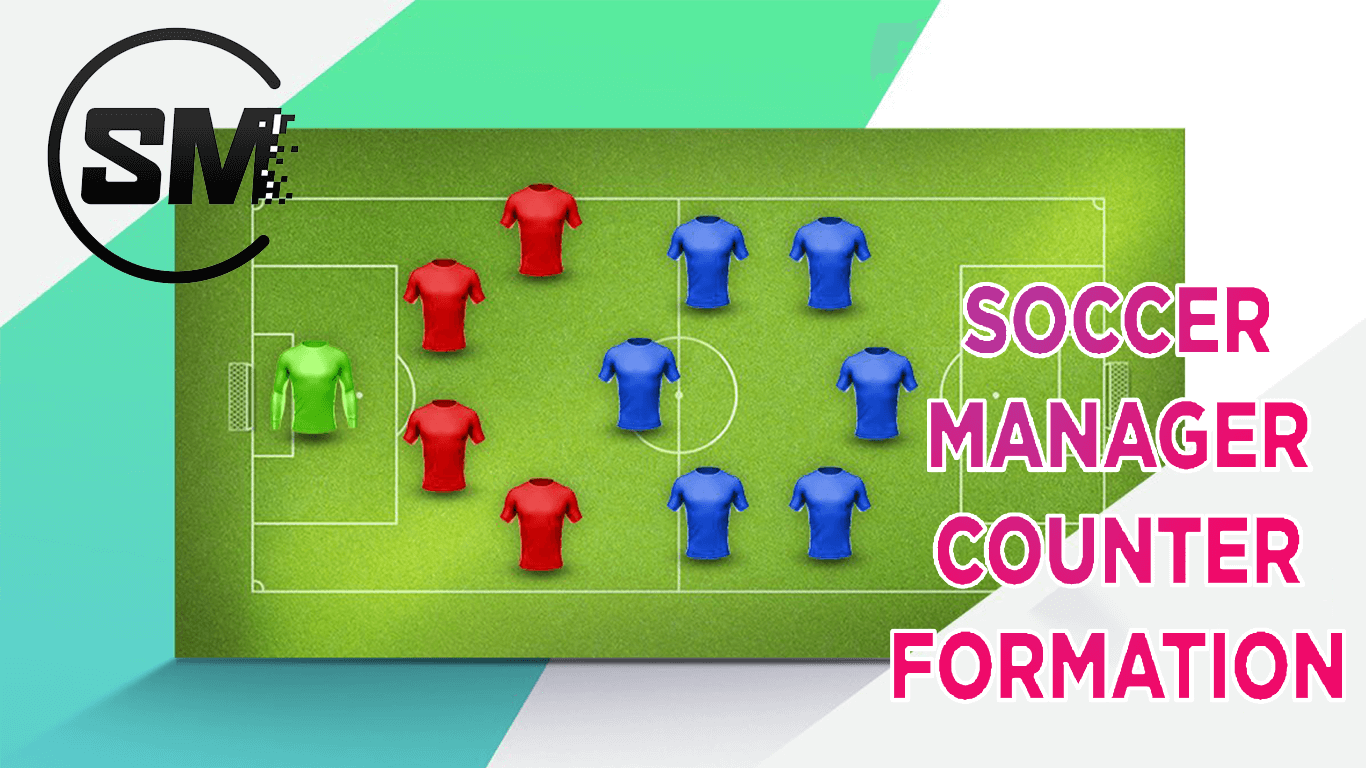
Here are the two shapes you will use most often. The attack points toward the top of each pitch.
4-2-3-1 (vs 4-4-2 and 5-3-2)
5-3-2 (vs 4-3-3)
A counter formation gives you an edge, but it does not guarantee a win. Check these before you blame the shape:
The formation sets the shape, and your other tactical settings decide how it behaves. If your tactics screen offers them, use these as a starting point:
For a full breakdown of settings, see our Soccer Manager best tactics and tips guide.
There is no single best one. The 4-2-3-1 is the most versatile because it controls the midfield and works against a 4-4-2 and a 5-3-2. Pick the counter that matches your opponent.
A 4-2-3-1 is the standard answer, with a 4-3-3 as the alternative. Both give you an extra central midfielder.
Try a 4-4-2 or a 5-3-2. Both protect the wide areas, and the 4-4-2 gives you two strikers against their two centre-backs.
Be patient. Use a 4-2-3-1, keep the ball in midfield, and avoid early crosses into a packed box.
Yes, but it is only one factor. Player ratings, fitness, morale and your other tactics matter just as much.
Use the table above as your cheat sheet, and learn the numbers rule so you can handle any shape. Count their midfield, protect against their strikers, and attack the space they leave. Combine your counter formation with the right settings from our Soccer Manager best tactics and tips guide, then head to Soccer Manager to put it into practice.
Counter strong opponent’s by playing defensive mentality. Defenders keeping low lines, Defensive fullbacks make fewer overlaps, Defensive midfielders direct play to the target man, wingers press more while loss of possession and quick run then cross to the target man, Attacking midfielders providing support to the striker and at last Striker should be a good finisher with the ability of poacher or target man.
The listed formation in this video has one of the best formations for Soccer Manager 2021.
If You want more formation and tactics

These are the tactics mentioned below are the OSM Best Formation Tips and Tricks with Tactics. Online Soccer Manager is one of the most trending games right now. It’s all proven tactics because I used these tactics and win the game easily.

Style of Playing: Wing Play
Marking: Zonal
Off-side Trap: No
Tackling: Agressive
Line Tactics
Forwards: Attack Only
Midfielders: Stay in Position
Defense: Attacking Full-backs
Pressing: Close down opposition 70
Style: Attacking 75
Tempo: High Speed Passing 75
Style of Playing: Counter Attack
Marking: Zonal
Off-side Trap: No
Tackling: Agressive
Line Tactics
Forwards: Support Midfield
Midfielders: Protect Defense
Defense: Defend Deep
Pressing: Close down opposition 70
Style: Defense 35
Tempo: Quick Passing 75
“Update your Sponsors Regularly”
Always have 4 players on the transfer list. Buy players from the list and put them for max selling price on the list. It’s funny how I sometimes buy players for like 5 million and sell them a few hours later for 10 million. The lower their value, the sooner you’ll sell them. I recommend only buying players with a lower value than 11mil. When you have 4 players on the list with 11m or lower, you’ll sell about 2-4 players a day. That money can be used to buy anyone you want. That’s how I managed to get a Watford team that was over 1 billion in value.

4-3-3 B
Style of Playing: Wing Play
Marking: Zonal
Off-side Trap: No
Tackling: Agressive
Line Tactics
Forwards: Attack Only
Midfielders: Stay in Position
Defense: Support Midfield
Pressing: Close down opposition 70
Style: Attacking 65
Tempo: One Touch Football 90

6-3-1 A
Style of Playing: Counter Attack
Marking: Zonal
Off-side Trap: No
Tackling: Normal
Line Tactics
Forwards: Attack Only
Midfielders: Protect the defense
Defense: Defense Deep
Pressing: Balance 56
Style: Park the Bus 15
Tempo: High Speed Passing 78
4-3-3 B
Tiki Taka Formation can beat weak 4-4-2 B but if you want to beat a stronger team then you have to use 4-2-3-1 formation.
4-3-3 B
Style of Playing: Wing Play
Marking: Zonal
Off-side Trap: No
Tackling: Aggressive
Line Tactics
Forwards: Attack Only
Midfielders: Stay in Position
Defense: Support Midfield
Pressing: Close down opposition 70
Style: Attacking 65
Tempo: One Touch Football 90
For stronger Opponent
Style of Playing: Shoot on Sight
Marking: Zonal
Off-side Trap: No
Tackling: Aggressive
Line Tactics
Forwards: Attack Only
Midfielders: Protect the defense
Defense: Defend deep
Pressing: Balance 50
Style: Defense 30
Tempo: Quick pass 70
4-4-2 Classic Formation can beat weak 4-3-3 A but if you want to beat a stronger team then you have to use 4-2-3-1 formation.
For weaker Opponent
4-3-3 B
Style of Playing: Wing Play
Marking: Zonal
Off-side Trap: Yes
Tackling: Aggressive
Line Tactics
Forwards: Attack Only
Midfielders: Stay in Position
Defense: Defend Deep
Pressing: Balanced 50
Style: Defence 35
Tempo: Play Possession 50
For stronger Opponent
Style of Playing: Shoot on Sight
Marking: Zonal
Off-side Trap: No
Tackling: Aggressive
Line Tactics
Forwards: Attack Only
Midfielders: Protect the defense
Defense: Defend deep
Pressing: Balance 50
Style: Defense 30
Tempo: Quick pass 70
4-3-3 A Formation can beat weak 4-5-1 but if you want to beat a stronger team then you have to use 3-4-3 B formation.
For weaker Opponent
4-3-3 B
Style of Playing: Passing Game
Marking: Zonal
Off-side Trap: No
Tackling: Aggressive
Line Tactics
Forwards: Attack Only
Midfielders: Protect Defense
Defense: Defend Deep
Pressing: Close Down Opposition 60
Style: Offensive 70
Tempo: Quick Passing 60
For stronger Opponent
Style of Playing: Counter Attack
Marking: Zonal
Off-side Trap: No
Tackling: Normal
Line Tactics
Forwards: Attack Only
Midfielders: Protect the defense
Defense: Defend deep
Pressing: Sit Deep 30
Style: Defensive 35
Tempo: Quick pass 60
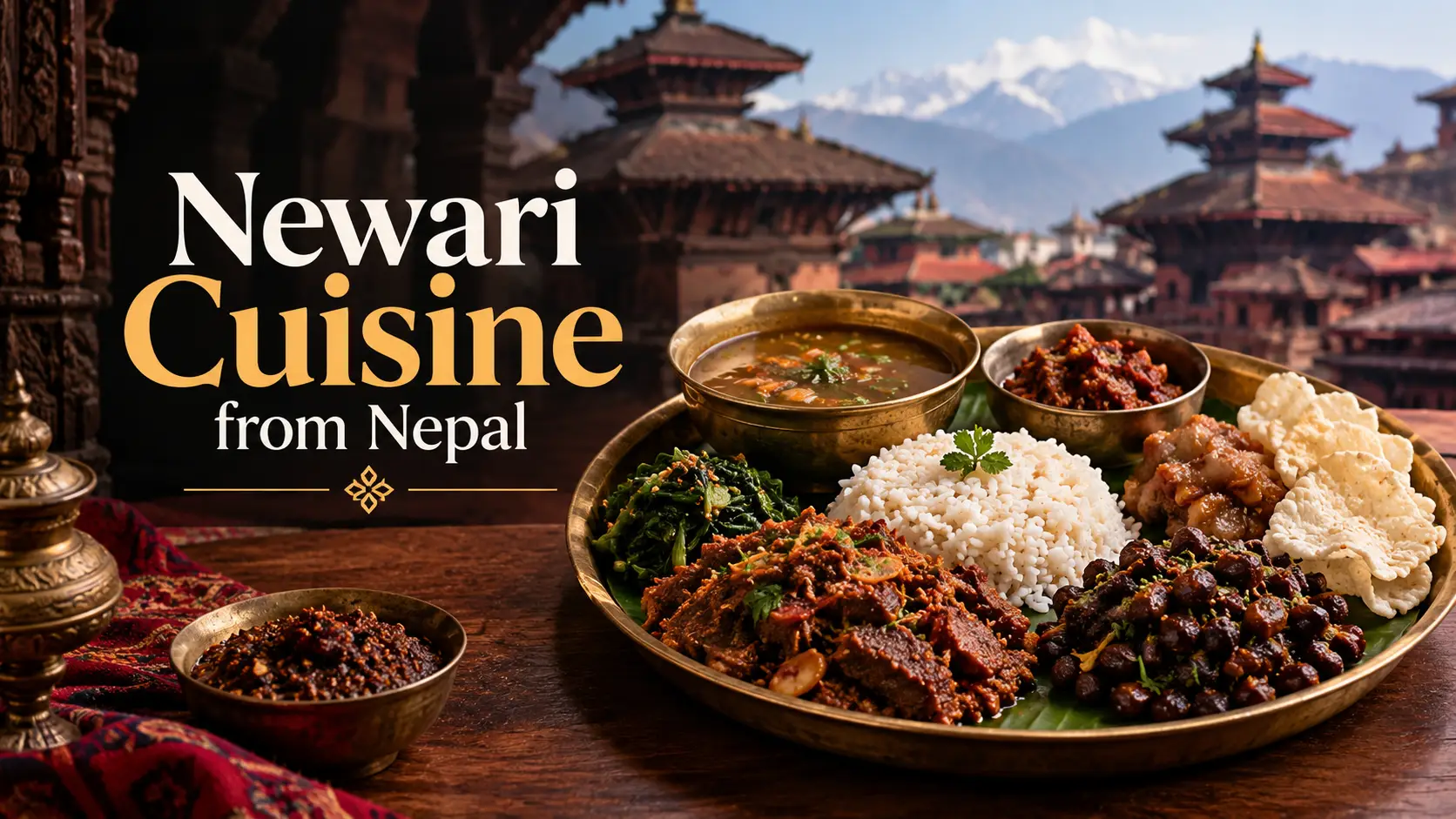
Newari cuisine from Nepal is the traditional food of the Newar people, the indigenous community of the Kathmandu Valley. It is built around beaten rice, buffalo meat, black lentils, mustard oil and bold spices. Many Nepalis and visitors consider it the most distinctive and flavourful food tradition in the country. It is also one of the few where every dish is tied to a festival, a ritual or a family occasion.
This guide covers what Newari food is, the dishes worth trying, the festivals that shape the menu, vegetarian options, and how to eat it in Kathmandu, Patan and Bhaktapur.
Quick answer:
In this article
Newari (or Newa) cuisine is a subset of Nepalese cuisine that developed over centuries among the Newars of the Kathmandu Valley. Food is central to Newar culture, and dishes served at feasts and festivals carry symbolic meaning. Daily meals are known as Ja Neu or the Newa thali.
Newari food generally falls into three groups:
1. Daily meals
Simple, balanced plates of rice, lentils, seasonal vegetables and pickles.
2. Snacks (khaja)
Bara, chatamari, choila and beaten rice, sold at street stalls and small eateries.
3. Feasts (bhwe)
Structured, multi-course meals for festivals, weddings and life rituals.
Newari cooking has a recognisable flavour signature. Four things set it apart:
The cuisine has also borrowed from its neighbours. Some Newari dishes resemble Tibetan ones: lowa is similar to the Tibetan swo, and Newari mamacha is a spicier take on the momo dumpling.
If you try only one Newari meal, make it samay baji. It is the most recognised plate of the cuisine and is served at feasts, rituals and restaurants. It is not a random mix: each item has a role in the plate.
Diagram: how a typical samay baji plate is built. Exact items vary by family, occasion and restaurant.

Use this table to see the main dishes at a glance and which ones suit vegetarians.
| Dish | What it is | Type | Vegetarian? |
|---|---|---|---|
| Choila | Spiced, grilled buffalo meat with mustard oil, ginger and chilli | Snack / side | No |
| Bara (wo) | Savoury lentil patty, plain or topped with egg or minced meat | Snack | Plain: yes |
| Chatamari | Thin rice-flour crepe, often called “Newari pizza” | Snack | Plain: yes |
| Yomari | Steamed rice-flour dumpling filled with molasses and sesame | Sweet | Yes |
| Kwati | Hearty soup of sprouted mixed beans | Soup / festival | Yes |
| Aloo tama | Tangy curry of potato and fermented bamboo shoot | Curry | Often (check stock) |
| Kachila | Raw minced meat, often buffalo, seasoned with spices | Festival | No |
| Ghalmal | Mixed curry of lentil cake, greens and leftover meat | Curry | No (usually) |
| Juju dhau | Rich set yoghurt from Bhaktapur, served in clay pots | Dessert | Yes |
Newari feasts are structured, not random assortments of dishes. Guests traditionally sit in rows on mats while courses are served in a set order. Food at these events marks everything from harvests to life milestones.
Yomari Punhi falls on the full moon of Marga (Mangsir), and in 2026 it is observed on 24 December. It is also celebrated as Jyapu Day, and the Kirant community marks Udhauli on the same day. Families steam yomari and offer it to Annapurna, the goddess of grains. In the evening, children and adults go door to door singing and asking for yomari in a custom called tyo-si-tyo. Historically, yomari was a rare food made once a year, which is why sharing it became a community tradition.
If you are in Kathmandu, Patan or Bhaktapur around that date, bakeries and sweet shops sell fresh yomari. Local families often welcome visitors who show interest.
Newari food is meat-heavy, but vegetarians can still eat well if they know what to ask for. This is a gap most guides skip.
Newari food is best eaten where it is made, in the three old royal cities of the valley:
Kathmandu
The traditional heart of Newari cuisine, with many restaurants around Thamel and the old bazaars.
Patan (Lalitpur)
Newari eateries around Patan Durbar Square are a favourite for locals and visitors alike.
Bhaktapur
Famous for juju dhau and a strong everyday Newar food culture.
Newar communities outside the core valley, such as in Banepa and Dhulikhel, adapt the cuisine to local ingredients while keeping core dishes like bara, choila and chiura. The result is one cuisine with several local accents.
| Newari cuisine | Typical Nepali daal bhat | |
|---|---|---|
| Staple | Beaten rice, rice flour, lentil cakes | Steamed rice with lentil soup |
| Meat | Buffalo, offal and egg are central | Often optional or occasional |
| Flavour | Mustard oil, ginger, fenugreek, fermented notes | Milder, built around daal and curry |
| Structure | Ritual feasts with set courses | Everyday plate |
| Festival link | Very strong (yomari, kwati, samay baji) | Varies by community |
Nepal’s cuisine is not one thing. It is a composite shaped by geography and trade, and Newari food is its most celebrated urban strand.
Newari food is famous for samay baji, choila, bara, chatamari and yomari, along with its structured festival feasts and rice-based staples.
Samay baji is the most recognised Newari meal, built on beaten rice with choila, egg, beans and pickles.
It is flavourful rather than uniformly hot. Dishes like choila and achar can carry real chilli heat, while bara, yomari and juju dhau are mild.
Yes. Plain bara, chatamari, kwati, yomari, juju dhau and a meatless samay baji are all possible. Always confirm with the kitchen.
Yomari is a steamed, cone-shaped rice-flour dumpling filled with molasses and sesame, and sometimes khuwa. It is the signature food of Yomari Punhi.
Yomari Punhi is on 24 December 2026, the Marga full moon day, which is also Udhauli and Jyapu Day.
Kathmandu, Patan and Bhaktapur are the best places. Look for small, busy local restaurants and festival-day sweet shops.
Newari cuisine from Nepal is more than a list of dishes. It is a living food culture where every plate is linked to a season, a festival or a family tradition. Start with a samay baji, add a bara and a piece of choila, and finish with yomari if the calendar lines up. Then explore the lesser-known dishes, because the Kathmandu Valley rewards curious eaters.
Ask a visitor what Nepali food is, and you will usually hear momo, Sel Roti and thukpa. Ask a Kathmandu local where to go for a proper sit-down meal, and there is a good chance the answer is a Thakali restaurant. The Thakali Khana Set is a full plate of rice or dhido, ghee-tempered dal, curries, pickle and chutney, and it has become one of the most popular meals in Nepali cities. It sits alongside everyday dal-bhat-tarkari, and it also belongs in any Taste of Nepal food list.
Quick answer
A Thakali Khana Set is a complete meal from the Thakali community of Mustang. It typically pairs rice (or dhido) with dal, vegetables, a meat curry or vegetarian alternative, a fermented pickle such as gundruk, and tomato chutney. Its signature flavours come from ghee, the dried Himalayan herb jimbu and the citrusy pepper timur.
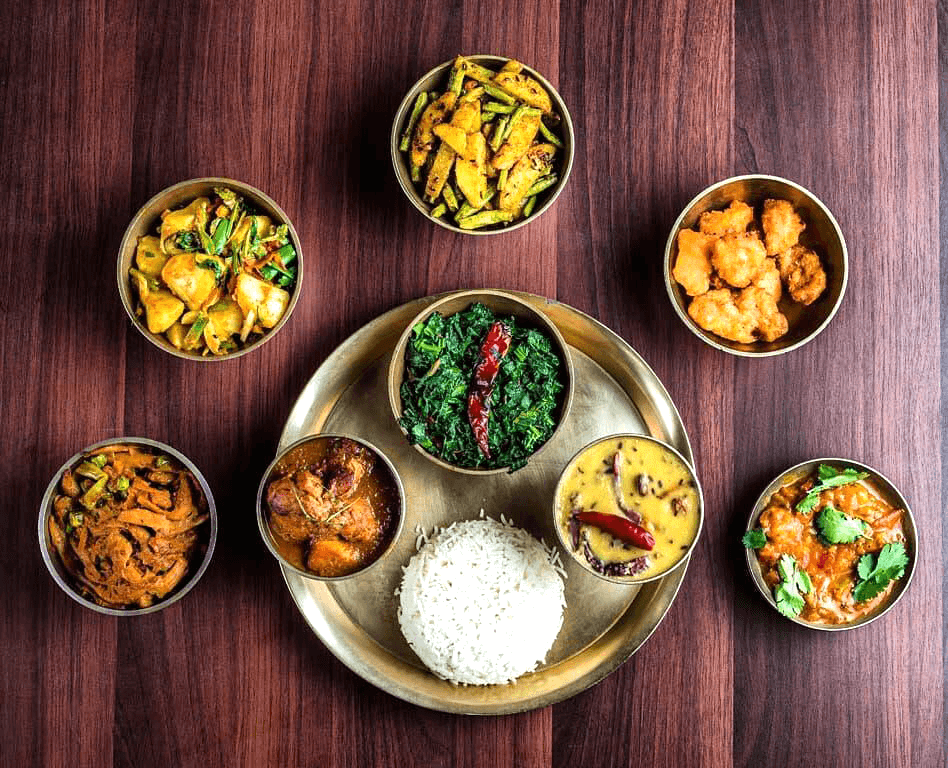
“Khana” simply means food or meal in Nepali. A Thakali Khana Set is the meal as the Thakali people serve it: several small dishes on one plate, built around a staple. According to The Gundruk, the staple is rice or dhido (usually buckwheat or millet), served with dal, vegetable curry, stir-fried spinach, meat curry, fermented pickle and a fresh chutney of timur and tomato.
Restaurants differ in the exact lineup, so treat the list below as typical, not fixed.
Thakali food is prepared by the Thakali people of the Thak Khola area of Mustang. Nepal Traveller notes that the set originates in the Thak Khola valley and is widely popular across western Nepal.
Thak Khola was long a trade route across the high Himalayas. Trade brought the Thakali access to vegetables, but because they lived in the upper Himalayan region, much of what arrived was dried. That history helps explain why preserved and fermented foods such as gundruk matter so much in the cuisine.
As Thakali families moved to cities, the food moved with them. Ekantipur reports that about 70 Thakali kitchens in Kathmandu are working to spread the cuisine at home and abroad, and the same article warns that a “Thakali set available here” sign does not guarantee an authentic taste.
Here is the plate at a glance, then the details in a table.
| Item | What it is |
|---|---|
| Rice / dhido | Steamed rice, or dhido, a thick porridge-like staple made from flour such as buckwheat or millet. |
| Dal | Traditionally black lentil or local beans, finished with a ghee and jimbu tempering. |
| Vegetable dishes | Seasonal vegetables, spicy potatoes and stir-fried spinach, depending on the kitchen. |
| Meat curry | Often local chicken or mutton; some restaurants offer fish or a vegetarian option. |
| Gundruk | A fermented leafy green, served as a pickle or in a soup. It pairs especially well with dhido. |
| Tomato chutney | A fresh chutney usually made with tomato and timur. |
| Phopke (sometimes) | Fermented rice served as a dessert, according to Online Khabar. |
Walk into a Thakali kitchen and the first thing you notice is the thick, fragrant smell of ghee. Beyond ghee, three things set the cuisine apart.
Dal is the highlight of the plate. The Gundruk describes the traditional method: lentils or beans are cooked slowly in a cast-iron pot over firewood, then finished with a tempering of jimbu and spices fried in hot ghee. Cast iron is said to give the dal its slightly greenish colour. At Gurugram’s Jimbu Thakali, The Nod reports the dal is repeatedly mashed with an iron ladle in an iron vessel, a traditional technique that deepens colour and flavour.
Dal-bhat is the staple across Nepal and is available in almost every restaurant, as Online Khabar notes. A Thakali set uses the same idea but builds the plate differently.
| Feature | Everyday dal-bhat-tarkari | Thakali Khana Set |
|---|---|---|
| Core | Rice, lentil soup, vegetable curry, achar | Rice or dhido, dal, curries, pickle, chutney |
| Dal flavour | Often turmeric, cumin, garlic | Ghee and jimbu tempering |
| Signature extras | Salad, achar | Gundruk, timur chutney, ghee |
| Origin | Nationwide staple | Thak Khola, Mustang |
Many restaurants let you pick. Rice is the familiar choice. Dhido, made from buckwheat, millet or corn flour, is a thicker, more filling option. Nepal Traveller says it is best enjoyed with gundruk, which adds a tangy, slightly sour note. If you want the more traditional experience, ask for dhido.
Because many places advertise a Thakali set, here are checks based on what the sources describe as defining traits:
Restaurants open, move and close, so confirm hours and addresses before you go. These names appear in the sources above:
Often, yes. Restaurant India reports that Jimbu Thakali’s thali offers a choice of chicken, mutton, fish or a vegetarian preparation, alongside jimbu-flavoured lentils, vegetables, potatoes, gundruk, radish pickle and tomato chutney. Other restaurants vary, so ask when ordering.
If you cook at home, The Gundruk’s guidance is to skip soaking the beans, which it says helps keep the texture creamy. For the tempering, it suggests ghee heated until it starts to smoke, then heat reduced and garlic, dried red chillies, fenugreek seed and jimbu added.
Thakali Khana is the traditional meal of the Thakali people from Mustang’s Thak Khola area: rice or dhido with dal, curries, pickle and chutney.
Jimbu is a dried Himalayan herb from the onion family, fried in ghee and used to flavour dal and other dishes.
Timur is Nepal’s native pepper, with a citrusy aroma and a mild numbing effect. It features in Thakali chutneys.
They are related but not identical. A Thakali set follows the dal-and-rice structure but adds ghee-and-jimbu dal, gundruk, timur chutney and the option of dhido.
Yes. Jimbu Thakali has opened an outlet in Gurugram, India, that serves the Thakali Khana Set.
A Thakali Khana Set is less about a single dish than a way of eating: a staple, a fragrant ghee-and-jimbu dal, something fermented and something fresh. Order it once and you will see why it has spread from Mustang to cities across Nepal and beyond. For more dishes to try, continue to Taste of Nepal.
The page you requested could not be found. Try refining your search, or use the navigation above to locate the post.

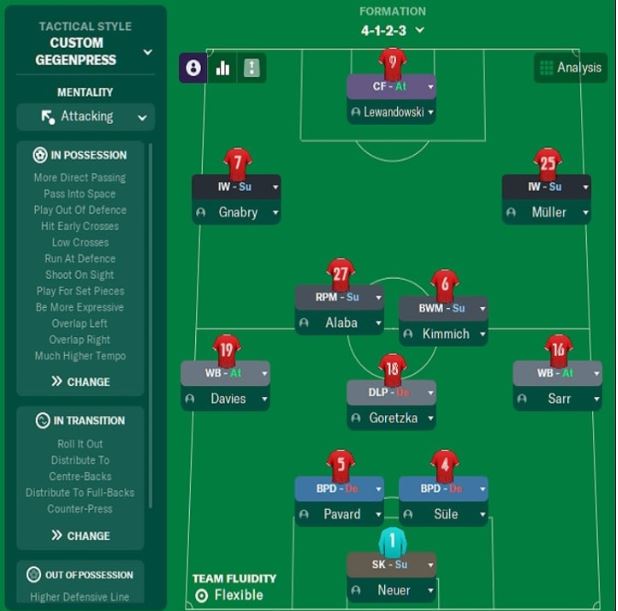
With an entire Forward and 2 Inverted Wingers, opposing center-backs do not stand an opportunity.
This setup is meant to overload the attack. Those 3 players are going to be supported by your 2 full-backs, thus high that they may moreover simply be wingers. Any four-back formation merely cannot handle the numbers.
You need 2 disciplined center-backs to create certain that you just aren’t getting overpowered, and your Deep Lying Playmaker should be comfy dropping into defense.
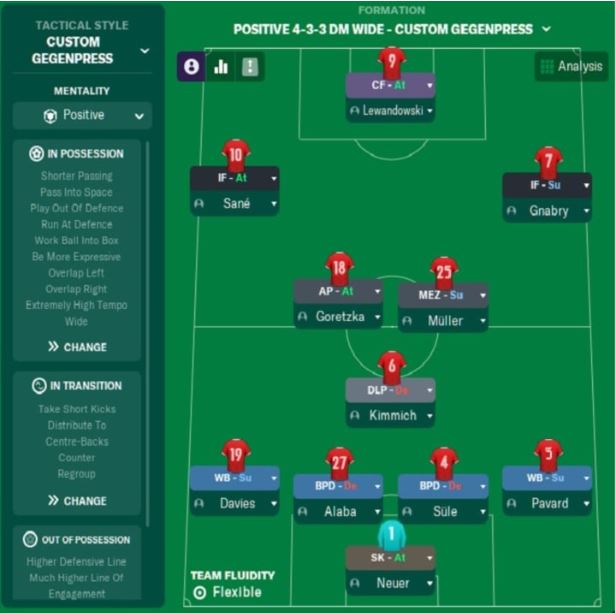
This Formation is a bit more stable at defense. The striker must be Targetman, both wingers must be shadow striker and advance playmaker bot center midfield must be ball winner with lost of stamina and Defensive midfield must be Deep lying playmaker.
In this formation, most of the attack begins from both flanks.
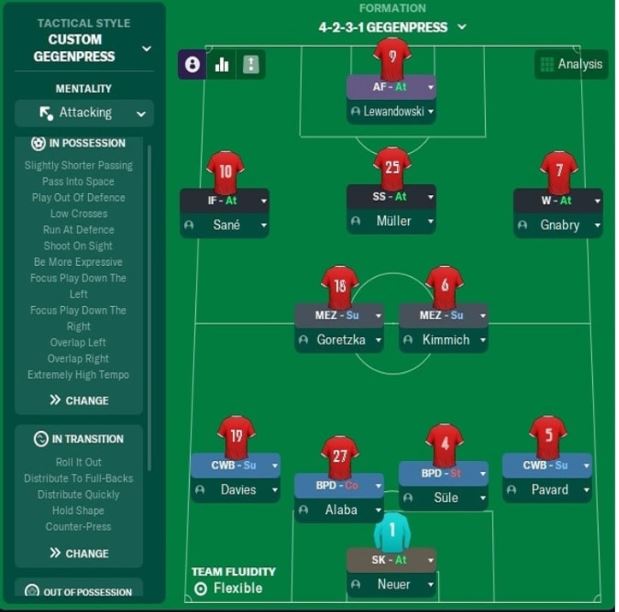
By Using this Formation will score more goals and also concede goals, so this formation is best for goal scoring but also a little bit weak at conceding goals. Both Center midfield players must be the engine of a team who can both recover the ball and playmaker.
And your attacking wingers must be Shadow strikers, they will score most of your goals in the game.
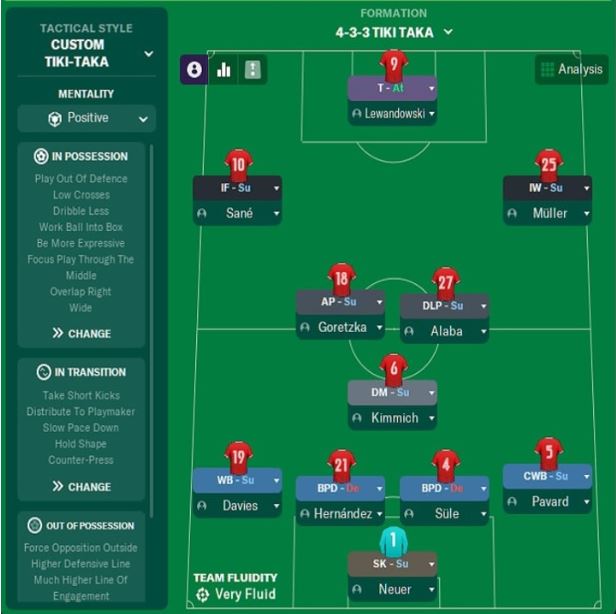
Pep Guardiola’s Barcelona side was one of the best football has ever seen, with this 4-3-3 formation in football.
A large part of the success and chance creation for this one comes through the middle of the pitch, where your playmakers intend to overload any opponent. The Trequartista is also responsible for dropping deep to form almost a diamond in the center of the pitch, so this is the position you need to prioritize.
In defense, it revolves around intense pressing to immediately recover the ball, and possession is then recycled to that creative midfield to get things going again.

If you want many goals, you need to try out this 4-1-2-1-2 tiki-taka.
Having five players with attacking duties means players will move forward in search of goals, and if you’ve got the right players for the right roles, they can pick their way through any defense. The two Advanced Forwards hound defenders.
Pick your full-backs more defensive as they need to able to play narrow.
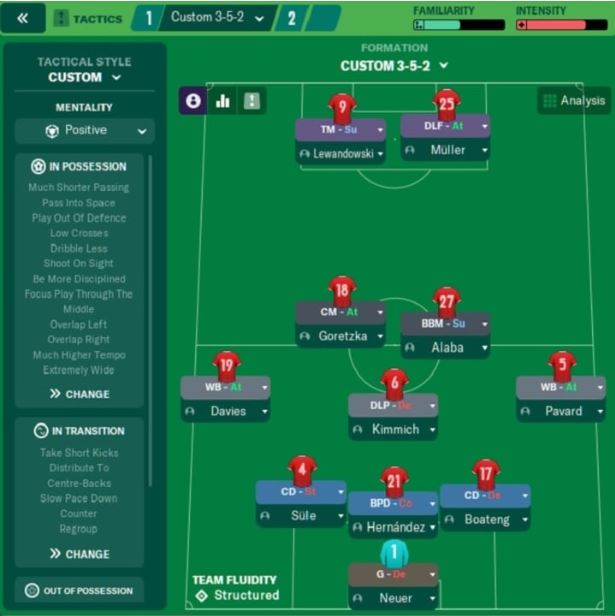
Antonio Conte’s Juventus are up there with the best performing team. He turned a struggling team into 3times champions. His tactic is a bit more defensively stable as the Deep Lying Playmaker is swapped in place of a Regista in the defense. You need to find a player with elite creativity playmaker, vision, and passing, or else this style won’t work.
In attack, those wing-backs will be flying forward to help the attacking players, but they’ll need to be fast enough to get back and form a flat 5-3-2 on defense.