
Thakali Khana Set: What’s on the Plate, Where It Comes From and How to Order It
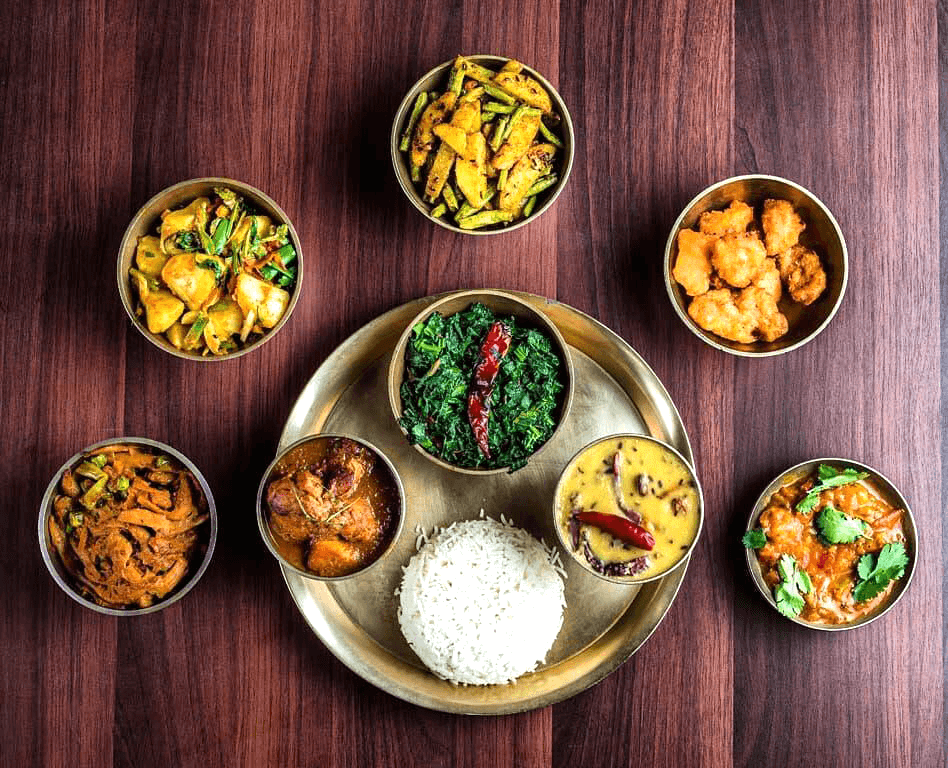
Ask a visitor what Nepali food is, and you will usually hear momo, Sel Roti and thukpa. Ask a Kathmandu local where to go for a proper sit-down meal, and there is a good chance the answer is a Thakali restaurant. The Thakali Khana Set is a full plate of rice or dhido, ghee-tempered dal, curries, pickle and chutney, and it has become one of the most popular meals in Nepali cities. It sits alongside everyday dal-bhat-tarkari, and it also belongs in any Taste of Nepal food list.
Quick answer
A Thakali Khana Set is a complete meal from the Thakali community of Mustang. It typically pairs rice (or dhido) with dal, vegetables, a meat curry or vegetarian alternative, a fermented pickle such as gundruk, and tomato chutney. Its signature flavours come from ghee, the dried Himalayan herb jimbu and the citrusy pepper timur.
What Is a Thakali Khana Set?
“Khana” simply means food or meal in Nepali. A Thakali Khana Set is the meal as the Thakali people serve it: several small dishes on one plate, built around a staple. According to The Gundruk, the staple is rice or dhido (usually buckwheat or millet), served with dal, vegetable curry, stir-fried spinach, meat curry, fermented pickle and a fresh chutney of timur and tomato.
Restaurants differ in the exact lineup, so treat the list below as typical, not fixed.
Where Thakali Food Comes From
Thakali food is prepared by the Thakali people of the Thak Khola area of Mustang. Nepal Traveller notes that the set originates in the Thak Khola valley and is widely popular across western Nepal.
Thak Khola was long a trade route across the high Himalayas. Trade brought the Thakali access to vegetables, but because they lived in the upper Himalayan region, much of what arrived was dried. That history helps explain why preserved and fermented foods such as gundruk matter so much in the cuisine.
As Thakali families moved to cities, the food moved with them. Ekantipur reports that about 70 Thakali kitchens in Kathmandu are working to spread the cuisine at home and abroad, and the same article warns that a “Thakali set available here” sign does not guarantee an authentic taste.
What Comes on a Thakali Khana Set Plate
Here is the plate at a glance, then the details in a table.
the staple
black lentil or local beans, ghee and jimbu
potato curry, stir-fried spinach
chicken, mutton, fish or vegetarian
gundruk, radish pickle
tomato and timur
| Item | What it is |
|---|---|
| Rice / dhido | Steamed rice, or dhido, a thick porridge-like staple made from flour such as buckwheat or millet. |
| Dal | Traditionally black lentil or local beans, finished with a ghee and jimbu tempering. |
| Vegetable dishes | Seasonal vegetables, spicy potatoes and stir-fried spinach, depending on the kitchen. |
| Meat curry | Often local chicken or mutton; some restaurants offer fish or a vegetarian option. |
| Gundruk | A fermented leafy green, served as a pickle or in a soup. It pairs especially well with dhido. |
| Tomato chutney | A fresh chutney usually made with tomato and timur. |
| Phopke (sometimes) | Fermented rice served as a dessert, according to Online Khabar. |
The Flavours That Make It Thakali
Walk into a Thakali kitchen and the first thing you notice is the thick, fragrant smell of ghee. Beyond ghee, three things set the cuisine apart.
- Jimbu. A dried herb from the onion family, made from two wild Allium species. Per Wikipedia, its taste sits between onion and chives, and it is fried in ghee to develop its flavour.
- Timur. Nepal’s citrusy, gently numbing pepper, used in chutneys and spice blends.
- Ghee. Used for the dal tempering and often served alongside the plate.
- Restraint. Ekantipur says timur, jimbu, garlic and local ghee give Thakali food its character without too much oil or heavy spice.
How the Dal Gets Its Character
Dal is the highlight of the plate. The Gundruk describes the traditional method: lentils or beans are cooked slowly in a cast-iron pot over firewood, then finished with a tempering of jimbu and spices fried in hot ghee. Cast iron is said to give the dal its slightly greenish colour. At Gurugram’s Jimbu Thakali, The Nod reports the dal is repeatedly mashed with an iron ladle in an iron vessel, a traditional technique that deepens colour and flavour.
black lentil or beans, slowly
pot and ladle deepen colour
jimbu and spices in hot ghee
over the dal, served hot
Thakali Khana Set vs. Everyday Dal-Bhat
Dal-bhat is the staple across Nepal and is available in almost every restaurant, as Online Khabar notes. A Thakali set uses the same idea but builds the plate differently.
| Feature | Everyday dal-bhat-tarkari | Thakali Khana Set |
|---|---|---|
| Core | Rice, lentil soup, vegetable curry, achar | Rice or dhido, dal, curries, pickle, chutney |
| Dal flavour | Often turmeric, cumin, garlic | Ghee and jimbu tempering |
| Signature extras | Salad, achar | Gundruk, timur chutney, ghee |
| Origin | Nationwide staple | Thak Khola, Mustang |
Rice or Dhido: Which Should You Choose?
Many restaurants let you pick. Rice is the familiar choice. Dhido, made from buckwheat, millet or corn flour, is a thicker, more filling option. Nepal Traveller says it is best enjoyed with gundruk, which adds a tangy, slightly sour note. If you want the more traditional experience, ask for dhido.
How to Spot an Authentic Thakali Restaurant
Because many places advertise a Thakali set, here are checks based on what the sources describe as defining traits:
- Ask whether the dal is tempered with jimbu and ghee.
- Look for gundruk and a timur-based chutney on the plate.
- Notice the aroma of ghee as you walk in.
- Check the menu for dhido and buckwheat dishes, not only rice.
Where to Try a Thakali Khana Set
Restaurants open, move and close, so confirm hours and addresses before you go. These names appear in the sources above:
- Kathmandu: Jimbu Thakali, which The Kathmandu Post says was established in 2016 with outlets in Kalimati, New Baneshwor, Jhamsikhel and Tangal. Ekantipur also names Mantra in Jhamsikhel and Tukuche Thakali in Gairidhara.
- Pokhara: The Gundruk recommends Thakali Bhancha (Newroad), Fewa Thakali Bhanchha (Lakeside) and Mantra Thakali Restaurant (Newroad and Lakeside).
- Abroad: Jimbu Thakali has opened its first foreign outlet in Gurugram, India, serving the Thakali Khana Set among other dishes.
Can You Get a Vegetarian Thakali Set?
Often, yes. Restaurant India reports that Jimbu Thakali’s thali offers a choice of chicken, mutton, fish or a vegetarian preparation, alongside jimbu-flavoured lentils, vegetables, potatoes, gundruk, radish pickle and tomato chutney. Other restaurants vary, so ask when ordering.
A Home Tip for the Dal
If you cook at home, The Gundruk’s guidance is to skip soaking the beans, which it says helps keep the texture creamy. For the tempering, it suggests ghee heated until it starts to smoke, then heat reduced and garlic, dried red chillies, fenugreek seed and jimbu added.
Frequently Asked Questions
What is Thakali Khana?
Thakali Khana is the traditional meal of the Thakali people from Mustang’s Thak Khola area: rice or dhido with dal, curries, pickle and chutney.
What is jimbu?
Jimbu is a dried Himalayan herb from the onion family, fried in ghee and used to flavour dal and other dishes.
What is timur?
Timur is Nepal’s native pepper, with a citrusy aroma and a mild numbing effect. It features in Thakali chutneys.
Is Thakali food the same as dal-bhat?
They are related but not identical. A Thakali set follows the dal-and-rice structure but adds ghee-and-jimbu dal, gundruk, timur chutney and the option of dhido.
Is Thakali Khana Set available outside Nepal?
Yes. Jimbu Thakali has opened an outlet in Gurugram, India, that serves the Thakali Khana Set.
Final Thoughts
A Thakali Khana Set is less about a single dish than a way of eating: a staple, a fragrant ghee-and-jimbu dal, something fermented and something fresh. Order it once and you will see why it has spread from Mustang to cities across Nepal and beyond. For more dishes to try, continue to Taste of Nepal.
Sources
- The Gundruk: Thakali Khana set and restaurants in Pokhara
- The Gundruk: Thakali dal method
- Ekantipur: Gourmet Food, From Mustangs to Manhattans
- Online Khabar: 10 famous local foods to try in Nepal
- Nepal Traveller: Must-try food from West Nepal
- Wikipedia: Jimbu
- The Kathmandu Post: Jimbu Thakali opens its first foreign outlet in India
- Restaurant India: Jimbu Thakali opens first India outlet
- The Nod: Let Jimbu Thakali correct you
Peppercorns Marich: Discover This Unique Spice
In the world of spices, peppercorns marich stand out as a unique and flavorful addition that intrigues both culinary enthusiasts and professional chefs alike. These distinctive peppercorns not only offer a rich flavor profile but also provide a glimpse into the...
Asparagus in Nepali: A Cultural and Culinary Insight
Asparagus, known as "Kurilo" in Nepali, is a vegetable that holds both cultural and culinary significance in Nepal. Whether you're a cooking enthusiast eager to explore new ingredients or a language learner intrigued by the diverse Nepali vegetable names,...
Maas Ko Daal Recipe: A Flavorful Lentil Delight
id="introduction-to-maas-ko-daal" class="autoblogger-h2" style="font-size: 1.75rem; font-weight: 800; color: #0f172a; margin: 2.5rem 0 1.25rem 0; border-bottom: 2px solid #e2e8f0; padding-bottom: 0.5rem;">Introduction to Maas Ko Daal If you're looking to master the...