Select Page

Karnali Blues Book Review & Summary

Karnali Blues Book Review & Summary: Buddhisagar’s Novel About a Father and Son

Karnali Blues (कर्नाली ब्लुज) by Buddhisagar is the Nepali novel that sends readers straight back to their own fathers. In this review I cover the story, a spoiler-free summary, the main characters, the author, the English translation and my honest verdict, with a short review in Nepali as well.

By Wilson ShresthaUpdated 11 September 202612 min read
Karnali Blues book review and summary – Nepali novel by Buddhisagar
Karnali Blues by Buddhisagar, first published in Nepali in 2010 and in English in 2021.
4.5out of 5 ★★★★★★★★★★

Quick verdict

A slow, tender coming-of-age novel that turns an ordinary village father into one of the most loved characters in Nepali literature. It will make you laugh, cry and think about your own father.

Read it if you love family stories, nostalgia and rural Nepal. Skip it if you want a fast plot full of twists.

Karnali Blues book details

Nepali title
कर्नाली ब्लुज
Author
Buddhisagar (Buddhi Ram Chapain)
First published
Autumn 2010 (2067 BS)
Publisher
FinePrint, Kathmandu
Genre
Fiction, coming-of-age novel (bildungsroman)
Language
Nepali, with dialogue in Tharu and the Jumli dialect
Length
About 400 pages
English translation
By Michael Hutt, published by Penguin Random House India (2021)
Setting
Matera, Katase Bazaar, Kalikot and Kohalpur in western Nepal
Narrator
Brisha Bahadur, the son

What is Karnali Blues about?

Karnali Blues is the story of a father, told by his son. The narrator, Brisha Bahadur, sits beside his father, Harsha Bahadur, in a crowded hospital in Kohalpur after a brain haemorrhage leaves the old man paralysed. For eleven days he feeds him, cleans him and watches over him. And while he waits, he remembers everything.

Those memories become the novel. When Brisha is a little boy, his father is nothing short of a superhero: the man the whole village calls when someone falls sick, the man who forgives every prank. As Brisha grows into a stubborn teenager, the superhero slowly becomes an ordinary man who is losing his business, his health and his place in the world, yet still puts his son’s wishes before his own.

That is the heart of the book: the way a son’s picture of his father changes over a lifetime, and the late, painful moment when he finally understands what that father gave up. Nepali literature has plenty of stories and poems about a mother’s love and sacrifice. Far fewer are written about the quiet, sometimes stern love of fathers. Karnali Blues fills that gap, which is why so many readers simply call it a father’s book.

Karnali Blues summary (spoiler-free)

The novel runs on two timelines that take turns. The present crawls forward one hospital day at a time. The past rushes along, place by place, as the family keeps moving in search of a better life. Here is that journey, without the ending.


  1. Matera

    Childhood in a village by the Amauri Khola

    Brisha is born in Matera, a sleepy village beside the Amauri Khola, a tributary of the Karnali. On the day he is born, his father notices a mole on the sole of his foot and predicts the boy will walk a lot in life but will never leave his parents. Harsha Bahadur runs a small medicine shop and is the village “doctor”. Brisha’s days are full of river swims, lessons he tries hard to avoid and mischief with his friend Chandre. He adores his father so much that he draws a moustache on a picture of the goddess Santoshi Maa and renames her “Santoshi Baa”.


  2. Katase Bazaar

    A bazaar town that rises, then fades

    The family moves to the growing bazaar of Katase, where business is better and life feels settled for a while. Brisha’s world gets bigger, with new friends and bigger troubles. But Nepal is changing around them. A new bridge over the Karnali at Chisapani shifts the flow of travellers and trade, and the bazaar that fed the family slowly starts to empty.


  3. Kalikot

    Up the Karnali into the hills

    With the shop failing, Harsha Bahadur has to choose a new home. Surkhet is the safer option, and Brisha’s mother knows it, but he picks remote Kalikot. The long journey up along the Karnali is one of the most beautiful parts of the book. Life in the hills is harder, money is tighter, and teenage Brisha’s mischief turns into real worry for his parents.


  4. Kohalpur

    The hospital bed, eleven days in the present

    Back in the present, the man who once carried the whole family lies silent in a hospital bed in Kohalpur. Day by day, the roles flip: the son who was always looked after now has to look after his father. Every memory in the book passes through these eleven days, which is why even the funniest childhood scenes carry a little sadness.

Show the ending (spoiler)

Harsha Bahadur does not recover. As his father fades, Brisha finally sees his life clearly: every move, every loss and every sacrifice was made for the family, and the person who lost the most in all those years was his father, not him. The book closes on a grown-up Brisha and his mother facing a life without the man who held everything together.

It is not a shocking ending. You can feel it coming from the first chapter. It hits hard because by then you know Harsha Bahadur as well as your own family.

Main characters in Karnali Blues

Buddhisagar fills the book with ordinary people who feel completely real. These are the ones you will remember.

Brisha BahadurThe narrator and son
Funny, lazy, curious and often a headache for his parents. We watch him grow from a spoilt little boy who wants an expensive bicycle into a young man carrying both guilt and love for his father. He writes poems too.
Harsha BahadurThe father, “Baa”
The soul of the novel. Kind, idealistic, sometimes stubborn, fond of his blue waistcoat, and almost never able to say no to his son. He helps the whole village while quietly struggling to keep his own family afloat.
Brisha’s mother“Aama”, never named
She has no name in the book, yet she is one of its strongest characters. Practical, often frustrated and always forgiving, she is usually right when her husband refuses to listen.
ParvatiBrisha’s elder sister
A steady, caring presence in the family home during Brisha’s childhood.
MamataParvati’s friend, “Mamata didi”
One of the memorable people of Brisha’s early years, with a story of her own.
ChandreChildhood friend
Brisha’s best friend and partner in mischief during the Matera years.
Village charactersBhagiram, Saddam, Mandire and more
Each has a small story of their own, and together they paint a full picture of life in the bazaars and villages of western Nepal.

Themes of Karnali Blues

A father’s quiet love

Harsha Bahadur never gives speeches about love. He shows it by forgiving, by paying for things he cannot afford and by standing between his son and the world. The novel makes you notice the same quiet gestures in your own father.

Growing up

Karnali Blues is a coming-of-age novel that follows Brisha from birth to adulthood. His growth is not neat or heroic. It is messy, lazy and full of mistakes, which is exactly why it feels believable.

Migration and a changing Nepal

Villages empty, bazaars rise and fall, and a single bridge changes a whole town’s fortune. Through one family’s moves, the book shows how roads, markets and migration reshaped western Nepal.

The beauty and hardship of the Karnali

Rivers, seasons, fields and hills are described so vividly that nature feels like a character. Beside that beauty sits the hard side of rural life: poverty, poor healthcare, superstition and small-town politics.

Regret and understanding

Most of us understand our parents late. Brisha’s slow realisation beside a hospital bed is what turns a nostalgic childhood story into a novel that stays with you for years.

Karnali Blues author: who is Buddhisagar?

Buddhisagar is the pen name of Buddhi Ram Chapain, born on 2 June 1981 in Kailali district in western Nepal. Like his narrator, he grew up between Matera, Katase Bazaar and Kalikot. He later moved to Kathmandu, studied journalism at RR Campus and worked as a journalist before becoming a full-time writer. He began as a poet, and his poems were broadcast on the radio when he was still very young. That poetic touch shows on almost every page of Karnali Blues.

Is Karnali Blues his own story? Partly. In a 2022 interview with Nepali Times, Buddhisagar said his own father was also treated in Kohalpur and later died of a brain haemorrhage, and that some parts of the beginning of the novel are real. He also made clear that Brisha is not simply him; only pieces of himself and his parents live inside the character.

Karnali Blues was his first novel. His other books include:

  • 2016 Phirphire, his second novel, nominated for the Madan Puraskar
  • 2019 Prerana and Lal Peela, a children’s book
  • 2022 Eklo, a novel about loneliness set in Kathmandu
  • 2023 Usle Diyeko Umer

My Karnali Blues book review (in English)

Karnali Blues is one of my all-time favourite books, and it is the first Nepali novel I suggest when someone asks me what to read. Every time I open it, I feel nostalgic. It takes me back to my own childhood and makes me love and respect my father even more.

What makes it special is how ordinary it is. There are no villains, no big twists and no dramatic love story. There is just a family, a few towns, a river and a father who keeps saying yes. Buddhisagar writes like the poet he is, with simple words and sharp pictures, so you can almost feel the heat of a Terai afternoon and hear the river in the background.

The book also makes you laugh out loud. Young Brisha’s pranks are genuinely funny, and the dialogue in Tharu and Jumli-flavoured Nepali makes the villagers feel like people you have met in real life.

What I loved

  • Harsha Bahadur, a father who feels like someone you actually know
  • Vivid, poetic descriptions of rivers, seasons and small towns
  • Honest humour in Brisha’s childhood chapters
  • The hospital-and-memory structure, which makes the ending land hard
  • A real picture of life in rural western Nepal

What could be better

  • At around 400 pages, the middle section moves slowly
  • Teenage Brisha is often hard to like
  • Some side characters leave the story too suddenly
  • The early chapters lean heavily on similes

To be fair, the book is not for everyone. It takes its time, and some readers find the middle slow. Teenage Brisha ignores his studies, wastes money and hurts the people who love him most. But I think that is the point. He is the son many of us once were, and the book asks us to look at our younger selves honestly.

Who should read it: anyone who loves family stories, anyone who grew up outside the big cities or misses village life, students of Nepali literature, and anyone who needs a book that will make them call their father.

Who might not enjoy it: readers looking for a fast plot, mystery or constant action.

Nepali original or English translation?

Karnali Blues is now available in two versions. Here is how they compare.

Nepali originalEnglish translation
Published2010, FinePrint2021, Penguin Random House India
TranslatorNot applicableMichael Hutt, professor of Nepali and Himalayan Studies at SOAS, London
Best forNepali readers who want the full flavour of the humour and local dialectsNon-Nepali readers, Nepali readers abroad and gifting
Keep in mindSome dialect-heavy dialogue can be tricky for readers from other regionsMany Nepali expressions are kept close to the original, so some lines read unusually in English

My advice: if you can read Nepali, read the original. Words like “Baa”, the village jokes and the dialects simply hit differently in Nepali. If you cannot, Hutt’s translation is a faithful way in, and it keeps the Nepali feeling of the book instead of smoothing it away.

कर्नाली ब्लुज पुस्तक समीक्षा (नेपालीमा)

कर्नाली ब्लुज लेखक बुद्धिसागरको पहिलो र सबैभन्दा चर्चित उपन्यास हो। यो वि.सं. २०६७ (सन् २०१०) मा फाइनप्रिन्टबाट प्रकाशित भएको थियो। उपन्यासले एउटा छोराको आँखाबाट उसको बुबाको कथा भन्छ।

कथा कोहलपुरको एउटा अस्पतालबाट सुरु हुन्छ, जहाँ ब्रेन हेमरेजपछि बुबा हर्षबहादुर थला पर्नुभएको छ। एघार दिनसम्म बुबाको सिरानमा बस्दा छोरा बृषबहादुर आफ्नो बाल्यकाल सम्झन्छ: अमौरी खोलाको किनारको मटेरा गाउँ, कटासे बजार र अन्त्यमा कालिकोटसम्मको यात्रा।

सानो छँदा बृषका लागि बुबा कुनै नायकभन्दा कम हुनुहुन्न। ऊ जति नै बदमास भए पनि बुबा सधैं उसको साथमा उभिनुहुन्छ। तर उमेर बढ्दै जाँदा ऊ बुझ्छ, उसका बुबा त आफ्ना इच्छा त्यागेर परिवारका सबै आवश्यकता पूरा गर्ने एक साधारण मान्छे हुनुहुँदो रहेछ।

उपन्यासमा कर्णालीको सुन्दर प्रकृति मात्र छैन; गरिबी, कमजोर स्वास्थ्य सेवा, बसाइँसराइ र बदलिँदो गाउँको पीडा पनि छ। थारु भाषा र जुम्ली लवजको प्रयोगले पात्रहरूलाई अझ जीवन्त बनाएको छ।

आमाको माया र त्यागबारे धेरै लेखिएको छ, तर कडा देखिने बुबाको मौन मायाबारे लेखिएका कृति थोरै छन्। त्यसैले कर्नाली ब्लुज साँच्चै “बुबाको किताब” हो। यो पढ्दा तपाईं हाँस्नुहुन्छ, रुनुहुन्छ, र अन्तिम पाना पल्टाएपछि आफ्नै बुबालाई सम्झिनुहुन्छ।

मेरो मूल्याङ्कन: ४.५/५। हरेक नेपाली पाठकले एकपटक अवश्य पढ्नैपर्ने उपन्यास।

कर्नाली ब्लुजका लेखक को हुन्?
बुद्धिसागर, जसको वास्तविक नाम बुद्धिराम चपाईं हो। उनको जन्म वि.सं. २०३८ मा कैलालीमा भएको हो।

कर्नाली ब्लुज अंग्रेजीमा पाइन्छ?
पाइन्छ। माइकल हटले अनुवाद गरेको अंग्रेजी संस्करण सन् २०२१ मा पेंगुइन इन्डियाले प्रकाशित गरेको हो।

Karnali Blues FAQs

Who is the author of Karnali Blues?

Karnali Blues was written by Buddhisagar, the pen name of Buddhi Ram Chapain, a Nepali novelist and poet born in Kailali district in 1981. It was his debut novel. He later wrote Phirphire, Eklo and Usle Diyeko Umer.

When was Karnali Blues published?

The Nepali original was published by FinePrint in the autumn of 2010 (2067 BS). The English translation by Michael Hutt was published by Penguin Random House India in 2021.

What is the story of Karnali Blues?

A young man, Brisha Bahadur, looks after his paralysed father, Harsha Bahadur, in a hospital in Kohalpur for eleven days. As he sits by the bed, he remembers growing up in Matera, Katase Bazaar and Kalikot, and slowly understands how much his father sacrificed for the family.

Is Karnali Blues a true story?

It is semi-autobiographical. Buddhisagar grew up in the same places as his narrator, and his own father was treated in Kohalpur before dying of a brain haemorrhage. The author says parts of the opening are real, but the novel as a whole is fiction and Brisha is not an exact copy of him.

Where is Karnali Blues set?

In western Nepal: the village of Matera beside the Amauri Khola, the bazaar town of Katase, the hill district of Kalikot, and a hospital in Kohalpur, where the present-day story takes place.

Is there an English version of Karnali Blues?

Yes. Michael Hutt, a professor of Nepali and Himalayan Studies at SOAS in London, translated it into English under the same title. Penguin Random House India published it in 2021, and it is sold in Nepal, India and online.

How many pages does Karnali Blues have?

Around 400 pages in both the Nepali original and the English translation.

Why is the book called Karnali Blues?

The Karnali river and region shape every stage of the family’s life, from Matera by a Karnali tributary to the hills of Kalikot. “Blues”, as in the music, suggests a deep sadness that runs beneath the story. In my reading, the title captures both: a place and a feeling of loss.

Is Karnali Blues a sad book? (mild spoiler)

Yes, the ending is emotional and the father does not survive. But the book is also full of humour, especially in Brisha’s childhood chapters, so it feels more bittersweet than depressing.

Final verdict: should you read Karnali Blues?

Yes. Karnali Blues is not a book you race through. It is a book you live in for a while. If you are Nepali, it will feel like home. If you are not, it is one of the best windows into ordinary life in western Nepal you will find in English. My rating is 4.5 out of 5.

After the last page, do what almost every reader of this book does: call your father. And if he is no longer with you, sit with a memory of him for a while.

If you liked Karnali Blues, read these next:

  • Phirphire by Buddhisagar, a story of friendship between two village boys, Pawan and Basanta
  • Seto Dharti by Amar Neupane, the moving life story of a woman widowed as a child
  • Palpasa Café by Narayan Wagle, an artist’s story set during Nepal’s conflict years

Looking for your next Nepali book?I review and summarise popular Nepali novels in simple English.

More Nepali book reviews

Facts in this review are checked against the publisher’s page from Penguin Random House India and Buddhisagar’s interview with Nepali Times. The opinions are my own.

Written by Wilson Shrestha. I am a web developer based in Kathmandu and a lifelong reader of Nepali novels. On this blog I share honest, easy-to-read reviews of the books I love.
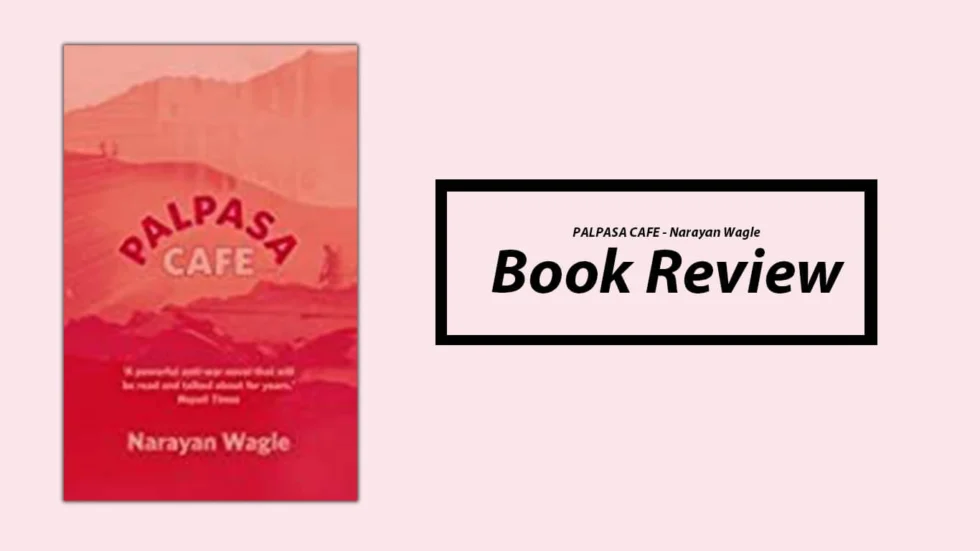

Palpasa cafe summary || Nepali Book Review

Palpasa Café Book Summary and Review: Narayan Wagle's Anti-War Classic

Palpasa Café novel by Narayan Wagle, book summary and review

Palpasa Café is a Nepali novel by journalist Narayan Wagle about an artist, a love that is never fully spoken, and a country torn apart by the Maoist insurgency. First published in 2005, it won the Madan Puraskar, Nepal's most prestigious literary award. It remains one of the best-selling Nepali novels ever written.

In this article you will find a spoiler-free summary, a character guide, the historical background, the themes, an honest look at the book's strengths and weaknesses, and advice on who should read it. A clearly marked spoiler section comes later for readers who have finished the book.

Quick verdict

A moving, quietly political novel with powerful scenes of village life during the war. Its love story and some dialogue feel stiff, especially in English. It is still essential reading for anyone who wants to understand how the conflict felt to ordinary Nepalis. Our rating: 4 out of 5.

Palpasa Café at a Glance

AuthorNarayan Wagle, editor of Kantipur daily
First published2005, in Nepali (Nepalaya)
GenreLiterary fiction, war novel, love story
SettingKathmandu and the hill villages during the Maoist insurgency (1996–2006)
StructurePrologue and epilogue by Wagle himself, with 28 chapters told from Drishya's point of view
LengthAbout 245 pages in the original Nepali edition
AwardsMadan Puraskar (2005)
TranslationsEnglish and Korean
SalesReportedly about 25,000 copies in its first year, a huge number for a Nepali book

Palpasa Café Summary (Spoiler-Free)

The novel opens with Narayan Wagle waiting for a final interview with Drishya, the artist whose story he has almost finished writing. Drishya never arrives. His assistant explains that men claiming to be security officers took him from his gallery in broad daylight. In the Nepal of those years, that kind of disappearance was far from unusual.

The story then goes back to Drishya's life as a painter in Kathmandu. He dreams of opening a café for artists in his home village, a place for colour, conversation and calm in the middle of a war. He meets Palpasa, a first-generation Nepali American who has come to the land of her parents. Many accounts say she left the United States after the racial stereotyping that followed 9/11. The two are drawn to each other but never say it plainly.

The story turns when Siddhartha, Drishya's old college friend, appears. Siddhartha has become a Maoist guerrilla. He challenges Drishya to stop painting from a distance and see the country that the war is destroying. Drishya travels back to the hills of his childhood and finds emptied villages, grieving families and children who have been pulled into the conflict. The war stops being a news headline and becomes personal.

The Story at a Glance

1. Prologue
Wagle waits for Drishya, who has been abducted.
2. Kathmandu
Drishya paints, dreams of a café and meets Palpasa.
3. The challenge
Siddhartha, now a Maoist, urges him to see the real Nepal.
4. The journey
A trek through war-torn villages changes how he sees his art.
5. Epilogue
Wagle returns and explains how he pieced the story together.

Main Characters

Drishya
A Kathmandu painter and a romantic. He is dreamy and idealistic, and the war forces him to ask what art is for. Wagle has said that much of Drishya's experience is semi-autobiographical.
Palpasa
A bright, idealistic Nepali American who has returned to her parents' homeland. She represents the diaspora's longing for a country it only half knows.
Siddhartha
Drishya's college friend turned Maoist guerrilla. He believes violence is the price of change, and he gives the story its sharpest argument.
Narayan Wagle
The author, who appears as a character in the prologue and epilogue and acts as the story's frame.

The Background: Nepal's Maoist Insurgency

The novel makes more sense with some context. A Maoist insurgency began in Nepal in 1996 and lasted about ten years, ending with the 2006 peace agreement. The royal palace massacre of 2001 sits in the middle of that period and appears in the story. Villages were caught between the state's security forces and the rebels. Disappearances, killings and the recruitment of young people marked daily life.

Wagle edited Kantipur, the country's leading newspaper, while writing the book, and both the state and the rebels pressured his paper. He has explained that many things do not fit the news format, so he turned to fiction to tell the truth. Reviewers often call the novel an anti-war book. It takes the side of ordinary people rather than either armed camp.

Major Themes in Palpasa Café

  • The cost of violence: The book keeps asking whether anything good can be built by destroying. Siddhartha says it can. Drishya cannot accept it while people are dying.
  • The role of the artist: Drishya must decide whether art can stay neutral when his country is bleeding. His colours eventually become a form of protest.
  • Disappearance and uncertainty: The opening abduction tells the reader from the start that safety is an illusion.
  • Diaspora and belonging: Palpasa's return raises the question of who has the right to love, and to grieve for, a country.
  • Unspoken love: Drishya and Palpasa's feelings are held back by fear, timing and war, which makes their story feel believable.
  • Incomplete stories: Wagle admits that all written works are incomplete, which fits a war whose victims often leave no clear record.

Spoiler Section: Ending Explained

Spoiler warning: The next paragraphs discuss the ending. Skip to the review section below if you have not read the book.

The novel is built as a story that the author reconstructs after Drishya's abduction. Its emotional weight comes from loss: Siddhartha is killed by the armed forces, and Palpasa's fate leaves Drishya haunted. He finds a measure of peace only through a series of paintings called “Palpasa Café.” In the epilogue, a young woman named Gemini asks Wagle to help find her missing friend, who turns out to be Palpasa. The book ends not with answers but with an open question about the missing, which mirrors the reality of many Nepali families during the conflict.

Palpasa Café Review: What Works and What Doesn't

Strengths

  • Wrenching village scenes, praised even by critics of the book
  • An even-handed view that refuses to glorify either side
  • An unusual frame in which the author becomes a character
  • Strong sense of place, from Kathmandu galleries to hill trails

Weaknesses

  • Conversations between Drishya and Palpasa can feel stilted
  • The prologue and epilogue feel somewhat constructed to some critics
  • The prose can be dense and flowery, and some of its poetry reads oddly in English
  • Some plot turns, such as Palpasa's return to Drishya's life, strike a few reviewers as unconvincing

Our Ratings

Setting and atmosphere4.5/5
Historical value5/5
Plot and pacing3.5/5
Characters and romance3.5/5
Emotional impact4.5/5

These scores reflect our editorial opinion.

Nepali Original vs. English Translation

Opinions on the English edition are mixed. Some reviewers say the original's promise survives, especially in the passages about Drishya's journey through the hills. Others feel something was lost, particularly in the romantic dialogue. If you read both Nepali and English, the Nepali original is the better choice. If you read only English, the translation is still worth your time for its portrait of the war.

Who Should Read Palpasa Café?

Reader typeWhy it fits
Students of Nepali literatureA landmark modern novel and a Madan Puraskar winner
Readers who want to understand the warShows the human side of the insurgency
Diaspora readersPalpasa's return speaks to questions of identity
Fans of fast, plot-driven fictionMay find the pace slow and the style heavy

Where to Get Palpasa Café

The novel is widely available in Nepali bookstores, and it is also sold as an e-book. It was reportedly the first Nepali novel on Kindle. If you are on a budget, check our guide to second-hand books in Nepal for places that sell popular titles at lower prices. Buying a legitimate copy supports the author and publisher.

Frequently Asked Questions

Who wrote Palpasa Café?

Narayan Wagle, a Nepali journalist and editor of Kantipur daily. It was his first novel. He later wrote another best-seller, Mayur Times.

What is Palpasa Café about?

It follows Drishya, a Kathmandu artist, through his unspoken love for Palpasa and his journey through villages ravaged by the Maoist insurgency.

Is Palpasa Café a true story?

It is fiction, but it is rooted in real events and in Wagle's experience as a journalist covering the war. Wagle has said that much of Drishya's experience is semi-autobiographical.

Did Palpasa Café win an award?

Yes. It won the Madan Puraskar in 2005.

Is Palpasa Café available in English?

Yes. It has been translated into English and Korean.

Is Palpasa Café worth reading?

Yes, especially for its picture of ordinary lives during the war, though its love story and style will not suit everyone.

Final Verdict

Palpasa Café is not a perfect novel, but it is an important one. Its strength is its refusal to take sides in a war that demanded them, and its portrait of the hills Drishya once knew is unforgettable. If you read one Nepali novel about the insurgency, make it this one. For more reading ideas, see our guide to buying second-hand books in Nepal.

Supremacy 1914 | A Complete Beginner Tips & Guide.

Supermacy 1914 A complete guide with tips and Tricks

Supremacy 1914 | A Complete Beginner Tips & Guide.

It’s been more than a year I have been playing this game continuously. It’s interesting and strategy is the main tactic to win this game. You have to be aware of your surroundings and make good relations with everyone. Join their Coalition or share the road with them. Take war with 1 enemy at a time cause multiple enemies will kill your troops from both sides.

  • Choose a country near the ocean and should not be surrounded by enemies.
  • Build Recruiting Office in every Province.
  • Build WORKSHOP on half of the provinces and BARRACKS limited to 1 or 2.
  • Build Fortress on your borders.
  • Produce Armoured cars and Cavalry.
  • Attack the weakest country around you.
  • Join Coalitions near you.
  • Make many allies as much as you can.
  • Set your relation Share Map with AI to increase Popularity

Upgrade your Factory to Level 1 as soon as possible to produce Artillery. Artillery is the most important at the beginning of the game to attack and defense. It will save your infantry from the enemies. I usually keep this behind the infantry so that the enemy could not attack directly. It is most useful from the long-range. While in short-range it is useless because infantry can easily destroy this.

Keep producing a lot of Artillery and Iron cars. The combination of Iron Car and Artillery is the best during the attack as well as in defense also. Enemy troops will be busy destroying the iron car at that time artillery will do its work by attacking the enemy from long distance

Here is how you can create Flower Defense.

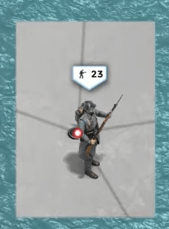
Flower Defense Tutorial step 1

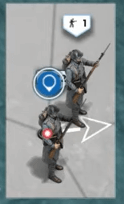
Step-1: Collect your Infantry in one place.

Flower Defense Tutorial Step 2
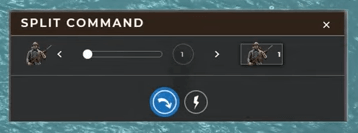
Flower Defense Tutorial

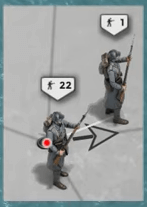
Step-2: Select them and press the split command. Then choose 1 Infantry to move one step forward.

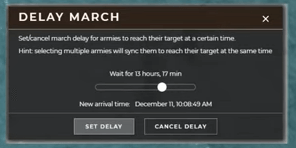
Step-3: Now press the Delay button.
Flower Defense Step 3

Step-3: Now press the Delay button.

Flower Defense step4

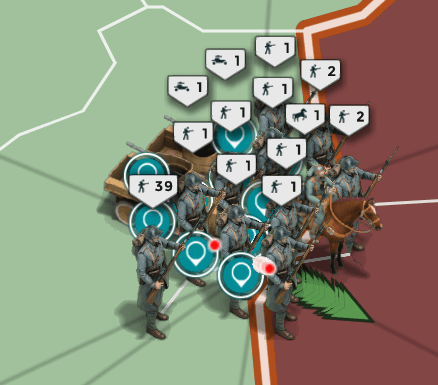
Step-4: Again Select the collected Infantry. Split 1, move forward then press the Delay button. 

supremacy 1914 flower defense tips and tricks

Step-5: Repeat the process again and again.

Here are some of the advanced tactics in this video. Follow this and become a hero in this game.

Step-1: Begin Recruiting

Your first reaction could be to establish workshops to improve your technical skills. We advise you to take a different path.
Instead, move your cursor to the right side of the screen to get a fordable menu. Begin by establishing a recruiting office in each province.
It’s a quick procedure, but the end result is well worth it. This action assures that you will have enough troops to secure your borders in the coming days.

Step-2: Strengthen Your Defense

It’s pretty normal for newcomers to launch an attack right away. Make sure you don’t make the same mistake. Instead, strengthen your defense immediately to deter them from striking early (and to be ready in case they do).
You’ve already started constructing your army, so it’s time to focus on physical, non-human defense. Your new soldiers should be able to guard your borders, therefore it’s time to focus on defending the provinces that are landlocked.

Build at least three barracks in each landlocked province to accomplish this. You could want to construct fortifications for increased defense.

Step-3: Communicate With Your Neighbors

It’s time to build some partnerships now that you have some basic protection in place. While you may desire absolute, unequaled power, you may need to collaborate with other armies in order to achieve it. You can always back-stab them later, so don’t worry.

Request an alliance by sending a message to the leaders in your area. If they refuse to cooperate, you can at least try to reach an agreement on non-aggression.

Remember, you’re the new kid on the block, so there’s no assurance they’ll bite. Having said that, having some powerful allies never hurts. In fact, for the first week or so of game-play, it may be essential to your survival.

Step-4: Gather Resources

Another common rookie error is failing to purchase resources soon away. As the game progresses, prices begin to rise, so now is the time to stock up on essentials.
Negative consumption should be used to deplete your resources so that you can create more of the higher-cost resources. You could, for example, live off of cheap fish while generating grain. As a result, you’ll have money coming in, allowing you to expand your barracks without starving your army.
It’s a good idea to always have at least 24 hours’ worth of supply on hand. Because the game continues to play while you’re not online, you’ll want to make sure your soldiers’ morale remains high and that they’re ready for battle.

Step -5: Decide the country you want to develop.

After you’ve finished all of your basic research, you’ll need to determine which province(s) you want to concentrate on expanding. Obviously, this is mostly a matter of personal preference.

However, you can choose which regions to concentrate on strategically. Is it possible, for example, for one province to provide double resource protection? Or is there a surplus of iron, wood, or grain? Consider your future intentions and identify areas where you can achieve your objectives.

Supremacy 1914 is a browser-based strategy game that puts players in control of a nation during the First World War. Players must manage their resources, build up their armies and navies, and negotiate with other nations to achieve victory. The goal of the game is to conquer Europe by either conquering all enemy capitals or having more Victory Points than any other player at the end of the game.

The key to success in Supremacy 1914 lies in strategic planning and resource management. In order for your nation to be successful you need to plan ahead for potential conflicts while managing your resources carefully so that you can build up an army capable of defending your territory as well as attacking enemy forces when necessary. You also need to make sure you have enough money coming into your treasury from taxes and trade agreements so that you can afford new units or upgrades when needed without going bankrupt!

One important aspect of this strategy game is diplomacy – negotiating treaties, trading resources between nations, forming alliances – which will help keep enemies away from attacking while allowing allies access through friendly borders if they choose it strategically beneficial for them too! Diplomatic victories are just as important (if not more) than military ones since they allow players access into regions where they may not have had before – giving them an advantage over competitors who don’t use diplomatic means often enough or wisely enough!
In order maximize efficiency on both fronts – militaristic & diplomatic – one needs stay informed about what’s happening around them: researching technologies; keeping tabs on rival powers’ movements & strategies; monitoring public opinion within own country etc… This will give insight into how others might act/react towards certain actions taken by player themselves thus allowing better decision making process overall leading ultimately towards achieving desired outcome i e winning supremacy over Europe !

Top Eleven Football Manager Player’s PlayStyle Guide

Top Eleven Playstyle Guide

Top Eleven Playstyles

In Top Eleven Football Manager, a player's playstyle defines their individual playing behavior. There are different playing styles in the game such as Box-to-Box, Mezzala, Regista, False Wingers, Target Man, Full Back, Wing Back, Stopper, Sweeper Keeper, Poacher, and more.

💡 Use Set-Piece Training to quickly develop your Play-styles.
Tactical Positioning Manual

MIDFIELD ROLE VISUALIZER

POSITION: MC
MC
High Density ZonePrimary Run/Pass Vector

SIMPLE DIFFERENCE AT A GLANCE

Box-to-Box:
Covers the whole midfield — defense ↔ attack.
Mezzala:
Moves from central midfield into the half-space — midfield → wider/attacking areas.
Regista:
Controls the game from deep through passing and vision.

BOX-TO-BOX

Position: MC

Real Box-to-Box Players: Paul Pogba / Steven Gerrard / Frank Lampard / Bastian Schweinsteiger / Yaya Touré

Present in a large area of the field, the box-to-box MC appears wherever needed, supporting other midfielders. He can take part in both attacking and defending plays. Moves between defensive and attacking areas, supports teammates, makes forward runs, helps recover possession, and arrives in the opponent's box when opportunities arise.

Formations that fit Box-to-Box:

Advantages:

    Disadvantages:

      IN SHORT / KEY DISTINCTION

      A Box-to-Box MC is an all-around midfielder who constantly moves between defense and attack, helping wherever the team needs him.

      Tactical Positioning Manual

      Attacking Role Visualizer

      Understand how different attacking roles move, create space, contribute to build-up play, and threaten the opposition.

      Poacher

      Position: CF / ST
      Goal Finisher
      Real Poacher Players
      Filippo Inzaghi / Miroslav Klose / Ruud van Nistelrooy
      Description

      A Poacher is a striker who specializes in finding and exploiting scoring opportunities inside and around the penalty area. Rather than dropping deep or becoming heavily involved in build-up play, he stays close to the opposition's defensive line, anticipates rebounds, loose balls, crosses, and defensive mistakes, and makes sharp movements into dangerous scoring positions.

      Formations that fit Poacher

      4-4-2 4-2-3-1 4-3-3 3-5-2

      Advantages

      • Excellent positioning inside the penalty area.
      • Highly effective at finishing chances.
      • Makes intelligent runs behind defenders.
      • Excellent at reacting to rebounds and loose balls.
      • Can exploit defensive mistakes.
      • Constantly threatens the opponent's defensive line.
      • Doesn't require many touches to score.

      Disadvantages

      • Limited involvement in build-up play.
      • Usually contributes less defensively.
      • Can become isolated if the team cannot create chances.
      • Less effective when forced to play far from the penalty area.
      • Relies heavily on service from teammates.
      In Short
      Stays near the danger zone → finds space → reacts quickly → finishes.

      False Nine

      Position: CF / ST
      Deep Creator
      Real False Nine Players
      Lionel Messi / Francesco Totti / Roberto Firmino
      Description

      A False Nine starts as the team's central striker but frequently drops into deeper midfield areas instead of staying on the opposition's defensive line. This movement can pull center-backs out of position, create space behind them for wingers or attacking midfielders, and allow the False Nine to participate in playmaking and combination attacks.

      Formations that fit False Nine

      4-3-3 4-2-3-1 4-1-4-1 4-3-1-2

      Advantages

      • Creates numerical superiority in midfield.
      • Pulls opposing center-backs out of position.
      • Creates space for wingers and inside forwards.
      • Excellent for combination play.
      • Can create chances through passing and movement.
      • Makes the team's attack difficult to predict.
      • Can score by arriving late into the penalty area.

      Disadvantages

      • Can leave the penalty area without a traditional striker.
      • Requires attacking players to make runs beyond him.
      • Can reduce the team's presence in the box.
      • Less effective if teammates don't exploit the space created.
      • Requires excellent passing, vision, movement, and decision-making.
      In Short
      Starts as a striker → drops deep → pulls defenders out → creates space for teammates.

      Target Man

      Position: CF / ST
      Focal Point
      Real Target Man Players
      Olivier Giroud / Zlatan Ibrahimović / Edin Džeko
      Description

      A Target Man is a physically strong striker who acts as a focal point for the team's attack. He uses his strength, height, aerial ability, and ball control to receive long passes and crosses, hold up the ball under pressure, and bring teammates into play. He can also attack crosses and score directly inside the penalty area.

      Formations that fit Target Man

      4-4-2 4-2-3-1 4-3-3 3-5-2

      Advantages

      • Strong aerial presence.
      • Excellent at holding up the ball.
      • Provides a reliable outlet under pressure.
      • Can win aerial duels against defenders.
      • Brings midfielders and wingers into the attack.
      • Effective against teams defending deep.
      • Dangerous from crosses and set pieces.
      • Can protect the ball while teammates move forward.

      Disadvantages

      • May lack the pace of a mobile striker.
      • Can struggle against fast and aggressive defenders.
      • Requires good service from teammates.
      • Can become isolated if the team sits too deep.
      • Less effective when the team relies heavily on quick transitions.
      • Can make the attack predictable if the team relies too heavily on long balls.
      In Short
      Receives the ball → holds it up → brings teammates into play → attacks crosses and finishes.

      False Winger

      Position: ML / MR
      Inside Creator
      Real False Winger Players
      Samir Nasri / David Silva / Kevin De Bruyne
      Description

      Deployed in a wide midfield position, the False Winger moves inside toward the central areas of the pitch rather than staying close to the touchline. By moving centrally, he creates an extra midfielder, helps overload the opposition in the middle, and can pull defenders out of position. This movement also creates space for the team's full-back to overlap on the outside.

      Formations that fit False Winger

      4-4-2 4-4-1-1 4-1-4-1 4-2-3-1

      Advantages

      • Creates a numerical advantage in central midfield.
      • Helps the team control possession in the middle.
      • Pulls opposition players out of their defensive positions.
      • Creates space for overlapping full-backs.
      • Provides an additional passing option between the lines.
      • Can create chances through central combinations.
      • Makes the team's attacking structure less predictable.

      Disadvantages

      • Can leave the wide area exposed.
      • Creates space for opponents to attack on the flank.
      • Requires the full-back to provide width.
      • Can overcrowd the centre if other midfielders also move inside.
      • Less effective if the team lacks a wide player or full-back to maintain width.
      • Requires good tactical awareness and positioning.
      In Short
      Starts wide → moves inside → overloads midfield → creates space for the full-back.
      Tactical Positioning Manual

      Defensive Role Visualizer

      Understand how different defensive roles position themselves, defend space, support build-up play, and transition between defense and attack.

      Sweeper Keeper

      Position: GK
      Defensive Playmaker
      Real Sweeper Keeper Players
      Manuel Neuer / Ederson / Marc-André ter Stegen
      Description

      A Sweeper Keeper is a goalkeeper who actively operates outside his penalty area when necessary, particularly when his team plays with a high defensive line. He acts as an additional defensive player behind the back line, coming off his line to intercept through balls, clear danger, and support build-up play with his passing.

      Formations that fit Sweeper Keeper

      4-3-3 4-2-3-1 3-4-3 3-5-2

      Advantages

      • Covers space behind a high defensive line.
      • Can intercept through balls before attackers reach them.
      • Helps defend against balls played over the defense.
      • Provides an additional passing option during build-up.
      • Can start attacks with accurate distribution.
      • Allows defenders to maintain a higher position.
      • Helps the team maintain possession.

      Disadvantages

      • Risky if he misjudges his position.
      • Can be vulnerable to long-range shots when outside the box.
      • Requires excellent decision-making.
      • Mistakes outside the penalty area can lead directly to goals.
      • Needs strong ball control and passing ability.
      In Short
      Moves off his line → covers space behind the defense → intercepts danger → helps build attacks.

      Stopper

      Position: DC
      Aggressive Defender
      Real Stopper Players
      Sergio Ramos / Giorgio Chiellini / Nemanja Vidić
      Description

      A Stopper is a center-back who actively steps out from the defensive line to confront attackers, challenge for the ball, and prevent opponents from receiving or turning in dangerous areas. Instead of simply holding the defensive line, the Stopper aggressively closes down forwards and midfielders while his defensive partner provides cover behind him.

      Formations that fit Stopper

      4-4-2 4-3-3 3-5-2 3-4-3

      Advantages

      • Aggressively closes down dangerous attackers.
      • Strong in tackles and physical duels.
      • Can disrupt attacks before they develop.
      • Effective against physical forwards.
      • Wins aerial and ground challenges.
      • Can step into midfield to intercept passes.
      • Provides aggressive defensive pressure.

      Disadvantages

      • Can leave space behind the defensive line.
      • Risky if he steps out at the wrong time.
      • Can be exposed by quick attackers running into the space behind him.
      • Requires a defender who can provide cover.
      • Can leave the defensive shape unbalanced.
      In Short
      Steps out → confronts the attacker → wins the duel → disrupts the attack.

      Full-Back

      Position: DL / DR
      Wide Defender
      Real Full-Back Players
      Philipp Lahm / Ashley Cole / Gary Neville
      Description

      A Full-Back is a wide defender who primarily protects the team's defensive line and covers the flanks. He supports the attack when appropriate through overlapping runs, passing, and crosses, but his first responsibility is maintaining defensive stability. Full-Backs are especially important when the team needs to balance attacking width with defensive protection.

      Formations that fit Full-Back

      4-4-2 4-3-3 4-2-3-1 4-1-4-1

      Advantages

      • Provides reliable defensive coverage on the flank.
      • Tracks and marks opposing wingers.
      • Maintains the defensive shape.
      • Can overlap to support attacks.
      • Provides width when needed.
      • Can deliver crosses into the box.
      • Helps transition quickly between defense and attack.
      • Can support the center-backs when defending.

      Disadvantages

      • Can be exposed when pushing too far forward.
      • Requires good positioning and defensive awareness.
      • Can struggle against very fast wingers.
      • May become isolated in wide defensive areas.
      • Excessive overlapping can create space for counter-attacks.
      In Short
      Protects the flank → supports the attack when needed → maintains defensive balance.

      Wing-Back

      Position: DML / DMR
      Wide Runner
      Real Wing-Back Players
      Achraf Hakimi / João Cancelo / Marcelo
      Description

      A Wing-Back operates higher and wider than a traditional Full-Back, taking on a major attacking and defensive role along the entire flank. With fewer traditional wide attackers ahead of him, the Wing-Back provides width, makes forward runs, delivers crosses, and supports attacks while still being responsible for recovering into the defensive line.

      Formations that fit Wing-Back

      3-5-2 3-4-3 5-3-2 5-2-3

      Advantages

      • Provides constant width on the flank.
      • Can push high into attacking areas.
      • Creates numerical advantages on the wings.
      • Makes overlapping and underlapping runs.
      • Provides crosses and cut-backs.
      • Can effectively support attacking transitions.
      • Gives the team an additional attacking player.
      • Can stretch the opposition's defensive shape.

      Disadvantages

      • Large physical demands due to covering the entire flank.
      • Can leave space behind when attacking.
      • Vulnerable to counter-attacks if possession is lost.
      • Requires high stamina and work rate.
      • Needs defensive awareness when recovering.
      • Can leave the team exposed if the opposite Wing-Back also pushes forward.
      • Works best with a back three or adequate defensive cover.
      In Short
      Starts wide and deep → pushes high → provides width and attacking support → recovers defensively.

      Pubg Mobile Sensitivity Settings

      pubg mobile sensitivity settings

      What is Pubg Mobile Sensitivity?

      Pubg Mobile Sensitivity is a controlled setting for the game that helps you to control your gameplay and it will make it easier to play like a pro. It can be customized from pubg mobile sensitivity settings. Players may primarily master recoil control as well as enhance their aim and reflexes by adjusting the sensitivity settings in the game’s options menu. It varies depending on the weapon.
      You can manually control each and every tab of that setting to make your gameplay comfortable or you can even use the provided Pubg Mobile Sensitivity Codes which I have listed down below.

      How to Change Pubg Mobile Sensitivity with shared codes?

      Step-1: Open the Settings menu of the Pubg Mobile Game.
      Step-2: Then go to the sensitivity tab.
      Step-3: Now scroll down to the bottom of the Sensitivity tab.
      Step-4: Click on Cloud layout Management
      If you want to share your layout with your friends then click on share or If you want to copy and paste others’ sensitivity settings then click on Search Method and paste the 19-digits sensitivity code then apply.

      WARNING: Before you change your sensitivity settings Upload to cloud. This will help you if you have messed up everything on the settings. I mean to say back up your setting before any changes on it.

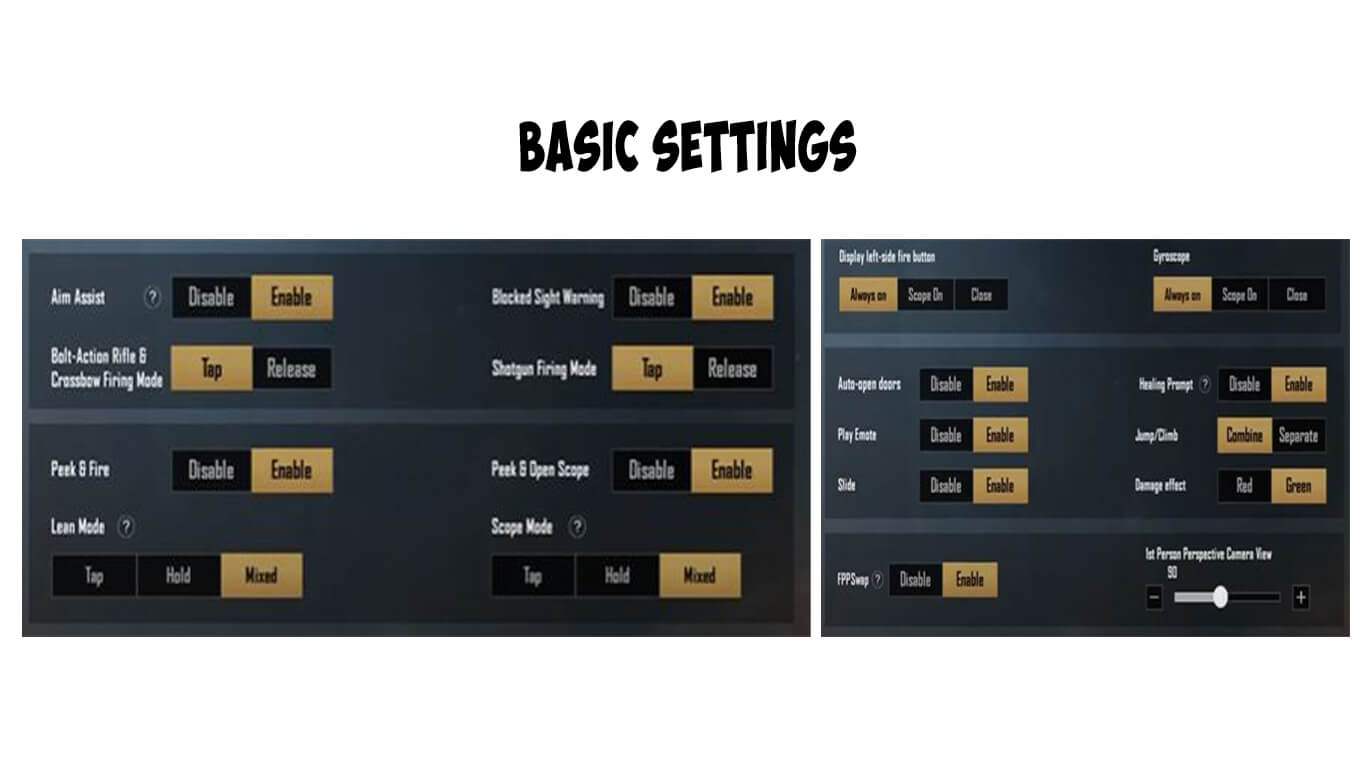
      Pubg Mobile Basic Settings Setup

      Best Pubg Mobile Sensitivity with codes

      4 FINGER LAYOUT: 6974-6312-0723-8631-890
      FULL GYRO SENSITIVITY: 6974-6382-9048-4855-231

      Athena Gaming:
      Coffin:
      Rolexxx:
      BUI BUI:
      Smokey (FPP):

      Pubg Mobile Soul Mortal Sensitivity Settings

      Soul Mortal Sensitivity setting Code:

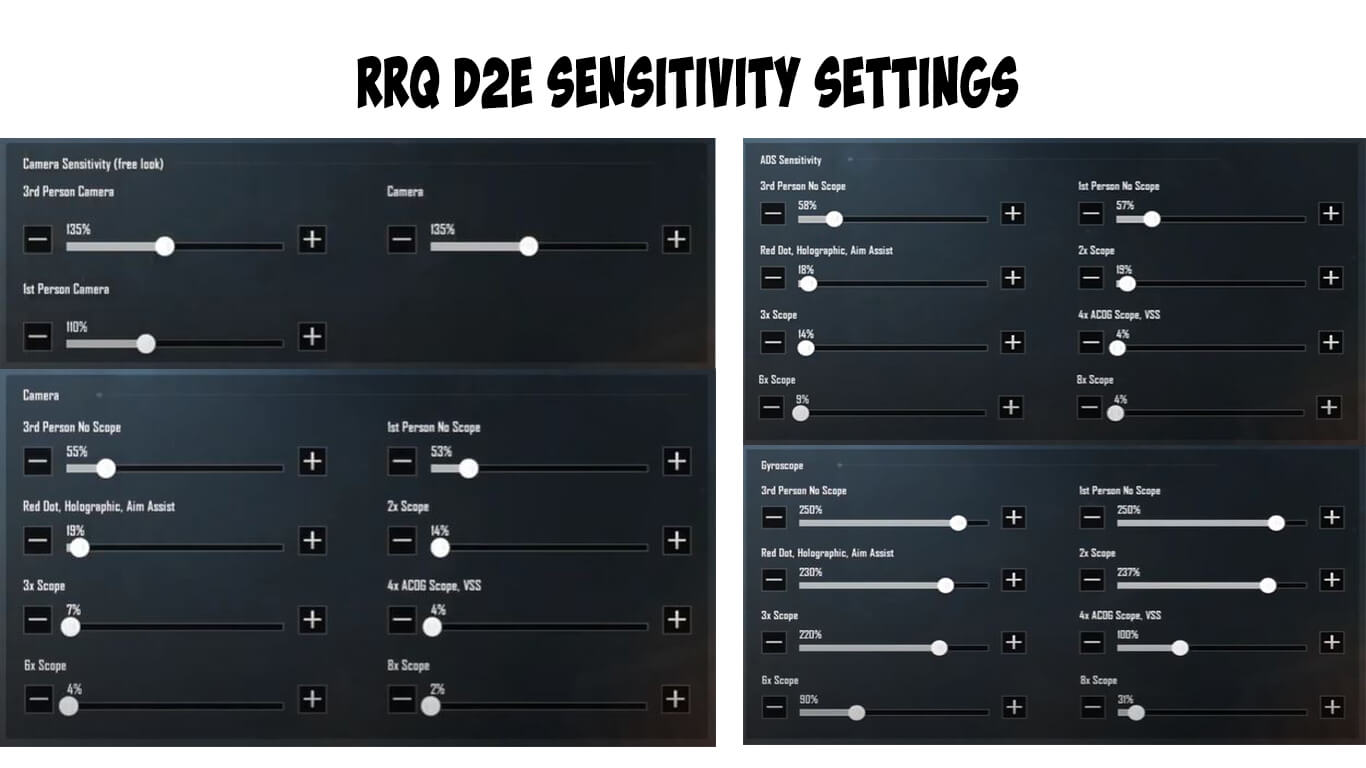
      RRQ D2E Pubg Mobile Sensitivity Settings

      RRQ D2E Sensitivity setting Code: