
Palpasa Café Book Summary and Review: Narayan Wagle's Anti-War Classic
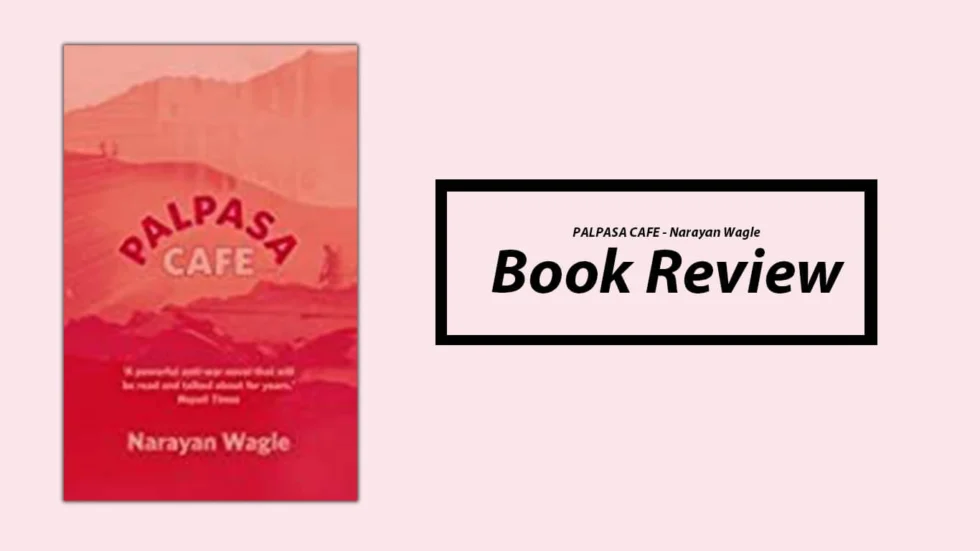
Palpasa Café is a Nepali novel by journalist Narayan Wagle about an artist, a love that is never fully spoken, and a country torn apart by the Maoist insurgency. First published in 2005, it won the Madan Puraskar, Nepal's most prestigious literary award. It remains one of the best-selling Nepali novels ever written.
In this article you will find a spoiler-free summary, a character guide, the historical background, the themes, an honest look at the book's strengths and weaknesses, and advice on who should read it. A clearly marked spoiler section comes later for readers who have finished the book.
Quick verdict
A moving, quietly political novel with powerful scenes of village life during the war. Its love story and some dialogue feel stiff, especially in English. It is still essential reading for anyone who wants to understand how the conflict felt to ordinary Nepalis. Our rating: 4 out of 5.
Palpasa Café at a Glance
| Author | Narayan Wagle, editor of Kantipur daily |
| First published | 2005, in Nepali (Nepalaya) |
| Genre | Literary fiction, war novel, love story |
| Setting | Kathmandu and the hill villages during the Maoist insurgency (1996–2006) |
| Structure | Prologue and epilogue by Wagle himself, with 28 chapters told from Drishya's point of view |
| Length | About 245 pages in the original Nepali edition |
| Awards | Madan Puraskar (2005) |
| Translations | English and Korean |
| Sales | Reportedly about 25,000 copies in its first year, a huge number for a Nepali book |
Palpasa Café Summary (Spoiler-Free)
The novel opens with Narayan Wagle waiting for a final interview with Drishya, the artist whose story he has almost finished writing. Drishya never arrives. His assistant explains that men claiming to be security officers took him from his gallery in broad daylight. In the Nepal of those years, that kind of disappearance was far from unusual.
The story then goes back to Drishya's life as a painter in Kathmandu. He dreams of opening a café for artists in his home village, a place for colour, conversation and calm in the middle of a war. He meets Palpasa, a first-generation Nepali American who has come to the land of her parents. Many accounts say she left the United States after the racial stereotyping that followed 9/11. The two are drawn to each other but never say it plainly.
The story turns when Siddhartha, Drishya's old college friend, appears. Siddhartha has become a Maoist guerrilla. He challenges Drishya to stop painting from a distance and see the country that the war is destroying. Drishya travels back to the hills of his childhood and finds emptied villages, grieving families and children who have been pulled into the conflict. The war stops being a news headline and becomes personal.
The Story at a Glance
Wagle waits for Drishya, who has been abducted.
Drishya paints, dreams of a café and meets Palpasa.
Siddhartha, now a Maoist, urges him to see the real Nepal.
A trek through war-torn villages changes how he sees his art.
Wagle returns and explains how he pieced the story together.
Main Characters
A Kathmandu painter and a romantic. He is dreamy and idealistic, and the war forces him to ask what art is for. Wagle has said that much of Drishya's experience is semi-autobiographical.
A bright, idealistic Nepali American who has returned to her parents' homeland. She represents the diaspora's longing for a country it only half knows.
Drishya's college friend turned Maoist guerrilla. He believes violence is the price of change, and he gives the story its sharpest argument.
The author, who appears as a character in the prologue and epilogue and acts as the story's frame.
The Background: Nepal's Maoist Insurgency
The novel makes more sense with some context. A Maoist insurgency began in Nepal in 1996 and lasted about ten years, ending with the 2006 peace agreement. The royal palace massacre of 2001 sits in the middle of that period and appears in the story. Villages were caught between the state's security forces and the rebels. Disappearances, killings and the recruitment of young people marked daily life.
Wagle edited Kantipur, the country's leading newspaper, while writing the book, and both the state and the rebels pressured his paper. He has explained that many things do not fit the news format, so he turned to fiction to tell the truth. Reviewers often call the novel an anti-war book. It takes the side of ordinary people rather than either armed camp.
Major Themes in Palpasa Café
- The cost of violence: The book keeps asking whether anything good can be built by destroying. Siddhartha says it can. Drishya cannot accept it while people are dying.
- The role of the artist: Drishya must decide whether art can stay neutral when his country is bleeding. His colours eventually become a form of protest.
- Disappearance and uncertainty: The opening abduction tells the reader from the start that safety is an illusion.
- Diaspora and belonging: Palpasa's return raises the question of who has the right to love, and to grieve for, a country.
- Unspoken love: Drishya and Palpasa's feelings are held back by fear, timing and war, which makes their story feel believable.
- Incomplete stories: Wagle admits that all written works are incomplete, which fits a war whose victims often leave no clear record.
Spoiler Section: Ending Explained
Spoiler warning: The next paragraphs discuss the ending. Skip to the review section below if you have not read the book.
The novel is built as a story that the author reconstructs after Drishya's abduction. Its emotional weight comes from loss: Siddhartha is killed by the armed forces, and Palpasa's fate leaves Drishya haunted. He finds a measure of peace only through a series of paintings called “Palpasa Café.” In the epilogue, a young woman named Gemini asks Wagle to help find her missing friend, who turns out to be Palpasa. The book ends not with answers but with an open question about the missing, which mirrors the reality of many Nepali families during the conflict.
Palpasa Café Review: What Works and What Doesn't
Strengths
- Wrenching village scenes, praised even by critics of the book
- An even-handed view that refuses to glorify either side
- An unusual frame in which the author becomes a character
- Strong sense of place, from Kathmandu galleries to hill trails
Weaknesses
- Conversations between Drishya and Palpasa can feel stilted
- The prologue and epilogue feel somewhat constructed to some critics
- The prose can be dense and flowery, and some of its poetry reads oddly in English
- Some plot turns, such as Palpasa's return to Drishya's life, strike a few reviewers as unconvincing
Our Ratings
These scores reflect our editorial opinion.
Nepali Original vs. English Translation
Opinions on the English edition are mixed. Some reviewers say the original's promise survives, especially in the passages about Drishya's journey through the hills. Others feel something was lost, particularly in the romantic dialogue. If you read both Nepali and English, the Nepali original is the better choice. If you read only English, the translation is still worth your time for its portrait of the war.
Who Should Read Palpasa Café?
| Reader type | Why it fits |
|---|---|
| Students of Nepali literature | A landmark modern novel and a Madan Puraskar winner |
| Readers who want to understand the war | Shows the human side of the insurgency |
| Diaspora readers | Palpasa's return speaks to questions of identity |
| Fans of fast, plot-driven fiction | May find the pace slow and the style heavy |
Where to Get Palpasa Café
The novel is widely available in Nepali bookstores, and it is also sold as an e-book. It was reportedly the first Nepali novel on Kindle. If you are on a budget, check our guide to second-hand books in Nepal for places that sell popular titles at lower prices. Buying a legitimate copy supports the author and publisher.
Frequently Asked Questions
Who wrote Palpasa Café?
Narayan Wagle, a Nepali journalist and editor of Kantipur daily. It was his first novel. He later wrote another best-seller, Mayur Times.
What is Palpasa Café about?
It follows Drishya, a Kathmandu artist, through his unspoken love for Palpasa and his journey through villages ravaged by the Maoist insurgency.
Is Palpasa Café a true story?
It is fiction, but it is rooted in real events and in Wagle's experience as a journalist covering the war. Wagle has said that much of Drishya's experience is semi-autobiographical.
Did Palpasa Café win an award?
Yes. It won the Madan Puraskar in 2005.
Is Palpasa Café available in English?
Yes. It has been translated into English and Korean.
Is Palpasa Café worth reading?
Yes, especially for its picture of ordinary lives during the war, though its love story and style will not suit everyone.
Final Verdict
Palpasa Café is not a perfect novel, but it is an important one. Its strength is its refusal to take sides in a war that demanded them, and its portrait of the hills Drishya once knew is unforgettable. If you read one Nepali novel about the insurgency, make it this one. For more reading ideas, see our guide to buying second-hand books in Nepal.