
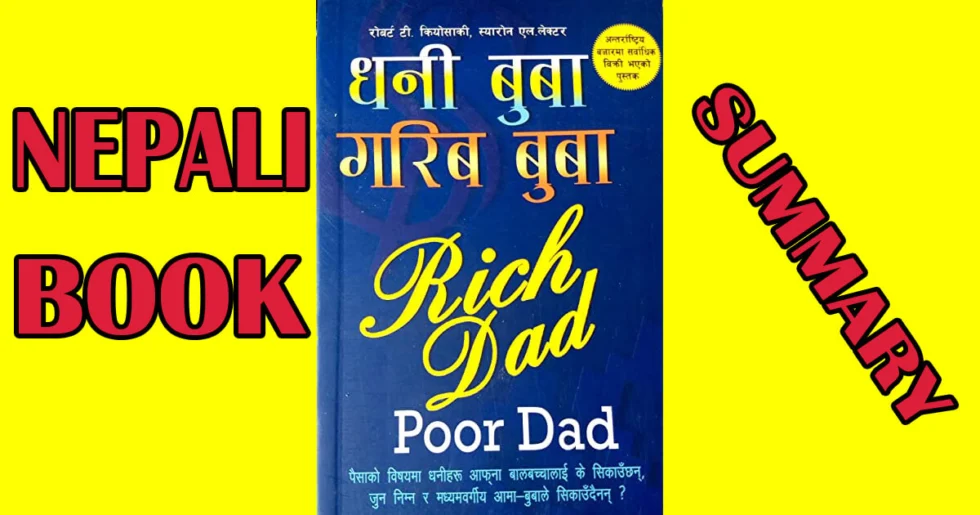
Dhani Buwa Garib Buwa is the Nepali edition of Rich Dad Poor Dad, one of the best-selling personal finance books of all time. This page gives you the complete summary, lesson by lesson, so you can understand the whole book in about ten minutes. Looking for the full text? See our free Nepali books PDF collection.
धनी बुवा गरीब बुवा विश्वमै सबैभन्दा धेरै बिक्री भएका व्यक्तिगत वित्त सम्बन्धी पुस्तक रिच ड्याड पुअर ड्याड को नेपाली संस्करण हो। यो पृष्ठमा पाठ–पाठ गरी पुरा सारांश छ, जसले तपाईंलाई करिब दश मिनेटमै सिङ्गो पुस्तक बुझ्न मद्दत गर्छ। पुरै पुस्तक पढ्न चाहनुहुन्छ भने निःशुल्क नेपाली पुस्तक PDF संग्रह हेर्नुहोस्।
Table of contentsविषय सूची
- Overview: two dads, two ways of thinkingपरिचय: दुई बुवा, दुई सोच
- Lesson 1: The rich don’t work for moneyपाठ १: धनीहरू पैसाका लागि काम गर्दैनन्
- Lesson 2: Why teach financial literacy?पाठ २: आर्थिक साक्षरता किन चाहिन्छ?
- Lesson 3: Mind your own businessपाठ ३: आफ्नै व्यवसायमा ध्यान दिनुहोस्
- Lesson 4: Taxes and the power of corporationsपाठ ४: कर र कम्पनीको शक्ति
- Lesson 5: The rich invent moneyपाठ ५: धनीहरूले पैसा “आविष्कार” गर्छन्
- Lesson 6: Work to learn, not to earnपाठ ६: कमाउन होइन, सिक्न काम गर्नुहोस्
- Overcoming obstacles and getting startedबाधा पार गर्ने र सुरु गर्ने तरिका
- Key takeawaysमुख्य सिकाइ
- Honest review: who should read it?इमानदार समीक्षा: कसले पढ्ने?
- FAQsबारम्बार सोधिने प्रश्न
Overview: two dads, two ways of thinkingपरिचय: दुई बुवा, दुई सोच
The author grew up in Hawaii with two father figures. His own father, “Poor Dad”, was a highly educated government education official who still struggled with money. His best friend Mike’s father, “Rich Dad”, left school early yet built a successful business empire.
Both men worked hard, but they thought about money in opposite ways. Poor Dad said, “I can’t afford it.” Rich Dad asked, “How can I afford it?” The book argues that this small difference in thinking, repeated for decades, decides who gains financial freedom.
लेखक हवाईमा दुई बुवाको छायाँमा हुर्किए। उनका आफ्नै बुवा (“गरीब बुवा”) उच्च शिक्षित र सरकारी शिक्षा अधिकारी थिए, तर पैसाको सङ्घर्ष कहिल्यै सकिएन। साथी माइकका बुवा (“धनी बुवा”) ले कम उमेरमै स्कुल छाडे, तर सफल व्यवसायिक साम्राज्य खडा गरे।
दुवै जना कडा परिश्रमी थिए, तर पैसालाई हेर्ने सोच ठीक उल्टो थियो। गरीब बुवा भन्थे, “मसँग त्यो किन्ने सामर्थ्य छैन।” धनी बुवा सोध्थे, “म यो कसरी किन्न सक्छु?” पुस्तकको तर्क के हो भने यही सानो फरक सोच वर्षौंसम्म दोहोरिँदा आर्थिक स्वतन्त्रता कसले पाउँछ भन्ने तय हुन्छ।
Lesson 1: The rich don’t work for moneyपाठ १: धनीहरू पैसाका लागि काम गर्दैनन्
Young Robert and Mike asked Rich Dad to teach them how to become rich. He offered them a tiny hourly wage, and after a few weeks of work they felt cheated. That was his point: most people work for a paycheck, then feel they need more, and stay trapped in the “rat race” of earning and spending.
Two emotions drive that trap: fear (of not paying the bills) and desire (for a bigger house or car). The rich, by contrast, make their money work for them instead of working only for money.
सानै उमेरमा रोबर्ट र माइकले धनी बुवासँग धनी हुन सिकाइदिन आग्रह गरे। उनले निकै थोरै ज्याला दिने भने, र केही हप्ता काम गरेपछि दुवैले आफूलाई ठगिएको महसुस गरे। उनको उद्देश्य यही थियो: धेरैजसो मानिस तलबका लागि काम गर्छन्, अझ बढी चाहिन्छ भन्ने सोच्छन्, र कमाउने–खर्चने “मुसादौड” मै अल्झिरहन्छन्।
यो जालो दुई भावनाले बनाउँछ: डर (बिल तिर्न नसकिने) र चाहना (ठूलो घर, गाडी)। धनीहरू भने पैसालाई आफ्ना लागि काम गराउँछन्।
Lesson 2: Why teach financial literacy?पाठ २: आर्थिक साक्षरता किन चाहिन्छ?
This is the heart of the book. An asset puts money in your pocket; a liability takes money out. The rich keep buying assets such as businesses, rental property, stocks and bonds. The middle class often buys liabilities, such as a big house or a new car, and calls them assets.
Kiyosaki says people should learn to read their income statement and balance sheet. The key habit: watch where your cash actually flows each month, and keep growing the asset column.
यो पुस्तकको मुटु यही पाठ हो। सम्पत्ति (एसेट) ले तपाईंको खल्तीमा पैसा हाल्छ; दायित्व (लायबिलिटी) ले खल्तीबाट पैसा निकाल्छ। धनीहरू व्यवसाय, भाडाको घर–जग्गा, सेयर र बन्ड जस्ता सम्पत्ति थप्दै जान्छन्। मध्यम वर्गले प्रायः ठूलो घर र नयाँ गाडी जस्ता दायित्व किनेर तिनैलाई सम्पत्ति ठान्छ।
कियोसाकी भन्छन्, आफ्नो आम्दानी विवरण र सन्तुलन पत्र (ब्यालेन्स सिट) पढ्न सिक्नुपर्छ। मुख्य बानी: हरेक महिना पैसा वास्तवमा कतातिर बग्दैछ हेर्ने, र सम्पत्तिको खाता बढाउँदै जाने।
Lesson 3: Mind your own businessपाठ ३: आफ्नै व्यवसायमा ध्यान दिनुहोस्
Your “business” is not your job; it is your asset column. Rich Dad’s example is McDonald’s founder Ray Kroc, whose real business was owning real estate, not selling burgers.
The advice is not to quit your job. Keep the job, but use part of every paycheck to buy assets, and “pay yourself first” before the bills and the bank.
तपाईंको “व्यवसाय” भनेको तपाईंको जागिर होइन; तपाईंको सम्पत्तिको खाता हो। धनी बुवाको उदाहरण म्याकडोनाल्ड्सका संस्थापक रे क्रोकको हो, जसको वास्तविक व्यवसाय बर्गर बेच्नु होइन, घर–जग्गाको स्वामित्व थियो।
सल्लाह जागिर छाड्नु भन्ने होइन। जागिर जारी राख्दै हरेक तलबको केही हिस्साले सम्पत्ति किन्नुहोस्, र बिल तथा अरूलाई तिर्नुअघि “पहिले आफैँलाई तिर्नुहोस्”।
Lesson 4: Taxes and the power of corporationsपाठ ४: कर र कम्पनीको शक्ति
Employees are taxed first and live on what remains. Business owners can spend through a legal company structure first, and are taxed on what is left. Rich Dad calls this a lesson in financial intelligence and legal protection, not a way to cheat.
कर्मचारीको कर पहिले कटिन्छ र बाँकी रकमले खर्च चलाउनुपर्छ। व्यवसायीले कानुनी कम्पनी संरचनामार्फत पहिले खर्च गर्न सक्छन्, र बाँकी रकममा कर तिर्छन्। धनी बुवा यसलाई कर छल्ने उपाय होइन, आर्थिक बुद्धिमत्ता र कानुनी सुरक्षाको पाठ भन्छन्।
Lesson 5: The rich invent moneyपाठ ५: धनीहरूले पैसा “आविष्कार” गर्छन्
Financial intelligence is built from four skills: accounting, investing, understanding markets, and law. With them, you can spot deals others miss and create opportunities with little of your own money.
The author shares his own real estate deals as proof. His point: opportunities are everywhere, but fear and the habit of playing safe stop most people from seeing them. The solution is education and practice.
आर्थिक बुद्धिमत्ता चार सीपबाट बन्छ: लेखा, लगानी, बजार बुझाइ, र कानुन। यी सीप भए अरूले नदेखेका अवसर देखिन्छन् र आफ्नो थोरै पैसाले पनि सम्झौता (डील) बनाउन सकिन्छ।
प्रमाणका रूपमा लेखकले आफ्ना घर–जग्गा लगानीका अनुभव सुनाएका छन्। उनको कुरा: अवसर जताततै छन्, तर डर र “सुरक्षित खेल्ने” बानीले धेरैलाई तिनलाई देख्न दिँदैन। समाधान भनेको शिक्षा र अभ्यास हो।
Lesson 6: Work to learn, not to earnपाठ ६: कमाउन होइन, सिक्न काम गर्नुहोस्
Schools train us to specialise in one field. Rich Dad advised building a wider skill set: sales, marketing, communication, leadership and managing money. The author took a sales job at Xerox mainly to overcome his shyness, accepting a lower income now for greater skills later.
Choose a job for what it teaches you, not only for the salary.
विद्यालयले हामीलाई एउटै क्षेत्रमा विशेषज्ञ बन्न सिकाउँछ। धनी बुवाले फराकिलो सीप बनाउन सल्लाह दिए: बिक्री, मार्केटिङ, सञ्चार, नेतृत्व र पैसाको व्यवस्थापन। लेखकले आफ्नो लजालु स्वभाव हटाउन जेरक्समा बिक्रीको जागिर लिए, अहिले कम आम्दानी स्वीकार गरेर पछि ठूलो सीप कमाउन।
जागिर तलब मात्र हेरेर होइन, त्यसले के सिकाउँछ भन्ने हेरेर छान्नुहोस्।
Overcoming obstacles and getting startedबाधा पार गर्ने र सुरु गर्ने तरिका
Five obstacles
Fear of losing money, cynicism, laziness, bad habits and arrogance. Kiyosaki says everyone feels fear; the winners act despite it, and treat losing as tuition.
Getting started
Find a purpose stronger than your excuses. Choose carefully who you spend time with. Learn one investing method well before the next. Pay yourself first. Keep your investments liquid enough to recover your original money. Use income from assets to buy luxuries. And learn by teaching others.
पाँच बाधा
पैसा गुमाउने डर, शङ्का (निराशावादी सोच), अल्छीपन, खराब बानी र अहङ्कार। कियोसाकी भन्छन्, डर सबैलाई लाग्छ; विजेताहरू डर हुँदाहुँदै पनि कदम चाल्छन् र हानिलाई सिकाइको शुल्क मान्छन्।
सुरु गर्ने तरिका
आफ्ना बहानाभन्दा बलियो उद्देश्य खोज्नुहोस्। कोसँग समय बिताउने हो, सोचेर छान्नुहोस्। अर्को विधि सिक्नुअघि एउटा लगानी विधि राम्ररी सिक्नुहोस्। पहिले आफैँलाई तिर्नुहोस्। लगानीबाट आफ्नो मूल पैसा फिर्ता आउने बाटो राख्नुहोस्। सम्पत्तिबाट आएको आम्दानीले मात्र विलासिता किन्नुहोस्। र अरूलाई सिकाएर आफू सिक्नुहोस्।
Key takeawaysमुख्य सिकाइ
- Don’t just earn more; build assets that pay you every month.
- Your house is usually a liability unless it produces income.
- A job is a stepping stone; your real business is your asset column.
- Learn accounting, investing, markets and law.
- Fear is normal. Act with education, not recklessness.
- Pay yourself first, even if the amount is small.
- केवल बढी कमाउने होइन; हरेक महिना आम्दानी दिने सम्पत्ति बनाउनुहोस्।
- आम्दानी नदिने घर प्रायः दायित्व नै हो।
- जागिर एउटा खुड्किलो हो; तपाईंको असली व्यवसाय सम्पत्तिको खाता हो।
- लेखा, लगानी, बजार र कानुन सिक्नुहोस्।
- डर स्वाभाविक हो। हतारले होइन, ज्ञानले काम गर्नुहोस्।
- सानो रकम भए पनि पहिले आफैँलाई तिर्नुहोस्।
Honest review: who should read it?इमानदार समीक्षा: कसले पढ्ने?
The book is easy to read and changes how you think about money. Students, young professionals and first-time earners will gain the most. Critics note that it gives few step-by-step instructions, that it is built around US examples, and that some stories cannot be verified. Treat it as a mindset book, then study your local laws and markets before investing.
पुस्तक सजिलै पढिन्छ र पैसाबारे सोच्ने तरिका बदल्छ। विद्यार्थी, युवा पेशाकर्मी र पहिलोपटक कमाउन थालेकाहरूले सबैभन्दा धेरै फाइदा पाउँछन्। आलोचकहरूका अनुसार यसमा चरणबद्ध निर्देशन कम छन्, उदाहरण अमेरिकी छन्, र केही कथा प्रमाणित गर्न सकिँदैन। यसलाई सोच बदल्ने पुस्तकका रूपमा लिनुहोस्, र लगानीअघि नेपालको कानुन र बजारबारे अध्ययन गर्नुहोस्।
Frequently asked questionsबारम्बार सोधिने प्रश्न
Is Dhani Buwa Garib Buwa the same as Rich Dad Poor Dad?
Yes. It is the Nepali edition of Robert Kiyosaki’s Rich Dad Poor Dad, so the lessons are the same.
What is the main message of the book?
Financial education and owning assets matter more than a high salary.
Where can I read or listen to more Nepali books?
Browse our free Nepali books PDF list and free Nepali audio books.
धनी बुवा गरीब बुवा र रिच ड्याड पुअर ड्याड एउटै हो?
हो। यो रोबर्ट कियोसाकीको रिच ड्याड पुअर ड्याड को नेपाली संस्करण हो, त्यसैले पाठहरू उही हुन्।
पुस्तकको मुख्य सन्देश के हो?
उच्च तलबभन्दा आर्थिक शिक्षा र सम्पत्तिको स्वामित्व बढी महत्त्वपूर्ण छ।
अरू नेपाली पुस्तक कहाँ पढ्न वा सुन्न सकिन्छ?
निःशुल्क नेपाली पुस्तक PDF सूची र निःशुल्क नेपाली अडियो बुक हेर्नुहोस्।
Good
Verry good book