Start Blogging Nepal: A Practical Guide for Beginners

Start Blogging Nepal: A Practical Guide for Beginners
Start Blogging Nepal: A Practical Guide for Beginners

Starting a blog can be an exciting journey, especially in a culturally rich and diverse country like Nepal. Whether you’re passionate about sharing your travel experiences, culinary adventures, or insights into local culture, blogging offers a platform to connect with a global audience. In this guide, we’ll explore how to start blogging in Nepal, focusing on essential steps, choosing the right platform, and strategies for monetization.

📌 Key Takeaways

  • Discover the essential steps to start a blog in Nepal.
  • Learn how to choose the right blogging platform for your needs.
  • Explore strategies for monetizing your blog effectively.

Understanding Blogging in Nepal

The Rise of Blogging

Blogging has seen significant growth in Nepal over the past few years. With increasing internet penetration and smartphone usage, more Nepalese are turning to blogs as a source of information and entertainment. This trend is particularly prominent among younger demographics who seek authentic content that resonates with their everyday experiences.

Why Blog in Nepal?

Blogging in Nepal offers unique opportunities. The country’s diverse culture, stunning landscapes, and rich traditions provide an endless pool of topics to explore. Blogging can also establish you as a thought leader in your niche, whether you’re discussing Himalayan treks or Kathmandu’s burgeoning food scene. Additionally, blogging can serve as a source of income, contributing to the local economy and providing financial independence.

Choosing the Right Blogging Platform

WordPress vs. Blogger

When it comes to starting a blog, selecting the right platform is crucial. Two of the most popular options in Nepal are WordPress and Blogger.

AspectWordPressBlogger
Ease of UseUser-friendly interface, vast customization optionsSimplicity and straightforward setup
FlexibilityHighly customizable with thousands of themes and pluginsLimited customization but sufficient for basic blogging needs
CostFree with optional paid features and hosting costsCompletely free with Google hosting
SupportExtensive community support and resources available on [WordPress official site](https://wordpress.org)Limited support, but helpful resources on [Blogger support page](https://support.google.com/blogger)

Other Platforms

While WordPress and Blogger are dominant, other platforms like Wix and Squarespace offer unique features. These platforms cater to users looking for drag-and-drop website builders with integrated hosting solutions. However, they might not offer the same level of community support and flexibility as WordPress.

Setting Up Your Blog

Domain and Hosting

To establish your blog, you’ll need a domain name and hosting service. Here’s how to get started:

  1. Choose a Domain Name: Select a name that reflects your blog’s theme and is easy to remember.
  2. Register Your Domain: Use a reliable domain registrar like GoDaddy or Namecheap.
  3. Select a Hosting Provider: For WordPress users, Bluehost and SiteGround are popular choices offering competitive pricing and excellent support.

Installing Your Platform

Once you have your domain and hosting, it’s time to install your blogging platform.

  1. Access Your Hosting Dashboard: Log in to your hosting account.
  2. Install WordPress: Use the one-click installation feature available in most hosting dashboards.
  3. Configure Your Settings: Set up your site title, tagline, and other basic settings.
  4. Choose a Theme: Select a theme that matches your blog’s aesthetic and install it.

For Blogger, simply create an account on Blogger.com and follow the intuitive setup process.

Creating Engaging Content

Content Ideas

Generating content ideas can be challenging. Here are some tips:

  • Explore Local Topics: Write about cultural festivals, local cuisine, and travel destinations.
  • Share Personal Stories: Connect with readers by sharing personal experiences and insights.
  • Stay Current: Cover trending topics and news relevant to your niche.

Writing Tips

Crafting engaging content involves more than just writing. Consider these techniques:

  • Use Catchy Headlines: Grab attention with compelling titles.
  • Incorporate Visuals: Enhance posts with images and videos to break up text.
  • Engage Your Audience: Encourage comments and feedback to foster interaction.

Monetizing Your Blog in Nepal

Ad Revenue

One of the most common ways to monetize a blog is through ad revenue. Platforms like Google AdSense allow you to display ads on your blog and earn income based on clicks and impressions. Ensure your content meets AdSense policies for approval.

Affiliate Marketing

Affiliate marketing involves promoting products and earning a commission on sales generated through your referral links. Popular programs include Amazon Associates and local e-commerce sites. Choose products relevant to your blog’s audience for better conversion rates.

Building a Blogging Community

Networking with Bloggers

Connecting with fellow bloggers can boost your blog’s visibility and credibility. Join local blogging groups on social media and participate in blogging forums to exchange ideas and collaborate on projects.

Engaging with Readers

Building a loyal readership requires consistent engagement. Respond to comments, ask questions, and create content that resonates with your audience. Hosting giveaways and conducting surveys can also enhance reader interaction.

FAQs

How can I start a blog in Nepal?

To start a blog in Nepal, choose a platform like WordPress or Blogger, set up hosting, and begin creating content. Focus on themes relevant to Nepalese audiences and maintain consistency.

What is the best blogging platform in Nepal?

WordPress and Blogger are popular choices in Nepal due to their ease of use and robust features. WordPress offers more customization, while Blogger is ideal for beginners seeking simplicity.

How do Nepalese bloggers make money?

Nepalese bloggers monetize through various channels such as ad revenue, affiliate marketing, and sponsored content. Building a niche audience and creating valuable content are key to maximizing earnings.

Starting a blog in Nepal is a rewarding endeavor that combines creativity with entrepreneurship. By selecting the right platform, creating compelling content, and engaging with your audience, you can build a successful blog that resonates with readers both locally and globally.

Frequently Asked Questions

How can I start a blog in Nepal?

Choose a platform, set up hosting, and start creating content.

What is the best blogging platform in Nepal?

WordPress and Blogger are popular choices due to ease of use and features.

How do Nepalese bloggers make money?

Through ad revenue, affiliate marketing, and sponsored content.
How to Write a Blog

How to write a blog

Writing a blog is the easiest part which will brainstorm your mind. You don’t have to do anything, type simple words that come into your mind after you have researched and learned about the topic. You have to note down the researched information about the topics so you can get references and remember them while writing.

A blog begins with a Title that must be related or it must include keywords. While writing the articles, separate them into different paragraphs.

 Before beginning to write a blog you should know my standard operating procedure (SOP) which will help you to write good content and get a good rank on search engines.

First of all, you must research keywords that have a good amount of traffic and people will search them on the internet. The traffic must be minimum or more than 100. If you find do search volume of traffic then your second step will be its keyword ranking difficulty, it must be less than 10 for the beginners.  You can also check for CPC more than 0.10 and Backlink  (less is better)

Where can you find these data?

To get these data you can use paid tools like ahrefs or even you can use free tools like Ubersuggest or Use google ad manager as well.

How to start?

Do deep research about the content that you are going to write. Then analyze competitors (check the top 10 ranked content about the topic). Then write better content with more words than your competitor, add more missing topics and images. Your blog must be easy to read and the audience will understand your blog.

After doing these steps you should share your content on social media and create more backlinks than your competitors.

How to choose Keywords?

Keywords are the most important element for blogging because if you have good keywords with a decent amount of traffic then your content will rank higher on google. Various elements matter while choosing good keywords, such as;

  • Search Volume
  • Keyword Traffic
  • Business Potential
  • Match search intent
  • Keyword difficulty

Question to ask yourself before getting into #1 competition

-Competitors fail to match relevant content.

-Can I get more quality backlinks than the top pages.

-Similar DR range?

-Authoritative than the competator?

How to Find Low Competition keywords?

Nowadays, there is big competition on the internet for bloggers which made the internet more relevant and people can get answers to what they are searching for easily. Still, even there is a big competition we can find good low competition keywords you following these steps:

  1. Brainstorm a list of topics.
    (Broad keywords of related niche) seed keywords. (5-10) Broad topics related to eachother.
  2. Expand your keywords on ahrefs.
  3. Filter Keywords
  4. Search & Match search intent

Heading Templets

These templates will assist you to write the best heading for your blogs.

  1. How to [Achieve the desired outcome]
  2. [Number] Proven [Acyiond/ways] to [Achieve Desired Result]
  3. [Number or How to] simple/easy ways to [Achieve Desired outcome] [Challenge]
  4. [Number] Reasons you’re [Not Achieving Desired outcome]

Introduction Templets

The introduction is the first paragraph of the content so you must write a good and easy-to-read introduction that will define your content in brief. To create a good intro you must include

A – Attention

I – Intrest (Stories/Facts)

D – Desire (Solve Problem/Proof)

A – Action (Let’s get started/Table of content)

Learn More

Earn Money online from blog in Nepal
Earn Money From Mobile in Nepal
How to write a blog

How to Fix URL Injection: 2 Simple Steps

What is URL Injection?

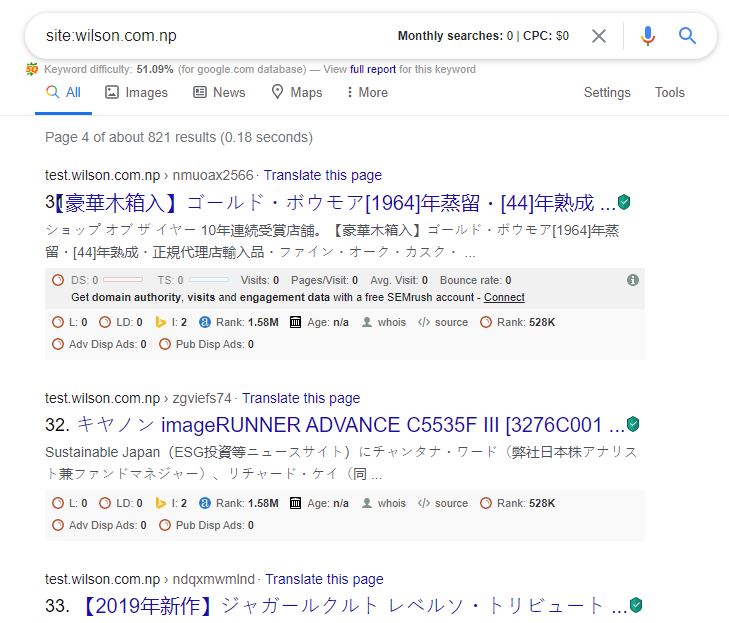
URL injection occurs when a hacker gets hacked into your site and create or inject a new random blank pages URL. These pages often contain redirection code that redirects your site to another third party site like porn, business sites, etc.

These injections can happen due to:

  • An unsecured server file directory in Cpanel
  • WordPress Nulled or Cracked Themes and Plug-ins
Url injection bot traffic on website

What happens when URL injection happens to your site?

  • Random URL will be index in Google Search Engine (Which will have an effect on SEO and Adsense will get deactivate from your site.)
  • Lots of Bot Traffic will visit your site. It will have an effect on Google Analytics report. (Unreal Bounce Rate, Unreal Page Views, Lots of 404 page redirection, etc.) It is also known as a DDoS attack.
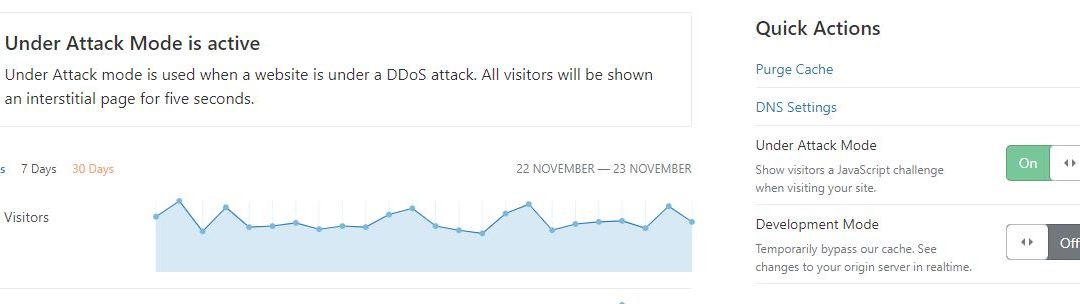
Fix url injection on website by using cloudflare, bot traffic fix problem

How to Fix Url Injection?

2 Simple Steps to fix this:

  1. Create a Cloudflare account and register your site to Cloudflare.
  2. Enable Under attack Mode.

Then Just need to wait for a few days, the bot traffic will be blocked from your site.

Then Go to Google Search Console and remove unwanted random URL created by URL injection.

Website Design and Development in Nepal: Complete 2026 Guide

Website Design and Development in Nepal: The Complete 2026 Guide

Website design and development in Nepal has grown from simple brochure pages into full online stores, booking systems and business platforms. Whether you run a hotel in Pokhara, a shop in Kathmandu or a startup anywhere in the country, a good website is now where customers check you out before they call, visit or pay.

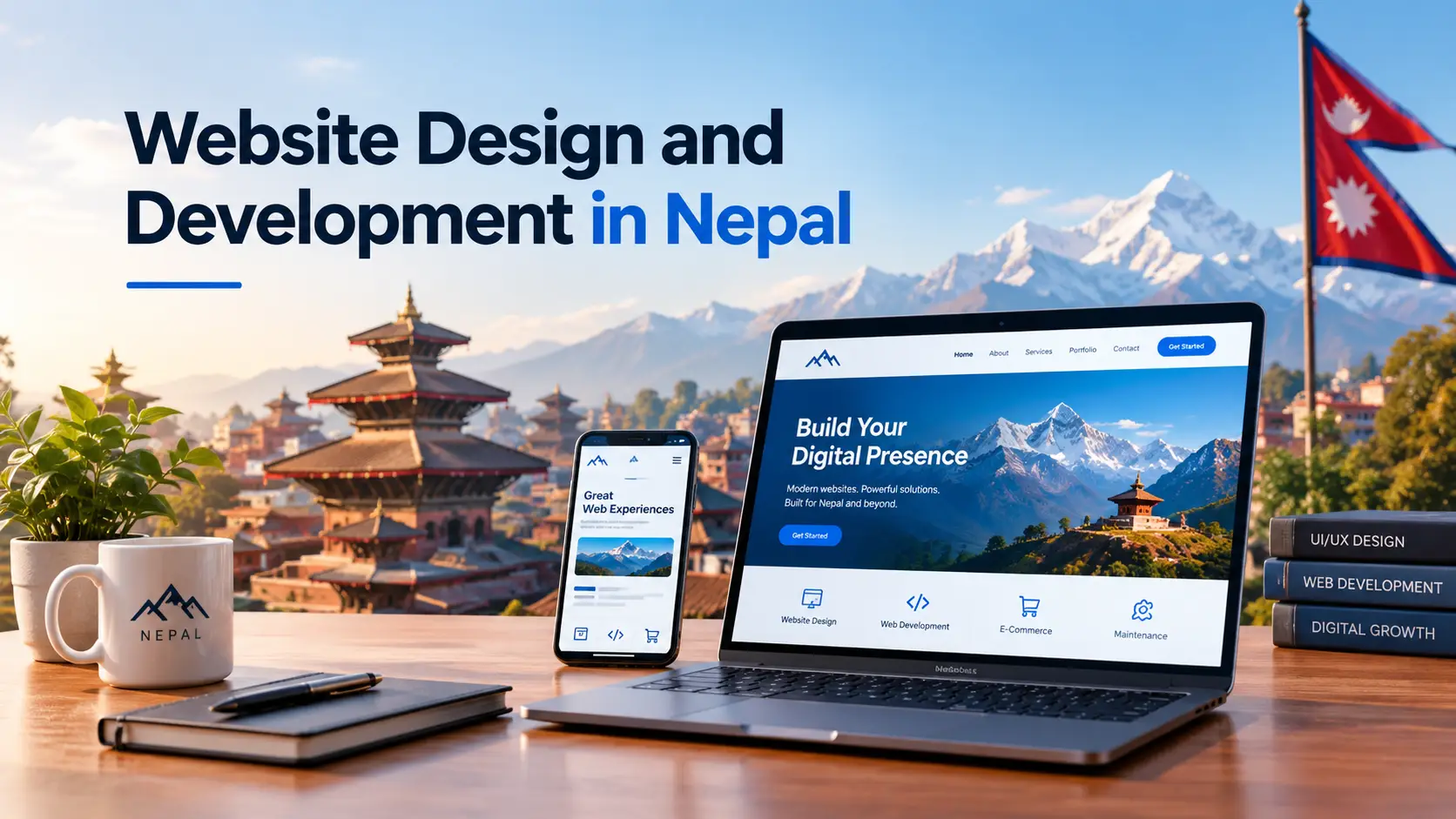
Website design and development in Nepal illustrated with the Himalayas

This guide explains what the work actually involves, how long it takes, what is specific to Nepal (payments, Nepali fonts, hosting, mobile speed) and how to choose between a freelancer and an agency. It is written for business owners, not developers, so you can make confident decisions and avoid the common mistakes.

Quick summary

  • Web design is how your site looks and feels. Web development is how it works behind the scenes. You need both.
  • Most business websites in Nepal take roughly 2–6 weeks. Online stores and custom systems take longer.
  • Your site should support local payments (eSewa, Khalti, Fonepay), load fast on mobile data and handle Nepali text properly.
  • You should own your domain, hosting and files. Always confirm this in writing.

What Is Website Design and Development?

People often use the two terms as if they mean the same thing. They do not, and knowing the difference helps you brief a developer properly.

Web Design

  • Layout, colours, fonts and imagery
  • Navigation and user experience (UX)
  • Mobile and desktop screen layouts
  • Brand consistency and trust signals

Web Development

  • Coding the pages and features
  • CMS setup (such as WordPress)
  • Databases, forms and payment integration
  • Speed, security and technical SEO

A beautiful design that loads slowly or breaks on a phone will lose customers. A technically perfect site that looks dated will not earn trust. Good projects treat them as one process.

The Website Development Process, Step by Step

Whoever you hire, a professional project follows roughly these stages. If a developer cannot explain their process, treat that as a warning sign.

1
Discovery & goals
2
Sitemap & wireframes
3
Visual design
4
Development
5
Testing & SEO setup
6
Launch & support

Diagram: the six stages of a typical website project.

  1. Discovery and goals. Define who the site is for and what action visitors should take: call, book, buy or inquire. Everything else follows from this.
  2. Sitemap and wireframes. Plan the pages and their structure before any design. This is the cheapest stage to fix mistakes.
  3. Visual design. Your brand colours, typography and layouts, usually shown as mockups for approval.
  4. Development. The approved design is built into a working site, with forms, galleries, payment options and a CMS you can manage yourself.
  5. Testing and SEO setup. Check phones, browsers, speed, forms and payments. Set up page titles, meta descriptions, redirects and analytics.
  6. Launch and support. Go live, then plan for backups, updates and security monitoring.

How Long Does It Take? Typical Timelines

Timelines depend mostly on how quickly you provide content (text, photos, logo) and approve designs. Delays are usually on the content side, not the coding side. These are typical ranges, not guarantees:

Typical build time by website type (weeks)
Landing page / simple brochure site — 1–3 weeks
Business / company website — 3–6 weeks
E-commerce store with payments — 6–12 weeks
Custom web application / portal — 12–24+ weeks

What Makes a Website in Nepal Different?

This is the part most guides skip. A site built for Nepal should handle local realities, not just copy an overseas template.

1. Local payment options

If you sell online, customers will expect to pay with wallets and banking apps they already use. Ask your developer about integrating eSewa, Khalti, Fonepay, IME Pay and ConnectIPS. Each gateway requires its own merchant account and approval, so start that paperwork early, since it is often what delays an e-commerce launch.

2. Nepali (Devanagari) language support

If your audience reads Nepali, make sure the site uses Unicode fonts that render correctly on all phones, and that the layout does not break with longer Nepali text. For bilingual sites, plan the English and Nepali versions as separate, properly linked pages so search engines understand them.

3. Speed on mobile data

Most visitors browse on phones and mobile data, often with uneven connections outside the main cities. Compress images (WebP is a good choice), avoid heavy sliders and auto-playing video, and use caching. A lighter site also tends to perform better in Google search.

4. Domain and hosting decisions

  • .com is the safest choice for most businesses and is easy to register.
  • .com.np signals a Nepali business, but registration usually requires business or identity documents. Check the current rules with the registry before you promise a launch date.
  • Hosting location matters. If your visitors are mostly in Nepal, ask about server location and speed. If you target tourists abroad, a server closer to them may serve you better.
  • Ownership: the domain and hosting should be registered in your name, not the developer’s.
Web designer building a responsive website layout for a business in Nepal

Which Platform or Technology Should You Choose?

You do not need to be technical, but you should know why a developer recommends something.

OptionBest forWatch out for
WordPressBusiness sites, blogs, portfolios, small storesNeeds regular updates and good security practice
WooCommerceOnline stores that want flexibility and local gatewaysToo many plugins slow the site down
Laravel / custom codeBooking systems, portals, SaaS, complex workflowsHigher cost and longer timeline; you depend on the developer
Website buildersVery small sites that need to launch fastLimited customization and local payment support

Freelancer or Agency: Which Should You Hire?

Both can deliver excellent work. The right choice depends on your project size, budget and how much support you need afterwards.

FactorFreelancerAgency
CostUsually lowerUsually higher
CommunicationDirect, one personAccount manager plus team
Best forSmall to mid-size business sitesLarge, multi-skill or enterprise projects
RiskAvailability if they get busyYour project may be handled by juniors

If you are leaning towards a one-to-one working relationship, read our guide to hiring a freelance web developer in Nepal for what to look for and what to ask.

What Affects the Price?

Prices in Nepal vary widely because the scope varies widely. The main cost drivers are:

  • Number of pages and level of custom design (template vs. fully custom)
  • E-commerce features and payment gateway integration
  • Bilingual (English and Nepali) content
  • Custom features such as booking, user accounts or dashboards
  • Content creation, photography and SEO work
  • Yearly costs: domain, hosting, SSL, maintenance and backups

Note that hosting and domain are often not included in a design quote, so ask. For a detailed breakdown with realistic ranges, see our full guide to website design cost in Nepal.

What I Have Learned From Real Projects

Across projects for local businesses, the same lessons keep coming up:

  • Content is the real bottleneck. Sites launch late far more often because photos and text arrive late than because of coding.
  • Fewer, clearer pages convert better. A simple site with a visible phone number, WhatsApp link and clear services beats a cluttered one.
  • Real photos beat stock images. Visitors can tell, and local trust matters, especially for tourism and services.
  • Maintenance is not optional. Outdated plugins and missing backups cause most of the emergencies I see.

Red Flags When Choosing a Developer

  • No portfolio of live, working websites you can open yourself
  • Guaranteed “#1 on Google” promises
  • The domain or hosting registered in their name, not yours
  • No written scope, timeline or payment schedule
  • A pirated or “nulled” theme or plugin, which is a major security risk
  • Unwilling to hand over admin access and files after launch

Pre-Launch Checklist

  • ✓ Site works and looks right on at least two phones and two browsers
  • ✓ Page speed tested on mobile
  • ✓ SSL (https) active, contact forms and payments tested
  • ✓ Unique page titles and meta descriptions on every key page
  • ✓ Google Analytics and Search Console connected, sitemap submitted
  • ✓ Google Business Profile linked to your site
  • ✓ Backups scheduled and admin credentials handed over to you

Frequently Asked Questions

What is the difference between web design and web development?

Web design covers how a site looks and feels to visitors. Web development covers the code and systems that make it work. A good project needs both.

How long does it take to build a website in Nepal?

A simple business website often takes 2–6 weeks, while online stores and custom systems can take several months. Fast content approval is the best way to shorten the timeline.

How much does a website cost in Nepal?

It depends on scope, from small template-based sites to custom e-commerce platforms. See our website design cost in Nepal guide for a detailed breakdown.

Can I accept eSewa and Khalti payments on my website?

Yes, if your developer integrates them. You will need an approved merchant account with each provider, so apply early.

Will my website rank on Google automatically?

No. A well-built site gives you a solid technical foundation, but ranking also needs useful content, relevant keywords, quality links and time.

Should I hire a freelancer or an agency?

Freelancers suit most small to mid-size projects and offer direct communication and lower cost. Agencies suit larger projects needing several specialists. Read more in our guide to hiring a freelance web developer in Nepal.

Do I need to pay for maintenance after launch?

Yes. Hosting, domain renewal, backups, security updates and occasional fixes are ongoing needs. Agree on these costs before the project starts.

Final Thoughts

The best website design and development in Nepal comes from clear goals, honest scope and a developer who explains things in plain language. Decide what you want visitors to do, plan content early, insist on owning your domain and files, and budget for maintenance.

Ready to move forward? Compare options in our guide to freelance web developers in Nepal, then check realistic budgets in our website design cost guide.

Our Services

Our Team helps to Connect the Respective Audiences of any product or Brands by using numbers of Social Media outlets.

We provide facebook advertising services and help you to reach to the people that are likely to Engage with your brands.

Boost the sales of your website with one of the best way to turn audiences into buyers.

Manage Campaigns and reach to the target audiences anytime, anywhere.

We provide good services and support.

Our Moto is to make you happy and successful

OUR OTHER PRODUCTS & SERVICES

Facebook Advertising in Nepal, Promote your business with social media in cheap rate, ads banner

Facebook Boost

Create Motion Video Ads

Online Shop

Printing & Press