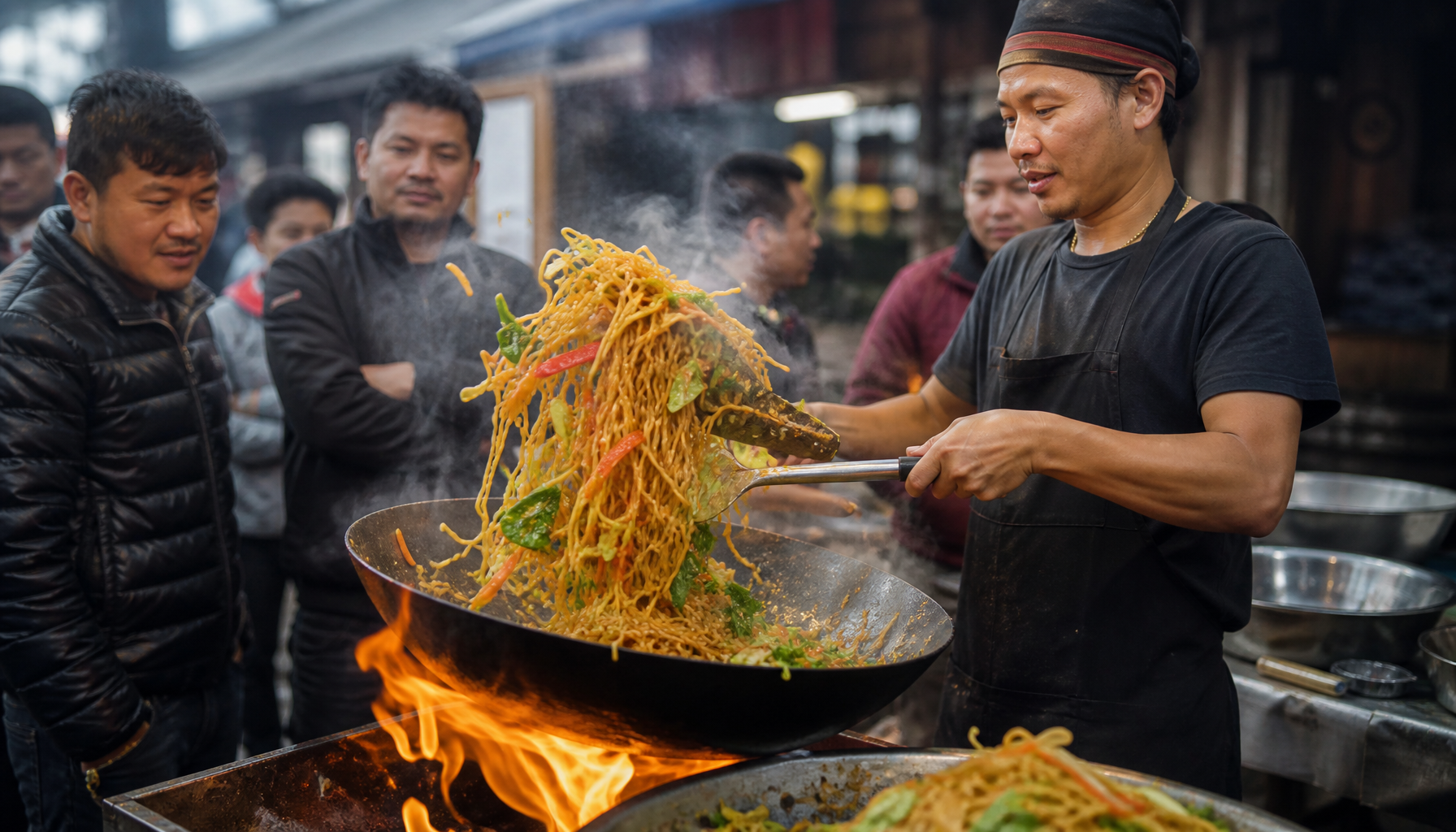
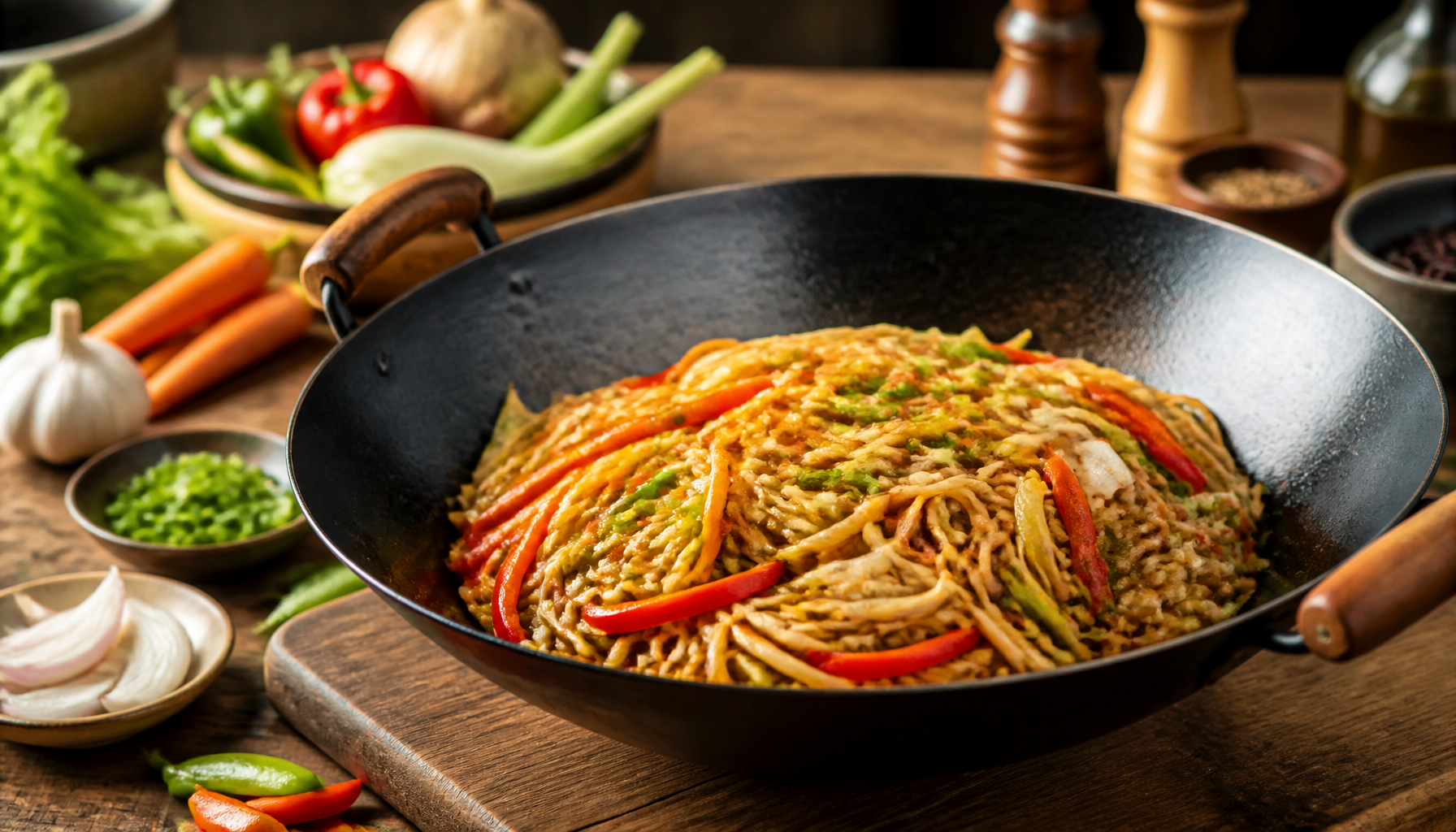
Nepali chowmein is a delightful variant of stir-fried noodles that has captured the hearts of food lovers worldwide. This Nepali chowmein recipe is not just a guide to making a delicious dish but also a journey through the rich tapestry of Nepali cuisine. Originating from China, chowmein has made its way into the streets of Nepal, blending seamlessly with local flavors and spices. Today, it stands as a staple in Nepali street food culture, offering a unique twist on the classic noodle dish.
📌 Key Takeaways
Learn how to make authentic Nepali chowmein at home.
Discover essential tips for perfect stir-fried noodles.
Explore the cultural significance of Nepali street food.
📋 Table of Contents
15 Sections
The Origins of Chowmein
Chowmein, which means “stir-fried noodles” in Mandarin, began its journey in China before spreading across Asia and beyond. The dish’s versatility and simplicity have allowed it to adapt to various culinary traditions, including Nepal. In Nepal, chowmein is infused with local flavors, making it distinct from its Chinese counterpart. The adaptation of chowmein in Nepal reflects the country’s ability to embrace and transform foreign influences into something uniquely Nepali.
Popularity in Nepal
In Nepal, chowmein is more than just a dish; it’s a cultural phenomenon. It’s a favorite among street vendors and home cooks alike, celebrated for its quick preparation and satisfying taste. Whether enjoyed as a quick snack or a full meal, chowmein is synonymous with Nepali street food Nepali cuisine overview. Its popularity lies in its ability to be customized with various ingredients, making it accessible and beloved by people from all walks of life.
Essential Ingredients for Nepali Chowmein
Crafting the perfect Nepali chowmein starts with gathering the right ingredients. The balance of spices, vegetables, and noodles creates the authentic flavor that makes this dish stand out.
Key Ingredients
Noodles: Opt for egg noodles or wheat noodles for the best texture.
Vegetables: Cabbage, carrots, and bell peppers add crunch and color.
Protein: Chicken, tofu, or paneer can enhance the dish’s protein content.
Soy Sauce: Provides a savory umami base.
Spices: Turmeric, cumin, and chili powder give the dish its distinct flavor.
Garlic and Ginger: Essential for depth and aroma.
Optional Additions
Feel free to customize your chowmein with these optional ingredients:
Green Chilies: For extra heat.
Spring Onions: Adds freshness and a slight bite.
Sesame Oil: Enhances the nutty flavor.
Vinegar: A splash of vinegar can add tanginess to the dish.
Step-by-Step: How to Make Nepali Chowmein
Step-by-Step: How to Make Nepali Chowmein
Creating a delicious Nepali chowmein at home is straightforward with these detailed steps.
Preparation Steps
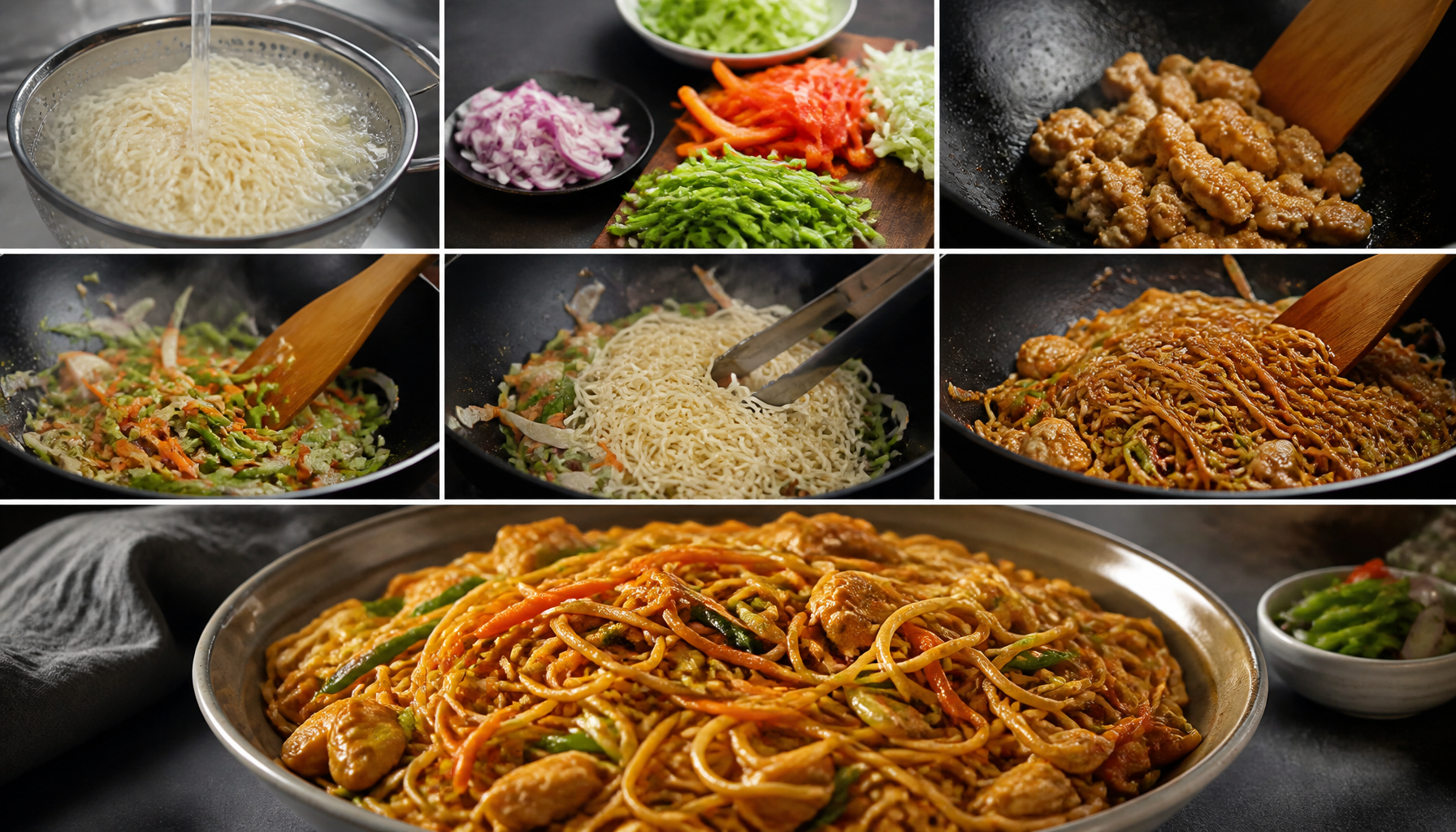
Boil the Noodles: Cook the noodles according to the package instructions. Once done, drain and rinse them under cold water to stop the cooking process. Toss with a bit of oil to prevent sticking.
Prepare the Vegetables: Slice the cabbage, carrots, and bell peppers into thin strips. Mince the garlic and ginger.
Prepare the Protein: If using chicken, tofu, or paneer, cut into bite-sized pieces and season with a pinch of salt and chili powder.
Cooking Instructions
Heat Oil: In a large wok or frying pan, heat two tablespoons of oil over medium-high heat.
Sauté Garlic and Ginger: Add the minced garlic and ginger, stirring for about 30 seconds until fragrant.
Cook Protein: Add your choice of protein, cooking until browned and cooked through.
Add Vegetables: Toss in the sliced vegetables, stir-frying for 3-4 minutes until they are slightly softened but still crisp.
Season and Stir-Fry: Add the cooked noodles to the pan, followed by soy sauce, turmeric, cumin, and chili powder. Stir-fry everything together for 2-3 minutes, ensuring the noodles and vegetables are well coated.
Finish with Garnishes: If using, add sliced green chilies and spring onions. Drizzle with sesame oil and a splash of vinegar, then toss again.
Serve: Transfer to a serving dish and enjoy your homemade Nepali chowmein!
Tips for Perfecting Your Chowmein
Tips for Perfecting Your Chowmein
Achieving the perfect chowmein requires attention to detail and a few expert tips.
Cooking Tips
High Heat is Key: Stir-frying at high heat ensures that the vegetables remain crisp, and the noodles get a slight char.
Dry Noodles Thoroughly: Ensure the noodles are well-drained before adding them to the pan to avoid a soggy texture.
Common Mistakes to Avoid
Overcrowding the Pan: This can lead to steaming instead of stir-frying. Cook in batches if necessary.
Overcooking Vegetables: Aim for a slight crunch to maintain texture and flavor.
The Cultural Significance of Nepali Chowmein
Chowmein holds a special place in Nepali culture, transcending its culinary roots to become a symbol of celebration and everyday life.
Chowmein in Nepali Celebrations
During festivals and family gatherings, chowmein is often served alongside traditional dishes. It represents the fusion of old and new, embodying the spirit of Nepali hospitality.
Chowmein as Street Food
On the bustling streets of Kathmandu and other cities, chowmein is a common sight. Street vendors skillfully toss noodles with vegetables and spices, serving them hot and fresh to eager customers. This accessibility and affordability have solidified chowmein’s status as a beloved street food in Nepal.
For more on perfecting your stir-fry technique, consider exploring stir-frying techniques for additional tips and tricks.
By following this guide, you’ll not only master the art of making Nepali chowmein but also gain an appreciation for its cultural significance. This dish is a testament to the rich culinary heritage of Nepal and a delicious way to bring a [taste of Nepal](https://wilson.com.np/taste-of-nepal/) into your home.
💡 Pro Tips: Always taste your chowmein before serving. Adjust the seasoning as needed to suit your palate.
⚠️ Important Notes: When using soy sauce, be mindful of the salt content to avoid an overly salty dish. Adjust other seasonings accordingly.
Frequently Asked Questions
What ingredients are essential for Nepali chowmein?
Essential ingredients include noodles, vegetables like cabbage and carrots, soy sauce, and spices.
How can I prevent my noodles from sticking?
To prevent sticking, rinse noodles in cold water after boiling and toss with a little oil.
Is Nepali chowmein similar to Chinese chowmein?
While influenced by Chinese chowmein, Nepali chowmein has unique spices and preparation methods.