
Nepal Trekking Permit Fee Guide (2026): Every Permit, Official Price & Total Cost by Trek
Updated October 2026 · Written in Kathmandu · Fees checked against the Nepal Tourism Board and Department of Immigration tables · USD figures at about NPR 155 = US$1
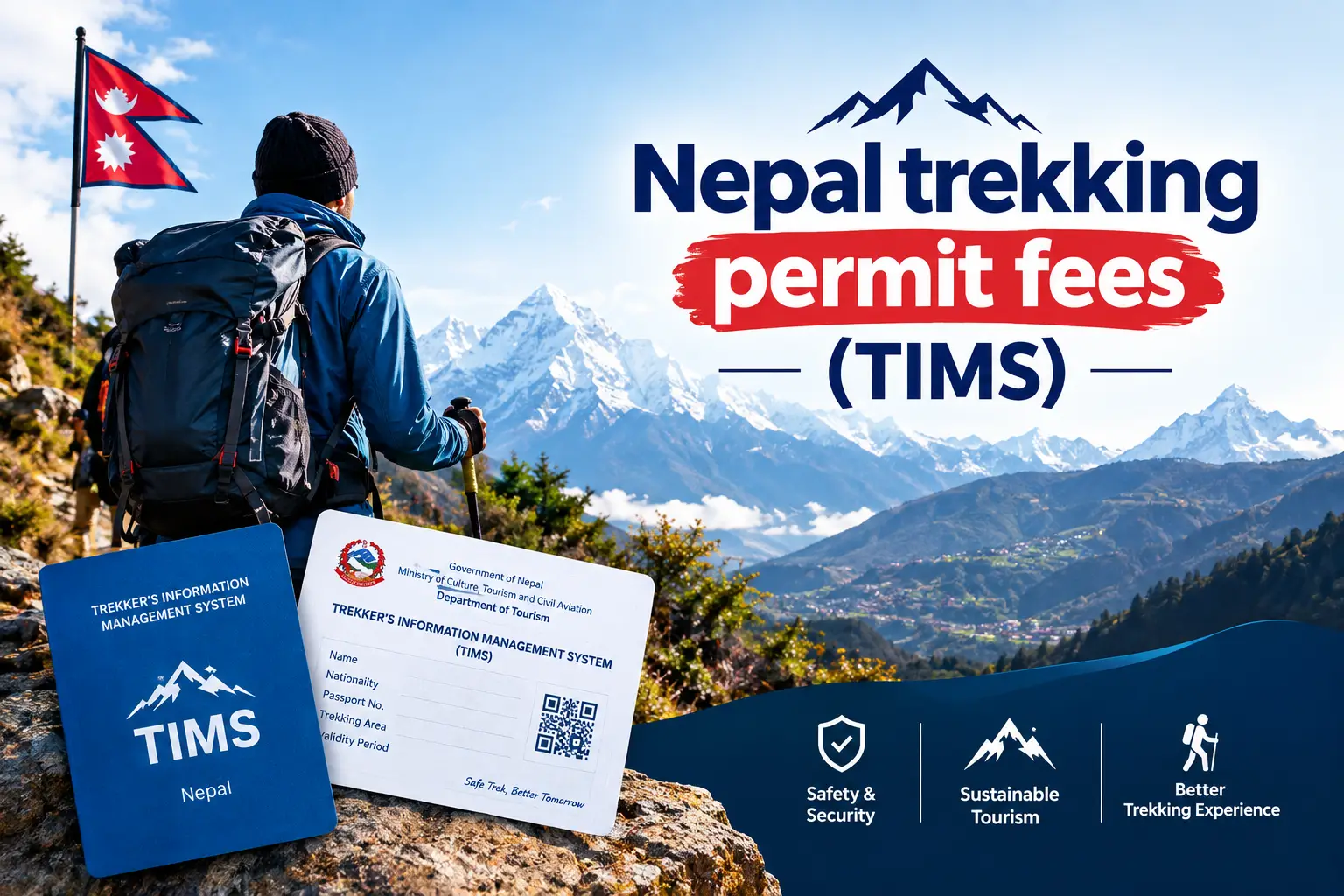
Search for Nepal trekking permit fees and you will find ten pages giving ten different numbers. One says the TIMS card is NPR 1,000, another says 2,000. One says Upper Mustang costs USD 500, another says USD 50. One says you need TIMS for Everest, the next says you don’t. Most of those pages were copied from each other years ago and never updated.
This Nepal trekking permit fee guide fixes that. Every fee below is taken from the official Nepal Tourism Board (NTB) park-fee, TIMS and restricted-area tables as they stand in October 2026, plus the Department of Immigration’s March 2026 solo-permit decision. You get the price of each permit, which treks need which permits, the total permit bill for each popular trek, and the changes that most guides still get wrong. If you are still sorting out visas, SIM cards and insurance, start with our guide to traveling to Nepal and come back here for the permits.
Quick answer: Nepal trekking permit fees in 2026
- National park or conservation area permit: NPR 3,000 per person per entry for most trekking areas (Kanchenjunga: NPR 2,000).
- TIMS card: NPR 2,000 (NPR 1,000 for SAARC nationals), issued online through a registered agency.
- Everest region: Sagarmatha National Park NPR 3,000 + Khumbu Pasang Lhamu Rural Municipality fee (most 2026 reports quote NPR 3,000). No TIMS checked in the Khumbu.
- Restricted areas: USD 20 a week (Kanchenjunga, Rolwaling) up to USD 50 a day (Upper Mustang and Upper Dolpa).
- Typical totals: about US$32–39 for Annapurna, Langtang or Everest; US$150+ for Manaslu; about US$519 for a 10-day Upper Mustang trek.
In this guide
- The three types of trekking permit in Nepal
- National park and conservation area fees
- TIMS card fee and who needs it
- Everest region permits and the Khumbu fee
- Restricted area permit fees (all 15 areas)
- Upper Mustang: old fee vs new fee
- Total permit cost by trek
- Which permits does my trek need?
- How and where to get your permits
- Guide rule and solo trekking in 2026
- Fees for Indian, SAARC and Nepali trekkers
- What most permit guides get wrong
- FAQs
The Three Types of Trekking Permit in Nepal
Every permit you will be asked for falls into one of three groups, and each is run by a different office. Knowing which office sets a fee explains why prices are quoted in different currencies and why some can be bought at a trail checkpoint while others cannot.
1. Area entry permit
National park or conservation area fee, e.g. ACAP, Sagarmatha, Langtang, Manaslu (MCAP).
Paid in: rupees · Where: NTB counter or park gate · Needed: almost every trek
2. TIMS card
Trekkers’ Information Management System card: a registration and safety record, now digital with a QR code.
Paid in: rupees, online · Where: through a registered agency · Needed: most routes outside the Khumbu
3. Restricted Area Permit (RAP)
Special permit for border zones such as Upper Mustang, Manaslu, Nar Phu, Dolpo and Kanchenjunga.
Paid in: US dollars · Where: Department of Immigration, via an agency · Needed: restricted zones only
The Everest region adds a fourth, local fee: the Khumbu Pasang Lhamu Rural Municipality permit, collected by the local government in Lukla or Monjo.
National Park and Conservation Area Fees (2026)
These are the official NTB entry fees for the protected areas that trekkers actually walk through. They are charged per person, per entry, not per day, and children under 10 enter free. You can pay at the Tourist Service Centre in Bhrikutimandap, Kathmandu, or at the park entry point.
| Protected area | Main treks | Foreigners | SAARC | Nepali |
|---|---|---|---|---|
| Annapurna Conservation Area (ACAP) | ABC, Poon Hill, Mardi Himal, Annapurna Circuit, Mustang, Nar Phu | NPR 3,000 | NPR 1,000 | NPR 100 |
| Sagarmatha National Park | Everest Base Camp, Gokyo, Three Passes | NPR 3,000 | NPR 1,500 | NPR 100 |
| Langtang National Park | Langtang Valley, Gosaikunda, Helambu, Tamang Heritage | NPR 3,000 | NPR 1,500 | NPR 100 |
| Manaslu Conservation Area (MCAP) | Manaslu Circuit, Tsum Valley | NPR 3,000 | NPR 1,000 | NPR 100 |
| Gaurishankar Conservation Area | Rolwaling, Tashi Labtsa | NPR 3,000 | NPR 1,000 | NPR 100 |
| Makalu-Barun National Park | Makalu Base Camp | NPR 3,000 | NPR 1,500 | NPR 100 |
| Shey-Phoksundo National Park | Upper and Lower Dolpo | NPR 3,000 | NPR 1,500 | NPR 100 |
| Rara National Park | Rara Lake | NPR 3,000 | NPR 1,500 | NPR 100 |
| Khaptad National Park | Khaptad plateau | NPR 3,000 | NPR 1,500 | NPR 100 |
| Dhorpatan Hunting Reserve | Dhorpatan, Dhaulagiri south side | NPR 3,000 | NPR 1,500 | NPR 100 |
| Kanchenjunga Conservation Area | Kanchenjunga North and South base camps | NPR 2,000 | NPR 500 | NPR 100 |
| Api Nampa Conservation Area | Api Base Camp (far west) | NPR 2,000 | NPR 500 | NPR 100 |
Source: NTB park entry fee schedule, checked October 2026. Some park counters add 13% VAT on top of the listed fee (so NPR 3,000 can become NPR 3,390); carry a little extra cash.
TIMS Card Fee in 2026 and Who Needs It
The TIMS card changed more than any other permit, and it is where most outdated advice lives. Under the revised TIMS provision that took effect on 31 March 2023, the card is no longer something you buy at a counter as a free individual trekker. It is issued online, through a government-registered trekking agency, together with a licensed guide.
TIMS fee (official NTB rate)
- Foreign trekkers: NPR 2,000 (≈ US$13)
- SAARC nationals: NPR 1,000
- Paid online by the agency (ConnectIPS, NepalPay and similar); you receive an e-card with a QR code
What’s out of date elsewhere
- The old “blue card NPR 1,000 for groups, green card NPR 2,000 for individuals” split is no longer on NTB’s page
- Buying TIMS yourself at the NTB office as an independent trekker is no longer the normal route
- Climbers with an expedition or peak permit generally don’t need a separate TIMS card
Regions on NTB’s TIMS-and-guide list include Annapurna (Circuit, ABC, Poon Hill, Mardi Himal, Khopra, Tilicho), Langtang and Helambu, Manaslu and Tsum, Mustang, Dolpo, Kanchenjunga, Makalu Barun, Rolwaling, Ganesh Himal, Dhaulagiri and Humla. The list also names Everest routes, which brings us to the biggest confusion of all.
Why you read “TIMS required” and “TIMS not required” for Everest
On paper, NTB’s TIMS page lists Everest Base Camp, Gokyo and the Three Passes. On the ground, the Khumbu Pasang Lhamu Rural Municipality stopped accepting TIMS years ago, runs its own entry permit instead, and has not enforced the guide rule. Checkpoints in Lukla and Monjo check the municipality permit and the Sagarmatha park permit, not a TIMS card. Both statements you read online are “true” – one describes the national rulebook, the other describes what happens on the trail. If you trek with an agency, it will simply handle whatever is being checked that season.
Everest Region Permits and the Khumbu Pasang Lhamu Fee
The Everest region is the one major area that needs two permits from two different authorities and no TIMS card. Both checkpoints sit on your first two days of walking, so you cannot miss them. For where they fall on the trail, see our Everest trek map with every stop, elevation and checkpoint.
| Permit | Foreigner fee | Where to pay |
|---|---|---|
| Khumbu Pasang Lhamu Rural Municipality entry permit | Most 2026 reports quote NPR 3,000 (introduced at NPR 2,000; some counters still quoted that) | Lukla, just after landing; Monjo if you walk in from Jiri or Salleri |
| Sagarmatha National Park entry permit | NPR 3,000 (SAARC NPR 1,500) | Monjo park gate, or NTB Tourist Service Centre in Kathmandu |
| Total | ≈ NPR 6,000 (≈ US$39) | Cash in rupees |
- Island Peak, Mera Peak or Lobuche? These are trekking peaks with their own climbing permit on top of the two Everest permits.
- Going into the Rolwaling or via the Tashi Labtsa pass? You also need the Gaurishankar Conservation Area permit and a Rolwaling restricted permit.
- Ward 5 of Khumbu Pasang Lhamu appears on the restricted list (USD 20 a week). The standard EBC, Gokyo and Three Passes treks do not need this RAP.
Restricted Area Permit Fees (All 15 Areas, 2026)
Restricted Area Permits are issued by the Department of Immigration, must be paid in US dollars, and can only be applied for through a registered trekking agency. The full official list is below. Seasonal rates apply in Manaslu, Tsum and Nar Phu, where autumn (September to November) costs more.
| Restricted area | Sep–Nov | Dec–Aug / all year |
|---|---|---|
| Upper Mustang (Lo Manthang area) | USD 50 per person per day, no minimum | |
| Upper Dolpa (Shey Gompa, Saldang, Charka) | USD 50 per person per day (NTB table) | |
| Manaslu (Chumnubri) | USD 100 first week + USD 15/day after | USD 75 first week + USD 10/day after |
| Nar Phu (Manang) | USD 100 first week + USD 15/day after | USD 75 first week + USD 15/day after |
| Tsum Valley (Gorkha) | USD 40 first week + USD 7/day after | USD 30 first week + USD 7/day after |
| Kanchenjunga (Taplejung) | USD 20/week for the first 4 weeks, then USD 25/week | |
| Makalu side (Sankhuwasabha) | USD 20/week for the first 4 weeks, then USD 25/week | |
| Lower Dolpa | USD 20 first week, then USD 5 per week | |
| Rolwaling / Dolakha | USD 20/week | |
| Rasuwa (Gosaikunda Rural Municipality, ward 1 and part of 2) | USD 20/week | |
| Khumbu Pasang Lhamu ward 5 (Solukhumbu) | USD 20/week for the first 4 weeks, then USD 25/week | |
| Humla (Simikot, Limi Valley) | USD 50 first week + USD 10/day after | |
| Mugu | USD 100 first week + USD 15/day after | |
| Bajhang (Saipal) | USD 90 first week + USD 15/day after | |
| Darchula (Vyas) | USD 90 first week + USD 15/day after | |
Source: NTB restricted area trekking permit table (Department of Immigration rates), checked October 2026. Highlighted rows changed most recently.
A RAP never travels alone
Every restricted zone sits inside or next to a protected area, so you always pay an entry permit on top. Upper Mustang and Nar Phu need ACAP. Manaslu needs MCAP and ACAP, because the circuit exits through Dharapani on the Annapurna side. Tsum Valley needs MCAP. Dolpo needs Shey-Phoksundo. Kanchenjunga needs the Kanchenjunga Conservation Area permit.
Upper Mustang: old fee vs new fee (is it really cheaper?)
For decades, Upper Mustang cost a flat USD 500 for the first ten days, even if you only stayed four. In November 2025 the Cabinet replaced that with USD 50 per person per day, counted only for the days you spend inside the restricted zone north of Kagbeni. Most articles call this a price cut. It is only a cut for short trips:
Upper Mustang RAP cost by days inside the zone (USD)
Old: 500
New: 200
Old: 500
New: 300
Old: 500
New: 400
Old: 500
New: 500
Old: 700
New: 700
Grey: old rule (USD 500 for 10 days, then USD 50/day). Green: cheaper under the new rule. Orange: same price.
- Jeep and motorbike tours win big: a 4–5 day drive to Lo Manthang now costs USD 200–250 in permit fees instead of 500.
- A full 10-day trek costs exactly the same as before: USD 500. Longer treks are unchanged too.
- Days are counted from Kagbeni. Nights in Jomsom, Kagbeni and Muktinath sit outside the zone and need only ACAP.
- Upper Dolpa now follows the same per-day rate on NTB’s table, a change almost no permit guide has picked up yet.
Total Permit Cost by Trek (Foreign Trekker, 2026)
Here is what one foreign trekker actually pays in permits for each popular route, with every required permit added up. Rupee fees are converted at about NPR 155 to the US dollar (the Nepal Rastra Bank rate in October 2026). Guide, porter, flights and lodging are not included.
Permit cost per person, by trek (approx. USD)
Green: standard treks. Blue: low-cost restricted areas. Orange and red: higher restricted-area fees.
| Trek | Permits needed | How it adds up | Total |
|---|---|---|---|
| Annapurna Base Camp, Poon Hill, Mardi Himal, Annapurna Circuit | ACAP + TIMS | NPR 3,000 + 2,000 | NPR 5,000 (≈$32) |
| Langtang Valley, Gosaikunda, Helambu | Langtang NP + TIMS | NPR 3,000 + 2,000 | NPR 5,000 (≈$32) |
| Everest Base Camp, Gokyo, Three Passes | Sagarmatha NP + Khumbu fee | NPR 3,000 + 3,000 | NPR 6,000 (≈$39) |
| Kanchenjunga (3 weeks) | RAP + KCA + TIMS | $20 × 3 + NPR 2,000 + 2,000 | ≈$86 |
| Nar Phu (1 week, autumn) | RAP + ACAP | $100 + NPR 3,000 | ≈$119 |
| Tsum Valley (1 week, autumn) | RAP + MCAP | $40 + NPR 3,000 | ≈$59 |
| Manaslu Circuit (8 days in zone, Sep–Nov) | RAP + MCAP + ACAP | $100 + $15 + NPR 3,000 + 3,000 | ≈$154 |
| Manaslu Circuit (8 days in zone, Dec–Aug) | RAP + MCAP + ACAP | $75 + $10 + NPR 3,000 + 3,000 | ≈$124 |
| Upper Mustang jeep tour (5 days in zone) | RAP + ACAP | $50 × 5 + NPR 3,000 | ≈$269 |
| Upper Mustang trek (10 days in zone) | RAP + ACAP | $50 × 10 + NPR 3,000 | ≈$519 |
| Upper Dolpo (10 days in zone) | RAP + Shey-Phoksundo NP (+ Lower Dolpa RAP on most routes) | $50 × 10 + NPR 3,000 + $20–25 | ≈$540+ |
Work out your own restricted permit cost
- Manaslu (autumn): USD 100 + USD 15 × (days in zone − 7)
- Manaslu (Dec–Aug): USD 75 + USD 10 × (days in zone − 7)
- Upper Mustang or Upper Dolpa: USD 50 × days in zone
- Kanchenjunga: USD 20 × weeks (first 4), then USD 25 a week
Which Permits Does My Trek Need? (Decision Flow)
Answer three questions, top to bottom, and you will know exactly which permits to budget for.
How and Where to Get Your Trekking Permits
Permits are tied to an area and, for restricted zones, to exact dates. Decide the itinerary first, including how many days you will spend inside any restricted zone.
For TIMS and every RAP, the agency files the application and assigns your licensed guide. RAP applications can now be paid in advance from abroad using an Application Submission ID.
At the NTB Tourist Service Centre, Bhrikutimandap (Kathmandu), the NTB office in Pokhara, or the park gate. ACAP can also be bought online through the NTNC e-permit portal.
Checkpoints stamp or scan your permits. Keep paper copies dry in a zip bag and a photo of each on your phone, and never hand over your only copy.
Documents checklist
✓ Bring for every permit
- Passport, valid for your whole stay
- Nepal visa (or visa number for online RAP applications)
- A few passport-size photos; some counters still ask for them
- Planned entry and exit dates and route
✓ Extra for TIMS and RAP
- Travel insurance covering trekking altitude and helicopter rescue
- Emergency contact details
- Your agency’s registration and your guide’s licence details
- US dollars (cash or agency transfer) for the RAP
Guide Rule and Solo Trekking in 2026
Two rules decide whether you can walk alone, and they are often mixed up.
- The licensed-guide rule (since 31 March 2023). On the routes NTB lists for TIMS, foreign trekkers must be accompanied by a licensed guide arranged through a registered agency. The Everest region is the practical exception described above.
- The solo restricted permit (since 22 March 2026). The Department of Immigration now issues a Restricted Area Permit to a single trekker. Before this, you needed at least two foreigners on one permit, which pushed solo travellers into finding strangers or paying for a “ghost” partner.
- “Solo” does not mean “alone”. The solo permit still requires a licensed guide and a registered agency, and the agency is responsible for rescue and logistics. One guide can lead a maximum of seven trekkers in a restricted area.
In plain terms: a solo traveller can now do Manaslu, Nar Phu, Tsum or Upper Mustang with just a guide, without waiting for a group to form. Rules have changed several times since 2023, so confirm the current position with your agency before you book flights. For which adventure fits your budget and season, see our ranking of Nepal adventure travel options.
Fees for Indian, SAARC and Nepali Trekkers
Most permit guides are written only for Western visitors. If you hold a passport from Afghanistan, Bangladesh, Bhutan, India, the Maldives, Pakistan or Sri Lanka, you pay SAARC rates, and Nepali citizens pay a token fee.
| Permit | Foreigners | SAARC incl. India | Nepali citizens |
|---|---|---|---|
| ACAP | NPR 3,000 | NPR 1,000 | NPR 100 |
| Sagarmatha / Langtang NP | NPR 3,000 | NPR 1,500 | NPR 100 |
| TIMS card | NPR 2,000 | NPR 1,000 | Not required for Nepali citizens |
| Restricted Area Permit | Full USD rate | Ask your agency; most areas charge foreign rates | Not required |
Children under 10 enter national parks and conservation areas free. Indian trekkers can enter Nepal without a visa but still need the park, TIMS and restricted permits above.
What Most Nepal Permit Guides Get Wrong
- “Upper Dolpo costs USD 500 for 10 days.” NTB’s current table lists Upper Dolpa at USD 50 per day, the same as Upper Mustang.
- “The Upper Mustang change made it cheaper.” Only for trips shorter than ten days in the zone. A classic 10-day trek still pays USD 500.
- “Every park is NPR 3,000.” Kanchenjunga and Api Nampa conservation areas are NPR 2,000 for foreigners.
- “NPR 3,000 is about USD 22–25.” That was true at older exchange rates. At around NPR 155 per dollar in October 2026, it is closer to USD 19.
- “TIMS is NPR 1,000 in a group.” NTB now lists a single NPR 2,000 rate for foreigners and NPR 1,000 for SAARC nationals, issued through agencies.
- “You can’t get a restricted permit alone.” Outdated since 22 March 2026; a guide is still required.
- “There’s a new 2026 green fee.” A few operator blogs mention one. We could not find a Nepal Tourism Board or national park notice for it as of October 2026, so don’t budget for it unless your agency shows you an official receipt.
Local Tips from Kathmandu
- Carry rupees for the trail permits. Park gates and the Khumbu counter work in cash. Card machines, where they exist, are unreliable in the hills.
- Restricted permits are a dollar purchase. Agencies pay the RAP in US dollars; if you pay your agency in rupees, ask which exchange rate they used.
- Permits are per entry. If you walk out of a park and back in on a different trip, you pay again. Plan side trips so you stay inside the area.
- Avoid Saturdays and public holidays for anything that needs a government office. During Dashain and Tihar, offices close for several days and agencies queue up afterwards.
- Ask for an itemised quote. Many packages advertise “all permits included”. Ask the agency to list each permit and its fee so you can check it against the tables above.
- Book autumn restricted treks early. September to November is both the busiest and most expensive RAP season for Manaslu and Nar Phu.
Planning to combine Nepal with Bhutan, Tibet or Ladakh? Each has its own permit system; our Himalayan travel guide compares them side by side.
Nepal Trekking Permit Fees: Frequently Asked Questions
How much does a trekking permit cost in Nepal in 2026?
Most national park and conservation area permits cost NPR 3,000 for foreigners, and the TIMS card costs NPR 2,000. Popular treks like Annapurna Base Camp, Langtang and Everest Base Camp come to about NPR 5,000–6,000 (roughly US$32–39) in permits. Restricted areas cost more, from USD 20 a week up to USD 50 a day.
Do I need a TIMS card for Everest Base Camp?
In practice, no. The Khumbu Pasang Lhamu Rural Municipality checks its own entry permit instead, so for Everest Base Camp you show the Sagarmatha National Park permit and the Khumbu municipality permit. NTB’s national list still names Everest routes, so let your agency confirm before you go.
How much is the Upper Mustang permit now?
USD 50 per person per day inside the restricted zone, with no minimum stay, plus the ACAP permit of NPR 3,000. A 5-day jeep tour pays USD 250 for the RAP; a 10-day trek still pays USD 500.
Can I trek solo in Nepal in 2026?
You can apply for permits as a single trekker, including restricted area permits since 22 March 2026, but on most routes you must walk with a licensed guide booked through a registered agency. The Everest region has not enforced the guide rule.
Where can I buy trekking permits in Nepal?
Park and conservation permits are sold at the NTB Tourist Service Centre in Bhrikutimandap, Kathmandu, at the NTB office in Pokhara, and at park entry points. ACAP can also be bought online. TIMS cards and restricted area permits are arranged through registered trekking agencies.
Can I pay permit fees in US dollars or by card?
Restricted area permits must be paid in US dollars. Park, conservation and Khumbu fees are charged in Nepali rupees, usually in cash at counters. TIMS is paid online by your agency.
Do Indian and Nepali trekkers pay less?
Yes. SAARC nationals, including Indians, pay NPR 1,000–1,500 for park permits and NPR 1,000 for TIMS. Nepali citizens pay NPR 100 at most parks and do not need TIMS or restricted area permits.
Are trekking permits valid for re-entry or refundable?
Park and conservation permits are charged per entry, so leaving and coming back means paying again. Treat all permits as non-refundable and non-transferable, and double-check names and dates before paying.
The bottom line
For the classic treks, Nepal trekking permits are cheap: about NPR 5,000–6,000 for Annapurna, Langtang or Everest. The money is in restricted areas, where Manaslu runs around USD 120–155 and Upper Mustang or Upper Dolpo USD 50 a day. Book a registered agency for anything outside the Khumbu, carry rupees for the gates, and check the fee tables above against any package quote.
Next steps: sort the rest of your trip with our guide to traveling to Nepal, or plan the walk itself with our Everest trek map.
Sources: Nepal Tourism Board park entry fees, TIMS card and restricted area permit pages; The Kathmandu Post, Immigration eases rules for solo trekkers in restricted areas (22 March 2026); Nepal Rastra Bank exchange rate, October 2026.
Fees change without much notice. Always confirm with your agency or the NTB counter before you pay.