Select Page

Book Summary: The Ultimate Sales Machine | Book Review
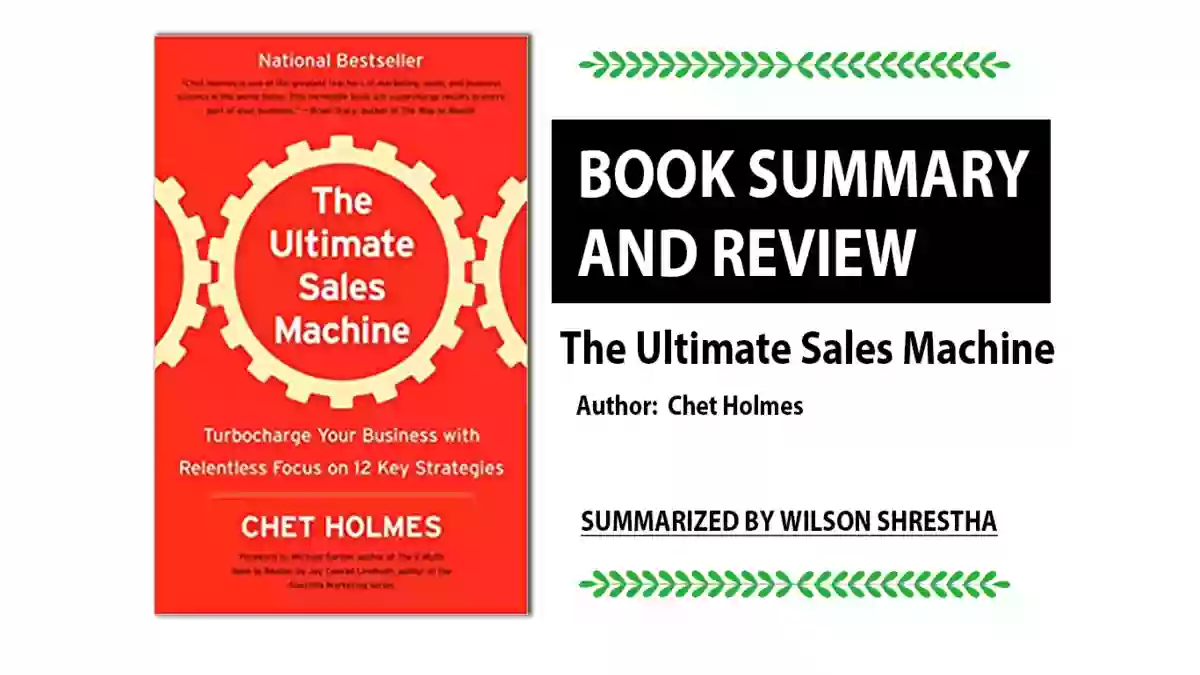
The Ultimate Sales Machine Book Summary and Book Review

Hi, I am Wilson Shrestha. I have read this book “The Ultimate sales Machine” many times and created a short summary for you awesome readers. Here you will learn to create a predictable and repeatable sales process. This book also suggests hiring and training a top-performing sales team so that you can close more deals and generate more referrals.

Book Name:The Ultimate Sales Machine
Author:Chet Holmes
Genre:Business, Sales
Publication Date:2007
ISBN:978-0071492778
Pages:245

Quotes from the book “The Ultimate Sales Machine”

“Mastery is a direct result of pigheaded discipline and determination.”

“Good time management shouldn’t take a lot of time.”

“No one gets good at anything without repetition.”

“People respect what you inspect.”

12 Steps to become an Ultimate Sales Machine:

Step 1: Time Management Secrets of Billionaires
Step 2: Instituting Higher Standards and Regular Training
Step 3: Executing Effective Meetings
Step 4: Becoming a Brilliant Strategist
Step 5: Hiring Superstars
Step 6: The High Art of Getting The Best Buyers
Step 7: The Seven Musts of Marketing
Step 8: The Eyes Have It
Step 9: The Nitty-Gritty of Getting the Best Buyers
Step 10: Sales Skills
Step 11: Follow-up and Client Bonding Skills
Step 12: All Systems Go

Welcome to the summary of “The Ultimate Sales Machine”

Step 1: Time Management Secrets of Billionaires

When Chet was running nine of Charlie Munger’s divisions, his employees used to come to him and ask if he had a minute. Which would then develop into a full-blown meeting. And because Chet had 22 people directly reporting to him, that basically took him about 12 hours, after which he went home and did creative work. He realized, that he had to do something.
So, he decided to put out a memo saying that he would only accept urgent meetings at a specified time of the day and all the rest would have to be held for the weekly time at which he would answer all matters. Note: If you’re a solopreneur now you could apply this to setting a specific responsive time during the day for all social media notifications, calls, or other distractions.
And that was only the first part of his six part-time management plans which could be applied instantly.

Step 2: Instituting Higher  Standards and Regular Training

When I was an airplane technician in the Air Force – We used to have a thing called a job guide for every maintenance activity on the plane. Whether that be cleaning a window or checking the wheels for damage – Everything was written in detail. This kind of management allows for no mistake and makes all the activities a lot more effective,  because you know exactly what you have to do,   no more, no less. This results in doing the tasks completely and not forgetting anything. Doing the tasks in a predictable way so that it doesn’t depend on the mood of the person on the same day. Doing the tasks faster because you already knew what you had to do before even starting the task.   On the contrary, a bad example of a hiring and executing process might be for a new hire just to see what a random senior employee does, and repeat after him,   because that’s completely unpredictable. If you’d like to read more about this process a truly excellent book on the subject is the E-myth Revisited by Michael Gerber.

Step 3: Executing Effective Meetings

What better way is there to improve your company than brainstorming all its problems together with the entire team and then coming up with solutions, also together? That’s why Chet started holding weekly one-hour meetings where he would tackle one problem with the processes at a time. He would come to the board, write one question, and ask people to brainstorm solutions for it.   Then, with all the solutions written on the board, he would have a vote on which one to use and proceed to delegate it to someone for detailed implementation. This way, the staff would be more eager to apply the new process, because they participated in its inception, and also,   it would probably be very effective because it was chosen out of a very wide variety of solutions.  Note: This chapter is for people who have employees.   Nonetheless, a possible interpretation for solopreneurs is to do this process by yourself once a week.

Step 4: Becoming a Brilliant Strategist

Imagine yourself standing in a  stadium full of your target audience and as soon as you open your mouth to talk about your product,   ninety percent of them leave and you continue your pitch with a broken spirit. The thing is,   that on average any given product has 10 percent of its target audience potentially ready for its purchase at the moment. That’s why when you start your pitch it should start with something broad that applies to all your audience, and then slowly narrowing down to your specific product.   For example, the heading of that pitch might be  “The Five Biggest Problems That Entrepreneurs   Face” and then, you could slowly go down to education elaborate on a few things you could educate yourself through, and then elaborate on the one that you’re using. For example: Books. And deeper and deeper you go.

Step 5: Hiring Superstars

Hiring someone is not for my sort of business you might think. “I’m doing creative work and my business is different”. Nonetheless, so long as your business relies solely on you,   and your mood – It’s not a business, it’s a job. That’s why as stated in step 2,   we must document our processes so that we will know what jobs are the most valuable and then be able to hire someone to do those jobs. Then, when you’ve written down all your tasks, consider how much you’re willing to pay for a given job so that it will still be profitable for you. That process might take some time but don’t get discouraged because it’s the only way to truly own a business.   P.S. Once more, a book I highly recommend on the subject is the E-myth Revisited by Michael Gerber.

Step 6: The High Art of Getting The Best Buyers

When I doubled sales three years in a row Charlie Munger said:   “Are you sure we’re not lying, cheating, and stealing? In all my years I’ve never seen anybody   double sales three years in a row.” ” -Chet  Holmes, The Ultimate Sales Machine, Step 6. When Chet started working for Charlie Munger,  their magazine “California Lawyer” had a 2 percent national advertising market share. Leaving them in 15th place out of 45 in the industry.   Then, Chet decided to concentrate on the 167  biggest advertisers in their field. An effort which he called “The Dream 100”. He began sending them letters and gifts every two weeks. For the first four months, he had zero sales. But then,  within six months, he had 28 of those advertisers on board. Thus, doubling the sales of the magazine and bringing the magazine all the way from 15th   place in advertising market share to first place.

Step seven: The Seven Musts of Marketing

Imagine yourself watching a YouTube video and an ad comes up. During this, a car pulls up to another and an angry woman with a baseball bat steps out and starts breaking into the parking car.   Then, a man in an identical car stops next to her and says something that you cannot hear.   Just then the true owner of the car shows up and seems in shock. Then,   you see the logo of a local body shop.   Would you unmute this ad just to hear what the man is saying? Would that ad draw your attention?   In order to bring our business to become an ultimate sales machine,   one of the areas we need to master is marketing.  That’s why in this step, Chet describes tips about the seven different marketing weapons. The first of which is the one I’ve just described:   Advertising.

Step 8: The Eyes Have It

“We human beings remember 20 percent of  what we hear 30 percent of what we see,   but 50 percent of what we both see and hear.”  Chet Holmes, The Ultimate Sales Machine, Step 8. On one occasion, at a seminar,  Chet was giving a speech and flashing slides rapidly every few seconds.  Then, when he came to talk about the importance of visual aids – He blanked the screen.  He could feel straight away that everyone in the room felt how the communication degraded. To improve our presentation,   we should always think of ways to present visually in addition to orally.

Step 9: The Nitty-Gritty of Getting the Best Buyers

This step goes into detail about how to apply the Dream 100 strategy.   Because it is quite difficult to describe a detailed chapter within a summary,   here are just the names of the steps for you to grasp the idea.

1. Choose your dream 100

2. Choose the gifts

3. Create your dream 100  letters

4. Create your dream 100 calendar

5. Conduct dream 100 follow-up phone calls

6.  Present the executive briefing. All that is left for success is pig-headed determination.

Step 10 is Sales Skills

When Chet was working with Charlie Munger on their magazine, a competing magazine opened just to compete with them. Chet’s clients then came to him to ask what he thought of that new magazine. He then said: You know what my philosophy is this:  Let them get successful and once they’ve proven themselves, then put your money in there. I would not let them build their success by experimenting with your money. And so it was. None of them went to advertise there, and the magazine closed within six months flat. That is the power of having clients who are also your friends. They’ll feel as if it’s a betrayal to go with another magazine.  Making your clients your friends is just one of the six sales skills that could turbo-charge your sales, according to Chet.

Step 11: Follow-up and Client Bonding Skills

Suddenly, the owner of the restaurant and celebrity chef approached Chet’s table with free samples of an appetizer and said: “It is so nice to see you, Chet.   And shook his hand. This was a meeting that Chet organized because of a trade show that was going on in town, bringing 18  of his advertisers together in one location.   The restaurant owner, seeming to know Chet,  impressed his advertisers and made the chat feel very special. So much so, that Chet is talking about it 20 years later. And that is an example of a masterful client bonding procedure.  We should also make procedures to make our clients feel very special when they do business with us so that they want to stay with our clients. This chapter includes 10 detailed instructions to create 10 follow-up interactions that will make our client feel special.

Step 12: All Systems Go

If you have recently bought a car, you have most likely noticed that you started seeing it on every corner, although you never did earlier. The reason for this is a certain area in our brain that’s called the Reticular Activating System or in short “RAS”. It is responsible for making us see what we subconsciously believe is important. Chet explains that it is possible to set this system in our favor so that we will better notice our ways to success. All that we have to do is record   10 positive affirmations and listen to the recording every night before bed. Note:   Please read more before applying, as this is just an abstract summary of the process.   One more thing that is important for succeeding with the 11 steps, is measuring progress, because when you measure, you may know whether what you’re doing is good or you should change something.

10 Points I have learned from this book

  1. Time management secrets
  2. High standards and training
  3. Effective meeting execution
  4. Becoming a strategist
  5. Hiring top talent
  6. Getting the best buyers
  7. Seven marketing musts
  8. Effective visual presentations
  9. The Dream 100 strategy
  10. Follow-up and bonding skills
[dsm_blog_carousel include_categories=”7″ use_excerpt=”off” use_date=”off” use_author=”off” _builder_version=”4.22.2″ _module_preset=”default” global_colors_info=”{}” theme_builder_area=”post_content”][/dsm_blog_carousel]

Book Summary: Marketing Made Simple | Book Review

Marketing Made Simple book summary and review

Hi, I am Wilson Shrestha. I have read this book “Marketing Made Simple” many times and created a short summary for you awesome readers. In Effective marketing, a strong first impression is more important. This process involves guiding potential customers through a series of well-defined steps in a marketing funnel. To do this there will be the need for trust and engagement.

Book NameMarketing Made Simple
AuthorsDonald Miller, Seth Godin
GenreBusiness
Publication Date2007
PublisherPortfolio Hardcover
Pages208
ISBN978-1-59184-138-1
ConcpetMarketing Made Simple is a book that teaches the basics of marketing in a clear and concise way. The authors argue that marketing is not about selling products or services, but about building relationships with customers. They provide readers with a step-by-step guide to creating a marketing plan, developing effective marketing materials, and measuring the results of their marketing efforts.

“J.J. and I are going to tell you exactly what you should do and in what order you should do it in so that your marketing works”. -Donald Miller.

5 Steps of Story Brand Guide for any Business:

  1. Create a Brandscript
  2. Create a One-Liner
  3. Wireframe a Landing Page
  4. Creating a Lead Generator
  5. Create an Email Campaignv

Welcome to the summary of “Marketing Made Simple”

Step 1: Create a Brandscript

In order to grab the audience’s attention,  we have to create a first impression that we have the potential to help them survive,  and thrive. That could make them stop what they’re doing and read more about us. The next question they are looking to answer is how exactly can we help them survive in detail. That is where your longer explanations and stories come in. After some time of education, the reader will say all right, I now understand how the content can help me, it’s time to commit.  That’s the point where he buys your product.  Note that to attract customers you should use marketing, and not branding. Branding is when you say things like “Save money, Save time”  assuming the customer already bought the product.   Marketing is when you say “The oil that you need to replace once a year” assuming they have no idea what the product is about. Those are the stages of a funnel. First, we get the potential buyer curious, then we explain how to use the product, and finally, we offer to buy one. 

Step 2: Create a One-Liner

How do we present what we do in one sentence and evoke curiosity about it? Here’s a   three-part formula for that. 1. Talk about the one biggest problem that your target audience faces.  

2. Offer your solution to that problem.

3.  Paint a picture of how it would look when the problem is solved. It might be something like:  Stop “hoping” that you choose the right book.   Improvement or Marketing Summaries will concisely show what this book is about so that you pick books that are directed toward your custom problems. Now that we’ve got the audience’s attention, let’s tell them how exactly does this magic happen.

Step 3 is Wireframe a Landing Page

Let’s fix your website. Here are some sections you could include on your landing page that have been tested by Don, and got positive results. 

1. The guide. Introduce yourself as the brand or person who can solve your customer’s problems. Use empathy and authority.

2.   The value proposition. Explain the benefits of the product. Don’t just say “We have the best catering services” but explain the benefits that they’re going to get when using them. 

3. The plan. State the 3 or 4-step plan that the potential customer will go through when interacting with you. Note – Because of the scope of this video the explanations are very partial and only a few out of the many website sections in the book are included. After the first impression and some chatting, it’s time for a small initial commitment.

Step 4: Creating a Lead Generator

What would happen if you met someone and didn’t take her phone number after it? You guessed it.   Nothing. So it is with marketing. No matter how awesome the first impression you make, nothing will happen if you don’t take their contact information.   That’s what lead generators are for. One of the most common and simple examples is a free PDF. So,   if you wish to keep in touch, check out the description to get 10 FREE audiobooks.   PDFs or lead generators are your opportunity to show your audience how well you can solve their problem. If you succeed, they will trust you more, and look to engage more with you. Here are some lead-generating examples:

1. The checklist. A list of ideas to solve the audience’s current problem.  

2. Interview. An interview with an industry expert about his solutions to their problem.

3.   Evoke curiosity. Tell about something your audience is curious about. So, now that we’ve got the phone number, let’s pick up the lovely phone and dial it.

Step 5: Create an Email Campaign.  

Hello? Hi Sarah, it’s Yan speaking,   from the marketing book club from one month ago. How are you doing? Probably the most important principle in email marketing is consistency. Everything else comes later. If we’re not sending mail at least once a week, we’re losing out and being forgotten. So while you’re at it here are three general e-mail writing tips. 

1. Get inspiration from the headlines of other emails.

2. Write as if you were talking to a   friend.

3. Use short sentences, so that the audience won’t tune out.   Besides consistency and these three tips, to achieve optimal results, you’ll need to use two types of mail – sales and nurture. The purpose of nurture emails is to give free value and solve the customer’s problems while keeping you in their consciousness. The purpose of sales emails is to be bold and have a clear purpose to sell.  So what’s the right order to use them? First,   write the nurture emails, and then write and insert an automated sales campaign before it. Why is it okay to start with a sales campaign? Because you’ve already gotten enough trust with the one-liner, website, and lead generator. And that is the plan!

10 Points I have learned from this book

  1. Compelling first impressions in marketing.
  2. The marketing funnel and its stages.
  3. Crafting a captivating Brandscript.
  4. Creating a persuasive one-liner.
  5. Effective landing page sections.
  6. Utilize lead generators.
  7. Consistency in email marketing.
  8. Email writing tips.
  9. Nurture and sales emails.
  10. Email campaign sequencing.
[dsm_blog_carousel include_categories=”7″ use_excerpt=”off” use_date=”off” use_author=”off” _builder_version=”4.22.2″ _module_preset=”default” global_colors_info=”{}”][/dsm_blog_carousel]

Book Summary: Content Inc. by Joe Pulizzi | Book Review

content inc book summary and review

Hi, I am Wilson Shrestha. I have read this book “Content Inc.” many times and created a short summary for you awesome readers. This book is a guide for content marketing that helps you create valuable content to build a loyal audience. It is a foundational marketing tool and provides practical insights on how to develop a successful content marketing strategy. Its focus is to build trust and authority within your specific niche and it also offers a roadmap for effectively engaging and monetizing your audience through the power of content.

AttributeDescription
Title“Content Inc.”
AuthorJoe Pulizzi
GenreMarketing and Content Strategy
Main FocusContent Marketing, Building a Loyal Audience, Monetization
Key Concepts– Creating Valuable Content
– Establishing Trust and Authority
– Developing a Content Marketing Strategy
Target AudienceBusinesses and Individuals interested in Content Marketing
PurposeProviding a Framework for Successful Content Marketing Strategies
Notable Takeaways– The importance of valuable content
– Building trust and authority within a niche
– Effectively engaging and monetizing an audience through content

content inc book summary and book review

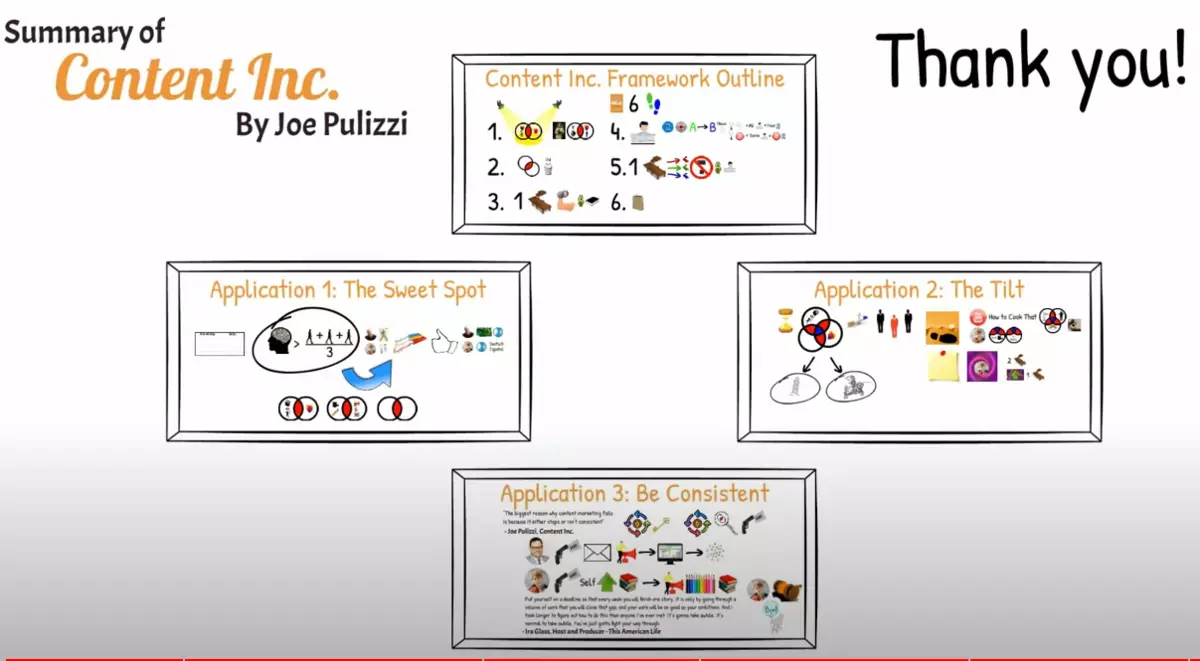
Content Inc. Framework Outline Summary

The Sweet Spot: Create content with a sweet spot of Knowledge or skill with your passion.
The Tilt: Develop a unique approach to present the sweet spot that makes you stand out in your field.
Building the base: Concentrating on one platform to build a strong following base before diversifying to other platforms.
Harvesting Audience: Leading your audience toward subscription to your email newsletter.
Diversification: Spreading and getting more audience from various platforms.
Monetization: Creating products for your gathered audience and exploring additional income sources, such as affiliate products, book royalties, subscription fees, or private consulting.

List of 3 Applications from the book.

  1. Identifying Your Sweet Spot: Know your area of knowledge and skill with a combination of passion and interest.
  2. Developing a Content Tilt: Make your content unique and it should represent your style so that your targeted audience will be more engaged. So brainstorm ideas to find your own content tilt to set you apart from others.
  3. Prioritizing Consistency: Consistency is the key for content creators, so commit yourself to a regular publishing schedule, whether it is for a blog, YouTube Channel, or any other platform. Consistency will keep your audience coming back and engaging but also help you refine your content tilt over time.

Welcome to the summary of “Content.Inc”

Application 1 is “The Sweet Spot”

When reading the first part of Content Inc. – Joe tasks the reader to list his knowledge and skill areas. Knowledge is defined as an area you know more about than the average person. For example,   one of Joe’s knowledge areas is 80’s baseball cards. As for me, one is nutrition for vegans.

Skill areas, on the other hand, are defined as the ability to do something well, or in other words,   knowledge used properly. One of Joe’s skills is public speaking, while one of mine is speaking   German and Spanish. For more examples, you may check out the blog post review in the description.

Now it’s your turn. What are your skill and knowledge areas?   Pause the video for a moment and just brainstorm for 5 minutes. If you’re not sure about something,   write it down. You could always remove it later. So, are you ready? You may pause it now. Hope you’ve written a few of your knowledge and skill areas.
Now that you have them, you may pick one and add one of your passions on top of it.  This combination is your sweet spot. For example,   mine is an intersection of video editing skills and a passion for marketing & business.   What is your intersection? You may pause the video now, and write it down.

Application 2 is “The Tilt”

No matter how skillful knowledgeable and passionate you are, this might not be enough to make you stand out. That’s where “The Tilt” comes in, which has two meanings: One is just to lean, incline, slope, or slant. Just as the Tower of Pisa in Italy has a tilt. The other is to aim or thrust. Just as one tilts a lance in a joust.

This is to say, that when your content has a tilt, it should represent both of those meanings. You need to be different, and a leader in your category at the same time, who is quote “Marking the unmapped land” for those behind him. For example, the channel How to Cook That by Ann Reardon sits on her sweet spot of the skill of cooking, and passion for teaching.

But, there are a lot of cooking channel owners that love to teach. What makes Ann different is that she focuses on the quote “Impossible food creations”, like a cake, that when cut open, appears as an Instagram logo. For myself, it is animation videos for YouTube and a 100-scale rating for the blog. Note: My focus should be on one platform according to Joe.

But, as of now, I choose to go on with both, because of a previous commitment, which is probably less effective, but a commitment is a commitment. That said, if you haven’t yet started or committed to anything, it would probably make sense for you to concentrate all your power on one platform. Now, it’s your turn.

What makes your sweet spot different? Where could you be the clear leader? You may pause the video and brainstorm the ideas in your mind. Then, you could let it sit a bit before you decide. Ready? Brainstorm. Go!

Application 3 is “Be Consistent”

The biggest reason why Content Marketing fails is because it either stops or isn’t consistent.

Joe Pulizzi, Content Inc. You might have heard it a million times, I know I have. Consistency is essential. If you lack consistency, it’s a bit like not keeping a promise. In addition, a side benefit of consistency is that it may also help you find your content tilt in case you haven’t found it yet. Just start, and you may learn your tilt along the way.

For example, Jay Baer – A six-time New York Times best-selling author, and a marketing keynote speaker, started his business surrounding email marketing. But, his analytics showed that there was more demand for social media. So, he tilted there. I, on the other hand, started my YouTube channel as general self-improvement book reviews and then tilted to marketing animation videos.

Here’s a quote from the popular host and producer of the show This American Life – Ira Glass on the subject. “Put yourself on a deadline so that every week you will finish one story. It is only by going through a volume of work that you will close that gap, and your work will be as good as your ambitions. And I took longer to figure out how to do this than anyone I’ve ever met.

It’s gonna take a while. It’s normal to take a while. You’ve just got to fight your way through.” I’m super guilty here. So, let’s cut this one short so that I could actually publish faster.

10 Points I have learned from this book

  1. Content Marketing Strategy
  2. Creating Valuable Content
  3. Establishing Trust and Authority
  4. The Six-Step Framework
  5. Consistency
  6. Audience Monetization
  7. The Importance of a Unique Angle
  8. Focus on Subscribers
  9. Content Diversification
  10. Learning and Application
[dsm_blog_carousel include_categories=”7″ use_excerpt=”off” use_date=”off” use_author=”off” _builder_version=”4.19.5″ _module_preset=”default” global_colors_info=”{}”][/dsm_blog_carousel]

Book Summary: Your Next Five Moves By Patrick Bet-David | Book Reveiw

your next five moves book summary

Hi, I am Wilson Shrestha. I have read this book many times and created a short summary for you awesome readers. This book is about providing knowledge about business and how you can run it properly for future growth. I am also mentioning this book is one of the best books I have ever read. Below are some of the main important points that I have collected from the book Your Next Five Moves book Summary. Hope you will like and enjoy it.

Book Information
Book NameYour Next Five Moves
AuthorPatrick Bet-David
Author BackgroundEntrepreneur, CEO of PHP Inc., Owner of Valuetainment YouTube channel
GenreBusiness, Strategy & Self-improvement
Publication YearAugust 18, 2020
Another Book by Author“Drop Out And Get Schooled”

Lesson to LearnThe art of business strategy and how to achieve success in entrepreneurship.
Key Concepts
Self-awareness, problem-solving, team building, strategy, power plays, decision-making, Strategies for scaling and success


Notes from the book your next five moves

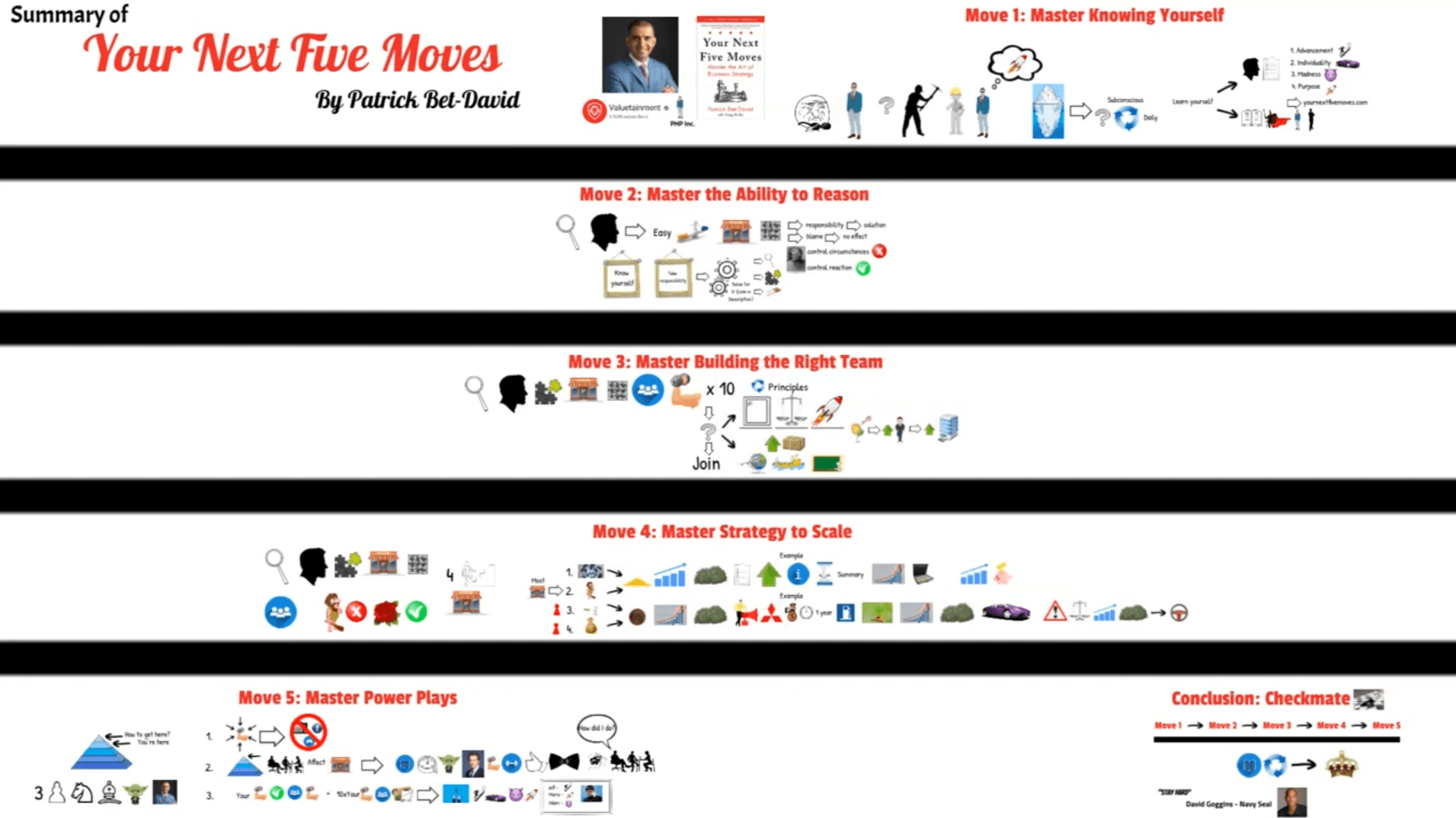
List of 5 Moves from the book.

  1. Clarity (Master Knowing Yourself): First of all you will have to be clear on what you want and who you want to be.
  2. Strategy (Make a Clear plan): Develop a plan that will help you to achieve your goal.
  3. Building the Right Team: Focus on Exponential Growth, not on just linear growth. To do that building the right team with talented peoples is a key aspect of this move. Then you will move to more profitable phase, create momentum and long-term Survival.
  4. Growth and Scale your business: Before Scaling your Business you must master on your skills, focus and career. Learn to navigate important meetings effectively, understand what motivates team members.
  5. Power Plays: Learn and master to apply power and leverage people to achieve your goals.

Welcome to the summary of “Your Next Five Moves:

Move one is Master Knowing Yourself: Master the Art of Business Strategy”. Did you ever think “Oh my god how do entrepreneurs do it? How can they work that much, and withstand all the pain that they do?” The simple, but not easy answer is that they know what they want to achieve and why they are doing it. They’ve dug deep and asked themselves the questions of who they want to be, and how will it look exactly, and keep asking it again and again.

Because they think of the vision daily, it helps them keep going. Here are two things that could help you understand yourself better: The first is to take Patrick’s identity quiz and find out if you’re driven by: One – Advancement, Two – Individuality, Three – Madness, or Four – Purpose. Check out yournextfivemoves.com to find it.

The second is to immerse in biographies of the greats, read about or learn from the people who have achieved what you want, and imitate their behavior.

Move two is: Master the Ability to Reason: Once you start researching yourself constantly, it will gradually become easier to make decisions, but that is not enough. To solve your business problem, you’ll also need to take high responsibility, and not blame outside circumstances.

As the Greek stoic philosopher Epictetus says: “We cannot choose our external circumstances, but we can always choose how we respond to them”. Finally, after having those two subjects nailed down, you’ll need a system for deep and rational problem-solving. One such system is Patrick’s “Solve for X” system. It breaks the solution into three parts.

One – Investigate, which contains: The urgency, potential gain or loss, and causes of the issue. Two – Solve, which contains: Whose advice or help is needed? What are the potential solutions? And what are the potential negative consequences of those solutions? Three – Implement: Whose buy-in is needed? Meaning, who may be affected by the problem, and should be prepared for it? Who’s responsible for what? And what are the new protocols to avoid this in the future?

Move three is Master Building the Right Team: After digging into your purpose and learning to deal with circumstances, you can now take other people on the journey with you, and multiply your power. But, why would they want to join? One possible reason is that they clearly understand your set of principles before they join, and it brings them a frame, stability, and purpose.

In other words – They have a reason to wake up in the morning, and they know what they should do to be rewarded. Note: Always keep repeating the principles, including after the hire, so that they’re never forgotten. Another possible reason is: Because of the benefits package you have. Whether that be yearly trips, mentorship, additional courses to help them improve, or another thing.

Invest in your employees first, and in return, they will most likely look to also help you and the company.

Move four is Master Strategy to Scale: Now that we have a clear vision, can address the problems that come our way, and have people with us, it is time to stop thinking about survival, and start thinking about flourishing.

In order to do that let’s first understand the four phases of a business according to Patrick, they are: One – Formulation, Two – Survival, Three – Momentum, and Four – Plateau. We want to move to step three and four because that’s where the money is. Most businesses get stuck on the survival phase, because they only invest in linear growth activities, and not at all in exponential growth activities.

An example of linear growth is building documented processes and improving them. Watch the E-Myth Revisited summary to learn more. An example of exponential growth is making an innovative campaign. For example, Mitsubishi had a campaign in which they offered to pay an entire year for their customer’s fuel. This way, in contrast to linear growth they changed one offer and their bottom line changed dramatically, and not just bit by bit.

If you want your business to grow fast – Invest in exponential growth, but be careful! You still need to have systems and keep your ego in check to stay in control, and not to lose all your progress.

Move five is Master Power Plays: Simply put – This move could be summarized as “How to get to the top and stay there”. Here are three of the tactics Master Patrick mentioned in this part: One – If you want to compete with the best in the industry you’ll need all the power you can gather.

Therefore, cut out all distractions from your life that are not essential for moving ahead. Things like: TV and video games, and yes social media consumerism. Two – At those stages of the process some meetings have a gigantic effect on your business. Therefore, you must learn how to navigate in them like a master, and as Arnold Schwarzenegger says: The best way to master anything is to reps and then some more reps.

Just like in the gym, meticulous preparation and rehearsals of the upcoming meeting will be well worth the investment. Three – It’s fine to be able to gather your power, but imagine how much you’ll multiply it if your people will give all their efforts… In order to get the best out of your people – Know what drives them, (Patrick’s identity quiz could help with that) but better yet keep an organized chart of everybody’s motivations, and always, I mean ALWAYS have their motivations in mind when you talk to them or give them a task.

Conclusion: Checkmate. Baaam, you score! According to Patrick – If we follow those five moves and keep following them, keep learning, and understand that improvement has no end, and basically in other words adopt Carol Dreck’s growth mindset with repeated persistence – We’ll have a high chance for success.

[dsm_blog_carousel include_categories=”7″ use_excerpt=”off” use_date=”off” use_author=”off” _builder_version=”4.19.5″ _module_preset=”default” global_colors_info=”{}” theme_builder_area=”post_content”][/dsm_blog_carousel]

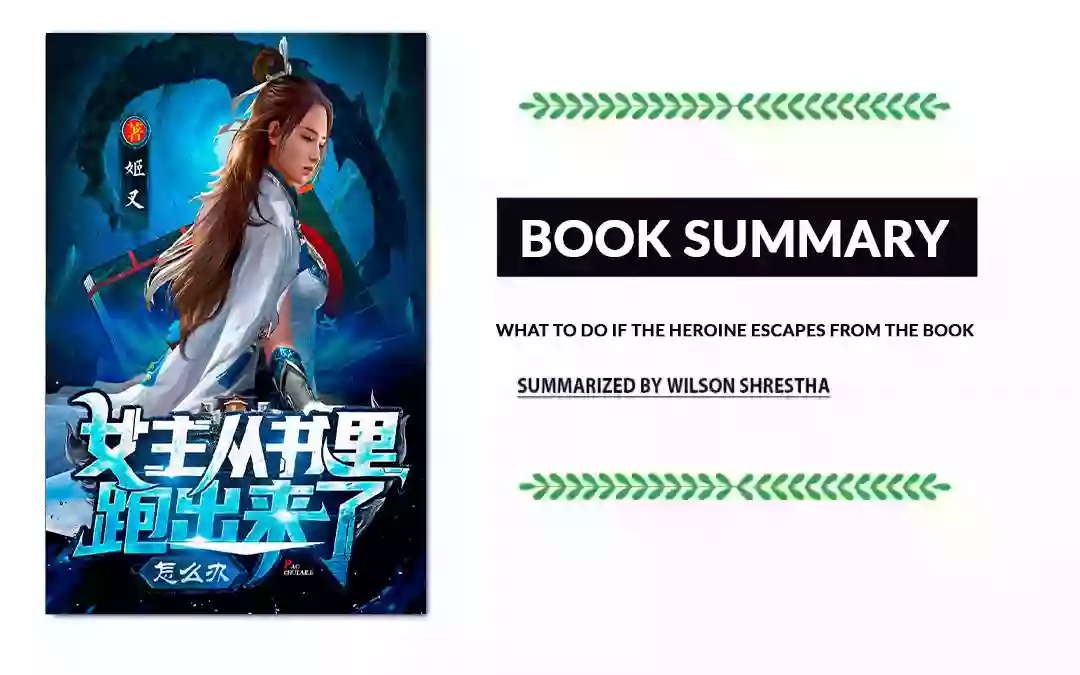
What to do if the heroine escapes from the book

what to do if the heroine escapes from the book

On the planet of literary works, personalities typically come to life on the webpages of a manual, pulling reciters right into their stories along with their powerful individualities as well as experiences. Nevertheless, what takes place when one of these characters decides to break without the boundaries of guide? It’s an instance that may seem to be far-fetched, but within this post, our experts’ll explore the fascinating principle of an idol running away from a manual and also what you can possibly do if you find yourself experiencing such a fictional problem.

Introduction

Recognizing the Signs
The initial step in coping with a heroine that has run away from a publication is actually to realize the indicators. These indications may feature:

Final thought

Participate in Dialogue
Inquire her about her reasons for leaving the book and what she really hopes to obtain in the true planet. By connecting along with the personality, you might be actually capable to discover an equally reasonable service.

Unusual disappearances from guide’s story.
Uncommon situations or even disruptions in the storyline.
The unexpected appeal of the personality in your field.
Remain Calm as well as Rational
It is actually significant to remain rational and calm when you discover that a heroine has run away from a publication. Besides, this is actually a strongly uncommon condition, as well as reacting with panic won’t assist. Take a deeper breathing spell and also remind your own self that you are actually the writer of the story as well as possess command over its outcome.

Discuss a Come back

In some cases, the run away idol might agree to go back to the book if particular conditions are actually fulfilled. Haggle with her to find a settlement that fulfills both events. This could involve making changes to the story, delivering her with new expertises within the book, or guaranteeing an even more satisfying narrative arc.

Check out the Character’s Motivation
Personalities in manuals often possess their personal motivations and also wishes. Performed she find her life in the book unfulfilling?

Welcome the Innovative Problem
While the tip of a character escaping from a publication may in the beginning be actually upsetting, it can easily additionally provide a distinct artistic difficulty. Welcome the chance to explore new narration options and grow the perimeters of your literary world. Utilize the experience as a possibility to expand as an article writer as well as involve your readers in a clean and unexpected method.

The suggestion of a heroine running away coming from a publication might be unconventional, yet it is actually an exciting idea that enables authors to explore the dynamic connection between inventors and also their creations. By recognizing the signs, remaining restful, and also complying with the steps outlined in this particular article, you can easily navigate this literary issue with creativity and diplomacy. Who understands, you might merely reveal a whole brand-new measurement of narration in the process.

Seek advice from the Book
The upcoming action is to revisit guide concerned. Carefully read through the web pages as well as chapters to observe if there are actually any type of hints or pointers about why the character may have left. Search for any disparities or even irregularities in the content that might supply idea into the character’s variation.

In the world of literature, personalities commonly happen to life on the webpages of a manual, attracting reciters in to their accounts with their convincing characters and experiences. What takes place when one of these personalities makes a decision to break free of charge coming from the limits of the manual? It’s a scenario that may seem bizarre, however in this weblog article, we’ll look into the intriguing idea of a heroine leaving from a book and also what you may do if you find on your own facing such a fictional problem.

Look For Literary Recommendations
Do not hesitate to find fictional advise if you discover on your own battling to deal with the circumstance on your own. Speak with various other writers, fictional professionals, or even creating teams who may have run into comparable circumstances. They might deliver important understandings as well as suggestions for resolving the issue.

Characters in books often possess their own inspirations as well as wishes. While the suggestion of a personality getting away coming from a publication may initially be actually distressing, it may likewise provide an unique artistic problem.

[dsm_blog_carousel include_categories=”7″ use_excerpt=”off” use_date=”off” use_author=”off” _builder_version=”4.19.5″ _module_preset=”default” global_colors_info=”{}”][/dsm_blog_carousel]

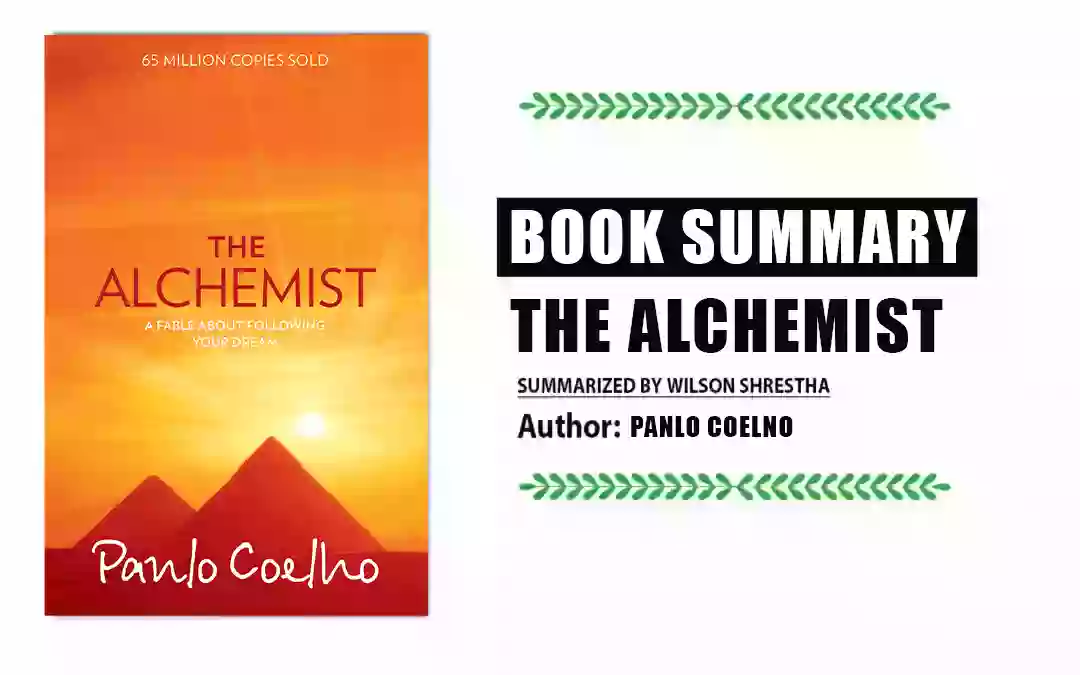
The Alchemist Book Summary

the alchemist book summary

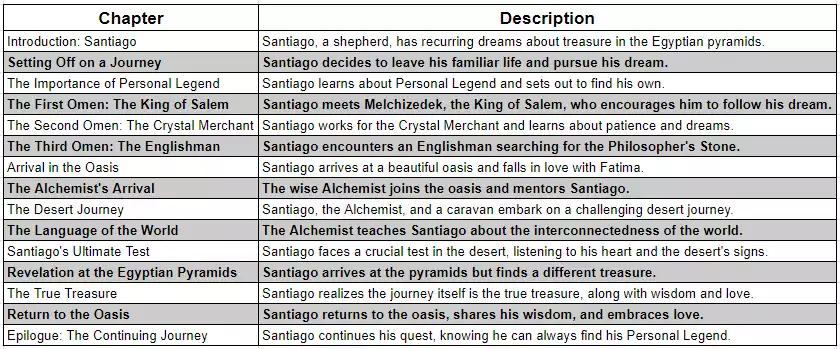
The tale of “The Alchemist” adheres to Santiago, a guard youngster that desires for discovering prize in the Egyptian pyramids. He starts a trip to accomplish his Personal Legend, complying with an assortment of people and also dealing with numerous obstacles en route. Santiago finds real significance of prize and discovers considerable lifestyle trainings regarding working toward one’s desires, listening to one’s soul, and complying with one’s dreams.

the alchemist book short description

Overview: Santiago as well as His Dream

Santiago, a straightforward shepherd, led a quiet lifestyle in a little community. Santiago could not neglect the telephone call of this aspiration.

Setting Off on a Quest

1 day, Santiago chose to leave his common life behind. Along with a confident heart, he left his lamb and also set off to go after the mystical treasure that had been actually troubling his dreams.

The Significance of Individual Tale

On his journey, Santiago met a practical fortune-teller that launched him to the idea of the “Personal Legend.” This, she said, was actually one’s accurate function in lifestyle. Santiago realized he should discover his own Individual Folklore.

The First Prophecy: The King of Salem

Santiago’s quest led him to an appointment along with Melchizedek, the King of Salem. Melchizedek motivated Santiago to observe his dream and also offered invaluable knowledge on lifestyle’s objective as well as destiny.

The 2nd Prophecy: The Crystal Merchant

As Santiago traveled, he helped a Crystal Merchant, learning courses of perseverance and persistence. The seller’s outlet educated him that every step of the adventure was very important, certainly not just the location.

The Third Omen: The Englishman

Santiago’s pathway intercrossed with an Englishman looking for the Philosopher’s Rock. By means of their conversations, Santiago learned about the “Spirit of the World,” the interconnectedness of all traits.

Landing in the Oasis

Santiago’s trip got him to a breathtaking oasis. Listed here, he fulfilled Fatima, and also love developed in between them. The retreat came to be a sign of elegance and also affection in Santiago’s experience.

The Alchemist’s Arrival

The practical Sorcerer signed up with the oasis, directing Santiago towards his prize. He educated Santiago the “Foreign Language of the Globe” and also the profound suggestion that deep space works together to assist us attain our desires.

The Desert Trip

With the Alchemist as well as a campers of travelers, Santiago embarked on a daunting journey throughout the substantial desert. This trip stood for life’s difficulties and the need to stand firm.

The Foreign language of the Globe

The Alchemist remained to advisor Santiago, explaining the interconnectedness of all traits as well as the value of paying attention to one’s center.

Santiago’s Ultimate Exam

In the desert, Santiago experienced his utmost test. He needed to trust his soul and also the indicators around him. This difficulty taught him to believe in themself and also his experience.

The Discovery at the Egyptian Pyramids

Truth Prize Santiago finally got to the Egyptian pyramids, but the jewel he found was certainly not there. Instead, he found an extensive realization that the experience on its own was the best prize. Santiago understood that the understanding he got, the love he discovered, and the individual he ended up being on this journey were actually the true treasures.

Go back to the Haven

Santiago returned to the oasis, discussed his newfound understanding, and also welcomed his love, Fatima. His journey had improved not only him but also the people around him.

Epilogue: The Proceeding Trip

Santiago understood his adventure was actually not over. With the understanding that he might always discover his in the past to his Personal Legend, he remained to look into lifestyle’s mysteries and follow his heart. And so, Santiago’s tale educates us that lifestyle’s true jewels are not consistently what our experts anticipate, however they are regularly worth the journey. Like Santiago, let us observe our hearts as well as locate our own Personal Legends. Santiago’s experience took him to a spectacular oasis. The sanctuary became a symbolic representation of beauty as well as love in Santiago’s experience. Santiago recognized he should discover his own Individual Legend. Santiago, a simple shepherd, led a quiet lifestyle in a tiny city. Santiago could not ignore the call of this desire.

[dsm_blog_carousel include_categories=”7″ use_excerpt=”off” use_date=”off” use_author=”off” _builder_version=”4.19.5″ _module_preset=”default” global_colors_info=”{}”][/dsm_blog_carousel]