
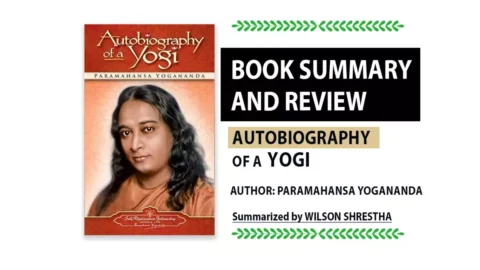
| Publication | 1946 |
| Genre | Spiritual Autobiography / Non-fiction |
| Language | English (also in Hindi, Nepali) |
| Publisher | The Philosophical Library |
| Country | India & United States |
| Pages | ~500 pages |
| Best For | Spiritual seekers, yoga practitioners, philosophy lovers |
📋 Table of Contents
- Introduction — Why This Book Still Matters
- Yogananda’s Family Background & Birth
- The Guru-Shishya Relationship
- Initiation into Yoga at Age 17
- Yogananda’s Core Spiritual Practices
- The Intense Search for the Right Guru
- Past Lives & Connection to Kailash Parvat
- Insight into Yogananda’s Early Teachers
- Connection with Swami Vivekananda’s Teachings
- Key Lessons from the Book
- Our Review & Rating
- Frequently Asked Questions
Introduction — Why This Book Still Matters
First published in 1946, Autobiography of a Yogi by Paramahansa Yogananda remains one of the most widely read spiritual books of all time. It has influenced millions — from ordinary seekers to visionaries like Steve Jobs, who reportedly kept only one physical book on his iPad: this one.
Unlike most spiritual texts, this autobiography reads like a gripping personal story — full of miracles, mystical encounters, devoted gurus, and a relentless quest for self-realization. Yogananda invites the reader on a journey into the deeper layers of consciousness, Hindu philosophy, and the timeless science of Kriya Yoga.
Whether you are a devoted yogi, a curious spiritual seeker, or simply someone who loves extraordinary life stories, this book will leave a lasting impression on you.
Yogananda’s Family Background & Birth
Paramahansa Yogananda was born on January 5, 1893, in Gorakhpur, Uttar Pradesh, India, into a devout Bengali family. His father, Bhagabati Charan Ghosh, was a disciplined railway official and a devoted disciple of Lahiri Mahasaya, a great Kriya Yoga master.
From his earliest childhood, Yogananda displayed unusual spiritual sensitivity. He recounts experiencing visions, feeling deep states of meditation, and sensing the presence of divine beings — all before the age of ten. His mother, who passed away during his youth, left a profound spiritual imprint on him, steering his entire life toward the search for God.
Born into a household steeped in spirituality yet exposed to the modern intellectual currents of colonial India, Yogananda’s upbringing was a unique blend of traditional wisdom and contemporary education — the perfect foundation for the spiritual luminary he would become.
The Guru-Shishya Relationship in Yogananda’s Philosophy
At the heart of Autobiography of a Yogi lies the ancient Indian concept of the Guru-Shishya (teacher-student) relationship. Yogananda repeatedly emphasizes that true spiritual growth cannot happen in isolation — it requires the guidance of a realized master who has already walked the path.
This idea may feel foreign in a Western, self-help-driven culture, but Yogananda makes a compelling case. The guru doesn’t just teach — the guru transmits energy, awareness, and grace directly to the disciple through a living spiritual bond that cannot be replaced by books, lectures, or online courses.
For readers in Nepal and South Asia who are already familiar with this concept through traditional education and culture, Yogananda’s words will feel deeply familiar and validating.
Initiation into Yoga at Age 17
At just 17 years old, Yogananda’s formal yogic journey began. Rather than pursuing a conventional career path, he was consumed by one burning question: Who am I? What is the purpose of life?
His early experiments with yoga weren’t glamorous. They involved rigorous physical and mental disciplines — extended fasting, long hours of meditation, and intense focus exercises. Yet these were not seen as hardships but as joyful offerings toward his ultimate goal of Self-Realization.
This chapter is particularly inspiring for young readers. Yogananda’s willingness to make radical choices in his teens, guided purely by inner calling, is a powerful reminder that authentic life paths often diverge sharply from social expectations.
Yogananda’s Core Spiritual Practices
The book offers a rare window into the specific practices that defined Yogananda’s spiritual life. Chief among them was Kriya Yoga — an advanced meditative technique involving precise breath control, spinal energy activation, and focused concentration on the spiritual eye (the point between the eyebrows).
Yogananda describes Kriya Yoga as a “spiritual airplane” — a method that dramatically accelerates inner evolution. Where ordinary meditation might take decades to produce results, Kriya Yoga can achieve the same transformation in a fraction of the time. Today, the Self-Realization Fellowship that Yogananda founded continues to teach Kriya Yoga worldwide.
Beyond Kriya, Yogananda practiced deep devotional prayer, service to others (Karma Yoga), and study of sacred scripture (Jnana Yoga) — a holistic approach that integrated all major paths of Hindu philosophy into a single, coherent spiritual life.
The Intense Search for the Right Guru
One of the most compelling narratives in the book is Yogananda’s relentless search for his destined guru. He approached several saints and teachers in his youth, each leaving a valuable impression, but none fulfilling the deep inner recognition he sought.
The eventual meeting with Sri Yukteswar Giri in Serampore is described as nothing short of a divine appointment — as though the cosmos had been orchestrating the encounter for lifetimes. Yogananda writes that the moment he saw Sri Yukteswar, he knew beyond all doubt: this is my guru.
Sri Yukteswar would prove to be a demanding but deeply loving teacher — one who balanced unconditional compassion with rigorous discipline. Their relationship forms the emotional and spiritual backbone of the entire autobiography.
Past Lives & Connection to Kailash Parvat
Among the most mystifying sections of the book are Yogananda’s revelations about his past lives and their connection to sacred Himalayan geography, including the holy Mount Kailash — a site of immense spiritual significance in Hinduism, Buddhism, and Bon traditions across Nepal and Tibet.
Yogananda describes how certain recurring spiritual inclinations, fears, and affinities can only be fully understood in the context of previous incarnations. This section challenges Western, linear views of identity and invites readers to consider a broader, multi-lifetime canvas for understanding their own souls.
For Nepali readers, these passages carry a special resonance — the mountains and spiritual landscapes described are deeply woven into the cultural and religious fabric of this region.
Insight into Yogananda’s Early Teachers
Before finding Sri Yukteswar, Yogananda encountered several remarkable teachers who shaped his understanding:
Swami Pranabananda — The Saint with Two Bodies
One of the first extraordinary masters Yogananda meets, Pranabananda demonstrates the phenomenon of bilocation — appearing in two places simultaneously — a feat that shatters the young seeker’s assumptions about the limits of physical reality.
Lahiri Mahasaya — The Yogi in Ordinary Life
His father’s guru, Lahiri Mahasaya, served as a living proof that spiritual realization could be achieved while living an ordinary householder’s life — holding a job, raising a family, and fulfilling social responsibilities. This made Yogananda’s path accessible and relevant to everyone.
Ananta Lal Ghosh — The Encouraging Brother
His elder brother Ananta played a critical role in facilitating Yogananda’s early encounters with masters, serving as an unlikely divine instrument in the unfolding of his destiny.
Connection Between Yogananda’s Life and Swami Vivekananda’s Teachings
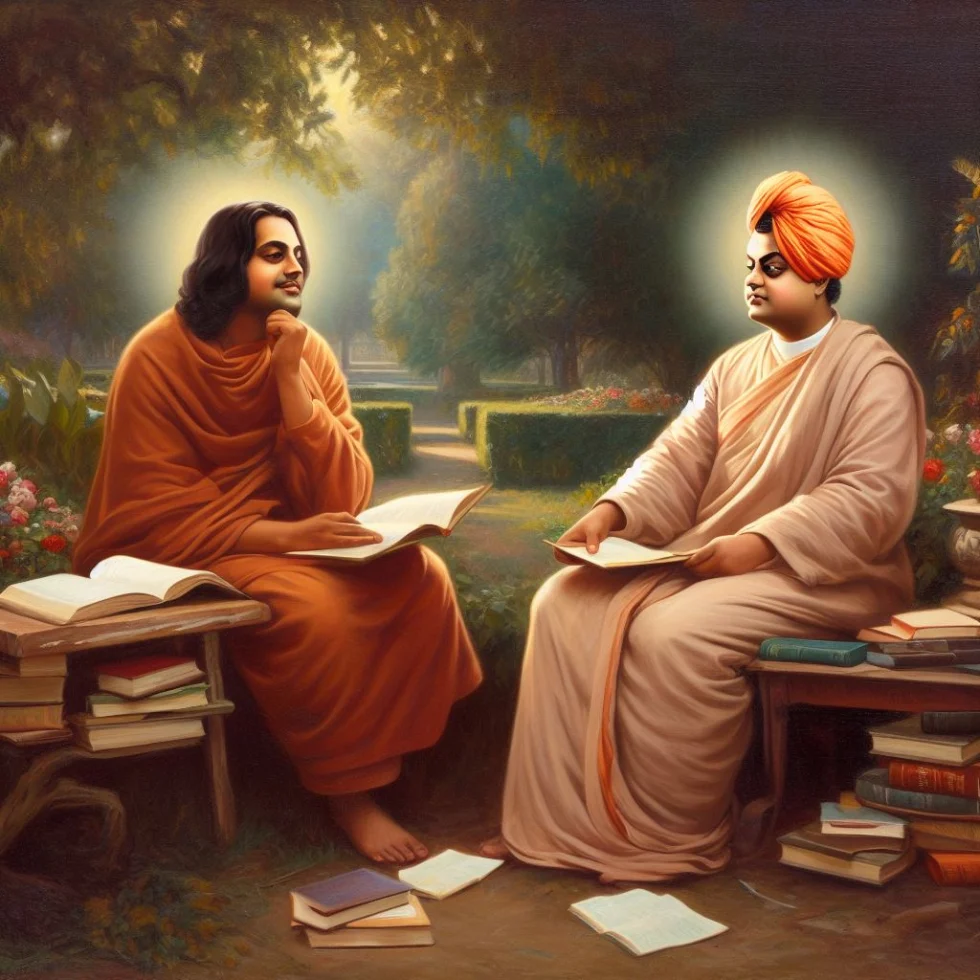
Swami Vivekananda, the great disciple of Sri Ramakrishna and the first Indian spiritual teacher to bring Vedanta and Yoga to the West, casts a long shadow over Yogananda’s autobiography — even though the two never met in person.
Both teachers shared a common mission: to demonstrate that the profound spiritual sciences of India were not mere superstition, but a rational, verifiable path to human evolution. Both undertook the challenge of presenting Hindu philosophy to a skeptical, scientifically-minded Western audience.
Yogananda’s methodology — blending spirituality with science, ancient wisdom with modern relevance — mirrors Vivekananda’s approach remarkably. Where Vivekananda planted the seeds, Yogananda continued the harvest, building the Self-Realization Fellowship and establishing Kriya Yoga centers across America and Europe.
✦ Key Lessons from Autobiography of a Yogi
- ⬥ The guru-disciple relationship is irreplaceable — no book or course can substitute for a realized teacher’s direct guidance and energy transmission.
- ⬥ Miracles are real but not the goal — supernatural phenomena appear throughout, but Yogananda consistently treats them as byproducts of spiritual evolution, not ends in themselves.
- ⬥ Kriya Yoga accelerates inner growth — specific, disciplined meditation practices can dramatically compress the timeline of spiritual development.
- ⬥ Science and spirituality are complementary — true spiritual science is as logical and reproducible as any laboratory experiment, when practiced correctly.
- ⬥ Death is not the end — through accounts of departed masters returning, Yogananda builds a compelling case for the continuity of consciousness beyond physical death.
- ⬥ God-realization is possible for everyone — regardless of religion, nationality, or social status, the divine is equally accessible to all sincere seekers.
- ⬥ Surrender over effort — the deepest spiritual breakthroughs come not through force of will, but through total surrender to the divine will.
Our Review of Autobiography of a Yogi
Autobiography of a Yogi is not a book you simply read — it is a book that reads you. With extraordinary literary grace, Yogananda weaves personal memoir, philosophical depth, and mystical experience into a narrative that challenges, comforts, and ultimately transforms the reader.
The writing is vivid, intimate, and often humorous. Yogananda’s voice feels warm and direct, as if speaking personally to each reader across the decades. The stories of miracles — a resurrected tiger, levitating saints, healing touch — are described with such specific detail that the reader is left genuinely uncertain about the limits of human possibility.
For those unfamiliar with Indian spiritual philosophy, the book also serves as an excellent accessible introduction to Vedanta, Samkhya philosophy, Tantra, and Bhakti. And for those already versed in these traditions, it offers a living, breathing example of how these abstract philosophies manifest in a real human life.
Ready to Read This Book?
Autobiography of a Yogi is available in English, Hindi, and other regional languages.
Get the Book on Amazon →