Select Page

Summary of the Selfish Giant

the selfish giant book summary

Here is a summary of The Selfish Giant a Fairy Tale story of children. This is the story of Gaints and children.

StoryThe Selfish Giant
AuthorOscar Wilde
GenreChildren’s Literature, Fairy Tale
Published1888
Main CharactersThe Selfish Giant & The Children
Themes– Selfishness and Generosity
– Redemption and Transformation
Moral MessageThe joy and beauty of sharing and kindness


Table of Contents

  1. Introduction
  2. The Giant’s Garden: A Forbidden Paradise
  3. The Selfish Giant: A Cold Heart Warmed
  4. The Joyful Return: Children and Spring
  5. The Special Child: Christ-like Imagery
  6. The Bitter Winter: A Lesson Learned
  7. The Giant’s Sacrifice: A Tearful Reckoning
  8. Lessons Learned: Themes and Takeaways
  9. Why “The Selfish Giant” Endures
  10. In Conclusion

Introduction

In the realm of timeless literary classics, Oscar Wilde’s “The Selfish Giant” stands tall as a poignant narrative that weaves together themes of redemption, compassion, and the transformative power of selflessness. As we delve into the heart of this enchanting story, let’s explore the characters, plot twists, and underlying messages that have made this tale a perennial favorite.

A giant in the forest with beautiful views and flowers in the garden

The Giant’s Garden: A Forbidden Paradise

At the story’s core lies the Giant’s magnificent garden, a sprawling haven where children once played freely. Amidst the vibrant flowers and lush greenery, Wilde crafts a vivid depiction of Paradise Lost, drawing readers into a world brimming with imagination and innocence.

The Selfish Giant: A Cold Heart Warmed

Central to the narrative is the titular character, the Selfish Giant. His cold and callous demeanor initially casts a shadow over the garden, isolating it from the laughter of children. Wilde masterfully portrays the Giant’s transformation, using the changing seasons in the garden as a metaphor for his evolving heart.

The Joyful Return: Children and Spring

As winter blankets the garden in an eternal chill due to the Giant’s selfishness, a pivotal moment unfolds. With the arrival of Spring, symbolized by the return of children to the once-forbidden garden, the Giant’s icy heart begins to thaw. Wilde’s imagery and symbolism here serve as a powerful testament to the cyclical nature of life and the possibility of redemption.

The Special Child: Christ-like Imagery

Woven into the narrative is the presence of a unique child, whose striking resemblance to Christ adds a layer of religious allegory to the story. His wounds, reminiscent of the crucifixion, and the Giant’s eventual act of self-sacrifice evoke a profound sense of spiritual redemption.

giant in snow winter season

The Bitter Winter: A Lesson Learned

As the story progresses, Wilde introduces a bitter winter that descends upon the garden once again. The Giant’s realization of his role in perpetuating this cold season serves as a powerful metaphor for the consequences of selfishness. Through this, Wilde imparts a moral lesson about the interconnectedness of actions and their impact on the world around us.

The Giant’s Sacrifice: A Tearful Reckoning

In a climactic moment of selflessness, the Giant makes a sacrificial gesture that holds the key to breaking the perpetual winter. His tears, shed for the sake of others, melt the snow and ice, ushering in a renewed spring and the ultimate redemption of the once-selfish protagonist.

Lessons Learned: Themes and Takeaways

Wilde’s timeless tale of “The Selfish Giant” imparts several valuable lessons. From the consequences of selfishness to the transformative power of compassion, the narrative encourages readers to reflect on their own actions and consider the broader impact they may have on the world.

Why “The Selfish Giant” Endures

As we conclude our exploration of this classic tale, it’s essential to understand why “The Selfish Giant” continues to resonate with audiences across generations. Its universal themes, timeless characters, and the profound simplicity of its message contribute to its enduring popularity.

Summary of the Selfish Giant

In Conclusion

Oscar Wilde’s “The Selfish Giant” is not merely a story; it’s a journey through the seasons of the human soul. From the icy grip of selfishness to the warm embrace of selflessness, the narrative unfolds like a blossoming flower in the Giant’s garden. As we take away the profound lessons embedded in Wilde’s words, we are reminded that, like the Giant, we too have the power to thaw the coldest winters in our lives through acts of kindness and compassion.

[dsm_blog_carousel include_categories=”7″ use_excerpt=”off” use_date=”off” use_author=”off” _builder_version=”4.19.5″ _module_preset=”default” global_colors_info=”{}”][/dsm_blog_carousel]

How to Invest in Bonds UK

how to invest in bonds UK

I have researched the whole internet and collected this information for my readers. If you have any confusion please feel free to ask me in the comment section down below.

What is a bond?

A bond is essentially a loan that an investor gives to an organization, like a corporation or government. This loan lasts for a certain amount of time and has a fixed rate of interest. The organization promises to pay back the loan amount, along with the interest, over this period.

What are the different types of bonds?

Here’s a simplified version of the different types of bonds:

Treasury Bonds: These are long-term loans to the U.S. government that last 10, 20, or 30 years. They’re considered safe because they’re backed by the U.S. government.

Savings Bonds: These are loans to the U.S. government that help it borrow money.

Agency Bonds: These are loans to government-sponsored enterprises and federal agencies.

Municipal Bonds: These are loans to local governments like states, cities, and counties. They use the money for things like building schools and highways.

Corporate Bonds: These are loans to companies. They use the money to grow their business. The risk and return can vary a lot, depending on the company’s financial health.

International and Emerging Market Bonds: These are loans to foreign governments or companies.

Bond ETFs: These are a type of investment fund that only invests in bonds.

Green Bonds and Other Bond Funds: These are loans that fund projects with positive environmental or climate benefits.

What are corporate bonds?

Here’s a simplified version of the different types of bonds:

Treasury Bonds: These are long-term loans to the U.S. government that last 10, 20, or 30 years. They’re considered safe because they’re backed by the U.S. government.

Savings Bonds: These are loans to the U.S. government that help it borrow money.

Agency Bonds: These are loans to government-sponsored enterprises and federal agencies.

Municipal Bonds: These are loans to local governments like states, cities, and counties. They use the money for things like building schools and highways.

Corporate Bonds: These are loans to companies. They use the money to grow their business. The risk and return can vary a lot, depending on the company’s financial health.

International and Emerging Market Bonds: These are loans to foreign governments or companies.

Bond ETFs: These are a type of investment fund that only invests in bonds.

Green Bonds and Other Bond Funds: These are loans that fund projects with positive environmental or climate benefits.

What are bond funds?

A bond fund is an investment fund that primarily invests in various types of bonds such as government, municipal, and corporate bonds. It aims and targets to generate regular income for investors. Unlike individual bonds, bond funds don’t have a maturity date, so the principal amount can fluctuate. The fund is managed by a portfolio manager who buys and sells bonds based on market conditions. Types of bond funds include government bond funds, municipal bond funds, corporate bond funds, and more.

Bond Vs Bond Funds

Individual BondsBond Funds
OwnershipHolders own specific bonds.Shareholders own shares of the fund.
DiversificationLimited diversification.Broad diversification across many bonds.
RiskIf the issuer defaults, the risk is significant.Spread risk across multiple issuers.
ManagementSelf-managed or broker assistance.Professionally managed by fund managers.
LiquidityVaries based on bond type.Generally more liquid, can be traded daily.
Investment MinimumCan be high, depending on the bond type.Often lower, making it accessible to many.
IncomeRegular interest payments.Periodic distributions from the fund.
MaturityFixed maturity date.Open-ended, no fixed maturity date.
Market PriceMay fluctuate but is redeemable at par value.Fluctuates based on market demand and NAV.
Transaction CostsBrokerage fees may apply.Transaction costs may apply but can be lower.
ReinvestmentInterest must be actively reinvested.Automatically reinvested in the fund.
CustomizationInvestors choose specific bonds.Limited ability to customize holdings.
Tax EfficiencyTax implications on interest income.Capital gains/losses are distributed annually.
MonitoringRequires active monitoring.Passive management and less monitoring are needed.
FlexibilityLimited flexibility for changes.Can easily buy/sell fund shares.


How do you buy bonds in the UK?

In the UK, you can buy bonds in several ways:

Directly: You can directly buy bonds through the Debt Management Office (DMO), your broker, or your bank.
Through an Agent: You can also buy bonds through an agent.
Exchange-Traded Funds (ETFs): You can buy a share of an ETF that already owns bonds.
Online or by Phone: Bonds can be bought online or by phone using a personal debit card issued by a UK bank or building society.
Through Investment Platforms: You can take a position on them via trading and investment platforms.

How is the interest earned on bonds taxed in the UK?

In the UK, the taxation on bond interest can be intricate and is influenced by various elements:

  • Personal Allowance: This is a certain amount of income you can earn each year without having to pay tax on it. If you haven’t exhausted this allowance with your salary, pension, or other sources of income, you can use it to earn tax-free interest from bonds.
  • Starting Savings Rate: There’s a provision where you might earn interest up to £5,000 without any tax implications. This is known as your starting rate for savings.
  • Personal Savings Allowance: Depending on your Income Tax band, you might be able to earn up to £1,000 in interest without having to pay tax on it.
  • Bond Interest Tax: Generally, bondholders are subject to a 20% tax on the interest income from bonds. Most bonds, with the exception of certain government bonds, are taxable. You’re taxed on both the income you earn from the bonds and any capital gain if you sell the bond before it matures. However, you’re allowed to withdraw up to 5% per year without incurring any additional taxes.

No Results Found

The page you requested could not be found. Try refining your search, or use the navigation above to locate the post.


[dsm_blog_carousel include_categories="121" use_excerpt="off" use_date="off" use_author="off" _builder_version="4.23.1" _module_preset="default" global_colors_info="{}"][/dsm_blog_carousel]

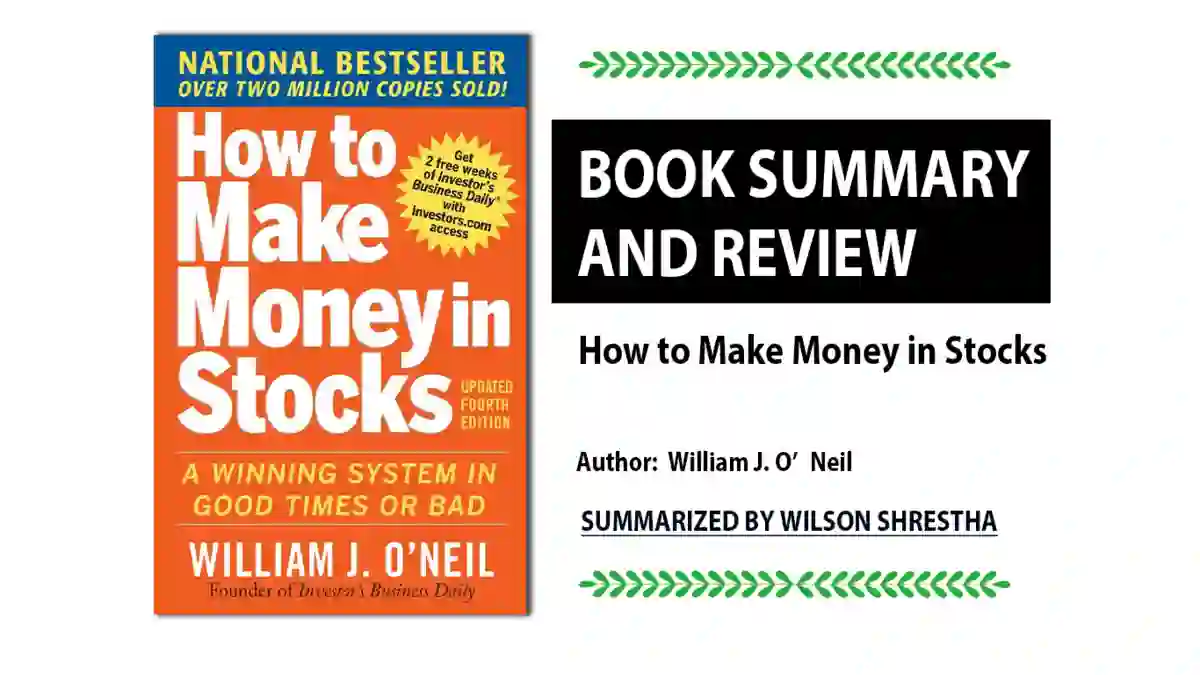
Book Summary How to Make Money in Stocks

How to make money in stocks book summary

Do you know, how to make money in stocks?

You should know how to make money in stocks because we came to the stock market to make money. This book by William J. O’Neil teaches you to make money from the stock market. If you know the basics of the stock market then you need to read this book because in this book it explains to beginners how to make money from stocks. Here in this article, I will explain all the main points related to this book and the stock market.

>>>A Beginner’s Guide to the Stock Market by Matthew R. Kratter<<<

Read This book summary before reading this book

TABLE OF CONTENTS

Introduction:

  • Overview of the stock market and the importance of having a winning system.
  • Introduction to the author’s CAN SLIM investing strategy.

Chapter 1: The Most Successful Investment Strategy:

  • Emphasis on the importance of a well-defined strategy for successful investing.
  • Introduction to the author’s personal experiences and lessons learned.

Chapter 2: A Lesson from a Pro: Jesse Livermore:

  • Exploration of the life and trading principles of Jesse Livermore, a legendary stock trader.
  • Key takeaways from Livermore’s successes and failures.

Chapter 3: The Three Skills of Top Trading:

  • Discussion of the three essential skills for successful trading: stock selection, market timing, and portfolio management.
  • Emphasis on the importance of developing and honing these skills.

Chapter 4: How I Made $2,000,000 in the Stock Market:

  • A personal account of the author’s journey to making a significant profit in the stock market.
  • Lessons learned from the author’s experiences and mistakes.

Chapter 5: The Seven Common Characteristics of Winning Stocks:

  • Introduction to the CAN SLIM strategy, which stands for seven key characteristics: Current earnings, Annual earnings, New products, Supply and demand, Leader or laggard, Institutional sponsorship, and Market direction.

Chapter 6: How to Spot Market Tops:

  • Guidance on identifying signs of a market top and preparing for potential downturns.
  • Importance of monitoring market trends and indicators.

Chapter 7: How to Buy Stocks:

  • Step-by-step guide on the process of buying stocks using the CAN SLIM strategy.
  • Considerations for timing and execution.

Chapter 8: Chart Patterns That Precede Strong Moves:

  • Examination of chart patterns that indicate potential strong stock moves.
  • Practical examples and visual representations of these patterns.

Chapter 9: When to Sell and Cut Your Losses:

  • Discussion of the importance of knowing when to sell a stock.
  • Strategies for minimizing losses and protecting profits.

Chapter 10: Ten Costly Common Mistakes Most Investors Make:

  • Identification and analysis of common mistakes made by investors.
  • Tips on how to avoid these pitfalls.

Conclusion:

  • Summary of key principles and takeaways from the book.
  • Encouragement to apply the learned strategies consistently.

The stock market is like a big playground where companies and investors team up. Companies sell bits of themselves, called stocks, to raise money. Investors buy and sell these stocks, hoping to make a profit when the stock prices go up. To succeed in this game, you need a smart plan, and one winning strategy is called CAN SLIM.

CAN SLIM is a cool code that helps you pick the right stocks:

C – Current quarterly earnings per share: This means the company should be making good money in the last three months.

A – Annual earnings increases: Look for companies whose profits are growing a lot.

N – New products, new management, new highs: Choose companies with cool new stuff, good leaders, and rising stock prices.

S – Supply and demand: If lots of people want the stock (demand) and there aren’t too many shares available (supply), that’s awesome.

L – Leader or laggard: Go for the winners in strong industries, not the losers.

I – Institutional sponsorship: Big-money investors are like trendsetters; follow their lead.

M – Market direction: Check if the overall market is going up or down. It affects all stocks.

CAN SLIM mixes two ways of looking at stocks – checking how the company is doing (fundamental analysis) and looking at the stock’s past behavior (technical analysis). But remember, even though CAN SLIM is cool, it’s not perfect. Always do your own homework, think about your money situation, and know how much risk you’re okay with before deciding on stocks. Happy investing.

Chapter 1: The Most Successful Investment Strategy

The book “How to Make Money in Stocks: A Winning System in Good Times and Bad, Fourth Edition” by William J. O’Neil underscores the critical role of having a well-defined strategy for successful investing. O’Neil introduces the CAN SLIM® Investing System, a proven 7-step process designed to minimize risk and maximize gains. This system is grounded in a comprehensive study of market winners spanning from 1880 to 2009. Offering practical techniques, the book guides readers on identifying promising stocks before they experience significant price increases and provides insights into selecting the best stocks, mutual funds, and ETFs to enhance profits. The latest edition includes 100 new charts to assist in identifying today’s most lucrative trends.

William J. O’Neil, the book’s author and the founder/chairman of Investor’s Business Daily, shares his personal experiences and valuable lessons learned in the world of investing. Boasting a national bestseller status, “How to Make Money in Stocks” has influenced over 2 million investors by revealing the secrets to wealth-building across various market conditions. O’Neil’s forward-thinking, innovative approach and disciplined investment strategy are poised to leave a lasting impact on investors and traders for generations. Additionally, the book offers strategies to help readers steer clear of the 21 most common mistakes made by investors.

Chapter 2: A Lesson from a Pro: Jesse Livermore

Jesse Lauriston Livermore, born on July 26, 1877, was an influential American stock trader, renowned for his role as a pioneer in day trading. He became the inspiration for the main character in the best-selling book, “Reminiscences of a Stock Operator,” written by Edwin Lefèvre. Livermore, once among the wealthiest individuals globally, tragically faced financial turmoil, with liabilities surpassing his assets at the time of his suicide on November 28, 1940.

Livermore’s trading approach, rooted in what is now known as technical analysis, remains a subject of study. His groundbreaking principles focused on trading stocks in trending markets, steering clear of ranging markets. When prices approached crucial points, he exercised patience to observe their reactions. For instance, if a stock hit a low of $50, rose to $60, and then retraced to $50, Livermore’s rules dictated waiting for the pivotal moment before making a trade. If the stock dropped to $48, he would take a short position. Conversely, if it rebounded from $50, he would enter a long trade at $52, closely monitoring the pivotal $60 level.

Livermore’s life was a rollercoaster of triumphs and setbacks. While he enjoyed notable successes, he also experienced financial losses, often attributed to not adhering to his own rules. His famous bet against the American economy in 1929 resulted in a $100 million profit. However, his high-risk trading approach led to multiple instances of financial downfall and subsequent rebuilding of his fortune. Livermore’s story serves as a rich source of lessons on the importance of market analysis and the consequences of bold decision-making.

Chapter 3: The Three Skills of Top Trading

Smart Stock Selection:
Choosing the right stocks is key. It involves understanding a company’s financial health, industry standing, and current market trends. Picking stocks wisely sets the foundation for successful trading.

Accurate Market Timing:
Predicting market movements is crucial. This skill involves grasping economic indicators, recognizing market cycles, and understanding investor sentiment. Being able to time your investments based on market dynamics is a valuable asset.

Effective Portfolio Management:
Managing your investments in a way that balances risk and reward is essential. This includes diversification, regularly assessing portfolio performance, and making adjustments as needed to optimize your investment strategy.

Developing and refining these skills is critical for trading success. It’s not just about making the right decisions; it’s also about effectively managing risk and maximizing returns over time. Education, practice, and real-world experience are key to honing these skills. Always keep in mind that successful trading is a journey, requiring patience, discipline, and a commitment to continuous learning.

Chapter 4: How I Made $2,000,000 in the Stock Market:

    The author of the book “How to Make Money in Stocks: A Winning System in Good Times and Bad, Fourth Edition” describes his own experience turning a sizable profit in the stock market. He makes it clear that there were some bumps in the road on this trip. There were successes and failures, as well as ups and downs. However, he gained invaluable knowledge from the experience that enabled him to succeed as a trader.

    Key lessons derived from the author’s experiences and missteps include:

    Patience is Crucial:
    The stock market isn’t a shortcut to quick wealth. Understanding market trends and making well-informed decisions take time and patience.

    Continuous Learning is Vital:
    Grasping financial concepts and staying informed about market trends is essential. Regular learning and staying updated with market news significantly enhance the ability to make sound trading decisions.

    Prudent Risk Management:
    Avoid putting all your investments in one place. Diversifying your portfolio is crucial to reducing risks and safeguarding against substantial losses.

    Decisions Based on Analysis, Not Emotions:
    Investment choices should be grounded in thorough research and analysis rather than being swayed by emotions. Emotions can cloud judgment and lead to suboptimal decisions.

    Learning from Errors:
    Every mistake presents an opportunity to learn. Analyzing what went wrong is crucial, enabling one to avoid similar mistakes in future endeavors.

    Chapter 5: The Seven Common Characteristics of Winning Stocks:

        The CAN SLIM strategy is a popular and highly respected investment strategy developed by William J. O’Neil, the founder of Investor’s Business Daily. It stands for seven key characteristics that top-performing stocks often share before making their biggest price gains. Here’s a brief introduction to each component:

        1. C – Current Earnings: Look for companies with a significant growth in earnings per share (EPS) in the most recent quarter compared to the same quarter in the previous year.
        2. A – Annual Earnings: The company should have a record of strong earnings growth over the past few years. A minimum annual earnings growth rate of 25% is often suggested.
        3. N – New Products, Services, or Management: Companies that have innovative new products or services often experience stock price increases. Changes in management or a new corporate structure can also act as a catalyst.
        4. S – Supply and Demand: Stocks with increasing volume are more likely to increase in price. This is a basic economic principle where a higher demand than supply leads to price increases.
        5. L – Leader or Laggard: Invest in leading (not lagging) stocks in leading industry groups. A leading stock is one that outperforms in earnings and other fundamental metrics.
        6. I – Institutional Sponsorship: Look for stocks that are being bought by institutional investors like mutual funds and pension funds. But be wary if too many institutions own the stock.
        7. M – Market Direction: Most stocks follow the market’s trend, so invest when the general market is in an uptrend.

        Remember, no single factor can predict a stock’s success. The CAN SLIM strategy encourages investors to consider a variety of factors before making an investment decision.

        Chapter 6: How to Spot Market Tops:

          Recognizing signs of a market top and getting ready for possible downturns is a big part of smart investing. Here’s a simple guide:

          Watch the Leaders:
          Keep an eye on the top-performing stocks in the leading sectors. If they start going down and making lower highs and lows, it could mean the market is at the top.

          Track the Market Indexes:
          Look at major indexes like the S&P 500 or the Dow Jones. If they start going down with more people selling, it might mean the market is at the top.

          Monitor Economic Indicators:
          Pay attention to things like rising interest rates, inflation, and unemployment rates. These can be signals that the market is at a high point.

          Watch for Too Much Optimism:
          If everyone is super positive and thinks the market will only go up, it might be a sign that the market is at the top.

          Getting ready for possible downturns means:

          Diversification:
          Don’t put all your money in one place. Spread it out in different areas to be safer.

          Risk Management:
          Use stop-loss orders to limit how much you can lose if the market starts going down.

          Stay Informed:
          Keep up with what’s happening in the market. Be ready to change your plan if things start to shift.

          Remember, nobody can perfectly predict when the market will go up or down. The important thing is to pay attention to trends, make smart choices, and manage the risks in your investments.

          Chapter 7: How to Buy Stocks:

            Here’s a step-by-step guide on how to buy stocks using the CAN SLIM strategy:

            1. Research: Use the CAN SLIM criteria to identify potential stocks. Look for companies with strong current and annual earnings, innovative new products or services, and strong institutional sponsorship.
            2. Analyze the Market: Understand the overall market direction. Most stocks follow the market’s trend, so it’s best to invest when the market is in an uptrend.
            3. Select Stocks: From your researched list, select the stocks that are leading in their sectors. These are the stocks that are outperforming in earnings and other fundamental metrics.
            4. Check Supply and Demand: Look for stocks with increasing volume. This indicates a higher demand, which can lead to price increases.
            5. Decide When to Buy: Timing is crucial. Look for a good buying point, which is often when the stock is breaking out of a sound base pattern like a cup-with-handle or double-bottom.
            6. Buy the Stock: Once you’ve done your research and found a good buying point, it’s time to buy the stock. Remember to start small as you can always add to your position over time.
            7. Manage Your Portfolio: Keep track of your stocks and the overall market trend. Be ready to sell if the stock drops a certain percentage below its purchase price.

            Chapter 8: Chart Patterns That Precede Strong Moves:

              Chart patterns are like secret codes in stock analysis. They’re super helpful for predicting where stock prices might go. Check out these patterns that often show up before a stock makes a big move:

              Breakout Patterns

              Breakout Pattern: This happens when a stock’s price goes above a certain level it’s been stuck at. If it breaks through the top or bottom of a range it’s been trading in, that’s a breakout.

              Reversal Pattern: Imagine the stock has been on a long ride up. A reversal pattern is like a sign that the ride might be stopping, and the stock could start going down.

              Continuation Pattern: Sometimes stocks take a breather before they keep going in the same direction. Continuation patterns tell us the trend is about to kick back in.

              Cup and Handle: Think of this like a cup of coffee. The price goes up, makes a little base, comes back up, and breaks out. It’s a popular pattern for predicting a breakout.

              Breakout Pattern: This happens when a stock’s price goes above a certain level it’s been stuck at. If it breaks through the top or bottom of a range it’s been trading in, that’s a breakout.

              Bull Flag Pattern: This one’s like a flag waving to say, “Here comes a move!” First, there’s a big surge, and then a triangle forms. When it goes back up with power, that’s the signal.

              These patterns are like clues telling traders where the stock might go next. They’re like reading the stock market’s mind!

              Chapter 9: When to Sell and Cut Your Losses:

              Knowing when to let go of a stock is just as vital as knowing when to buy. Check out these simple strategies to protect your profits and minimize losses:

                Set a Stop-Loss Order: It’s like having a safety net. You tell your broker to sell a stock if it drops to a certain price. This helps limit how much money you might lose.

                Use a Trailing Stop Order: Think of this as a smart stop-loss. It moves with the market, protecting your gains as the price goes up and limiting losses when it goes down.

                Set a Profit Target: Have a plan for when to cash in your chips. If the stock hits a certain price and you’ve made a profit, consider selling to lock in your gains.

                Watch the Market Trends: Keep an eye on the big picture. If the overall market is going down, it might be a good time to sell, especially if your stock is looking shaky too.

                Monitor the Company’s Fundamentals: Look at the company’s basic info like earnings and revenue. If these are going south, it might be a signal to sell.

                Don’t Let Emotions Control You: Fear and greed can mess with your decisions. Stay calm, stick to your plan, and don’t let emotions drive your choices.

                These strategies help keep you in control and protect your money. It’s like having a playbook for when things get tricky in the stock market.

                Chapter 10: Ten Costly Common Mistakes Most Investors Make:

                  Investing in the stock market can be a rewarding venture, but it’s not without its pitfalls. Here are some common mistakes made by investors and tips on how to avoid them:

                  1. Lack of a Plan: Investing without a clear plan or strategy can lead to impulsive decisions. It’s important to set clear investment goals and develop a plan to achieve them.
                  2. Chasing Performance: Investors often make the mistake of buying stocks that have already had large price increases, hoping the trend will continue. However, past performance is not indicative of future results.
                  3. Not Diversifying: Putting all your eggs in one basket can be risky. Diversification can help spread risk and potentially improve returns.
                  4. Ignoring Fees: Trading fees, fund expenses, and other costs can eat into your returns. It’s important to understand and minimize these costs where possible.
                  5. Letting Emotions Drive Decisions: Fear and greed can lead to poor investment decisions. It’s important to stay objective and make decisions based on sound analysis.
                  6. Neglecting to Rebalance: Over time, your portfolio can become unbalanced due to changes in the value of your investments. Regular rebalancing can help maintain your desired asset allocation.
                  7. Not Understanding What You’re Investing In: Before investing in a stock, it’s important to understand the company’s business model, financial health, and the risks involved.

                  Conclusion

                  The book “How to Make Money in Stocks: A Winning System in Good Times and Bad, Fourth Edition” provides valuable insights into the world of stock trading. Here are the key principles and takeaways:

                  1. Essential Skills: The importance of stock selection, market timing, and portfolio management cannot be overstated. These skills are crucial for successful trading.
                  2. Learning from Experience: The author’s personal journey and the lessons learned from his experiences and mistakes provide practical guidance for traders.
                  3. CAN SLIM Strategy: This strategy, which stands for Current earnings, Annual earnings, New products, Supply and demand, Leader or laggard, Institutional sponsorship, and Market direction, is a comprehensive approach to stock selection.
                  4. Understanding Chart Patterns: Recognizing and understanding chart patterns can help predict potential strong stock moves.
                  5. Knowing When to Sell: It’s important to know when to sell a stock to minimize losses and protect profits.
                  6. Avoiding Common Mistakes: The book identifies common mistakes made by investors and provides tips on how to avoid them.

                  No Results Found

                  The page you requested could not be found. Try refining your search, or use the navigation above to locate the post.
                  [dsm_blog_carousel include_categories="121" use_excerpt="off" use_date="off" use_author="off" _builder_version="4.23.1" _module_preset="default" global_colors_info="{}"][/dsm_blog_carousel]

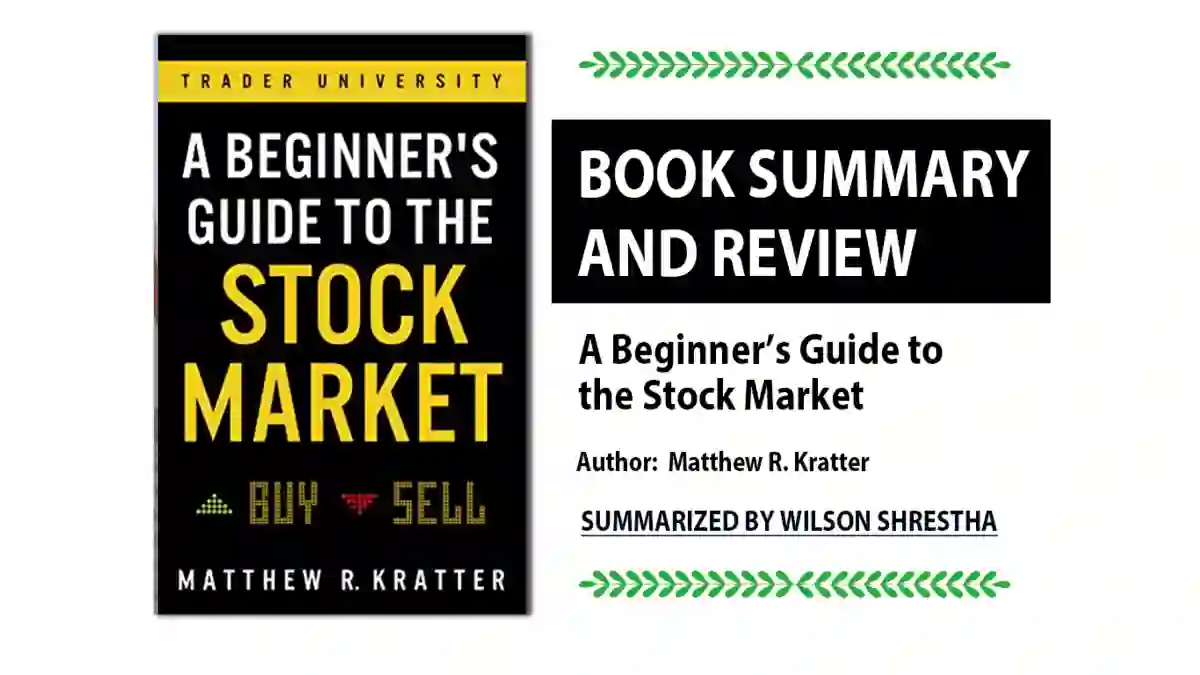
                  A Beginner’s Guide to the Stock Market by Matthew R. Kratter Book Summary

                  A Beginner’s Guide to the Stock Market

                  It’s been more than A decade since I have been investing in the stock market and I am proud to say it’s been a roller coaster ride. I have read this book many times and here I am going to express my knowledge to you that, for beginners who are going to learn and invest in the stock market, this is the best book you can find. I have read many books about the stock market but the Book, A Beginner’s Guide to the Stock Market by Matthew R. Kratter provides you with the most needed fundamental knowledge about the stock market and how it works.

                  TABLE OF CONTENTS

                  Chapter 1: Introduction to the Stock Market

                  1.1 What is the Stock Market?

                  1.2 Why Invest in Stocks?

                  Chapter 2: Stock Market Basics

                  2.1 Understanding Stocks

                  2.2 How the Stock Market Works

                  2.3 Key Market Participants

                  Chapter 3: Getting Started

                  3.1 Setting Financial Goals

                  3.2 Assessing Risk Tolerance

                  3.3 Creating a Budget for Investing

                  Chapter 4: Types of Investments

                  4.1 Stocks

                  4.2 Bonds

                  4.3 Mutual Funds

                  4.4 Exchange-Traded Funds (ETFs)

                  Chapter 5: Investment Strategies

                  5.1 Long-Term Investing

                  5.2 Value Investing

                  5.3 Growth Investing

                  5.4 Income Investing

                  Chapter 6: Stock Market Research

                  6.1 Fundamental Analysis

                  6.2 Technical Analysis

                  6.3 Reading Financial Statements

                  Chapter 7: How to Buy and Sell Stocks

                  7.1 Opening a Brokerage Account

                  7.2 Placing Orders

                  7.3 Market vs. Limit Orders

                  Chapter 8: Managing Your Portfolio

                  8.1 Diversification

                  8.2 Rebalancing

                  8.3 Portfolio Monitoring


                  Chapter 9: Risks and Pitfalls

                  9.1 Market Risks

                  9.2 Behavioral Pitfalls

                  9.3 Avoiding Common Mistakes

                  Chapter 10: Advanced Topics

                  10.1 Options Trading

                  10.2 Short Selling

                  10.3 Margin Trading

                  Chapter 11: Tax Considerations

                  11.1 Capital Gains and Losses

                  11.2 Tax-Efficient Investing

                  Conclusion and Next Steps

                  Review and Recap

                  Continuing Your Investment Education


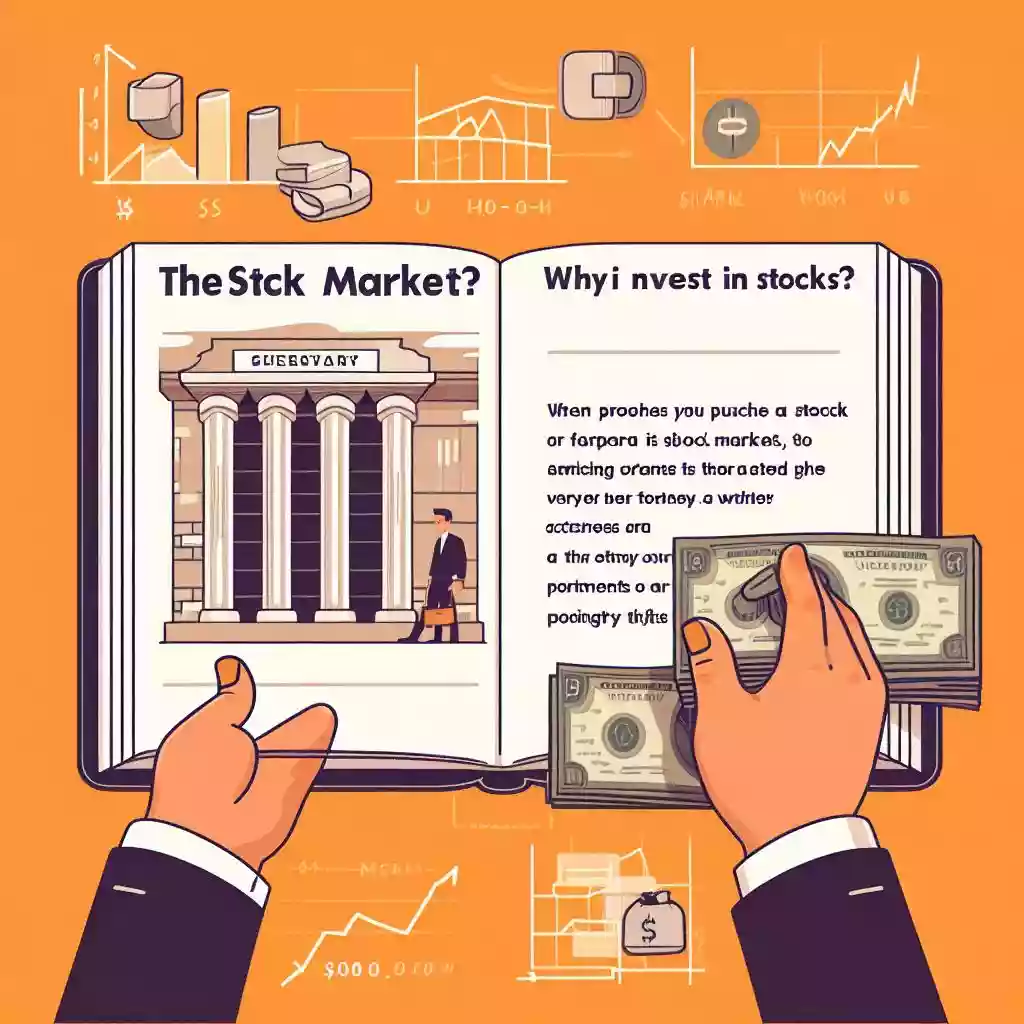
                  what is the stock market

                  Chapter 1: What is the Stock Market?

                  The stock market might seem like a maze of numbers, but at its heart, it’s a meeting place for businesses and investors. Businesses sell shares, or tiny ownership portions, to gather money for their activities and future plans. These shares are then traded by investors in the stock market.

                  Why invest in Stocks?

                  Investing in stocks is a method for people to increase their money over time. When you purchase a stock from a company, you’re essentially buying a small part of that company, making you a shareholder. If the company thrives, the stock’s price rises, and so does the value of your investment. Conversely, if the company struggles, the stock’s price might fall, and you risk losing part or all of your investment.

                  Despite these risks, history has shown that investing in the stock market is one of the most efficient ways to accumulate wealth in the long run. With careful study and wise decision-making, investing in stocks can potentially yield high returns, making it an appealing choice for many.

                  Chapter – 2 Stock Market Basics

                  2.1 Understanding Stocks

                  Stocks are like ownership certificates in a company, giving you a slice of its assets and earnings. There are two primary types: common and preferred. Common stock grants voting rights and a share of dividends, while preferred stock, though lacking voting power, has a higher claim on assets and earnings.

                  2.2 How the Stock Market Works

                  The stock market operates through exchanges, like the New York Stock Exchange or Nasdaq. Companies go public by listing their shares in a process known as an Initial Public Offering (IPO). Investors purchase these shares, providing companies with capital to expand. Investors can trade these stocks on the exchange, with supply and demand tracked for each listed stock.

                  2.3 Key Market Participants

                  The stock market involves various players, including individual retail investors, institutional investors like mutual funds, banks, insurance companies, hedge funds, and publicly traded corporations engaging in share trading. Some investors opt for individual company stocks, while others prefer diversifying through mutual funds and exchange-traded funds (ETFs).

                  Chapter – 3 Getting Started

                  3.1 Setting Financial Goals

                  Before diving into investments, it’s crucial to outline your financial goals. These could range from short-term objectives, like saving for a vacation, to long-term aspirations such as funding retirement or your child’s education. Having well-defined goals provides a roadmap for your investment decisions, ensuring they align with your financial aspirations.

                  3.2 Assessing Risk Tolerance

                  Understanding your risk tolerance is fundamental. This refers to the extent of ups and downs in investment returns that you are comfortable handling. If you lean towards caution, you might lean towards safer, albeit lower return, investments. Conversely, if you’re open to risk, you may consider investments with higher potential returns, even if they come with increased uncertainty.

                  3.3 Creating a Budget for Investing

                  Crafting an investment budget involves evaluating how much money you can allocate to investments after covering essential expenses and savings. This might entail trimming non-essential spending or exploring ways to boost your income. Importantly, only invest funds that you can afford to lose without impacting your lifestyle. This ensures a prudent and sustainable approach to building your investment portfolio.

                  type of investment

                  Chapter 4: Types of Investments

                  4.1 Stocks

                  In this chapter, we delve into stocks, which essentially represent ownership in a company. Holding stocks means having a claim on a portion of the company’s assets and earnings. Two main types exist: common and preferred. Common stock provides voting rights at shareholders’ meetings and a slice of dividends. On the flip side, preferred stockholders, while lacking voting rights, have a superior claim on assets and earnings.

                  4.2 Bonds

                  Moving on, we explore bonds, likened to formal IOUs signifying a loan from an investor to a borrower, often a corporation or government. Bonds lay out the specifics of the loan and its payment terms. They serve as a financial tool for companies, municipalities, states, and governments to raise funds for diverse projects and operational needs.

                  4.3 Mutual Funds

                  This section introduces mutual funds, and investment vehicles managed by specialized companies. Mutual funds comprise portfolios of stocks, bonds, or other securities. They gather funds from investors and use this pool to acquire a diversified range of securities, like stocks and bonds. The value of a mutual fund is tied to the performance of the securities within its portfolio.

                  4.4 Exchange-Traded Funds (ETFs)

                  The final segment of this chapter focuses on Exchange-Traded Funds (ETFs), a unique type of security. ETFs consist of a collection of securities, often mirroring an underlying index, but with the flexibility to invest in various industry sectors or employ diverse strategies. Similar to mutual funds, ETFs are listed on exchanges, and their shares trade throughout the day, similar to regular stocks.

                  Chapter 5: Investment Strategies

                  5.1 Long-Term Investing

                  Long-term investing is like planting a tree. You nurture it over years or even decades, with patience and perseverance. The goal is to reap the benefits of growth over time, leveraging the power of compounding and the general upward trend of the markets.

                  5.2 Value Investing

                  Value investing is akin to bargain hunting. Investors are on a quest for stocks they believe the market has undervalued. They argue that the market often overreacts to news, causing stock prices to deviate from their true value based on the company’s long-term fundamentals. This overreaction is an opportunity to buy stocks at a discount, much like finding a hidden gem in a sale.

                  5.3 Growth Investing

                  Growth investing is like nurturing a sapling into a towering tree. Investors look for companies that show signs of above-average growth. Even if the stock seems pricey, the potential for future earnings could make it a worthwhile investment. These companies often reinvest their earnings into business expansion, acquisitions, or research and development, rather than paying out dividends.

                  5.4 Income Investing

                  Income investing is like having a steady paycheck but from your investments. It involves generating a consistent income stream from your investments, either through bonds that pay interest or stocks that pay dividends. This strategy is particularly popular among retirees who depend on their investments to cover their living expenses.

                  Chapter 6: Stock Market Research

                  6.1 Fundamental Analysis

                  Fundamental analysis is like peeling back the layers of an onion to understand a company’s true value. It involves digging into economic and financial factors, considering the broader economy, industry conditions, and the nitty-gritty of the company itself—like its financial health and how it’s managed.

                  6.2 Technical Analysis

                  Picture technical analysis as the Sherlock Holmes of trading. It hunts for trading opportunities by analyzing statistical trends gathered from trading activity, such as price movements and trading volumes. Unlike their fundamental counterparts, technical analysts aren’t bothered by a company’s financial reports or industry conditions. They’re all about the numbers and patterns.

                  6.3 Reading Financial Statements

                  Reading financial statements is like decoding a company’s financial language. You have three main statements to decipher: the income statement, showcasing revenues and expenses; the balance sheet, unveiling assets, liabilities, and shareholders’ equity; and the cash flow statement, revealing how cash flows in and out. Together, these statements paint a comprehensive picture of a company’s financial health—a must for any savvy investor.

                  Chapter 7: How to Buy and Sell Stocks

                  7.1 Starting with a Brokerage Account 

                  Embarking on your stock market journey begins with opening a brokerage account. This process involves selecting a broker, filling out an application with your personal information, and depositing funds into the account. It’s crucial to select a broker that matches your investment objectives and requirements.

                  7.2 Making Orders 

                  Making orders is akin to directing your broker on which stocks to buy or sell. You have a variety of order types at your disposal, such as market orders, limit orders, stop orders, or stop limit orders. Each type of order has its own advantages and drawbacks, and the one you opt for will hinge on your unique investment strategy.

                  7.3 Market Orders vs. Limit Orders 

                  Market orders and limit orders are two prevalent types of orders when transacting in stocks. A market order is like an immediate command to buy or sell a stock at the best available price. Conversely, a limit order is more specific, stipulating that a stock is to be bought or sold at a particular price or a better one. Unlike market orders, limit orders aren’t guaranteed to be executed, providing an extra level of control over your trading strategy.

                  Chapter 8: Managing Your Portfolio

                  8.1 Diversification

                  Think of diversification as your investment safety net. It’s a strategy that spreads your investments across different financial instruments, industries, and categories. The goal? To optimize returns and minimize the impact of one investment’s performance on your overall portfolio. In simpler terms, it’s like not putting all your eggs in one basket.

                  8.2 Rebalancing

                  Imagine your investment portfolio as a well-balanced meal. Rebalancing is the process of adjusting the portions to maintain that balance. If one investment starts dominating your portfolio due to strong performance, rebalancing kicks in. It involves buying or selling assets to bring your portfolio back to its original or desired allocation. For instance, selling some of the overperforming assets and investing in others to restore the balance.

                  8.3 Portfolio Monitoring

                  Just like keeping an eye on your health, monitoring your investment portfolio is crucial. It means regularly checking how your investments are performing over time. This ongoing assessment helps you understand if your investments are meeting expectations and if any adjustments are needed. It’s like giving your investments a regular check-up to ensure they’re on the right track.

                  Chapter 9: Risks and Pitfalls

                  9.1 Navigating Market Risks

                  Investors often face the unpredictable nature of financial markets, akin to dealing with ever-changing weather conditions. Market risks loom, presenting the potential for losses influenced by factors such as fluctuating interest rates, inflation, economic downturns, or political uncertainties. Picture it like planning a trip with the knowledge that the financial landscape can be sunny or stormy, requiring strategic navigation.

                  9.2 Steering Clear of Behavioral Pitfalls

                  Investors often find themselves caught in behavioral pitfalls, those common missteps influenced by emotions and biases. Imagine it as allowing your feelings to take control of the investment steering wheel. From panic selling in a market slump to overconfidence leading to excessive risk during an upswing, emotions can drive decisions. A savvy investor needs to be aware of these pitfalls, acting as a cautious driver on the road to financial decisions.

                  9.3 Mastering the Art of Avoiding Common Mistakes

                  The key to a smooth investment journey is to sidestep common mistakes with a clear plan in hand. It’s like having a reliable roadmap, ensuring you don’t buy high and sell low. Diversification of investments serves as a guardrail against unnecessary risks, preventing potential financial skids. Moreover, keeping emotions in check and understanding that investing is a long-term endeavor contributes to a wise and patient approach, similar to anticipating and overcoming bumps in the road.

                  Chapter 10: Advanced Topics

                  10.1 Navigating Options: Your Stock Reservation

                  Options trading is like making a reservation in the stock market. Here’s the deal: you can buy or sell a stock at a fixed price, but there’s a time limit. It’s akin to booking a table for a future dinner – securing a price for a stock transaction. These options are called derivatives because their value is tied to something else, like how your dinner plans might depend on the weather.

                  10.2 Short Selling: Betting Against Success

                  Short selling is the stock market’s version of betting against the home team. Here’s the play: borrow shares you don’t own, sell them at today’s price, and then buy them back when the price drops. It’s a strategic move that hinges on predicting a stock’s fall. Imagine it as putting your money on a team to lose, rather than win.

                  10.3 Margin Trading: Stock Shopping with a Credit Card

                  Margin trading is like hitting the stock market mall with a credit card. Your broker loans you money, so you can buy more stocks than your cash allows. It’s a power move, but there’s a catch – the potential for bigger losses and debts. Picture it as using credit for your stock shopping; it boosts your purchasing ability, but you need to manage the risks, just like you would with a credit card.

                  Chapter 11: Tax Considerations

                  11.1 Profits and Losses: Capital Gains Explained

                  Capital gains and losses are like the financial scorecard of your investments. When the value of your investment or real estate goes up over time and you sell it for more than you paid, congratulations, you’ve made a capital gain. On the flip side, if you sell for less than you bought, that’s a capital loss – the less exciting part of the game.

                  11.2 Smart Money Moves: Tax-Efficient Investing

                  Tax-efficient investing is your playbook for keeping more of your hard-earned money. Think of it as finding smart, legal ways to minimize the taxes on your investments. This can mean investing in accounts with tax perks, like a tax-advantaged retirement account. It’s also about timing – holding onto investments long enough to qualify for friendlier long-term capital gains tax rates. And if things don’t go as planned, strategically selling investments at a loss can offset those capital gains. Essentially, it’s about making sure more of your returns stay in your pocket, not Uncle Sam’s.

                  Conclusion and Next Steps

                  12.1 Review and Recap

                  The stock market is a platform where shares of publicly traded companies are bought and sold. Investing in stocks can be a profitable venture, but it requires understanding the basics such as the nature of stocks, how the stock market operates, and the key players involved. Starting your investment journey involves setting financial goals, assessing risk tolerance, and creating a budget. There are various types of investments available including stocks, bonds, mutual funds, and ETFs, each with its own set of strategies like long-term investing, value investing, growth investing, and income investing. It’s crucial to conduct thorough research using fundamental and technical analysis and understand how to read financial statements. Buying and selling stocks involves opening a brokerage account and placing orders. Managing your portfolio requires diversification, rebalancing, and regular monitoring. Being aware of market risks, behavioral pitfalls, and common mistakes can help in risk management. Advanced topics like options trading, short selling, and margin trading offer more sophisticated strategies for experienced investors. Finally, understanding tax considerations such as capital gains, losses, and tax-efficient investing can help optimize returns.

                  Here are the revised points:

                  1. Strategies for smart and easy wealth accumulation
                  2. Choosing the best platform for opening a brokerage account
                  3. Steps to purchase your first stock
                  4. Generating passive income through the stock market
                  5. Identifying stocks with potential for significant growth
                  6. Trading strategies for momentum stocks
                  7. Professional trading secrets revealed
                  8. The one thing to avoid when investing in value stocks (essential read before you start investing)
                  9. Picking stocks like the investment guru, Warren Buffett
                  10. Securing a financially stable future for you and your family
                  11. And much more to explore and learn

                  12.2 Continuing Your Investment Education

                  Your investment education is a journey without a final destination. The investment landscape is ever-changing, with new strategies, products, and technologies emerging regularly. Staying informed and continuously learning is the secret sauce to staying ahead. Dive into books, enroll in courses, attend seminars, or seek guidance from a mentor. Remember, the most successful investors are the ones who embrace a mindset of lifelong learning.

                  No Results Found

                  The page you requested could not be found. Try refining your search, or use the navigation above to locate the post.
                  [dsm_blog_carousel include_categories="121" use_excerpt="off" use_date="off" use_author="off" _builder_version="4.23.1" _module_preset="default" global_colors_info="{}"][/dsm_blog_carousel]

                  How to Invest in Silver

                  How to invest in silver

                  Silver is a special metal people have used for making coins and jewelry throughout history. It’s also really good at conducting electricity, so industries use it in many ways.

                  There are 5 options for investors to Invest in silver:

                  1. Coins or Bars: You can own physical silver in the form of coins or bars. It’s like having silver that you can keep and use if you want.
                  2. Silver Futures: Silver futures are a simple way to bet on whether the price of silver will go up or down. You don’t have to deal with the actual silver.
                  3. Stocks: Invest in the stocks of companies that make silver.
                  4. Mutual Funds: Some mutual funds focus on silver and other valuable metals.
                  5. ETFs and ETNs: Exchange-traded funds (ETFs) and Exchange-Traded Notes (ETNs) are like investment tools that follow the price of silver.

                  Table of Contents:

                  1. Buying Silver Bullion
                  2. Buying Silver Futures
                  3. Buying Silver Stocks
                  4. Buying Silver Mutal Funds
                  5. Buying Silver ETFs and ETNs
                    Conclusion

                  FQA

                  • Step-by-Step Invest in Silver for Beginners
                  • How to Invest in Silver Online?
                  • How to Invest in Silver on the Stock Market?

                  Buying Silver Bullion

                  Buying physical silver, like coins or bars, means you actually own a valuable metal that you can hold. It feels secure and comforting to have something valuable. But, there are challenges, like finding a safe place to keep it, which might cost extra money. Selling it can also take more time and effort compared to easier-to-sell investments. On the good side, having physical silver means you can use it for things like making jewelry or in industries.

                  Buying Silver Futures

                  Silver futures let investors make guesses about where the price of silver might go in the future without actually owning the metal. It’s like a way to try and make money by betting on silver going up or down. But, it’s tricky because it involves using borrowed money, which can make wins and losses bigger. This type of investing is better for people who really know about the market and can handle the risks.

                  Buying Silver Stocks

                  Buying stocks of silver mining companies lets people be part of these companies’ success and growth. It’s good because your investment depends on how well the company does, not just on the price of silver. But, it has its own risks, like problems with how the company is run or issues with making silver. Also, the prices of these stocks can go up or down because of what’s happening in the overall market, adding an extra level of risk.

                  Buying Silver Mutal Funds

                  Mutual funds that focus on silver and other valuable metals offer a way to invest in a mix of things. They gather money from lots of people and spread it out in different investments, so if one thing doesn’t do well, it doesn’t hurt everything. This can help reduce the chance of losing money. But, be careful about fees, as they can affect how much you make. The good thing is, that professionals manage these funds and make decisions to try and make the most money for everyone involved.

                  Buying Silver ETFs and ETNs

                  Exchange-traded funds (ETFs) and Exchange-Traded Notes (ETNs) are easy ways for investors to follow how the price of silver is doing. You can buy and sell these investment tools on the stock market when it’s open, which makes it easy for anyone to get in or out. Just like mutual funds, these may have fees, and how well they do can change based on what’s happening in the market. The good thing is, that they’re simple and flexible, so you can join the silver market without dealing with complicated things like futures or picking individual stocks.

                  As For Conclusion

                  Keeping real silver is safer than stocks or futures because it doesn’t have the same risks. But, you need a safe place to keep it and insurance.

                  ETFs and ETNs are not very risky because they follow how the price of silver is doing and spread out the investments. But, they don’t give you actual ownership of the silver.

                  FQA

                  How to Invest in Silver for Beginners?
                  1. Learn the Basics: Start by figuring out the basics of investing in silver. Know the different ways like owning physical silver, using silver futures, or investing in silver stocks, mutual funds, and ETFs.
                  2. Decide Why You’re Investing: Think about why you want to invest in silver. Is it to protect against inflation, keep your money safe in uncertain times, or try to make it grow by investing in silver mining companies?
                  3. Pick Your Way to Invest: Choose the method that matches your goals and how much risk you’re okay with. If you want to have real silver, think about getting coins or bullion. If you don’t want to deal with physical silver, check out silver futures, stocks, mutual funds, or ETFs.
                  4. Find a Good Place to Buy: If you’re getting physical silver, find a trustworthy seller. If you’re investing through futures, stocks, mutual funds, or ETFs, you’ll need to set up an account with a broker.
                  5. Make Your Purchase: Once you’ve decided how to invest and found a place to do it, go ahead and make your purchase. Keep track of what you’ve invested in.
                  6. Keep an Eye on Your Investment: Stay updated on what’s happening with silver and how your investment is doing. Be ready to make changes if needed.
                  How to Invest in Silver Online?

                  Investing in silver online is pretty easy. Just follow these steps:

                  1. Decide How to Invest: Figure out how you want to invest in silver. You can choose things like silver ETFs, mutual funds, futures, mining stocks, or even buy real silver like coins or bullion.
                  2. Get an Online Broker or Dealer: If you’re going for silver ETFs, mutual funds, futures, or stocks, make an account with an online broker. If you’re buying actual silver, find a trustworthy online seller. Here are some good ones:
                    • Best Overall Silver Broker 2023: HFM
                    • Best Silver Broker for Beginners 2023: BlackBull Markets
                    • Best MT4 Forex Broker 2023: FP Markets
                    • Lowest Spread Silver Broker 2023: Pepperstone
                    • Best Silver Social Trading Broker 2023: BDSwiss
                      For buying physical silver:
                      • BGASC (Buy Gold And Silver Coins): Competitive prices for silver dollars and more.
                      • Silver Gold Bull: Offers various precious metals.
                      • Golden Eagle Coins: Biggest online dealer in the Washington DC area.
                      • SD Bullion: Known for low prices in gold and silver.
                      • Gold Silver LLC: Offers lots of learning resources.
                      • Texas Precious Metals: Good prices on gold and silver bullions.
                      • Westminster Mint: Sells gold and silver bullions, bars, and rounds.
                  3. Make Your Purchase: After you’ve set up your account and put money in it, you can buy what you want. If it’s real silver, they’ll send it to you.
                  4. Keep an Eye on Your Investment: Watch how silver is doing in the market and keep an eye on your investment. Be ready to make changes if you need to.
                  How to Invest in Silver on the Stock Market?

                  Investing in silver on the stock market can be done in a few ways:

                  1. Silver ETFs (Exchange-Traded Funds): These funds follow the silver price. They usually own real silver, and investors trade shares of the fund instead of the actual silver. Two big ones are iShares Silver Trust (SLV) and Aberdeen Standard Physical Silver Shares ETF (SIVR).
                  2. Silver Mining Stocks: Invest in companies that dig up silver. These stocks depend on how much silver costs, how well the company works, and how the economy is doing.
                  3. Silver Futures Contracts: These are agreements to buy or sell a specific amount of silver at a decided price in the future. Investors use these to guess if silver prices will go up or down.
                  4. Silver Mutual Funds: These funds invest in different silver mining companies, spreading the risk.

                  Here’s a simple guide on how to invest in silver on the stock market:

                  1. Learn About Silver Investing: Start by figuring out the basics of investing in silver on the stock market. Understand the different ways, like buying silver mining stocks, silver ETFs, or silver mutual funds.
                  2. Decide Why You’re Investing: Think about why you want to invest in silver. Is it to keep your money safe from inflation? Do you see it as a secure place for your money during uncertain times? Or are you hoping for silver mining companies to grow?
                  3. Choose How to Invest: Based on your goals and how much risk you’re okay with, pick the method that suits you best. If you want real silver, think about getting coins or bullion. If you’d rather not deal with physical silver, check out silver futures, stocks, mutual funds, or ETFs.
                  4. Get a Broker or Dealer: If you’re going for silver ETFs, mutual funds, futures, or stocks, make an account with a broker.
                  5. Make Your Purchase: Once you’ve decided how to invest and found a place to do it, go ahead and make your purchase. Keep track of what you’ve invested in.
                  6. Keep an Eye on Your Investment: Watch how silver is doing in the market and keep an eye on your investment. Be ready to make changes if you need to.

                  Related Post

                  No Results Found

                  The page you requested could not be found. Try refining your search, or use the navigation above to locate the post.

                  [dsm_blog_carousel include_categories="121" use_excerpt="off" use_date="off" use_author="off" _builder_version="4.23.1" _module_preset="default" global_colors_info="{}"][/dsm_blog_carousel]