

Amar Neupane
Author
Amar Neupane is a Nepali youth novelist and personality in Nepalese literature. His first novel Paniko Gham was published in 2066 BS and won the Padhyashree Sahitya Samman award. His collection of children’s stories Kalilo Man won the Parijat Balsahitya Pandulipi Purashkar award.
Seto Dharti Book Review: Summary, Characters, Themes and Ending Explained
Amar Neupane’s Madan Puraskar–winning novel follows Tara, married at seven and widowed at nine, through seventy-eight years of a life lived in white. Here is the full summary, a guide to every major character, what the title really means, an honest review, and a ready-to-use review essay in English.
By Wilson ShresthaUpdated 11 September 202615 min read
Seto Dharti at a glance
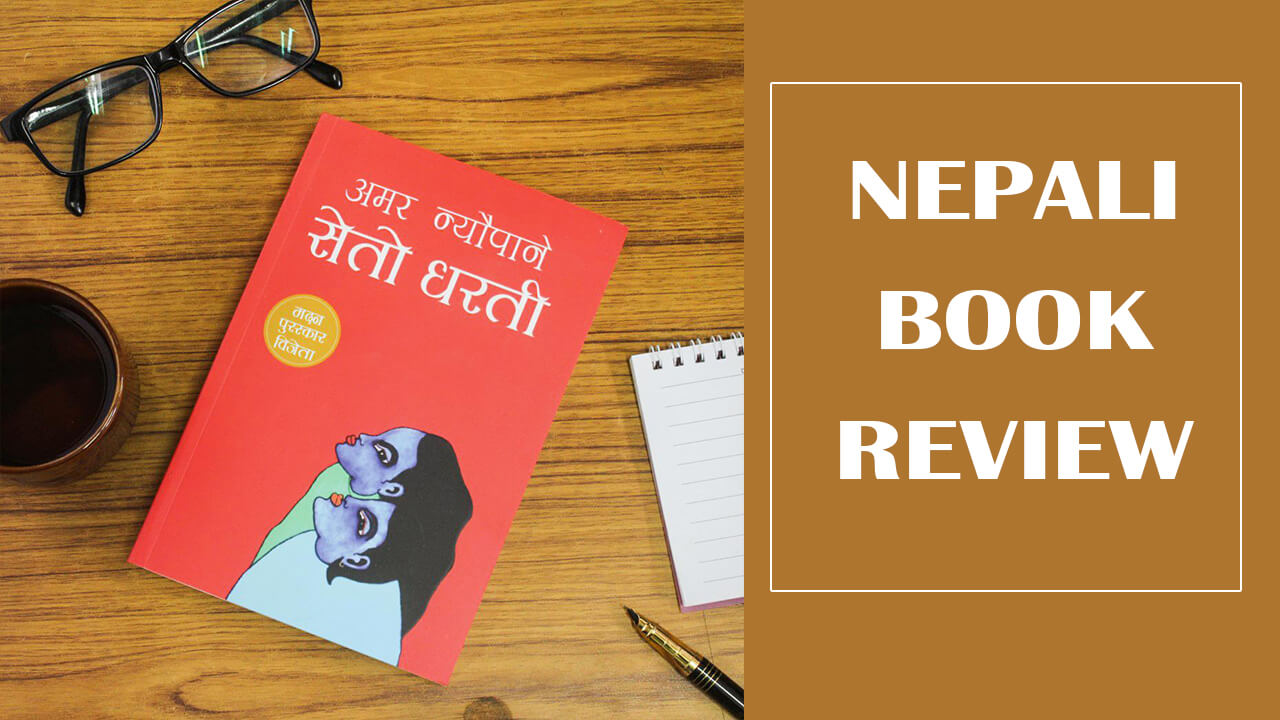
Seto Dharti (सेतो धरती, “White Earth”) is a 2012 Nepali novel by Amar Neupane. It is narrated by Tara, a Brahmin girl from Kaski who is married at seven and widowed at nine, when her husband dies while studying in Banaras. Stripped of colour, love and choice, she spends her youth in her father’s house and the rest of her life in a small hut at Devghat. It is one of the most honest portraits of child marriage and widowhood in Nepali literature.
- Author
- Amar Neupane
- Original title
- सेतो धरती (Seto Dharti), meaning “White Earth”
- Publisher
- FinePrint, Kathmandu
- First published
- March 2012 (2068 BS)
- Length
- About 373 pages, told in 68 short chapters
- Genre
- Social and historical fiction, written as a first-person life story
- Setting
- Hanspur, Kaski, and Devghat, from 1990 BS to 2068 BS (roughly 1933 to 2011)
- Awards
- Madan Puraskar (2012); INLS Best Book Award, Novel (2013)
Essential Nepali reading with a narrator you won’t forget. The middle slows down and the ending divides readers, but the book earns its reputation.
Contents
Seto Dharti book summary (full plot)
This summary covers the whole story. The ending is tucked behind a toggle, so you can stop before it if you haven’t finished the book.
A game of weddings, then a real one
Tara is born in Hanspur, Kaski, in 1990 BS, the year of the great earthquake. She is a curious, playful girl, and when the village children play at weddings, her friend Govinda is always the groom. Govinda is also the boy who first teaches her the letters of the alphabet, and the fondness she feels for him quietly stays with her for the rest of her life.
When Tara is seven, her family tells her there is a puja at home. She is dressed up and seated through a long ritual she does not understand, falls asleep in the middle of it, and only later realises that she has been married to a boy she has never met. She is taken to her in-laws’ house crying for her mother, and her mother-in-law’s rules begin to shape her small life.
Widowed at nine
Her husband leaves for Banaras (Kashi) to study and dies there. Tara is nine years old and can barely picture his face. What follows is the part of the book most readers never forget: her bangles are broken, her jewellery and bright clothes are taken away, her head is shaved, and she is wrapped in the white cloth she is expected to wear for the rest of her life. Custom keeps her with her in-laws after the death, where what she eats and how she looks are controlled so that a young widow never appears attractive.
Growing up in white
Back in her father’s house, her mother tells her to live like a son of the family and to be as patient as the earth. Tara tries. She watches her friends grow into brides and mothers while she stays fixed in white. Her friend Yamuna is happily married, and when Yamuna describes her love for her husband, Tara listens hungrily. Those stories give her a borrowed idea of intimacy and a longing she has been told she can never have.
Her childhood friend Pavitra is also a child widow, married to a man older than her own father and widowed at eleven. Where Tara obeys, Pavitra resists, and one day she leaves for Banaras with a visiting pandit. Govinda, too, goes to Banaras to study with Tara’s elder brother, and the village slowly empties of the people she loves.
Losing her mother
Tara’s mother falls ill suddenly and dies the next day. Still only a girl herself, Tara becomes a mother to her two younger brothers, the youngest just nine months old. Some of the novel’s most tender pages come from this stretch, as a child widow who will never be allowed to have children raises someone else’s.
A stepmother, and the road to Devghat
Less than three years after her mother’s death, Tara’s 44-year-old father marries an 11-year-old girl. The same custom that ruined Tara’s childhood now repeats itself inside her own home. The house turns hostile, her father sides with his new wife, and the brother she raised builds a life of his own. At thirty-three, with no place left for her, Tara slips away from home and joins pilgrims walking south to Devghat (sometimes written Dev Ghat), the sacred meeting point of the Kali Gandaki and Trishuli rivers, where widows traditionally went to spend their final years in devotion.
Life at Devghat
Tara builds a small hut, helps with religious work, and gives her life to God, or tries to. The swami of the ashram reminds her of Govinda, and a quiet attraction grows between them that neither can fully admit. In her dreams she takes many husbands and calls herself a “dream Draupadi”: a woman untouched in body but not in mind.
Years later Yamuna also arrives at Devghat, widowed after a full married life. Tara notices something that unsettles her. Yamuna, who lived and loved freely, can let go of desire easily. Tara, who was never allowed to live, cannot.
Pavitra returns as Gangeshwari
One day a wealthy and respected spiritual teacher named Gangeshwari arrives at Devghat as a major donor. One night she visits Tara’s hut and reveals who she really is: Pavitra. In Banaras, she first sang bhajans in an ashram, then lived for about fifteen years as a courtesan and built a fortune. At thirty-five she left that life, raised a daughter alone who became a university professor, turned to spiritual study, and came home to Nepal under a new name.
Tara is shocked and goes to tell the swami that Pavitra has “polluted” the holy ground, but when she stands in front of him, she cannot say it. Instead, she hears herself saying that Pavitra has already attained moksha. Slowly she understands why.
Pavitra lived through her desires and came out of them clean. Tara buried hers and carried them all her life. One was a courtesan in body but pure in mind; the other stayed pure in body but never in mind. The whole novel turns on that reversal.
How does Seto Dharti end?
Near the end of her life, Tara finally meets Govinda again, the boy she carried in her heart for seven decades. It is not the reunion she dreamed of. Govinda took a government job in the city, married twice, and lived a full family life, yet he is now old, sick and lonely. Tara finds him far less than the man she had imagined, and she sees that he is, if anything, unhappier than she is. When he asks whether she lives alone in her hut, she answers that God is with her.
The book closes with Tara at seventy-eight, looking back on a life spent without colour in the name of God, and asking herself why she agreed to live it that way.
A common mistake: some summaries online say Tara “finally finds happiness” with Govinda. The novel does not say that. The meeting is quiet, disillusioning and deliberately open-ended, which is exactly why readers still argue about it.
Timeline of Tara’s life
The novel spans almost eight decades. Notice where the colour leaves her story.
- 1990 BSBorn in Hanspur, Kaski
Arrives in the year of the great earthquake, into a traditional Brahmin family.
- Age 7Married to a stranger
Told it is a puja, she falls asleep during her own wedding.
- Age 9Widowed
Her husband dies while studying in Banaras. Bangles broken, head shaved, white for life.
- GirlhoodHer mother dies
Tara raises her baby brother and runs the household.
- YouthHer father remarries a child
At 44 he marries an 11-year-old, and home becomes hostile.
- Age 33Leaves for Devghat
Slips away from home to live as a devotee by the river.
- Later yearsYamuna and Pavitra return
Two old friends, two very different lives, one confession that changes how Tara sees her own.
- Age 78 (2068 BS)Govinda, and the end of her story
The reunion she waited a lifetime for, and a final look back.
The red thread ends at age nine. Everything after is lived in white.
Main characters in Seto Dharti
The cast is small, and each character shows a different way a woman could live, or fail to live, inside the same rules.
- Taraतारा
- The narrator. Obedient, observant and painfully honest, she follows every rule society gives her and pays for each one. Her voice, moving from a child’s confusion to an old woman’s clarity, is the heart of the book.
- Pavitra / Gangeshwariपवित्रा
- Tara’s childhood friend and mirror image. Widowed at eleven, she breaks every rule, lives many lives in Banaras, and returns as a revered teacher. Her name literally means “pure”, an irony the novel uses deliberately.
- Yamunaयमुना
- A happily married friend whose stories of love give Tara a borrowed window into intimacy. When she later arrives at Devghat as a widow, her calm shows Tara what a fulfilled life makes possible.
- Govindaगोविन्द
- Tara’s childhood playmate, the groom in their wedding games and the boy who taught her the alphabet. He is her lifelong, unspoken love, and the gap between the Govinda she imagined and the man she meets is the book’s last lesson.
- The swamiस्वामीजी
- The spiritual guide at the Devghat ashram. Through him the novel questions whether renunciation is possible for someone who was never allowed to have anything to renounce.
- Tara’s motherआमा
- Loving but bound by custom, she teaches Tara to endure like the earth, the lesson that gives the novel its title.
- Father and stepmotherबुबा र सौतेनी आमा
- Her father’s marriage to an 11-year-old shows the same system from the other side, and pushes Tara out of her home for good.
What does “Seto Dharti” mean?
Seto means white and dharti means earth. White is the colour widows were made to wear once their red sindoor and bangles were taken away. The earth stands for silent endurance: after Tara is widowed, her mother tells her to be as patient as the earth, which bears whatever is done to it without complaint.
So “white earth” describes what a widow was expected to become: colourless, and endlessly patient. The novel spends nearly four hundred pages asking whether that patience was a virtue, or something that was taken from her.
Major themes
Child marriage as a family decision
Tara never chooses anything that shapes her life. Her marriage, her widowhood and even her clothes are decided by adults who believe they are doing the right thing. Neupane keeps the villains ordinary, which makes the system more frightening than any single cruel person.
Widowhood and the politics of colour
Colour is how society marks Tara. Red belongs to married women; white belongs to her. The book is full of small moments where she envies a flower, a festival or a friend simply for being allowed to look alive.
Desire, the body and the mind
Seto Dharti is unusually frank about a widow’s inner life. Tara’s longing never disappears just because it is forbidden, and the novel argues that suppressing desire does not make a person pure. That idea is what makes the Tara and Pavitra contrast so powerful.
Religion as refuge, and as another cage
Devghat gives Tara freedom from her family, but not from herself. Faith offers her peace and purpose, yet the book also shows how religious rules were used to justify the life she was forced into.
Two friends, two paths
Tara and Pavitra start in the same place and make opposite choices. The novel refuses to punish the rule-breaker or reward the rule-follower, and that refusal is its boldest move.
Our Seto Dharti book review
What works
The voice. Tara tells her own story in plain, local Nepali, full of village speech and short sentences. The 68 short chapters make a long book easy to read in small sittings, and her voice grows naturally from a child’s confusion to an old woman’s hard-won wisdom.
Emotional honesty. Many novels about widows stop at suffering. This one goes further and lets Tara be curious, jealous, angry and full of desire. That is what makes her feel real rather than symbolic.
History through one life. The story runs from the 1930s to 2011, and you feel the country change without the book ever turning into a history lesson. The changes reach Tara slowly, the way they reached most women in rural Nepal.
What doesn’t
A slow middle. After the gripping early chapters, the years at home and the first years at Devghat can feel repetitive.
Moments of melodrama. A few scenes, such as an orphaned baby being nursed by a dog, lean closer to sentiment than realism. Critics like Dr. Bishnu Prasad Paudel have pointed this out in their analyses of the novel.
Ideas ahead of the characters. Pavitra’s transformation and Tara’s late, radical conclusions sometimes feel more like the author’s argument than a natural change in the characters. The Govinda ending is a strong idea that deserved a few more pages.
Verdict
Seto Dharti deserves its place among the most important Nepali novels of the century so far. It is not a comfortable read, and it is not flawless, but few books make a single life feel this large. Overall: 4.5 out of 5.
Seto Dharti book review essay in English
Need a review for school or college? This 400-word essay is written in simple English and follows the usual structure: introduction, summary, analysis and conclusion. Please use it as a model and add your own opinions.
Seto Dharti by Amar Neupane: A Book Review
Seto Dharti (White Earth), written by Amar Neupane and published by FinePrint in 2012, is one of the most celebrated Nepali novels of recent times. It won the Madan Puraskar, the highest literary award in Nepal, for its powerful picture of child marriage and child widowhood in traditional Nepali society.
The novel is narrated by Tara, a Brahmin girl from Kaski. At the age of seven, she is married to a boy she has never met, and at nine she becomes a widow when her husband dies while studying in Banaras. From that day, her bangles are broken, her head is shaved and her colourful clothes are replaced with white. Although she hardly knew her husband, society expects her to spend her whole life in his memory.
Tara grows up in her father’s house and raises her younger brothers after her mother’s sudden death. When her father marries a very young girl, her home becomes unbearable, and at the age of thirty-three she leaves for Devghat, a holy place for Hindus, where she spends the rest of her life. Through her friends, the novel shows the different paths women could take. Yamuna enjoys a loving marriage, while Pavitra, another child widow, breaks every rule, runs away to Banaras and later returns as a respected spiritual teacher. Tara follows every rule, yet she is the one who feels empty and unfulfilled.
The greatest strength of the book is its honest first-person voice. Neupane uses simple, everyday language and short chapters, which make the story easy to read and deeply emotional. He also writes openly about Tara’s inner feelings and desires, showing that a widow’s emotions do not disappear simply because society forbids them. The title is also symbolic. White is the colour of widowhood, and the earth stands for the silent patience that women were expected to show.
The novel is not perfect. The middle part feels slow and repetitive, and some events seem more dramatic than realistic. The ending, in which Tara finally meets her childhood friend Govinda, is quiet and leaves many questions unanswered.
Overall, Seto Dharti is a moving and important novel. It shows how cruel traditions can take away a person’s entire life, and it reminds us why the fight against child marriage still matters in Nepal today. I would recommend it to every student and reader who wants to understand the history of Nepali women.
Seto Dharti on stage (2026)
In April 2026 the novel was adapted for the stage at Kantipur Theatre in Gairidhara, Kathmandu, directed by Sundar Dhital with Benisha Hamal as Tara. According to The Kathmandu Post, the play set Tara’s childhood home and her Devghat hut side by side on stage, letting the older Tara step into her own memories. The director also said his biggest regret was not being able to fit Pavitra into the ninety-minute production, which shows how much of the novel lives in that friendship.
Who should read Seto Dharti?
Read it if you want to understand how Nepali women lived through most of the twentieth century, if you are studying Nepali literature, or if you simply want a novel that stays with you for weeks. It is emotionally heavy, so give yourself time with it. If it moves you, these make good next reads:
- Jhola by Krishna Dharabasi. A short, searing story about the practice of sati, later made into a film.
- Radha by Krishna Dharabasi. A Madan Puraskar winner that retells a familiar legend through a woman’s eyes.
- Karnali Blues by Buddhisagar. A father-and-son story from western Nepal, equally rooted in place and memory.
- Palpasa Café by Narayan Wagle. Love and loss set against Nepal’s civil war.
Frequently asked questions
Who is the author of Seto Dharti?
Seto Dharti was written by Amar Neupane, a novelist and teacher from Chitwan. It was published by FinePrint in March 2012.
What does Seto Dharti mean in English?
It means “White Earth”. White is the colour of widowhood, and the earth represents the silent endurance widows were expected to show.
Is Seto Dharti a true story?
It is a work of fiction. Amar Neupane has said it was inspired by the life of his grandmother, who was married at nine and widowed at eleven.
At what age was Tara married and widowed?
Tara was married at seven and became a widow at nine.
Where did Tara’s husband die?
He died in Banaras (Varanasi, also called Kashi) in India, where he had gone to study.
Why did Tara go to Devghat?
After her mother’s death, her father married an 11-year-old girl and life at home became hostile. With nowhere she belonged, Tara left at the age of thirty-three to live as a devotee at Devghat, where she stayed for the rest of her life.
Who is Gangeshwari in Seto Dharti?
Gangeshwari is Pavitra, Tara’s childhood friend, living under a new name. She arrives at Devghat as a wealthy spiritual teacher and reveals her past to Tara.
Does Tara find happiness with Govinda at the end?
No. Tara meets Govinda near the end of her life, but he is old, sick and lonely, and far from the man she imagined. The ending is quiet and open to interpretation rather than a happy reunion.
How many pages does Seto Dharti have?
The original FinePrint edition runs to about 373 pages, divided into 68 short chapters.
What awards did Seto Dharti win?
It won the Madan Puraskar in 2012 and the INLS Best Book Award (Novel) in 2013.
Sources
- Amar Neupane, Seto Dharti, FinePrint, 2012.
- Dr. Bishnu Prasad Paudel, “‘सेतो धरती’ उपन्यासको विषय वस्तु र त्यसमा अभिव्यक्त जीवन दृष्टि”, Samakalin Sahitya, 2013.
- “Amar Neupane on portraying the practices of our society through stories”, The Annapurna Express.
- Jony Nepal, “‘Seto Dharti’: A heavy story, carefully staged”, The Kathmandu Post, 21 April 2026.
- “Seto Dharti”, Wikipedia.