
Best Time to Visit Pokhara (2026–27): Month-by-Month Weather, Festivals & What to Do
Updated October 2026 · Climate figures from 1991–2020 averages · All heights in feet
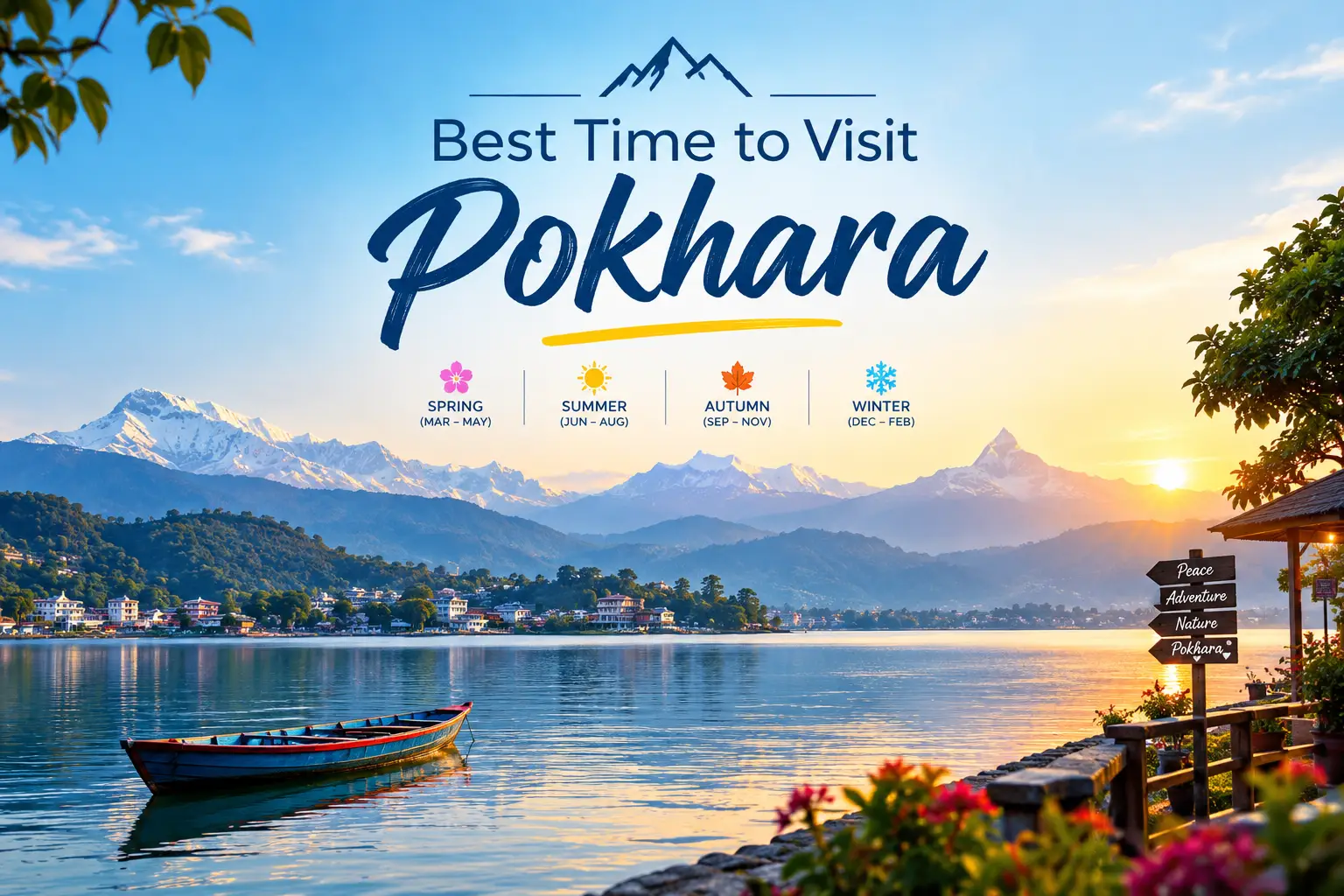
Lake and boat at sunrise in Pokhara Nepal
Ask five travel sites for the best time to visit Pokhara and you will get five different answers. One says autumn, another says November to March, a weather site says April. They are not all wrong – they are answering different questions. The month that gives you a crystal-clear Machhapuchhre at sunrise is not the month with the cheapest lakeside rooms, and neither is the month with the best rhododendrons on the Poon Hill trail.
This guide sorts that out. You get the short answer first, then the actual weather data month by month, the right window for each activity – paragliding, boating on Phewa Lake, the Annapurna treks – plus the 2026–27 festival dates, crowd and price patterns, and the local timing tricks that most guides skip.
Quick answer
The best time to visit Pokhara is mid-October to early December, when the monsoon has cleared, rain almost stops and the Annapurna range is sharpest. November is the single best month. The second-best window is March to April for warmer days and blooming rhododendrons. Avoid June to August if mountain views matter – that is peak monsoon.
In this guide
- Why every guide gives a different answer
- Pokhara month ratings at a glance
- Pokhara weather by month: the data
- Best time to visit Pokhara by season
- Month-by-month guide
- Best time for each activity
- Festivals and events 2026–27
- Crowds, prices and shoulder season
- Which month is right for you?
- What to pack by season
- FAQs
Why Every Guide Gives a Different “Best Time”
Pokhara sits at about 2,700 ft in a valley at the foot of the Annapurna massif. That position gives it two personalities. For most of the year it is mild, sunny and easy. But when the summer monsoon arrives, the mountains wring the moisture out of the clouds right over the city – which is why Pokhara is one of the wettest cities in Nepal, averaging around 152 inches (3,870 mm) of rain a year, according to Weather & Climate’s 1991–2020 averages.
So the “best” month depends on which of these you care about most:
- Mountain views: mid-October to January wins. The air is driest and clearest.
- Comfortable warmth: March and April. Warm days, cool nights, flowers on the hills – but more afternoon haze.
- Low prices and quiet: late January, February and the monsoon months.
- Trekking from Pokhara: October–November and March–April, because the high trails matter more than the town.
Weather-only sites rank winter highly because it is dry and mild in town, while trekking companies push autumn and spring because that is when their trails work. Both are right for their audience. The sections below let you pick for yours.
Pokhara Month Ratings at a Glance
We scored each month out of 10 for a typical first-time visitor, weighing mountain visibility, rain, temperature and crowds.
Very good
Good
Mixed
Monsoon
Our editorial rating, not an official index. A trekker would score January lower (cold, snow up high); a budget traveler would score July higher.
Pokhara Weather by Month: What the Data Shows
Two numbers explain almost everything about Pokhara’s seasons: how many days it rains, and how warm the afternoons get. Here is the rain first.
Average days with rain in Pokhara, by month
F
M
A
M
J
J
A
S
O
N
D
Source: weather2travel monthly averages. Note how September still has around 10 wet days – it is a monsoon month, not “autumn”.
The amounts are just as lopsided. July alone averages around 37 inches (943 mm) of rain, while December gets about half an inch (12 mm). In other words, one summer month can drop more rain on Pokhara than London sees in a year – and then the city goes almost completely dry for the winter.
| Month | Avg daytime high | Rainy days | Mountain views | Crowds |
|---|---|---|---|---|
| January | 68°F (20°C) | 2 | Excellent mornings | Low |
| February | 73°F (23°C) | 2 | Very good | Low–medium |
| March | 81°F (27°C) | 2 | Good, haze builds | High |
| April | 86°F (30°C) | 3 | Mornings only | High |
| May | 86°F (30°C) | 5 | Hazy, storms | Medium |
| June | 88°F (31°C) | 11 | Rare | Low |
| July | 86°F (30°C) | 16 | Very rare | Low (domestic & Indian visitors) |
| August | 88°F (31°C) | 15 | Very rare | Low |
| September | 86°F (30°C) | 10 | Improving late month | Rising |
| October | 82°F (28°C) | 3 | Excellent from mid-month | Peak |
| November | 77°F (25°C) | 1 | Best of the year | Peak |
| December | 70°F (21°C) | 1 | Excellent | Medium; busy at New Year |
Daytime highs from Weather & Climate (1991–2020 averages); nights range from about 45°F (7°C) in January to 72°F (22°C) in June. Different weather stations and datasets give slightly different figures, so treat these as typical, not guaranteed.
Local tip: the mountains have office hours
Even in the best months, Pokhara’s clearest views come early. On a typical November morning the Annapurnas and the fishtail peak of Machhapuchhre are razor-sharp from Lakeside at sunrise, and by early afternoon a soft layer of cloud often creeps up the foothills. In spring that happens even faster. If seeing the mountains is the point of your trip, plan Sarangkot or the Peace Pagoda for dawn, and keep afternoons for the lake, cafés and museums.
Best Time to Visit Pokhara by Season
| Season | Months | Weather | Best for | Downside |
|---|---|---|---|---|
| Autumn | Oct–Nov | Dry, clear, warm days | Views, paragliding, treks, festivals | Busiest, highest prices |
| Winter | Dec–Feb | Dry, sunny days, cold nights | Views, value, short treks | Chilly mornings, snow up high |
| Spring | Mar–May | Warm, hazier, storms by May | Rhododendrons, trekking, warmth | Afternoon haze hides peaks |
| Monsoon | Jun–Sep | Hot, humid, heavy rain | Green scenery, waterfalls, low prices | No views, flights and roads disrupted |
Autumn (October–November): the classic best time
Once the monsoon breaks, usually in the first half of October, Pokhara gets its most reliable weather of the year. Rainy days drop to about three in October and one in November, daytime temperatures sit in the high 70s to low 80s °F, and the Annapurna skyline is visible from almost anywhere in the city.
- Why go: the sharpest mountain views, the peak paragliding season, ideal trekking on Poon Hill and Annapurna Base Camp, and Dashain and Tihar celebrations.
- Watch out for: fully booked lakeside hotels and paragliding slots, packed buses around Dashain, and the occasional late-monsoon shower in early October.
Winter (December–February): the underrated season
Winter in Pokhara is far milder than most visitors expect. Afternoons reach around 68–73°F (20–23°C) and there are only one or two rainy days a month. Nights drop to the mid-40s °F, and early mornings by the lake can be misty, but snow in the city itself is extremely rare.
- Why go: crisp views, smooth air for paragliding, lower prices from January, and the Pokhara Street Festival at New Year.
- Watch out for: cold teahouses and snow on higher trails like Poon Hill (10,531 ft) and Annapurna Base Camp (13,550 ft), plus a short burst of domestic crowds over the New Year week.
Spring (March–May): warmth and rhododendrons
Spring is the second peak season. March and April are warm and mostly dry, and the hills above Pokhara turn red and pink with rhododendron, Nepal’s national flower. The catch is visibility: dust and pre-monsoon haze build through the season, so the mountains are often clear at dawn and gone by lunch.
- Why go: flowering trails on the Poon Hill and Annapurna Base Camp routes, warm lake days, Nepali New Year in mid-April.
- Watch out for: heat in late April and May, thunderstorms building from May, and hazier photos than in autumn.
Monsoon (June–September): green, wet and cheap
From June the monsoon takes over and Pokhara becomes the rainiest major city on a typical Nepal itinerary. Views disappear for days at a time, and rain can stop paragliding completely – in July, Nepal’s sky sports association told The Rising Nepal that heavy rain had halted flights and caused booking cancellations.
- Why go: lush green rice terraces, Davis Falls at full power, empty viewpoints, big hotel discounts, and easy access to rain-shadow Upper Mustang.
- Watch out for: landslides on the Kathmandu–Pokhara highway, leeches on lower trails, cancelled flights and humid nights.
Pokhara Month-by-Month Guide
Coldest month, but sunny. Superb dawn views and quiet hotels. Bring a down jacket for Sarangkot sunrise. High treks are cold and snowy.
Warming up, still dry and clear. A sweet spot for value before the spring rush. Good month for paragliding and Begnas Lake.
Spring peak begins. Rhododendrons start blooming on the hills, trekking season is in full swing, and views are good in the mornings.
Warmest dry month and peak rhododendron time. Nepali New Year around April 14 brings domestic crowds. Expect haze after mid-morning.
Hot and humid with pre-monsoon storms in the afternoons. Prices begin to drop. Mountain views are hit-and-miss.
Monsoon arrives, usually in mid-June. Rain mostly comes in heavy bursts, often at night or in the afternoon. Green and quiet.
The wettest month, with around 16 rainy days. Paragliding and ultralight flights often stop. Best for waterfalls and deep discounts.
Still heavy rain and the least sunshine of the year. Road travel needs buffer time for landslides.
Transition month. The first half is still monsoon; the last week can bring the first clear mornings. Good for early-bird deals.
Peak season. Clear skies most days from mid-month, Dashain kites over the lake, and busy trails. Book early.
The best month. Almost no rain, the clearest air of the year, comfortable days and Tihar lights. Ideal for photos.
Dry and clear, cooler nights, fewer trekkers. Lakeside fills up for the Street Festival from December 28.
Best Time for Each Activity in Pokhara
Most guides stop at seasons. But the best time to go paragliding is not the same as the best time to see Davis Falls. Use this calendar to match the month to what you actually want to do.
| Activity | Best | Good | Avoid |
|---|---|---|---|
| Paragliding from Sarangkot | Oct–Dec | Jan–Apr | Jun–Aug |
| Sunrise at Sarangkot or the Peace Pagoda | Mid-Oct–Jan | Feb–Mar | Jun–Sep |
| Boating on Phewa Lake | Oct–Apr | May, Sep (mornings) | Stormy monsoon afternoons |
| Ghorepani Poon Hill trek (10,531 ft) | Oct–Nov, Mar–Apr | Dec–Feb (cold) | Jun–Aug |
| Annapurna Base Camp trek (13,550 ft) | Oct–Nov, late Mar–Apr | Early Mar, Dec, May | Jun–Aug; take care Jan–Feb |
| Davis Falls & waterfalls | Jul–Sep | Oct | Dry season (a trickle) |
| Rafting near Pokhara | Oct–Nov, Mar–May | Dec–Feb (cold water) | Peak monsoon floods |
| Upper Mustang via Pokhara | May–Oct | Apr, Nov | Dec–Feb (very cold) |
| Photography | November | Oct, Dec–Feb | Jun–Aug for peaks |
Treks around Annapurna now require a licensed guide booked through a registered agency. Rules and permit fees are covered in our guide to traveling to Nepal.
Paragliding: why winter beats spring
Tandem flights launch from the Sarangkot ridge, at around 5,200 ft, and glide down toward Phewa Lake. Autumn and early winter give the calmest, clearest conditions, which is why pilots who have flown here for years tend to rate November and December highly. Spring flights are still good and the thermals can be stronger, but the view of the Himalaya behind you is often hazier. Book a morning slot in any season – that is when the mountains are most likely to be out.
Trekking from Pokhara: plan around the high trail, not the town
Pokhara is the gateway to the Annapurna region, so your trekking dates matter more than your lakeside days. October–November gives the most stable weather on the trail. Late March and April trade some visibility for rhododendron forests and warmer nights. On the Annapurna Base Camp route, the section above Deurali is exposed to avalanches after heavy snowfall, so winter trekkers should follow their guide’s advice and local warnings before heading up.
Pokhara Festivals and Events Calendar (2026–27)
Festivals can make a trip – or make it more expensive and crowded. Here are the dates that shape Pokhara’s calendar.
Dashain · Oct 11–25, 2026
Nepal’s biggest festival. The main tika day was October 21 in 2026. Kites fill the sky, families travel home, and buses and flights are packed.
Tihar · early November 2026
The festival of lights. Laxmi Puja falls on November 8, 2026, and Lakeside glows with oil lamps and marigolds.
Pokhara Street Festival · Dec 28 – Jan 1
Held every year along a roughly 1.9-mile stretch of Lakeside Road with food stalls, music and New Year celebrations. Hotels fill up fast.
Tamu Lhosar · around Dec 30
The Gurung New Year, celebrated widely in Pokhara with cultural dances and traditional dress.
Holi · February or March
The festival of colors draws big, lively crowds to Lakeside.
Nepali New Year · around April 14
A national holiday that brings a wave of domestic tourists to Pokhara.
2026 Dashain and Tihar dates from Calendarific. Lunar festival dates shift every year, so check the 2027 calendar once it is published.
The street festival has a real history behind it. It began in 1998 as the Lakeside Street Festival, and organisers told the Kathmandu Post that December had been a near-empty month for Pokhara’s restaurants before it started. To understand why Dashain empties offices and fills buses, read our explainer on what Dashain is and how it’s celebrated, or browse more in our Nepali culture and food section.
Crowds, Prices and the Shoulder-Season Sweet Spots
Pokhara has two kinds of crowds, and they peak at different times:
- International trekkers arrive in October–November and March–April. Trail lodges, paragliding companies and mid-range Lakeside hotels fill first.
- Domestic travelers surge during Dashain, Tihar, the New Year week and Nepali New Year. Buses, budget hotels and Lakeside restaurants feel this most.
- Indian tourists visit in larger numbers in the summer months, keeping parts of Lakeside lively even in the monsoon.
Sweet spot 1: late November to Christmas
Autumn weather without the autumn rush. Trekking crowds thin out after mid-November and the skies are still the year’s clearest. Avoid the December 28–January 1 festival week if you want quiet.
Sweet spot 2: February
Dry, clear and noticeably warmer than January, before the spring trekking season pushes rates up in March. Good for families and slow travel.
Budget play: late September
A gamble, but the monsoon often eases in the last week of September. You can lock in off-season rates and catch the first clear mornings before the October crowds.
Local tip: Dashain travel is a different sport
During the days just before Dashain tika, half of Kathmandu tries to leave the valley at once. Tourist buses to Pokhara sell out, and private car fares rise. If your trip overlaps Dashain, book your Kathmandu–Pokhara transport several days ahead, travel early in the morning, or take the 25-minute flight. The return rush comes a few days after tika, so leave a buffer before any international flight.
Which Month Is Right for You?
Go in November. You get everything Pokhara is famous for, reliably.
November to January, shooting at dawn. The driest air of the year gives the sharpest peaks.
October–November for stability, late March–April for flowers and warmer nights.
October to December for paragliding, ziplining and rafting in one trip.
February for good weather at lower prices, or June–August for the deepest discounts.
Late November, February or March: mild, dry and calmer than peak weeks.
October–November for Dashain and Tihar, or late December for the Street Festival and Tamu Lhosar.
Monsoon months: quiet, green and cheap long stays, if you do not mind the rain.
What to Pack for Pokhara by Season
| Season | Must pack |
|---|---|
| Autumn | Light layers, a fleece for dawn viewpoints, sunscreen, sunglasses |
| Winter | Down jacket, warm hat and gloves for sunrise trips, T-shirts for midday |
| Spring | Breathable clothes, a light rain shell for afternoon storms, hat, insect repellent |
| Monsoon | Quick-dry clothing, umbrella, sandals with grip, dry bags for phones and cameras, leech socks for trails |
What Most “Best Time to Visit Pokhara” Guides Don’t Tell You
- September is not autumn in Pokhara. Many guides lump it in with October, but it still averages around 10 rainy days. Clear weather usually settles in from mid-October.
- Spring views are a morning-only deal. March and April are lovely, but haze often hides the peaks after mid-morning. Do your viewpoints at dawn.
- Winter is the best-kept secret. December to February is dry, sunny and cheaper, with daytime temperatures that feel like a warm spring day in Europe.
- Festival weeks change the logistics, not just the mood. Dashain and New Year push up transport prices and fill rooms with domestic travelers.
- Monsoon does not mean constant rain. Showers often come in heavy bursts, and some mornings are bright. You lose the guaranteed views, not the whole day.
- Rain-shadow trips start here. When Pokhara is soaked, Upper Mustang behind the Annapurna range stays relatively dry, so the monsoon can still be a trekking season if you head north.
Frequently Asked Questions
What is the best month to visit Pokhara?
November. It has almost no rain, the clearest mountain views of the year, comfortable daytime temperatures around 77°F (25°C) and excellent conditions for paragliding and trekking.
Is October a good time to visit Pokhara?
Yes, especially from mid-October once the monsoon has fully cleared. Expect peak-season crowds and higher prices, plus busy roads during Dashain.
Is it worth visiting Pokhara during the monsoon?
It can be, if you want green scenery, waterfalls, quiet and low prices. But July is the wettest month, mountain views are rare and paragliding is often cancelled, so it is not ideal for a first visit.
Is Pokhara cold in December and January?
Days are mild, around 68–70°F (20–21°C), but nights drop to about 45°F (7°C) in January. Bring a warm jacket for early mornings. It very rarely snows in Pokhara itself.
Can you see the mountains from Pokhara in April and May?
Often in the early morning, less often later in the day. Pre-monsoon haze builds through spring and May brings afternoon storms, so views are less reliable than in autumn and winter.
When is the best time for paragliding in Pokhara?
October to December gives the clearest views and most stable flying, with January to April also good. Avoid June to August, when rain regularly grounds flights.
What is the best time to trek to Annapurna Base Camp from Pokhara?
October to November and late March to April. These months give stable weather on the trail. Winter is possible but cold, with snow and avalanche risk on the upper section.
How many days do you need in Pokhara?
Two to three days covers Phewa Lake, Sarangkot sunrise, the Peace Pagoda and paragliding. Add four to five days for the Poon Hill trek, or a week or more for Annapurna Base Camp.
The bottom line
If you can choose any time, visit Pokhara between mid-October and early December, with November as the best month of all. Choose March–April if you want flowers and warmth, February if you want value with good weather, and the monsoon only if you are happy to trade mountain views for green hills and quiet streets. Whatever you choose, catch the mountains at sunrise.
Planning the rest of your trip? Our complete guide to traveling to Nepal covers visas, SIM cards, trekking rules and travel insurance.